
Asia’s Excursionist Economy Is Driving a New Tourism Infrastructure Revolution Across Japan and More Countries

Published
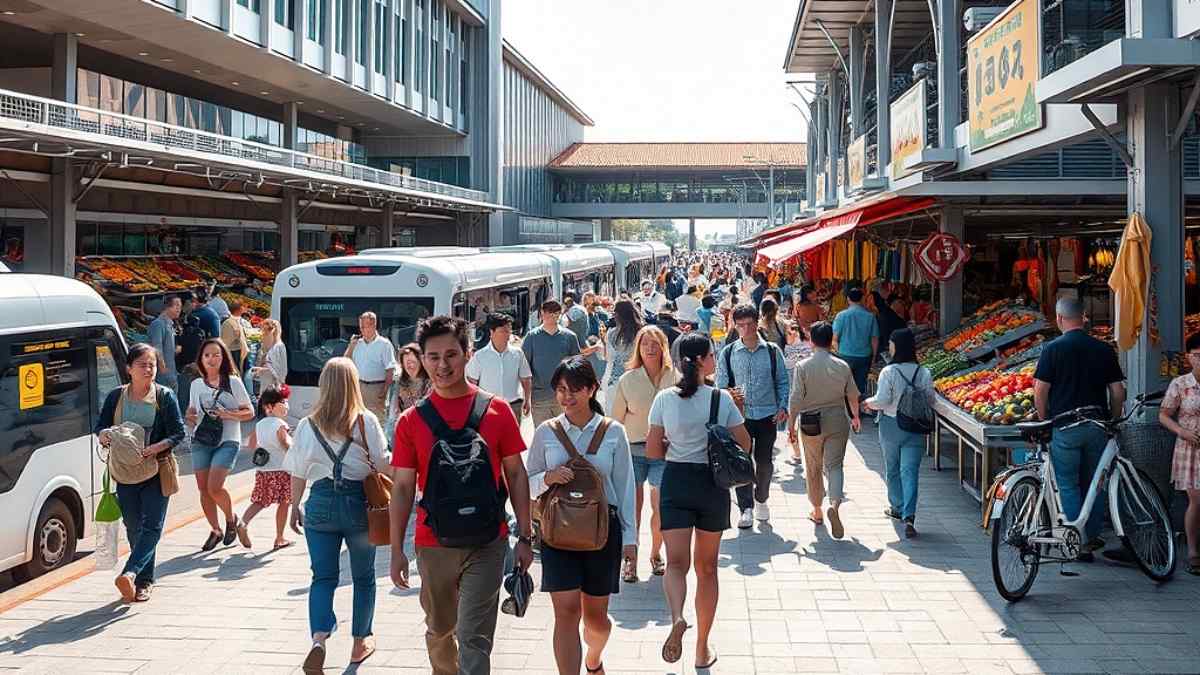
Image generated with Ai
Traditionally, destination management focused on overnight stays in hotels; however, the emergence of new trends in domestic tourism has led to a significant paradigm shift in regional corridor management. Same-day tourism economics has become an extremely important topic because millions of excursionists traveling within regions ignore hotel accommodation and immediately invest money in local roadside vendors, transportation facilities, and historic zones. From the perspective of city planners and destination management organizations in Asia, neglecting these flows of visitors is extremely risky in terms of planning. The analysis of excursionists and micro-mobility patterns would help eliminate infrastructure problems and build sustainable economic connections.
The Structural Flaw in Conventional Tourism Accounting
For decades, the standard benchmark for evaluating the health of a visitor economy has been tethered to the hospitality sector. Municipal authorities, national tourism ministries, and regional destination management organisations (DMOs) have systematically relied on metrics such as Average Daily Rate (ADR), Revenue Per Available Room (RevPAR), and cumulative hotel room nights to gauge destination performance. This administrative preference originates from historical reporting frameworks established under the United Nations World Tourism Organization (UN Tourism) and the standard Tourism Satellite Account (TSA) architecture. Within the International Recommendations for Tourism Statistics (IRTS 2008), visitors are bifurcated into overnight visitors, termed tourists, and same-day visitors, designated as excursionists. While the TSA methodology acknowledges that excursionists generate domestic tourism consumption, national statistical offices have historically under-reported non-overnight flows due to the logistical complexity of capturing travelers who do not register at commercial accommodation establishments.
Advertisement
Advertisement
This systemic accounting bias creates significant distortions in regional economic planning. In peri-urban belts surrounding primary metropolitan centres, non-overnight travelers frequently constitute between 60% and 85% of total visitor arrivals. When municipal performance scorecards and central government grant allocations are determined exclusively by formal accommodation registers, public capital becomes severely misallocated. Infrastructure investments are directed into hotel zones and airport links, while intermodal transit hubs, highway interchanges, sanitation infrastructure, parking assets, and historic village cores—which bear the direct impact of excursionist volumes—remain chronically underfunded.
The post-pandemic travel era has exacerbated these structural disparities. Compressed household leisure schedules, the formalisation of hybrid work arrangements, rising room rates across metropolitan hotel chains, and the rapid expansion of intercity tollway and rail networks have accelerated the volume of short-haul travel. Treating excursionists as incidental visitors rather than primary economic drivers leaves municipal authorities unable to manage crowd dispersion, anticipate utility spikes, or harness the transaction velocity generated by same-day travelers.
Advertisement
Advertisement
The Anatomy of the Post-Pandemic Excursionist and Micro-Mobility Travel
The contemporary excursionist is structurally distinct from the traditional holidaymaker. Where long-haul travelers plan itineraries weeks or months in advance, modern day-trippers operate on short planning horizons, frequently making travel determinations within 24 to 48 hours based on local weather conditions, highway traffic reports, and social media gastronomy recommendations. This behavioral cohort demonstrates high travel frequency. While a suburban family might take one or two multi-night vacations per year, that same household often undertakes twelve to twenty single-day regional excursions annually.
Advertisement
Advertisement
This structural shift has catalyzed the growth of micro-mobility travel, wherein urban residents venture 50 to 150 kilometres outside metropolitan cores for targeted leisure experiences. These journeys are driven by specific consumer motivations: independent culinary exploration, farm-to-table culinary visits, ecotourism excursions, heritage trail walking, open-air sporting events, and peri-urban factory outlet shopping.
Because same-day visitors return to their primary residences by nightfall, their spatial and temporal footprint differs sharply from hotel guests. Their movements are concentrated around regional expressway exits, arterial junction corridors, roadside commercial strips, municipal parks, and heritage plazas. Rather than diffusing impact across a 24-hour cycle, excursionists create high-amplitude demand surges during morning arrivals and evening departures. This rapid pulsation places stress on local transit systems, suburban road networks, and municipal public works during weekend windows, requiring municipal planners to manage acute peak-load phenomena rather than baseline residential demand.
Excursionist Analytics: Unmasking the Invisible Visitor via Alternative Data Streams
Capturing the footprint of the non-overnight visitor requires moving beyond static hotel surveys toward dynamic excursionist analytics underpinned by alternative public and private data streams. Because day excursionists do not complete registration forms or pay municipal lodging taxes, traditional surveillance methods fail to capture their movements. To address this visibility gap, regional authorities and progressive DMOs are triangulating multiple non-traditional data layers to construct accurate visitor profiles.
Advertisement
Advertisement
The primary foundation of excursionist analytics relies on telecommunications signalling data gathered from mobile network operators. Whenever a mobile device connects to cellular towers, it generates timestamped event records. By establishing algorithms that identify devices whose registered billing addresses or base stations reside outside the destination, tracking continuous presence between two and sixteen hours, and filtering out routine freight and commercial commuters, network analysts can determine precise excursionist counts, geographic origins, dwell durations, and movement corridors.
This cellular telemetry is corroborated through transport sensor metrics. Automated Electronic Toll Collection (ETC) gantries, optical vehicle classification systems on arterial highways, and municipal parking occupancy sensors provide real-time counts of inbound private vehicular volume. These sensors allow traffic authorities to map entry velocities, identify choke points along secondary roads, and record vehicle dwell times within commercial and heritage precincts.
Advertisement
Advertisement
Furthermore, the proliferation of digital wallets and contactless payments provides detailed visibility into excursionist transaction behavior. By partnering with fintech platforms, commercial clearing houses, and banking consortia, regional economic planners access anonymised, aggregated merchant point-of-sale (POS) and QR-code clearing data. This telemetry captures spending volume across street vendors, independent dining venues, open-air agricultural stalls, and cultural heritage sites, establishing a granular financial map of day-tripper expenditure patterns.
| Analytics Data Layer | Primary Collection Mechanism | Core Metric Captured | Destination Planning Application |
| Cellular Network Telemetry | Cell tower handshakes & mobile signalling events | Dwell duration, source origin, spatial density heatmaps | Dynamic crowd routing, public safety deployments |
| Intelligent Highway Tolling | Automated ETC gantries & optical plate recognition | Hourly vehicle volumes, arterial entry points | Parking management, contra-flow traffic scheduling |
| Digital Wallet POS Density | Aggregated QR-code & contactless transactions | Average spend per transaction, merchant category velocity | MSME fiscal yield analysis, tax revenue forecasting |
| Attraction Gate Sensors | Optical turnstiles, ticket scanners & Wi-Fi probes | Hourly footfall volume, attraction repeat visits | Dynamic admissions scheduling, capacity control |
Measuring the Excursionist Multiplier Effect on Grassroots Micro-Enterprises
A widespread misconception among regional policy planners is that because excursionists do not rent accommodation, their economic contribution is negligible. While per-capita spend by overnight hotel guests is substantially higher in absolute terms due to room fees, luxury hospitality services, and fine dining, the local economic multiplier effect generated by same-day visitors is broad, fast-moving, and concentrated among community enterprises.
In standard input-output economic modeling based on Leontief matrices, corporate hotel revenues often exhibit substantial financial leakage. A significant percentage of every dollar spent at large resort properties or multinational hotel chains leaves the host municipality in the form of corporate dividends, overseas procurement of imported foodstuffs, management fees, and centralized service contracts. In sharp contrast, excursionist spending circulates directly through local supply chains:
| Stage | Excursionist Spending / Activity | Local Beneficiaries | Economic Impact |
|---|---|---|---|
| Direct Spend | 70–85% of excursionist spending goes toward F&B, micro-retail and transit | Local businesses and service providers | Higher local revenue generation |
| Local Services | Spending flows to food stalls, farm shops, family cafés and shuttle services | Small businesses and local operators | Increased daily business turnover |
| Agricultural & Artisan Supply | Local businesses purchase products and services from nearby suppliers | Farmers, artisans and producers | Stronger local supply chains |
| Labour & Transport Reinvestment | Revenue supports informal workers and local transport services | Local workers and transport providers | Greater income circulation within communities |
| Municipal Cash Velocity | Money circulates rapidly through interconnected local businesses | Wider local economy | Accelerated economic activity |
| Reduced Leakage | Greater reliance on local suppliers rather than corporate chains | Independent enterprises and communities | Lower economic leakage and stronger local retention of tourism revenue |
Direct financial injections from day-trippers flow primarily into food and beverage establishments, regional artisanal workshops, roadside farm stands, community parking cooperatives, and independent transport operators. Because these transactions are conducted directly with micro, small, and medium-sized enterprises (MSMEs), the capital is retained locally. Independent café owners, fruit stallholders, and transit drivers spend their earnings within the immediate community, purchasing produce from local agricultural growers, utilizing local vehicle repair shops, and patronising regional retail businesses.
Additionally, same-day visitors require lower municipal infrastructure investment than overnight guests. They do not consume overnight municipal water and electricity reserves, generate midnight noise complaints, or require the extensive rezoning, power substations, and sewage infrastructure demanded by multi-storey hotel complexes. As a result, the net fiscal yield per unit of public investment can be advantageous for municipalities that learn to capture and direct excursionist footfall.
Advertisement
Advertisement
| Spending & Operational Metric | Same-Day Excursionist Profile | Overnight Hotel Guest Profile |
| Primary Expenditure Allocation | Food & beverage (45–55%), artisanal retail/produce (25–35%), transit/fuel (10–15%) | Accommodation (40–55%), food & beverage (20–30%), entertainment/retail (15–20%) |
| Capital Leakage Rate | Minimal; transactions occur directly with local operators and vendors | Moderate to high; corporate margins, imported goods, and management fees exit the region |
| Municipal Resource Burden | Surface parking capacity, road wear, public sanitation, solid waste handling | High per-capita water use, power grid strain, long-term civic infrastructure expansion |
| Visit Frequency / Repeat Index | High; 8 to 16 visits annually per regional consumer | Low to moderate; 1 to 2 visits annually to the same destination |
| Booking Window | 0 to 48 hours; highly sensitive to weekend weather conditions | 14 to 60 days; structured booking and planning cycles |
Asian Benchmark Case Studies in Excursionist Modernisation
Asian transportation networks and peri-urban destination belts provide operational benchmarks demonstrating how government ministries, transit agencies, and local government units modernise physical and digital infrastructure to measure and monetise same-day travel.
The Philippines: CALABARZON, Central Luzon, and Municipal Grant Allocations
In the Philippines, the Department of Tourism (DOT) and the National Economic and Development Authority (NEDA) have re-engineered regional monitoring to focus directly on municipal-level same-day arrival metrics. The CALABARZON region (encompassing the provinces of Cavite, Laguna, Batangas, Rizal, and Quezon) represents the primary weekend leisure corridor for the Metro Manila urban conurbation. Official CALABARZON Regional Development Reports record that the region logs over 22.09 million same-day arrivals annually, compared to roughly 3.10 million overnight tourists—demonstrating that excursionists represent more than 87% of all visitor entries.
Cities like Tagaytay in Cavite receive millions of day excursionists driving 1.5 to 2.5 hours across the South Luzon Expressway (SLEX) and the Cavite-Laguna Expressway (CALAX) network to access highland dining, farm tourism, and scenic views. Under Tourism Secretary Christina Garcia Frasco, the DOT launched the tourist rest areas (TRA) flagship program in collaboration with the Tourism Infrastructure and Enterprise Zone Authority (TIEZA). These purpose-built installations cater to excursionists along major provincial thoroughfares, featuring high-capacity clean sanitation facilities, lactation rooms, smart electronic charging stations, tourist information desks, and dedicated pasalubong centers operated by local micro-cooperatives selling provincial food products and handicrafts. Crucially, the DOT utilizes municipal same-day visitor metrics to determine infrastructure grant awards, establishing an incentive for Local Government Units (LGUs) to accurately track, accommodate, and service day-tripper flows.
Japan: High-Speed Rail Corridors and Real-Time Congestion Diversion in Kanto and Kansai
Japan maintains one of the world’s most detailed domestic travel accounting frameworks. Official releases from the Japan Tourism Agency (JTA) and the OECD indicate that domestic same-day travelers generate roughly 246.8 million to 253 million single-day trips annually, spending approximately ¥5 trillion, with an average expenditure of nearly ¥20,000 per traveler per trip.
The extensive connectivity provided by the Shinkansen and private rail lines has integrated destinations like Kamakura, Hakone, and Nikko into the Tokyo metropolitan day-trip orbit, while Nara and Kyoto serve identical functions for Osaka and Kobe. Private railway operators have capitalized on this demand by upgrading rolling stock into destination experiences; Tobu Railway’s deployment of the luxury limited express Spacia X between Tokyo’s Asakusa and Nikko incorporates multi-tier seating, boutique private lounges, and onboard cafes serving Tochigi craft beers, converting standard day transit into a premium travel product. To alleviate severe over-tourism in dense cultural heritage hubs, the JTA and municipal governments deployed real-time congestion-mapping applications and digital street signs in Kyoto and Kamakura. These systems combine IoT sensor data, Wi-Fi probes, and station turnstile pings to broadcast live crowd-density levels to excursionists’ smartphones, diverting footfall toward under-visited heritage sites and less crowded commercial shopping streets.
Advertisement
Advertisement
China: Greater Bay Area Cross-Border Day Travel and Fintech Integration
The Guangdong-Hong Kong-Macao Greater Bay Area (GBA) has established an integrated cross-border excursionist ecosystem. Enabled by mega-infrastructure investments—chiefly the Hong Kong-Zhuhai-Macao Bridge (HZMB) and the Guangzhou-Shenzhen-Hong Kong Express Rail Link—the GBA functions within a “one-hour transport radius”. According to the Hong Kong Tourism Board (HKTB) and the Census and Statistics Department, same-day visitors entering Hong Kong surpassed 26.7 million annually, outpacing overnight tourist arrivals.
Concurrently, a massive “northbound consumption” pattern has emerged, with hundreds of thousands of Hong Kong residents undertaking weekend same-day trips to Shenzhen, Zhuhai, and Guangzhou for dining, entertainment, hypermarket retail shopping, and outpatient medical services. Under policy initiatives such as “Northbound Travel for Hong Kong Vehicles,” eligible private car owners cross the HZMB directly without dual-licence commercial plates. This cross-border flow operates smoothly due to complete payment integration: digital wallet platforms WeChat Pay HK and AlipayHK allow Hong Kong consumers to clear transactions automatically with small mainland food vendors, wet market stalls, and regional taxi services in Renminbi, enabling real-time cross-border spend tracking and financial settlement.
Thailand: Eastern Seaboard Corridors and PromptPay Cashless Telemetry
In Thailand, the domestic travel sector generates over 1.16 trillion baht, heavily supported by weekend excursionist departures from Greater Bangkok. The completion of motorway links, including the expansion of Motorway 7 to Chonburi, Pattaya, and Rayong, has transformed the Eastern Seaboard into a primary day-trip recreation corridor.
Coastal municipalities in Chonburi and canal-side communities in Samut Songkhram—such as the Amphawa Floating Market—experience significant weekend surges of urban day-trippers seeking seafood gastronomy and evening floating markets. To observe and monetise this informal economic velocity, municipal authorities partnered with the Ministry of Tourism and Sports (MOTS) and commercial financial institutions to roll out the PromptPay QR unified payment network across roadside stalls, fruit vendors, and longtail boat operators. This digital transaction layer removes cash constraints for travelers while providing municipal finance offices with daily transactional telemetry on excursionist spending within micro-merchant zones.
| Country / Region | Primary Transport Infrastructure | Excursionist Volume & Dynamic | Technological & Policy Solutions |
| Philippines (CALABARZON & Central Luzon) | CAVITEX, SLEX, CALAX expansions; future NSCR rail lines | Over 22M annual same-day visits; Manila residents travelling to Tagaytay & Batangas | DOT/TIEZA Tourist Rest Areas (TRAs); municipal performance scorecards tracking day visits |
| Japan (Kanto & Kansai Belts) | Shinkansen; Tobu Railway Spacia X; interoperable IC cards | ~250M domestic day-trippers generating ¥5 trillion spend | JTA real-time congestion-mapping apps; timed transit passes; crowd diversion algorithms |
| China (Greater Bay Area) | Hong Kong-Zhuhai-Macao Bridge (HZMB); Express Rail Link | 26.7M+ same-day cross-border entries; high-volume northbound travel | “Northbound Travel for Hong Kong Vehicles”; WeChat Pay HK / AlipayHK cross-border clearing |
| Thailand (Greater Bangkok & EEC) | Motorway 7 expansions; planned high-speed rail lines | Weekend leisure trips to Chonburi, Rayong, and floating markets | PromptPay QR coverage across informal vendors; MOTS provincial survey telemetry |
Targeted Infrastructure Built for the Single-Day Visitor
Successfully integrating excursionist flows requires specialized physical and digital infrastructure. When local governments treat day-trippers as transient passers-by rather than designing for them, destination cores experience traffic gridlock, parking degradation, and overburdened civic amenities. Progressive regional destination management requires four structural capital interventions:
Advertisement
Advertisement
Transit-Oriented Developments (TODs) and Peripheral Mobility Hubs
Rather than allowing personal automobiles and tour coaches to crowd historic cores, regional gateway municipalities build intermodal mobility hubs on suburban perimeters or near railway nodes. These hubs combine long-distance express coach bays, passenger rail terminals, electric shuttle loops, and shared micro-mobility charging docks. Moving transfer activity to the town periphery protects sensitive historical architecture while allowing day-trippers to navigate the last mile smoothly.
Peripheral Smart Park-and-Ride Networks
To eliminate vehicle congestion in village centres, local councils construct smart park-and-ride facilities located near major expressway junctions. Utilizing variable digital message signage and automated license plate recognition, these facilities alert inbound motorists to parking capacity in real time. Visitors park on the periphery and transfer to electric municipal shuttles or designated cycling paths, keeping town centres walkable and quiet.
Integrated Single-Day Digital Experience Passes
Regional DMOs package municipal assets into single-day digital experience passes accessed via mobile devices. These digital products bundle unlimited local public transit access, timed admission tickets to municipal heritage sites, and digital discount tokens valid at participating independent restaurants and farm stalls. This mechanism captures upfront revenue and provides DMOs with granular check-in data across participating points of interest.
Dynamic Capacity Scheduling and Ticketing Systems
To safeguard fragile cultural, religious, and ecological landmarks, municipal authorities deploy dynamic capacity reservation platforms. By adjusting admission pricing based on historical footfall curves—charging lower rates during morning or late-afternoon windows—destinations balance crowd arrivals, prevent queuing bottlenecks, and spread customer footfall evenly across nearby merchant districts.
The Destination Funnel: Converting High-Frequency Excursionists into Overnight Guests
While excursionists provide steady liquidity to micro-enterprises, converting a portion of these repeat day visitors into overnight stayers remains an essential economic objective. Because an excursionist already values the destination, has solved local travel logistics, and displays positive brand trust, they represent an efficient inbound lead for local accommodation providers. Converting day-trippers into overnight guests multiplies their spending footprint and activates evening retail economies.
Advertisement
Advertisement
Municipalities and destination marketing agencies deploy three primary operational strategies to encourage extended stays:
Curating the Post-18:00 Night-Time Economy
Day-trippers typically depart before dusk if cultural sites, retail boutiques, and visitor facilities close at 17:00. To extend dwell time into the evening, destinations curate dedicated twilight programs:
- Illuminated Heritage Trails: Opening temples, castles, and historic streetscapes after dark with ambient illumination, architectural projection mapping, and guided evening walking tours.
- Waterfront and Night Food Markets: Establishing pedestrianised night markets showcasing regional culinary specialties, local musical performances, and handicraft stalls operating from 18:00 to 23:00.
- Evening River Cruises and Cultural Spectacles: Scheduling sunset passenger boat excursions, theatrical performances, and traditional arts shows that conclude after regional commuter rail schedules shift to lower late-night frequency.
Real-Time Mobile Geofencing and Twilight Retargeting
Through partnerships with telecommunications operators, regional DMOs and local hotel consortia deploy targeted mobile messaging to day-trippers within the municipal boundary between 16:00 and 18:00. These location-triggered messages combine live traffic alerts warning of highway delays with exclusive, discounted room packages at boutique inns, farmstays, and heritage hotels. Offering seamless, same-day room reservations captures spontaneous overnight conversions that fill unsold hotel inventory.
Multi-Day Curated Itineraries and Linked Trail Networks
Regional tourism agencies publish themed travel itineraries that deliberately divide experiences across a two-day schedule. For example, a “Heritage and Coast” trail combines inland historical exploration on Saturday with coastal diving or culinary foraging on Sunday, emphasizing the logistical impracticality of completing both activities in a single calendar day. By marketing paired destination experiences, DMOs turn single visits into multi-day weekend getaways.
Policy Roadmap: Destination Governance and Municipal Resource Allocation
Capturing the economic value of non-overnight travel requires local government units and regional authorities to reform destination governance and fiscal models. A comprehensive policy roadmap incorporates four core administrative actions:
Advertisement
Advertisement
1. Modernise Tourism Performance Scorecards
National tourism departments must overhaul statutory appraisal systems that evaluate municipal tourism success solely through registered hotel room nights. Municipal performance scorecards, regional ranking metrics, and national development grants should incorporate verified same-day visitor arrivals, micro-merchant POS volumes, and public transit usage, incentivising local officials to support and manage the full spectrum of visitor velocity.
2. Form Public-Private Mobility Data Alliances
Local authorities should build data-sharing compacts connecting municipal planning boards with mobile network carriers, expressway concessionaires, and digital payment platforms. Consolidating these streams into a municipal data clearinghouse gives local planners predictive analytics on weekend crowd flows, arterial transit volumes, and consumer spending patterns.
3. Establish Dedicated Excursionist Infrastructure Trust Funds
Because excursionists place operational demands on public amenities without paying conventional municipal lodging taxes, local governments need dedicated mechanisms to fund municipal upkeep. Authorities can establish municipal infrastructure funds financed by modest parking fees, transit surcharges, and single-day pass sales. These funds should be ring-fenced to finance public restroom maintenance, waste collection, traffic management, and historic preservation.
4. Implement Regional Carrying Capacity Thresholds
Unmanaged excursionist influxes can overwhelm local community life, leading to resident resentment and environmental wear. Municipal councils must define carrying capacity limits for sensitive ecological, historic, and residential areas. Combining real-time pedestrian counting sensors with automated traffic diversions enables authorities to protect heritage assets and community wellbeing while maintaining a sustainable visitor economy.
Future Outlook: The Evolution of Peri-Urban Tourism Belts
Looking ahead, regional leisure travel will increasingly be shaped by shorter, more frequent journeys. As intercity transit lines, high-speed rail links, and highway bypasses continue to expand across developing and developed Asian markets, the traditional division between residential suburbs and tourism destinations will continue to blur. Metropolitan boundaries are expanding into regional recreation networks, turning peripheral farming communities, coastal villages, and mountain towns into accessible recreational hubs.
Advertisement
Advertisement
Municipalities that continue to assess economic vitality through the narrow lens of hotel occupancy will misallocate capital, strain civic infrastructure, and fail to capture local commercial value. Conversely, local authorities that adopt excursionist analytics, deploy smart transit hubs, and build integrated digital ecosystems will lead this structural transition. By recognizing same-day visitors as catalysts for local enterprise, regional leaders can build sustainable, resilient, and inclusive tourism economies for the next decade of travel.
Conclusion
The modern visitor economy has gone way beyond just the typical hotel lobbies and conventional sleeping accommodations. With the expansion of the transportation infrastructure in Asia, same-day tourism economics provides a proven model for regional authorities to generate growth for their businesses, spread around public revenues, and improve their regional transportation systems. While same-day excursionists apply specific stresses to the road infrastructure, municipal sanitation, and historic core districts, modern telemetry technology allows for the quantification of the hitherto invisible economic returns from these efforts. Through the creation of rest stations, integration of digital passes, and evening entertainment, it is possible to control the excursionist traffic flow.
Advertisement
