
France Joins Germany, Italy, Spain and Belgium in Leading Europe’s Smart Rail Travel Expansion as EU Unveils Unified Train Booking Vision for Cross-Border Tourism: Here’s Why It Matters

Published
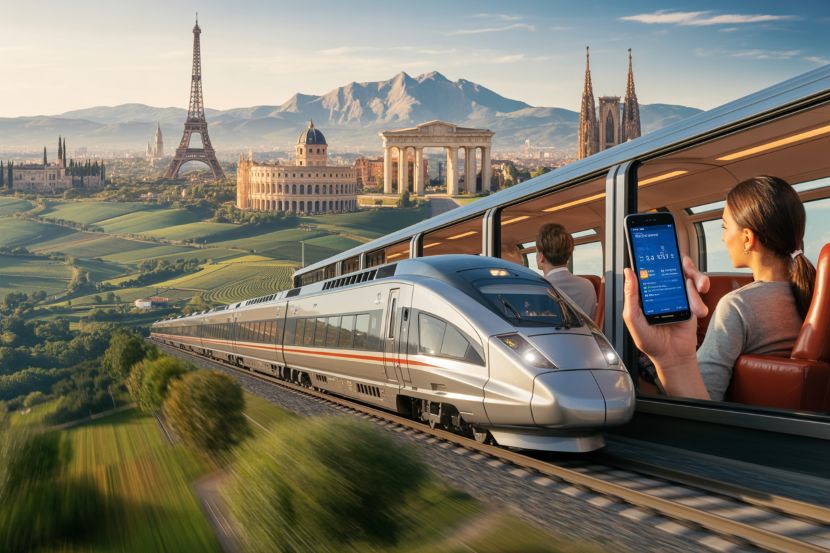 Image generated with Ai
Europe’s rail sector is moving toward one of its biggest transformations in decades as the European Union prepares new measures aimed at simplifying cross-border train bookings for travelers and tourism businesses alike. The proposal, designed around a “single journey-single ticket” model, would allow passengers to compare routes, reserve seats, and complete multi-country rail itineraries in one transaction across competing operators. The initiative comes at a time when European train travel, overnight sleeper routes, and sustainable tourism are witnessing remarkable growth amid rising short-haul airfare costs and stronger environmental policies across the continent.
For travel advisors, tour operators, and independent travelers, the proposed changes could reshape how rail journeys are sold and experienced between major tourism hubs such as Paris, Berlin, Rome, Madrid, Vienna, Amsterdam, and Brussels. The EU’s latest push is also expected to accelerate demand for eco-conscious travel experiences, long-distance rail vacations, and integrated mobility networks that support tourism across multiple European countries without the complications of fragmented ticket systems.
Europe’s Rail Industry Enters a New Competitive Phase
The European Commission’s latest rail mobility initiative aims to tackle one of the most persistent frustrations in European tourism: fragmented booking systems. Travelers currently planning rail journeys across several countries often face multiple websites, different ticketing rules, disconnected schedules, and limited passenger protection if delays disrupt onward connections.
Under the proposed framework, railway operators would be required to share ticketing data and allow rival tickets to be sold across platforms. This could dramatically improve booking transparency for travelers moving between countries such as France, Germany, Italy, Spain, Austria, Belgium, and the Netherlands.
Advertisement
Advertisement
The proposal reflects the EU’s broader climate agenda, which increasingly favors rail over short-haul aviation for intra-European travel. Several countries have already introduced restrictions on domestic or short-distance flights where rail alternatives exist.
Key Areas the EU Proposal Could Transform
| Area | Expected Impact on Travelers |
|---|---|
| Multi-country rail booking | Easier single-payment itineraries |
| Passenger rights | Better protection during missed connections |
| Travel planning | Faster comparison of rail routes and fares |
| Tourism mobility | Simpler city-to-city European vacations |
| Sustainable travel | Reduced dependence on short-haul flights |
Industry analysts believe the move could place rail travel closer to the convenience level long associated with airline reservation systems.
Advertisement
Advertisement
Rail Tourism Demand Surges Across Europe
The timing of the proposal is significant. European rail travel has experienced a sharp resurgence since the pandemic recovery period, driven by sustainability concerns, airport congestion, and growing interest in slow travel experiences.
According to data published by the European Environment Agency, rail remains among the lowest-emission transport options for medium-distance travel within Europe. Meanwhile, Eurostat figures have shown a steady recovery in international rail passenger numbers across key tourism corridors.
Travelers are increasingly choosing train journeys between major destinations including:
| Popular Rail Tourism Corridors | Tourism Appeal |
|---|---|
| Paris–Amsterdam | Business and leisure connectivity |
| Berlin–Vienna | Cultural and city-break tourism |
| Milan–Rome | High-speed domestic tourism |
| Madrid–Barcelona | Business and weekend travel |
| Brussels–Cologne | Cross-border short-stay tourism |
The revival of overnight sleeper trains has further strengthened rail tourism. Operators such as Austria’s Nightjet network and other private European rail companies have expanded sleeper services connecting major capitals and tourism gateways.
For tourism boards, the trend supports broader sustainability goals while helping disperse visitor traffic beyond airports.
Why Travel Advisors Could Benefit Significantly
The EU proposal is expected to create substantial opportunities for the travel trade sector, particularly for agencies specializing in multi-country European itineraries.
Advertisement
Advertisement
At present, travel advisors often face operational challenges when booking rail products because inventory systems differ across operators. Integrating booking access could simplify itinerary building and create more dynamic rail-tourism packages.
Potential Advantages for Travel Agencies
| Benefit | Industry Impact |
|---|---|
| Unified booking systems | Faster itinerary creation |
| Easier fare comparison | Improved pricing transparency |
| Better customer confidence | Reduced disruption concerns |
| Expanded rail packaging | More tourism product options |
Tour operators focused on luxury rail holidays, cultural tourism, river cruises, and sustainable travel packages could particularly benefit from easier rail integration.
The shift may also encourage more international visitors arriving in Europe by air to continue their journeys by train instead of taking additional regional flights.
Travelers Are Increasingly Choosing Sustainable Mobility
The push for integrated rail travel also reflects changing traveler behavior. Sustainability has become a stronger purchasing factor among European and long-haul travelers, especially younger demographics and corporate travel buyers.
A growing number of companies are reducing employee short-haul flights under ESG targets, while leisure travelers increasingly view rail journeys as part of the vacation experience itself rather than simply transportation.
High-speed rail continues to gain traction because of its city-center convenience, reduced airport wait times, and lower environmental impact.
Advertisement
Advertisement
Rail vs Short-Haul Air Travel in Europe
| Factor | Rail Travel | Short-Haul Flights |
|---|---|---|
| City-center access | Strong advantage | Often airport-dependent |
| Carbon emissions | Lower | Higher |
| Baggage flexibility | Generally easier | Restrictive policies |
| Security procedures | Faster | Longer screening times |
| Scenic tourism value | High | Limited |
This evolving consumer behavior has encouraged private rail investments across Europe, especially in premium sleeper trains and high-speed services.
Sleeper Trains Are Becoming a Tourism Experience Again
One of the strongest trends supporting Europe’s rail expansion is the comeback of overnight rail travel. Once considered outdated, sleeper trains are now attracting both budget-conscious travelers and premium tourism segments.
Routes linking cities such as Vienna, Paris, Berlin, Zurich, Brussels, and Rome are seeing renewed interest from travelers seeking lower-emission alternatives to flights while maximizing sightseeing time.
Tourism experts note that overnight rail also supports secondary destinations by connecting regional cities that are less dependent on major airports.
The resurgence has prompted renewed investments in modern sleeper cabins, onboard dining, digital ticketing systems, and upgraded passenger comfort.
What Travelers Should Watch Before Booking Cross-Border Rail Trips
Although the proposed EU measures could improve rail connectivity significantly, implementation may still take time as operators adapt technology platforms and commercial agreements.
Advertisement
Advertisement
Travelers planning multi-country European rail vacations should continue monitoring:
Smart Rail Travel Tips for Europe
| Travel Tip | Why It Matters |
|---|---|
| Book high-demand routes early | Summer rail capacity can sell out |
| Check overnight train availability | Sleeper demand is increasing |
| Review connection times carefully | Delays still affect cross-border routes |
| Compare rail passes with point-to-point fares | Savings vary by itinerary |
| Monitor digital ticket compatibility | Some operators still use separate systems |
Tourism professionals also expect competition among operators to intensify once cross-platform ticketing becomes mandatory.
Europe’s Tourism Future May Be Built Around Rail Connectivity
The EU’s latest rail initiative signals a broader transformation in how travelers could move across Europe in the coming years. Rather than relying heavily on fragmented domestic flights, future tourism growth may increasingly revolve around integrated rail mobility connecting major capitals, secondary cities, cultural hubs, and leisure destinations.
For travelers, the proposed system promises smoother booking experiences and greater confidence when navigating complex international rail itineraries. For the tourism sector, it opens new opportunities to create sustainable, multi-destination journeys that align with changing traveler priorities.
As Europe continues balancing climate goals with tourism growth, rail connectivity is rapidly becoming more than a transport strategy — it is evolving into a central pillar of the continent’s future travel economy.
Advertisement
