
Czechia Tourism Gains Momentum as International Booking Demand Rises

Published
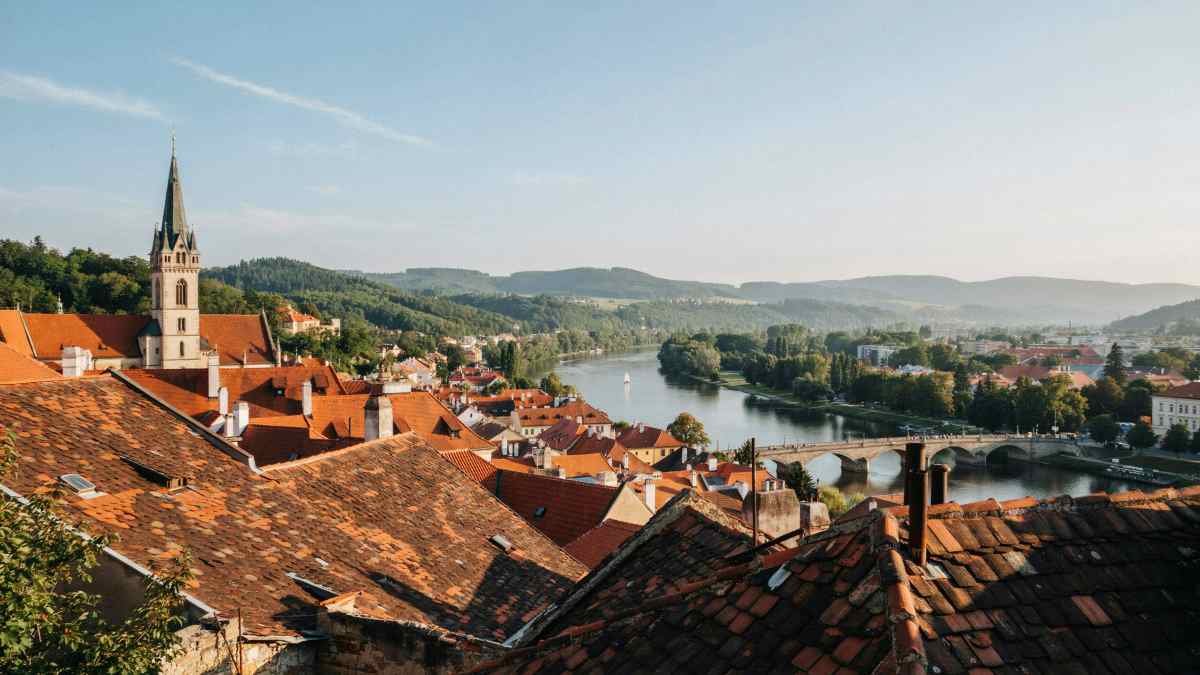
Image generated with Ai
Czechia ranks among Europe’s most rapidly growing booked destinations in 2026, according to travel intelligence from Amadeus in partnership with UN Tourism. According to the most recent European travel report, there has been an 18% year-on-year growth in bookings for Czechia. This makes the country outpace Iceland as the most rapidly developing destination in Europe’s largest tourist markets. The statistic is significant, although it should be stated correctly. An 18% growth means booked travel demand, not an 18% rise in international search demand or in tourist numbers. The trend is part of a larger shift in European travel behaviour as tourists have shown more interest in cultural, nature, and season-based destinations. Czechia is taking advantage of this trend while rebuilding its tourism numbers.
Czechia Leads Europe’s Booking Growth
The Amadeus and UN Tourism Travel Insights 2026: Focus on Europe report identifies Czechia as the fastest-growing booked destination among Europe’s leading tourism markets.
Czechia recorded 18% year-on-year growth in bookings, followed by Iceland at 11%.
The report links this demand to growing interest in culturally rich city breaks and nature-led travel across Central and Northern Europe.
Advertisement
Advertisement
That trend is significant because European travellers have historically concentrated demand on destinations such as Spain, Italy, France and the United Kingdom.
Czechia offers a different proposition, centred on historic cities, architecture, food, spa destinations, countryside and relatively compact travel distances.
Advertisement
Advertisement
Prague remains the country’s principal international tourism gateway, but the national tourism offer extends considerably beyond the capital.
International Tourism Has Recovered
Czechia entered 2026 with a solid tourism base.
Advertisement
Advertisement
The OECD’s 2026 tourism review reports that the country recorded 10.9 million international tourists at commercial accommodation establishments in 2025, representing a 4% increase from 2024 and bringing international visitor numbers to roughly the 2019 level.
Germany remained the largest source market, accounting for 21% of international tourists, followed by Slovakia and Poland, each with 8%.
Domestic tourism also remains important. Czechia recorded approximately 12.6 million domestic overnight visitors in 2025, up 2.5% from the previous year.
The combination gives the tourism sector a broad demand base rather than making it dependent entirely on long-haul international visitors.
Advertisement
Advertisement
2026 Arrivals Show a More Mixed Picture
The latest official quarterly figures provide an important qualification to the booking data.
During the second quarter of 2026, 6.4 million guests stayed in Czech collective accommodation establishments, an increase of only 0.5% from the same period in 2025.
Foreign guest demand stagnated during the quarter, while overnight stays by international visitors increased 0.7%.
That means the 18% booking-growth figure should not be interpreted as an equivalent increase in arrivals.
Booking data measure forward-looking demand and purchasing behaviour, while official accommodation statistics record guests who actually arrive and stay.
The difference is important for understanding Czechia’s tourism trajectory.
Advertisement
Advertisement
VAT Policy Claim Needs Correction
The claim that Czechia has strategically lowered VAT on accommodation and culture to stimulate intra-regional tourism in 2026 is not accurate.
Czechia currently has two VAT rates, including a standard rate of 21% and a reduced rate of 12%. Official government information places accommodation services, restaurant and catering services and admission to a range of cultural venues within the reduced-rate framework.
However, this is not a new 2026 tourism incentive.
The Czech government actually restructured VAT rates from January 2024, with accommodation moving from the previous 10% reduced rate to 12%.
Therefore, the current tourism momentum should not be attributed to a new 2026 VAT reduction.
Prague Remains the Main Gateway
Prague continues to dominate Czechia’s international tourism landscape.
Advertisement
Advertisement
During the second quarter of 2026, approximately 2.2 million guests stayed in Prague, generating around 5 million overnight stays.
The capital’s combination of historic architecture, cultural attractions, restaurants, nightlife and international air connectivity continues to make it the country’s most important visitor hub.
Yet the latest booking trends also support wider regional tourism.
Destinations such as Karlovy Vary, known for its spa tradition, Český Krumlov, famous for its historic centre, and South Bohemia provide alternatives to Prague.
Brno adds another urban option, while Czechia’s countryside, castles, forests and protected landscapes support nature-based travel.
Seasonal Travel Is Becoming More Important
The Czechia trend also fits into a wider European movement towards travel outside traditional peak periods.
Advertisement
Advertisement
The Amadeus and UN Tourism report found that European travellers are increasingly interested in destinations offering seasonal balance and distinctive experiences.
This can benefit Czechia because its tourism offer works across multiple seasons.
Prague’s cultural attractions operate throughout the year, while Karlovy Vary and other spa destinations can attract wellness travellers beyond the traditional summer period.
Winter brings Christmas markets and urban breaks, while spring and autumn offer cooler conditions for sightseeing and countryside travel.
Czechia Benefits From Changing European Demand
Over 130 million international tourists visited Europe during the first quarter of 2026, up by 4% year on year, according to the Amadeus and UN Tourism report. Central and Eastern Europe saw a steeper increase of 6%. Czechia is therefore reaping the rewards of both country-specific tourism and recovery in its region. With an 18% increase in bookings, this figure is especially impressive, but it would seem that Czechia is becoming a rising market, not one that has seen an 18% increase in tourist numbers. From the traveler’s point of view, this trend implies that Czechia is becoming more and more visible as a destination that offers alternatives to Europe’s most popular tourism destinations. Prague is still the main highlight of the country, but increased interest in regional destinations provides visitors with a chance to combine historic cities, spa towns, culture and nature all in one not-too-big country. The current tourism story of 2026, therefore, becomes evident: Czechia is seeing strong growth in bookings as travellers seek out Central Europe for their vacations.
Advertisement
