
Abu Dhabi and Maldives Emerge Alongside Luxury Rivals as Coastal Tourism Pursues Higher-Value Travel

Published
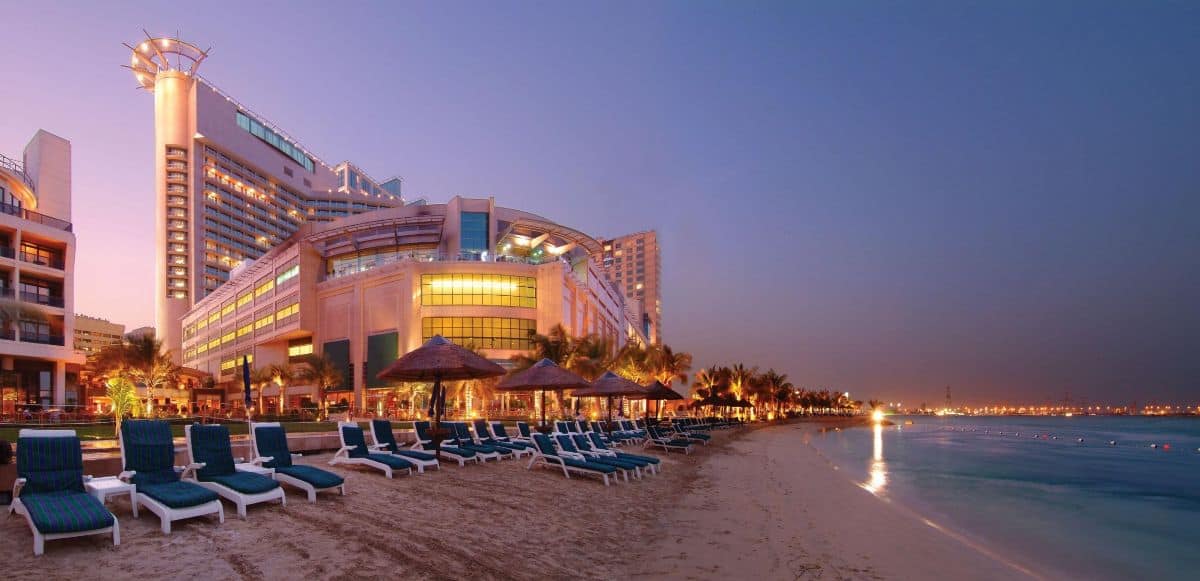
The luxury coastal tourism market is entering a more sophisticated phase, with destinations chasing value rather than arrivals alone. Abu Dhabi, Maldives, Mauritius, Seychelles and Oman are developing distinct models built around premium accommodation, marine experiences, wellness, air access and sustainability. Their latest tourism figures reveal an important shift: visitor spending, length of stay, hotel performance and environmental resilience increasingly shape destination strategy. Abu Dhabi recorded 26.6 million visitors in 2025 and AED9.1 billion in hotel revenue. The Maldives generated more than US$5.57 billion in tourism receipts, while Seychelles lifted tourism income by 29%. Mauritius attracted 1.44 million tourists, and Oman generated more than OMR1 billion in inbound tourism expenditure.
Luxury Is Moving Beyond the Beach
The traditional coastal tourism formula depended heavily on scenery, hotel inventory and seasonal demand. Today, destinations increasingly compete through the depth of experiences surrounding the room, villa or private island. That includes marine excursions, wellness programmes, gastronomy, culture, adventure, shopping and longer-stay itineraries.
Advertisement
Advertisement
This evolution matters because headline arrivals can conceal important changes in tourism quality. A destination may welcome more people while seeing weaker utilisation, shorter stays or limited local spending. Conversely, a smaller destination can generate stronger economic returns by attracting travellers who stay longer and purchase more experiences.
The five destinations therefore provide useful examples of different tourism architectures. Abu Dhabi combines resorts with culture and major events, while the Maldives monetises marine assets through resort-island tourism. Mauritius has a broader island economy, Seychelles prioritises higher-value and lower-impact demand, and Oman combines coastline with mountains, desert and heritage.
Advertisement
Advertisement
Abu Dhabi Builds a Wider Luxury Ecosystem
Abu Dhabi’s 2025 performance demonstrates how luxury tourism can operate within a much larger destination economy. The emirate welcomed 26.6 million visitors, including 5.9 million hotel guests, while hotel revenue reached AED9.1 billion. Hotel revenue increased 19.5% year on year, significantly faster than hotel guest growth.
The accommodation market also strengthened. Occupancy reached 81%, up three percentage points, while average daily rate increased 19%. RevPAR climbed 23%, indicating stronger revenue generation from available rooms. Average length of stay reached 2.9 nights, although several major international markets stayed considerably longer.
Advertisement
Advertisement
| Abu Dhabi 2025 indicator | Performance |
|---|---|
| Total visitors | 26.6 million |
| Hotel guests | 5.9 million |
| Hotel revenue | AED9.1 billion |
| Hotel occupancy | 81% |
| Average length of stay | 2.9 nights |
| ADR growth | 19% |
| RevPAR growth | 23% |
| MICE delegates | 2.2 million |
| Culture and leisure attendance | 4.2 million |
The figures reveal why the destination increasingly treats luxury as an ecosystem rather than a hotel category. Culture, events, entertainment and business travel can extend the reasons for visiting beyond the coastline. In 2025, MICE delegates increased 40% to 2.2 million, while culture and leisure event attendance reached 4.2 million.
Air access reinforces that strategy. International inbound seat capacity grew 11%, while the load factor reached 89%. India became especially important, with 436,124 hotel guests, representing a 22% annual increase.
For travellers, the implication is practical. Abu Dhabi can function as a short luxury break, a cultural holiday, a resort stay or part of a wider UAE itinerary. That flexibility reduces dependence on one tourism segment.
Maldives Turns Nature Into High-Value Experiences
The Maldives presents a radically different commercial structure. Its luxury proposition remains deeply connected to the marine environment, making coral reefs, diving, wildlife and ocean experiences central economic assets.
The country welcomed 2,246,516 visitors in 2025, an annual increase of 9.8%. Tourism receipts exceeded US$5.57 billion, according to figures highlighted by Visit Maldives, marking a 16.4% increase over the previous year.
The more revealing measure is bed-night performance. Maldives recorded 13.67 million bed nights in 2025, up only 2.4%, while average beds in operation increased 4.3% to 64,377. Capacity therefore expanded faster than bed nights.
Advertisement
Advertisement
| Maldives tourism indicator | 2025 |
|---|---|
| Tourist arrivals | 2.25 million |
| Tourism receipts | More than US$5.57 billion |
| Bed nights | 13.67 million |
| Bed-night growth | 2.4% |
| Average beds in operation | 64,377 |
| Bed-capacity growth | 4.3% |
| December arrivals | 224,455 |
That gap offers an important industry lesson. Adding resort capacity does not automatically create proportional demand. Operators increasingly need stronger year-round conversion, differentiated experiences and higher-value ancillary spending.
Marine tourism also creates a sustainability paradox. The same reefs and wildlife that justify premium rates remain vulnerable to climate pressure and visitor intensity. The Maldives’ Fifth Tourism Master Plan therefore places attention on marine protected areas, coral restoration, wildlife interaction and better management of popular dive locations.
For travellers, this means the Maldives experience increasingly extends beyond an overwater villa. Diving, manta encounters, whale-shark excursions, wellness, private cruises and conservation-led activities can become major components of the trip.
Mauritius Expands the Spending Equation
Mauritius offers another model because its tourism economy reaches well beyond the resort compound. The island welcomed 1,436,250 tourists in 2025, up 3.9% from 2024. Air arrivals increased 4.7%, while sea arrivals fell 27.6%.
India was among the fastest-growing major markets. Indian arrivals increased 33.5% to 75,808, giving Mauritius a stronger foothold in an important premium outbound market.
The spending data is particularly revealing. Average expenditure per tourist reached Rs74,200 in 2025, compared with Rs71,000 in 2024. Travellers staying in hotels spent an average Rs93,900, compared with Rs34,300 among non-hotel visitors.
Advertisement
Advertisement
| Mauritius 2025 indicator | Data |
|---|---|
| Tourist arrivals | 1.436 million |
| Annual arrival growth | 3.9% |
| Air arrivals | 1.412 million |
| Air-arrival growth | 4.7% |
| Indian arrivals | 75,808 |
| Indian-arrival growth | 33.5% |
| Average spend per tourist | Rs74,200 |
| Average hotel visitor spend | Rs93,900 |
| Average spend per tourist night | Rs6,600 |
That distinction changes how Mauritius should be understood. The commercial opportunity is not simply to fill rooms, but to encourage spending across food, wellness, marine activities, golf, excursions, culture and shopping.
The island also illustrates the importance of aviation. More than 98% of tourist arrivals in 2025 came by air. For an isolated island destination, connectivity is therefore fundamental tourism infrastructure rather than a secondary convenience.
Seychelles Makes Value the New Volume Measure
Seychelles provides perhaps the clearest example of a destination deliberately reframing tourism success. Its sustainable tourism framework describes a move away from growth based primarily on visitor numbers. Instead, it emphasises visitor expenditure, community benefit and protection of natural and cultural resources.
The economic evidence strengthens that argument. Visitor arrivals reached 398,840 in 2025, up 13.1%. Yet average spending per tourist rose 14.3%, while overall tourism income increased 29%.
| Seychelles indicator | 2025 change |
|---|---|
| Visitor arrivals | 398,840 |
| Arrival growth | 13.1% |
| Average spending per tourist | +14.3% |
| Tourism income | +29% |
| Indian arrivals | 13,499 |
| Indian-arrival growth | 77.0% |
| Cruise calls | 41 |
The policy direction is equally notable. Seychelles increasingly promotes nature, culture, wellness, island-hopping and community-based experiences alongside traditional luxury accommodation.
Cruise tourism is also being recalibrated. Seychelles recorded 41 cruise calls during the 2025–26 season, compared with 35 previously. However, the destination highlighted smaller premium and expedition vessels, rather than treating ship numbers alone as the measure of success.
Advertisement
Advertisement
For travellers, that shift can create a more diverse holiday. A Seychelles itinerary can combine boutique accommodation, nature trails, marine excursions, Creole cuisine, wellness and island-hopping rather than remaining centred on a single beach resort.
Oman Broadens the Coastal Luxury Map
Oman introduces the most geographically diverse model in this comparison. Its coastline forms only one part of a wider tourism proposition encompassing mountains, wadis, deserts, heritage districts and adventure landscapes.
Official 2025 data shows 3.966 million inbound visitors, including 2.714 million overnight tourists. These overnight visitors generated 17.728 million nights, producing an average stay of 6.5 nights.
Inbound tourism expenditure reached OMR1.014 billion, while average expenditure per visitor stood at OMR255.5. Hotel guests exceeded five million during the year.
| Oman 2025 indicator | Performance |
|---|---|
| Inbound visitors | 3.966 million |
| Overnight tourists | 2.714 million |
| Tourist nights | 17.728 million |
| Average stay | 6.5 nights |
| Inbound expenditure | OMR1.014 billion |
| Average expenditure per visitor | OMR255.5 |
| Hotel guests | More than 5 million |
The spending structure is also revealing. Travel tickets accounted for 30.3% of inbound expenditure, accommodation 22%, and food and beverages 13.6%. Shopping represented 3.6%, indicating considerable room for broader destination spending.
Oman’s aviation strategy supports that diversification. Oman Air launched direct Muscat-Singapore flights in July 2026, operating four days weekly. The route expands access to Southeast Asia and strengthens onward connectivity through the carrier’s wider network.
Advertisement
Advertisement
For travellers, Oman can therefore offer a longer itinerary than a conventional beach escape. Sea, mountains, desert, heritage and wellness can coexist within one journey, potentially increasing length of stay and dispersing expenditure.
Five Models Reveal One Major Shift
The five destinations differ dramatically in scale, geography and tourism structure. Yet their data points towards a common transformation: destinations increasingly want higher economic value from each visitor.
| Destination | Core luxury proposition | Key 2025 signal |
|---|---|---|
| Abu Dhabi | Resort, culture, events and MICE | AED9.1bn hotel revenue |
| Maldives | Private islands and marine experiences | US$5.57bn+ receipts |
| Mauritius | Resorts and diversified island experiences | Rs74,200 average spend |
| Seychelles | Nature, wellness and responsible luxury | Tourism income +29% |
| Oman | Coast, heritage, mountains and adventure | OMR1.014bn inbound spend |
The contrast also exposes different vulnerabilities. The Maldives depends heavily on marine ecosystems and international aviation. Mauritius depends strongly on air connectivity. Seychelles faces infrastructure and carrying-capacity constraints, while Abu Dhabi must sustain demand across an expanding luxury and entertainment ecosystem.
Oman, meanwhile, needs to convert growing connectivity and investment into longer stays and wider visitor expenditure. These are different challenges, but each destination increasingly measures success through indicators beyond arrivals.
Sustainability Becomes Part of Luxury
Environmental policy is also moving closer to the centre of the premium tourism proposition. Abu Dhabi operates sustainability guidelines across hotels, food and beverage, events, attractions and travel businesses. It also uses a hotel carbon calculator and sustainability audits to establish environmental performance.
Seychelles has adopted an even broader destination framework. Its policy focuses on protecting natural and cultural capital, strengthening climate resilience and improving information for sustainable tourism. The country explicitly identifies higher-value, lower-impact tourism as a strategic direction.
Advertisement
Advertisement
The Maldives faces an even more fundamental equation. Its tourism product depends on coral reefs and marine biodiversity, meaning environmental degradation can directly threaten the commercial proposition.
For travellers, sustainability is therefore becoming more tangible. The meaningful question is no longer whether a resort uses recyclable amenities. It is whether tourism protects the natural asset, local economy and community experience that make the destination valuable.
What Travellers Should Watch Next
The emerging pattern has practical consequences for holiday planning. Travellers seeking premium coastal trips should increasingly compare destinations through length of stay, experience depth, connectivity and local activities, rather than room category alone.
A two-night luxury stay and a seven-night experience-rich itinerary can generate very different economic and personal value. Likewise, a private villa may be only one component of a broader trip involving diving, wellness, cultural visits, food and nature.
Connectivity also deserves greater attention. New routes can reshape accessibility quickly, while aviation disruptions can expose the fragility of island tourism. Travellers should therefore examine direct-flight availability, seasonal schedules and onward transfers before committing to complex coastal itineraries.
The sustainability dimension matters too. Smaller islands have finite land, water and infrastructure, while marine ecosystems can face intense pressure. Choosing locally owned experiences, respecting wildlife guidelines and spreading visits across multiple attractions can help tourism benefits reach beyond major resorts.
Advertisement
Advertisement
Coastal Tourism Enters a New Phase
The next chapter of luxury coastal tourism will not be defined solely by larger villas, private beaches or higher room rates. Abu Dhabi is adding culture and events to its resort economy, while the Maldives is extracting greater value from marine experiences. Mauritius is broadening spending beyond accommodation, Seychelles is pursuing value over volume, and Oman is turning its coastline into one element of a much wider destination.
The numbers reinforce the shift. Hotel revenue, visitor expenditure, length of stay, air capacity and environmental performance increasingly matter alongside arrivals. For travellers, that creates more choice and more sophisticated products. For destinations, it raises a harder task: generate greater value without exhausting the natural and cultural assets that create demand. The strongest long-term models will therefore depend on experience quality, connectivity, responsible growth and economic participation. Coastal luxury is becoming less about escaping to a beach and more about discovering what an entire destination can deliver.
Advertisement
