
Singapore Cruise Travel Is Now Set To Unlock Luxury Cruise Value On More Global Voyages In September 2026

Published
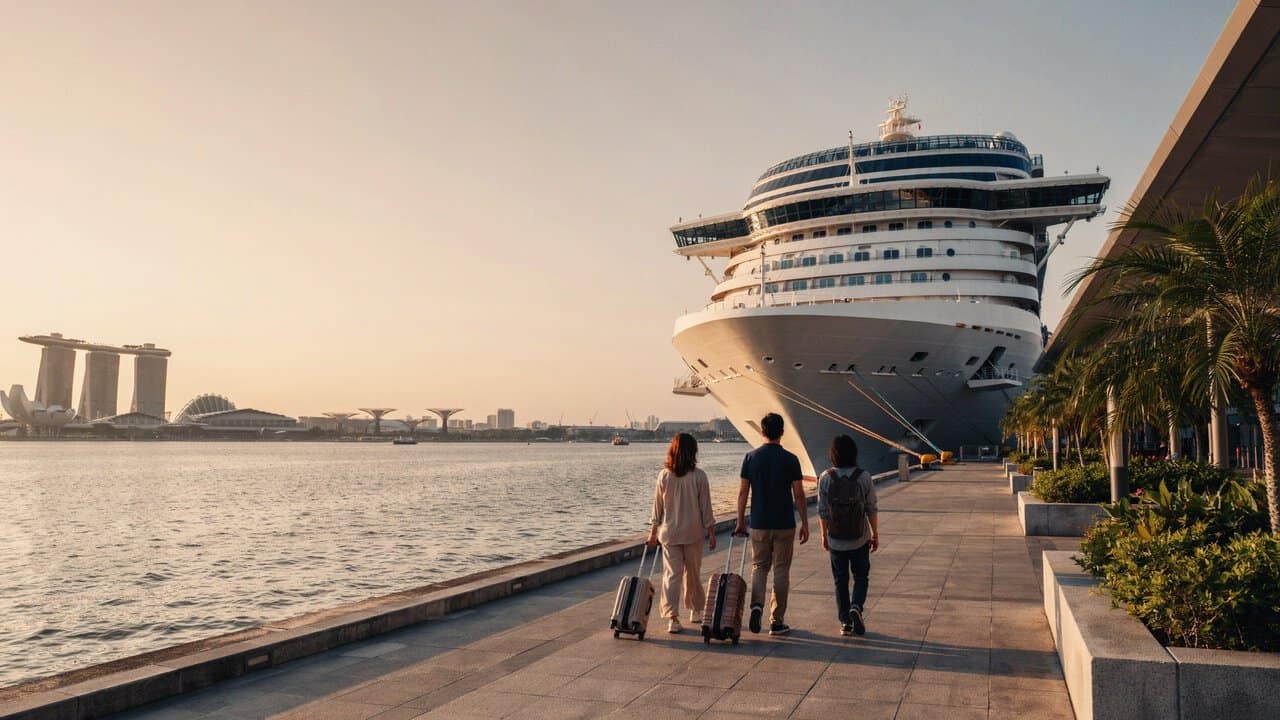
As of September 2026, Singapore remains Southeast Asia’s leading Luxury Cruise gateway, supported by expanded terminal capacity, new homeport activity and the latest official performance data. The evidence does not represent a new September announcement. It combines results published in February and April 2026, covering national cruise activity in 2025 and regional economic performance in 2024. More than two million passenger movements passed through Singapore’s cruise terminals during 2025. Ship calls also increased by 10 per cent. These developments strengthen Singapore Cruise Travel, although official statistics do not separate luxury passengers from the wider cruise market.
September 2026 Position Builds on Earlier Official Results
Singapore’s current cruise position is based mainly on results released by its national tourism authority on 3 February 2026. Those figures showed that the country received 375 cruise ship calls during 2025, an increase of 10 per cent from 2024. Passenger throughput exceeded two million and grew by 9 per cent. Throughput measures movements through cruise terminals. It can include passengers beginning, ending or continuing voyages, so it should not automatically be interpreted as two million different tourists.
Advertisement
Advertisement
The figures remain the latest complete annual cruise results officially available for assessing Singapore’s position in September 2026. They confirm growth during 2025, rather than a sudden increase occurring during September itself. Singapore Cruise Travel should therefore be presented as an established sector carrying positive momentum into the final months of 2026. It would be inaccurate to describe the 2025 performance figures as newly recorded September results or to suggest that all passenger growth came from premium travellers.
The table below separates the reporting periods from the publication and assessment dates. This distinction prevents older performance data from being presented as a new event.
Advertisement
Advertisement
| Category | Reporting Period | Officially Verified Result | Meaning in September 2026 |
|---|---|---|---|
| Cruise passenger throughput | Full year 2025 | More than 2 million, up 9% | Latest complete annual cruise result |
| Cruise ship calls | Full year 2025 | 375 calls, up 10% | Confirms increased port activity |
| International arrivals | Full year 2025 | 16.9 million, up 2.3% | Shows the wider tourism recovery |
| Tourism receipts | January–September 2025 | S$23.9 billion, up 6.5% | Indicates higher visitor-economy value |
| Regional passenger visits | Full year 2024 | 3.9 million | Measures Southeast Asian cruise activity |
| Singapore’s regional share | Full year 2024 | 48% | Places Singapore first in the region |
| Regional economic output | Full year 2024 | US$10 billion | Shows wider cruise-related economic activity |
| Main terminal capacity | Completed expansion reported in 2026 | Increased from 6,800 to 11,700 | Supports larger passenger movements |
| 2026 visitor forecast | Full year 2026 | 17 million to 18 million | Projection, not a completed result |
Luxury Cruise Momentum Reflects Singapore’s Wider Tourism Recovery
Singapore welcomed 16.9 million international visitors in 2025, according to official tourism figures. This was 2.3 per cent higher than in 2024. Mainland China supplied 3.1 million visitors, representing approximately 18.3 per cent of all arrivals. Indonesia contributed 2.4 million, or about 14.2 per cent. Malaysia and Australia each delivered 1.3 million, while India generated another 1.2 million. Together, the five largest markets represented roughly 55 per cent of the national total.
Tourism receipts reached S$23.9 billion during the first nine months of 2025, increasing by 6.5 per cent from the corresponding 2024 period. This was the highest amount recorded for those nine months. The result does not show how much cruise passengers spent because the published total covers the wider visitor economy. However, Luxury Cruise passengers may use hotels, airport transfers, attractions and retail services before or after sailing. This represents a potential economic connection, not a separately measured official outcome.
Advertisement
Advertisement
The stronger tourism environment provides useful background for cruise development. Large nearby markets can supply passengers for short regional voyages, while long-haul visitors can connect through Singapore’s international airport. Strong visitor numbers do not directly prove higher cruise demand, but they create a broader travel base from which cruise bookings may emerge.
Expanded Terminals Reinforce Singapore Cruise Travel Capacity
Singapore has two cruise terminals, each offering two berths. One facility operates at HarbourFront, while the larger terminal serves the Marina Bay area. HarbourFront provides access to nearby visitor districts and regional ferry connections. The Marina Bay location can handle large ocean-going vessels and gives travellers relatively direct access to central Singapore. Together, the four berths support homeported ships, visiting vessels and passengers transferring between air, land and sea transport.
A S$40 million expansion increased the principal terminal’s passenger-handling capacity from 6,800 to 11,700. That represents an additional 4,900 places, or growth of approximately 72.1 per cent. The expansion strengthens the physical foundation for Singapore Cruise Travel by allowing larger passenger movements to be processed. It does not guarantee that every journey will be queue-free. Actual processing depends on vessel schedules, immigration clearance, security checks, baggage handling, staffing and traffic around the port.
Homeporting gives this added capacity greater tourism relevance. A homeported ship uses Singapore as the regular beginning and ending point for its voyages. International passengers may arrive before departure, stay locally and use ground transport. Some may remain after returning from their cruise. A visiting ship making only a brief port call normally creates fewer opportunities for pre- and post-cruise stays.
Luxury Cruise Value Extends Across Southeast Asia
An official assessment published on 15 April 2026 examined the economic contribution of Southeast Asian cruising during 2024. It found that the regional sector generated US$10 billion, or S$12.9 billion, in total economic output. This represented 5 per cent of global cruise-industry output. Cruise activity also contributed US$4.5 billion, or S$5.8 billion, to the region’s gross domestic product.
The assessment covered direct, indirect and induced economic activity. Direct effects can include passenger purchases and operational spending. Indirect effects can arise when cruise-related businesses obtain goods and services from suppliers. Induced effects can occur when workers spend income connected with that activity. The US$10 billion figure must not be described simply as money spent by passengers because its measurement is much wider.
Advertisement
Advertisement
Southeast Asia recorded 3.9 million cruise-passenger visits in 2024, representing 2 per cent of the global total. The region produced US$2,564 in economic output per passenger visit, 2.4 times the worldwide average. Singapore held 48 per cent of the regional market, while the second-largest destination accounted for 22 per cent. Together, the two markets represented 70 per cent of Southeast Asian cruise visits.
Applying Singapore’s published 48 per cent share to the regional total produces an indicative calculation of about 1.87 million passenger visits. This is a mathematical interpretation, not a separately published national total. It also uses a different reporting period from the more than two million passenger movements recorded in Singapore during 2025. The two numbers should not be compared as if they use identical years and methods.
The regional assessment found that 85 per cent of cruise travellers rated their Southeast Asian experience positively. It also reported that 47 per cent expressed an intention to return for a land-based visit. These findings suggest that cruising can introduce travellers to destinations they may revisit. An intention is not a confirmed booking, however, and should not be presented as guaranteed future demand.
For Luxury Cruise tourism, the economic findings show why high-value sea travel has gained policy and industry attention. Premium voyages can support accommodation, specialist transfers and destination services. Yet the official assessment covers all cruise categories. It does not publish a separate economic output figure for luxury sailings, so the specific premium contribution remains unconfirmed.
Airport Connections and Entry Rules Remain Important
Singapore’s international airport offers a dedicated transfer service for eligible fly-cruise passengers. A fly-cruise journey combines an incoming flight with a voyage departing from Singapore. Depending on the participating booking, the service can include baggage transfer, ground transport and cruise check-in before passengers reach the port. The standard option costs S$120 per person, while the premium package costs S$220 per person.
Travellers require at least five hours between the scheduled arrival of their flight and the cruise departure. Advance reservations are recommended at least ten days before arrival. Eligibility depends on the participating airline and cruise arrangement. Passengers should verify the conditions before payment because not every flight or sailing is included.
Advertisement
Advertisement
Entry procedures remain separate from cruise and transfer bookings. Most foreign visitors must submit Singapore’s electronic arrival declaration within three days before arrival, including the arrival day, unless officially exempt. The declaration is free and does not replace a visa. Visa requirements depend on nationality, while passport conditions can vary according to the traveller’s circumstances.
Passengers must also check the immigration rules for every country included in their itinerary. Permission to enter Singapore does not automatically provide permission to disembark elsewhere. For Singapore Cruise Travel, these requirements matter because one voyage may involve several jurisdictions with different visa, passport and arrival procedures.
Travellers preparing for a Singapore cruise should:
- Check whether their passport requires a Singapore entry visa.
- Confirm that the passport satisfies the applicable validity rules.
- Submit the electronic arrival declaration through the official platform.
- Confirm the correct departure terminal before travelling to the port.
- Review the final boarding time in the cruise documents.
- Check visa rules for every scheduled destination.
- Keep flight details and cruise confirmations readily available.
- Allow at least five hours for an eligible air-to-sea transfer.
- Reserve the transfer service at least ten days ahead where possible.
- Monitor official airport, port, immigration and weather updates.
- Review insurance cover for delays and missed departures.
- Avoid treating unofficial social-media advice as an immigration rule.
Passengers do not need to change existing plans solely because the sector is expanding. They should instead check whether terminal details, transfer arrangements or entry rules affect their own itinerary. Travellers connecting through the airport on departure day should allow a generous time margin because flight delays can threaten final boarding.
Luxury Cruise Outlook Moves Towards Wider 2026 Growth
Singapore expects between 17 million and 18 million international visitors in 2026, with tourism receipts forecast at S$31 billion to S$32.5 billion. These are official projections, not confirmed results. Economic uncertainty, travel costs and changes in ship deployment may influence the final outcome.
Additional homeport activity and expanded terminal capacity could support more voyages from Singapore. However, larger passenger flows will place greater demands on terminals, immigration services, hotels, roads and airport transfers. Regional cooperation will also remain important because Singapore-based itineraries rely on ports, transport networks and entry procedures across Southeast Asia.
Advertisement
Advertisement
Environmental and operational pressures require continued attention. Cruise activity needs energy, water, waste services and reliable maritime management. Available official data do not provide a separate growth rate, spending total or environmental assessment for the Luxury Cruise segment.
As of September 2026, Singapore has a strong cruise platform, supported by more than two million passenger movements and 375 ship calls in 2025. Singapore Cruise Travel is moving forward, but travellers should continue checking terminal details, entry requirements and transfer conditions through official channels.
Singapore Luxury Cruise Growth Enters Its Next Important Phase
Singapore’s cruise sector enters the final months of 2026 with stronger terminal capacity, rising passenger throughput and a leading position in Southeast Asia. Official evidence confirms more than two million passenger movements and 375 ship calls during 2025, while regional research shows wider economic value. However, the figures do not isolate the Luxury Cruise market or guarantee continued growth. Future progress will depend on efficient operations, smooth air-sea connections and regional cooperation. Singapore Cruise Travel remains well positioned, but travellers should verify entry rules, terminal details and transfer arrangements through official channels before departure for every planned voyage in 2026.
Advertisement
