
Jeddah, Madinah and Dammam Maintain Flights as Riyadh Reopens in October 18 Under Restrictions, Signalling a Cautious Comeback for Saudi Arabia Aviation

Published
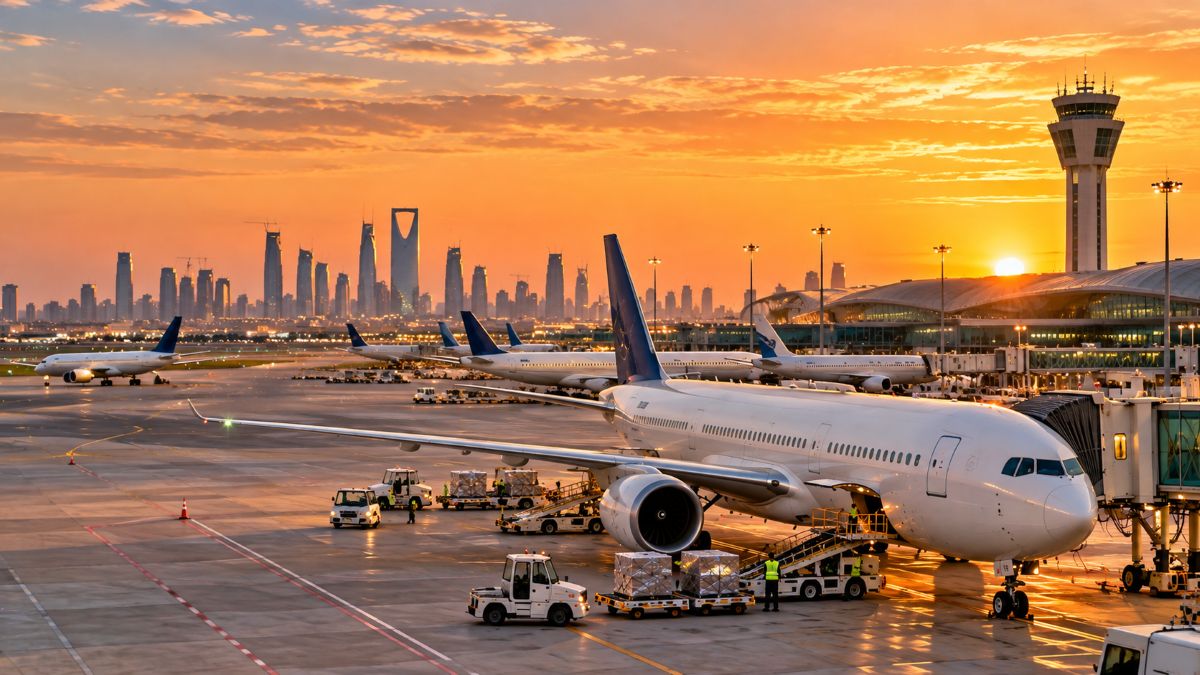
Jeddah, Madinah and Dammam maintain flights as Riyadh reportedly reopens under restrictions, signalling a cautious comeback for Saudi Arabia aviation following deadly attacks and regional airspace disruptions. While Jeddah and Madinah have seen selected international services resume, Dammam continues handling flights amid operational uncertainty. Meanwhile, Riyadh King Khalid International Airport has reportedly begun limited domestic operations after security inspections, although official confirmation of its reopening remains outstanding. The developments offer cautious hope for international tourists, business travellers and religious pilgrims. However, ongoing airspace warnings, airline schedule changes and security concerns mean passengers must verify their flights before departure.
Why Is Riyadh Airport Reopening Only to Limited Flight Operations?
King Khalid International Airport has faced significant operational disruption following two attacks on 8 October 2026.
Advertisement
Advertisement
Saudi Arabia’s General Authority of Civil Aviation confirmed that airport facilities and a Saudia aircraft were targeted.
The incidents resulted in three deaths, several injuries and property damage, according to official Saudi government statements.
Advertisement
Advertisement
Although GACA initially announced the resumption of airport operations on 9 October, authorities subsequently extended the suspension on 12 October to complete further safety assessments.
Reports on 21 October indicated that limited domestic services had resumed.
Advertisement
Advertisement
However, no independently verified government announcement establishes the number of operating flights, the percentage of normal capacity restored or the timetable for unrestricted international services.
| Date | Confirmed or reported development |
|---|---|
| 8 October 2026 | Two attacks targeted Riyadh Airport |
| 9 October 2026 | GACA confirmed casualties and damage |
| 9 October 2026 | Initial operational resumption announced |
| 12 October 2026 | Extended suspension confirmed |
| 21 October 2026 | Limited domestic reopening reported, awaiting official operational confirmation |
The distinction between reported reopening and officially confirmed flight availability remains important for travellers.
How Important Is King Khalid International Airport to Saudi Aviation?
Riyadh Airport is one of Saudi Arabia’s largest aviation gateways, supporting domestic connectivity, international business travel and tourism.
According to the Saudi General Authority for Statistics, King Khalid International Airport handled approximately 37.6 million passengers in 2024.
This represented an 18% increase compared with the previous year.
The airport ranked second nationally by passenger movements, behind King Abdulaziz International Airport in Jeddah.
Advertisement
Advertisement
| Saudi aviation indicator | Official 2024 figure |
|---|---|
| Total national airport passengers | More than 128 million |
| International passengers | 69 million |
| Domestic passengers | 59 million |
| Riyadh Airport passengers | 37.6 million |
| Jeddah Airport passengers | 49 million |
| Dammam Airport passengers | 12.8 million |
| Riyadh aircraft movements | Approximately 274,000 |
| Riyadh annual passenger capacity | 39 million |
| National air cargo | 1.2 million tonnes |
Riyadh accounted for approximately 29.4% of Saudi Arabia’s total passenger movements in 2024, based on rounded national figures.
These historical statistics demonstrate the airport’s importance but do not measure the October 2026 disruption.
What Are European Aviation Authorities Warning About Saudi Airspace?
The European Union Aviation Safety Agency issued Conflict Zone Information Bulletin CZIB-2026-09 on 30 September 2026.
The bulletin identifies potential aviation risks involving missiles, drones, air-defence activity and falling debris.
Its guidance applies to specified areas within the Jeddah Flight Information Region and remains scheduled for review by 16 November 2026.
EASA recommends avoiding operations within a defined portion of Saudi airspace while exercising caution elsewhere.
Advertisement
Advertisement
| Aviation safety indicator | Official information |
|---|---|
| Authority | European Union Aviation Safety Agency |
| Bulletin | CZIB-2026-09 |
| Issue date | 30 September 2026 |
| Scheduled validity | Until 16 November 2026 |
| Main concerns | Missiles, drones and falling debris |
| Affected airspace | Specified areas of Jeddah Flight Information Region |
| Recommended action | Avoid designated areas and exercise caution elsewhere |
The bulletin does not represent a complete closure of Saudi Arabian airspace.
Nevertheless, individual airlines may continue adjusting schedules according to operational assessments and safety requirements.
Which Other Saudi Airports Are Operating or Recovering Flights?
| Airport | City | Status supported by official sources | Impact on travellers |
|---|---|---|---|
| King Abdulaziz International Airport (JED) | Jeddah | Malaysia Airlines resumed scheduled services on 18 October after a temporary suspension | Improved access for international travellers and pilgrims, although some other airlines remain disrupted |
| Prince Mohammad bin Abdulaziz International Airport (MED) | Madinah | Malaysia Airlines resumed scheduled services on 18 October | Restored selected international connections for religious travellers |
| King Fahd International Airport (DMM) | Dammam | Government reporting confirms continuing operations with some disruption | Passengers must check individual flights, especially international connections |
| King Khalid International Airport (RUH) | Riyadh | Limited recovery reported following attacks and repeated operational restrictions | Flight availability remains uncertain and subject to safety assessments |
| Abha International Airport (AHB) | Abha | No separate official reopening announcement verified | Reports of route disruption should not be mistaken for confirmed airport closure |
| Taif International Airport (TIF) | Taif | No separate official reopening announcement verified | Travellers should check airline schedules individually |
The Indian government’s public broadcaster reported on 15 October that flights at Dammam, Jeddah and Madinah continued, although some services were disrupted.
What Are the Official Statistics for Saudi Arabia’s Major Airports?
The Saudi General Authority for Statistics published its 2025 aviation figures in May 2026.
| Aviation indicator | Official 2025 figure |
|---|---|
| Total Saudi airport passengers | 140.9 million |
| Annual passenger growth | 9.6% |
| International passengers | 75.8 million |
| Domestic passengers | 65.1 million |
| Total aircraft movements | 979,800 |
| International aircraft movements | 473,500 |
| Domestic aircraft movements | 506,300 |
| Countries connected internationally | 66 |
| International destinations served | 176 |
The same report identifies Jeddah as the country’s busiest airport, followed by Riyadh and Dammam.
| Airport | 2025 passengers | 2025 aircraft movements |
|---|---|---|
| King Abdulaziz International, Jeddah | 53.5 million | 314,400 |
| King Khalid International, Riyadh | 40.8 million | 296,800 |
| King Fahd International, Dammam | 13.7 million | 108,500 |
| Combined three-airport total | 108.0 million | 719,700 |
The three airports accounted for approximately 76.7% of Saudi Arabia’s total passenger movements in 2025.
Advertisement
Advertisement
These are historical annual statistics, not the number of passengers or flights operating during the October 2026 disruption.
How Does the United States Travel Advisory Affect International Visitors?
The United States Department of State maintains Saudi Arabia at Level 3, advising American citizens to reconsider travel.
Its 12 October 2026 update identifies armed conflict, terrorism, missile attacks and drone activity among the principal security concerns.
The advisory also acknowledges significant disruption to commercial aviation.
However, Level 3 does not represent a complete prohibition on travel.
| US advisory indicator | Current position |
|---|---|
| Destination | Saudi Arabia |
| Advisory level | Level 3 |
| Official recommendation | Reconsider travel |
| Relevant update | 12 October 2026 |
| Principal risks | Armed conflict, terrorism and aerial attacks |
| Commercial aviation | Significant operational disruption |
| US government employee airport access | Special authorisation required |
International travellers should check their national government’s advice before departure.
Advertisement
Advertisement
They should also confirm airline schedules because the reopening of airport facilities does not automatically mean that every commercial route has resumed.
What Other Transport Options Are Available Across Saudi Arabia?
Saudi Arabia’s railway network provides important domestic connectivity, particularly between major cities and transport hubs.
According to the Saudi Transport General Authority, more than 40.9 million railway passenger journeys were recorded during the third quarter of 2026.
Riyadh Metro accounted for approximately 30.4 million passengers.
Meanwhile, the Haramain High Speed Railway carried more than 1.9 million passengers.
| Saudi railway indicator | Third quarter 2026 |
|---|---|
| Total railway passengers | More than 40.9 million |
| Riyadh Metro passengers | 30.4 million |
| King Abdulaziz Airport automated train | 7 million |
| Haramain High Speed Railway | More than 1.9 million |
| Eastern railway network | Approximately 393,900 |
| Northern railway network | Approximately 258,600 |
| Railway freight | 3.9 million tonnes |
These figures demonstrate Saudi Arabia’s wider transport capacity.
Advertisement
Advertisement
However, railway services cannot automatically replace cancelled international flights, particularly for passengers travelling beyond the country.
How Could Riyadh Airport Disruption Affect Saudi Tourism?
The uncertainty surrounding Riyadh Airport creates practical challenges for international tourists, business travellers and passengers making onward connections.
Visitors may need to adjust accommodation reservations, airport transfers and planned activities if flights are cancelled or rescheduled.
Riyadh’s role as a major aviation gateway makes reliable airport operations important for Saudi Arabia’s tourism development.
However, no verified official figures establish the number of tourists stranded, hotel bookings cancelled or tourism revenue lost during the October disruption.
Similarly, the reported limited reopening does not establish that international connectivity has returned to normal.
Advertisement
Advertisement
For tourism businesses, the immediate priority is providing accurate travel information and helping affected visitors manage itinerary changes.
Clear communication from airlines and airport authorities remains essential for maintaining passenger confidence.
What Should Travellers Do Before Flying Through Riyadh?
Passengers should confirm their flight status directly with the operating airline before travelling to King Khalid International Airport.
Domestic passengers should check whether their specific service is operating, while international travellers must verify both departure and arrival arrangements.
Connecting passengers should confirm every sector of their itinerary.
| Traveller situation | Recommended action |
|---|---|
| Domestic flight | Confirm operating status |
| International departure | Check airline schedule |
| Connecting journey | Verify all flight sectors |
| Cancelled service | Request rebooking or refund options |
| Saudi citizens stranded abroad | Contact Saudi diplomatic missions |
| International tourists | Review government travel advisories |
| Passengers requiring assistance | Contact airline before departure |
Travellers should also monitor airport security announcements and follow instructions from local authorities.
Advertisement
Advertisement
Importantly, passengers should not assume that a reported partial reopening guarantees access to every terminal or flight.
Conclusion: What Does Riyadh Airport Recovery Mean for Middle East Travel?
Saudi Arabia’s aviation sector faces an important recovery period following the October attacks on King Khalid International Airport. The reported return of limited domestic flights offers a potential step towards restoring connectivity, but unrestricted international operations remain unconfirmed. Official figures demonstrate Riyadh’s importance, with 37.6 million passengers recorded in 2024. Meanwhile, European aviation safety guidance and the United States Level 3 advisory underline continuing security concerns. For international travellers, careful planning, airline confirmation and awareness of official restrictions remain essential. Ultimately, restoring dependable airport operations will be important for passenger confidence, business connectivity and Saudi tourism.
Comment by Anup Keshan, Founder and Editor-in-Chief of Travel And Tour World
“Saudi Arabia plays an increasingly important role in international aviation and tourism, making the safe restoration of Riyadh Airport operations particularly significant. The reported return of limited domestic services offers a potential step towards rebuilding connectivity after serious disruption. However, passenger safety must remain the highest priority throughout the recovery process. Travellers need reliable flight information, transparent airline communication and appropriate assistance when journeys are interrupted. Continued coordination between aviation authorities, airlines and tourism organisations can help restore confidence. Strong safety standards and dependable transport infrastructure will remain essential for supporting Saudi Arabia’s long-term tourism ambitions and international connectivity.”
Advertisement
