
Con Dao Ecotourism: Sustainable Sea Turtle Conservation & Travel Guide

Published
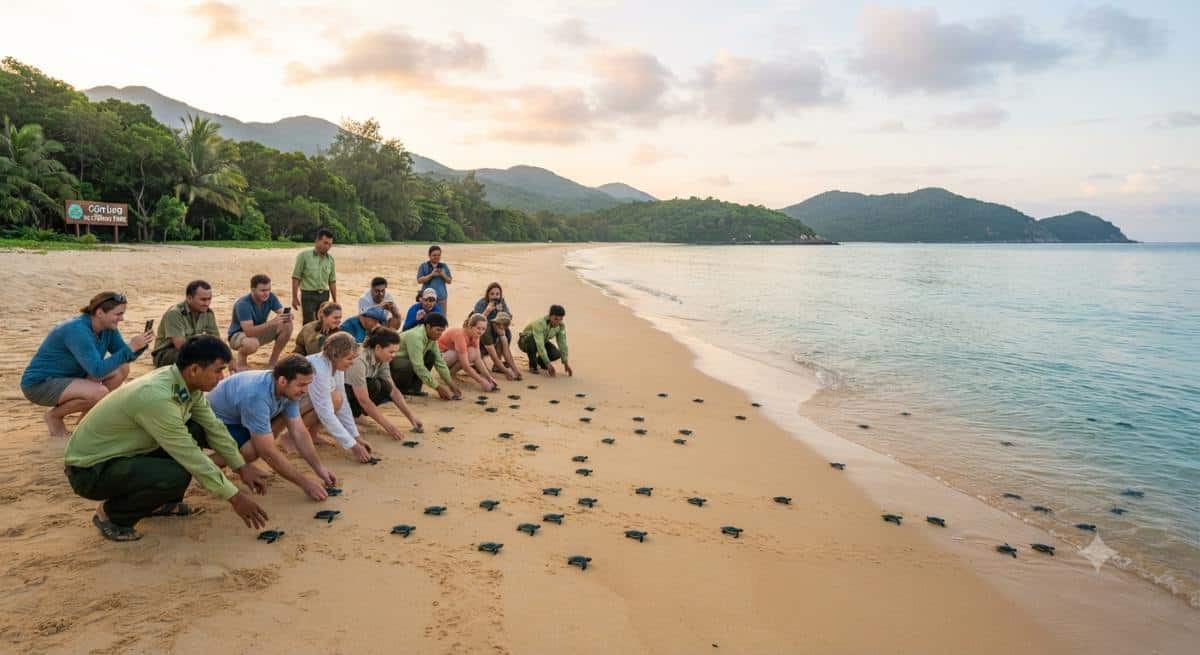
The historical and natural landscape of Con Dao National Park located within the Con Dao special zone serves as a vital sanctuary for marine biodiversity in Viet Nam. Renowned for its stunning natural scenery and profound historical significance, this destination represents one of the most critical nesting grounds for marine life in the country. Specifically, the territory accounts for approximately 90 percent of all sea turtles residing in the national waters. Every year, spanning from the month of May through October, mature mother turtles travel vast distances across open oceans to reach tranquil, undisturbed sandy beaches where they deposit their eggs safely.
Following the departure of the adult turtles back into the open sea, the newly hatched creatures encounter a formidable challenge regarding their survival. Scientific observations indicate that merely a single hatchling out of every one thousand to ten thousand individuals manages to reach maturity. Consequently, safeguarding individual nests and ensuring the secure transfer of hatchlings into the ocean environment plays an indispensable role in maintaining sustainable marine populations and preserving the overall equilibrium of the marine ecosystem.
Advertisement
Advertisement
Impact on Travellers
Tourists visiting the destination are granted opportunities that extend far beyond conventional sightseeing activities. Participants can actively engage in releasing baby sea turtles directly into the ocean waves, which transforms passive conservation concepts into deeply moving, educational travel experiences. When dawn breaks, tiny hatchlings emerge sequentially from designated incubation zones, making their way across the warm sand toward the rolling surf. This natural phenomenon unfolds rapidly, yet it leaves profound impressions on individuals who witness it firsthand.
Through direct involvement, travelers develop heightened awareness regarding environmental fragility and collective human responsibility toward nature. Visitors are invited to observe the delicate life cycles of marine animals, fostering a deep personal connection to ecological preservation. These interactive experiences reshape how vacationers perceive sustainable travel, shifting attention from mere leisure to active ecological stewardship and environmental mindfulness.
Advertisement
Advertisement
Industry Insights
Specialized programs and structured tours have been established to systematically merge environmental protection with leisure travel. Under formal initiatives such as the Nature Conservation Accompanying Sea Turtles program alongside targeted multi-day itineraries organized by local park authorities, travelers are permitted to visit specific locations including Bay Canh, Cau, and Tai islands. Guided closely by professional park rangers, participants gain comprehensive knowledge regarding nesting cycles and marine protection strategies.
Furthermore, academic and industry perspectives highlight that observing nesting patterns, studying fragile ecosystems, and releasing hatchlings can evolve into distinctive ecotourism assets when managed responsibly. Experts note that such a strategy successfully attracts environmentally conscious travelers while simultaneously generating vital financial resources to support ongoing protection efforts. Nevertheless, destination managers must strictly enforce regulatory frameworks to ensure that human presence does not disrupt natural habitats.
Advertisement
Advertisement
Practical Information
Additional community and athletic initiatives continue to expand the scope of conservation-focused tourism throughout the region. Notable projects such as the Run for Sea Turtles event, which was initially established in the year 2022, function as essential mechanisms for raising philanthropic funds dedicated to animal protection while promoting responsible travel habits. Over the course of multiple editions, the athletic gathering has successfully drawn thousands of participants and collected substantial financial contributions for conservation operations.
Future iterations of the sports event feature scenic coastal courses mapped out for sunrise hours, offering various distance categories tailored to diverse athletic groups. By merging physical sports with environmental education, the community creates another multifaceted attraction centered entirely on local wildlife and pristine surroundings. Travelers seeking to participate must coordinate directly with authorized park administration bodies to secure proper permissions and adhere strictly to all established conservation guidelines.
Comparison with Previous Policies or Developments
Earlier models of tourism management within the region predominantly focused on basic sightseeing, historical exploration, and unregulated leisure activities with minimal visitor participation in direct ecological maintenance. Traditional approaches often separated commercial travel development from environmental protection mandates, resulting in limited public engagement regarding habitat preservation.
In contrast, contemporary administrative frameworks deliberately integrate conservation duties into mainstream tourism portfolios. Modern developments utilize structured volunteer programs, educational guided tours, and charitable athletic events to actively involve the public in hands-on preservation tasks. This evolutionary shift demonstrates a progressive management style wherein commercial travel value is generated directly through active environmental restoration rather than passive consumption of natural assets.
Advertisement
