
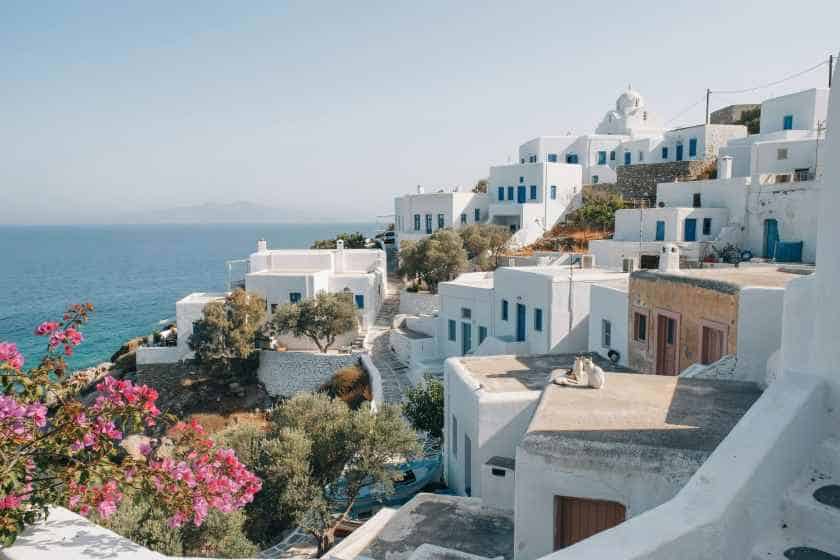
Image generated with Ai
Kionia, Tinos and the wider Cyclades region continue attracting increasing interest from cultural travellers as one of the Aegean’s most important religious and archaeological sites reveals the story of a sanctuary unlike any other in the Greek islands. Located near the coastal village of Kionia on Tinos, the Sanctuary of Poseidon stands as the only known sanctuary in the Cyclades dedicated exclusively to Poseidon, the powerful god of the sea.
Dating back to the 4th century BC, the sanctuary once served as a major pilgrimage centre, drawing worshippers, sailors and visitors from across the Aegean world. Today, the archaeological site offers travellers a remarkable opportunity to explore ancient temple foundations, mosaics, statues and unique artefacts while gaining insight into the religious traditions that shaped life in the Greek islands more than two thousand years ago.
Advertisement
For visitors seeking experiences beyond beaches and coastal resorts, the Sanctuary of Poseidon provides one of the most compelling cultural attractions on Tinos.
The Sanctuary of Poseidon occupies a special place within Greek archaeology.
Advertisement
Advertisement
While temples and sanctuaries dedicated to various gods and goddesses can be found throughout Greece, the site at Kionia is unique because it is the only known sanctuary in the Cyclades devoted exclusively to Poseidon.
This distinction highlights the importance of the sea in the lives of ancient island communities.
For centuries, maritime travel shaped trade, communication and daily life throughout the Aegean. Sailors and merchants relied on favourable conditions for survival and prosperity, making Poseidon one of the most significant deities in the region.
The sanctuary became a focal point for worship and pilgrimage, reflecting the deep connection between the people of the Cyclades and the surrounding sea.
Today, this unique heritage continues attracting visitors interested in ancient religion, maritime history and archaeology.
Poseidon was one of the principal gods of the ancient Greek pantheon.
As ruler of the seas, earthquakes and storms, he was widely revered across coastal communities and island settlements.
His influence extended far beyond mythology, affecting the practical realities of life for those who depended on maritime travel and fishing.
The establishment of a dedicated sanctuary on Tinos demonstrates the importance of his worship within the Cyclades.
Pilgrims likely travelled from neighbouring islands and mainland Greece to honour the god, seek protection for voyages and participate in religious ceremonies.
The sanctuary therefore functioned not only as a place of worship but also as a centre of social and cultural interaction.
For modern travellers, the site provides insight into the beliefs and traditions that shaped ancient maritime civilisation.
Although much of the original sanctuary has been lost to time, archaeological excavations have uncovered important structural remains.
Among the most significant discoveries are the foundations of the temple complex itself.
These remains allow researchers to reconstruct aspects of the sanctuary’s original layout and scale.
The foundations indicate that the site once formed part of an impressive religious centre that served worshippers over many centuries.
Visitors exploring the archaeological area can trace the outlines of ancient structures and gain a sense of how the sanctuary functioned during its peak.
The remains help bring the history of the site to life while illustrating the architectural traditions of the Classical Greek world.
Excavations have revealed far more than temple remains.
Archaeologists have uncovered drinking fountains, statues and decorative mosaics that provide additional insight into the sanctuary’s importance.
The fountains likely served practical and ceremonial purposes, supporting both daily activities and religious rituals.
Statues discovered at the site highlight the artistic achievements of the period and reflect the role of sculpture within sacred spaces.
The mosaics demonstrate the level of craftsmanship and attention to detail associated with important religious centres.
Together, these discoveries reveal a sanctuary that was not merely functional but also visually impressive and culturally significant.
For visitors, the artefacts help create a richer understanding of the environment experienced by ancient worshippers.
Among the most intriguing discoveries at Kionia is the Andronicus sundial.
This ancient timekeeping instrument provides evidence of scientific knowledge and technological sophistication within the Greek world.
Sundials played an important role in organising daily life and religious activities, allowing communities to measure time with remarkable accuracy.
The presence of such an instrument at the sanctuary highlights the broader functions of religious centres beyond worship alone.
For cultural tourists, the sundial offers a fascinating glimpse into how ancient societies combined science, astronomy and religion within everyday life.
It remains one of the site’s most distinctive archaeological treasures.
Visitors wishing to gain a deeper understanding of the sanctuary can continue their journey at the Tinos Archaeological Museum.
The museum houses important artefacts recovered from excavations and provides valuable context for interpreting the site.
One of its most notable exhibits is a scale model of the Sanctuary of Poseidon.
The model helps visitors visualise how the complex may have appeared during its height, offering perspectives that are difficult to obtain from the ruins alone.
The museum therefore complements the archaeological site, creating a more complete and engaging visitor experience.
For cultural travellers, combining both attractions provides a comprehensive introduction to one of the most important historical locations on Tinos.
Although Tinos is widely known for religious pilgrimages, traditional villages and coastal landscapes, the Sanctuary of Poseidon highlights another important dimension of the island’s identity.
The site attracts travellers interested in archaeology, ancient history and heritage tourism while helping diversify the island’s tourism offerings.
As demand for cultural experiences continues growing, attractions such as the sanctuary are becoming increasingly important in drawing visitors seeking meaningful connections with Greece’s past.
The combination of historical significance, archaeological discoveries and coastal scenery makes Kionia one of the most rewarding destinations in the Cyclades for heritage tourism.
4th Century BC
The Sanctuary of Poseidon is established near present-day Kionia on Tinos.
Classical and Hellenistic Periods
The sanctuary functions as an important pilgrimage and religious centre in the Cyclades.
Modern Archaeological Excavations
Researchers uncover temple remains, fountains, statues, mosaics and the Andronicus sundial.
Present Day
The site stands as the most important archaeological attraction on Tinos and a major destination for cultural tourism.
Kionia, Tinos and the Cyclades preserve an extraordinary chapter of ancient maritime history through the Sanctuary of Poseidon, the only known sanctuary in the region dedicated exclusively to the god of the sea. From its temple foundations and artistic treasures to its remarkable sundial and museum exhibits, the site reveals the profound connection between island communities and the Aegean waters that shaped their lives. As cultural tourism continues expanding across Greece, the Sanctuary of Poseidon offers travellers a unique opportunity to explore one of the Cyclades’ most distinctive and historically significant archaeological destinations.
Advertisement
Tags: Aegean Sea, ancient Greece travel, ancient Greek sanctuaries, archaeological attractions Tinos, Cyclades
Advertisement
Advertisement













Friday, September 4, 2026

Friday, September 4, 2026

Friday, September 4, 2026

Thursday, September 3, 2026

Wednesday, September 2, 2026

Friday, September 4, 2026

Friday, September 4, 2026