
North Carolina State Fair Drives Major Autumn Tourism Surge as Raleigh Welcomes Near-Million Visitors Through October 25

Published
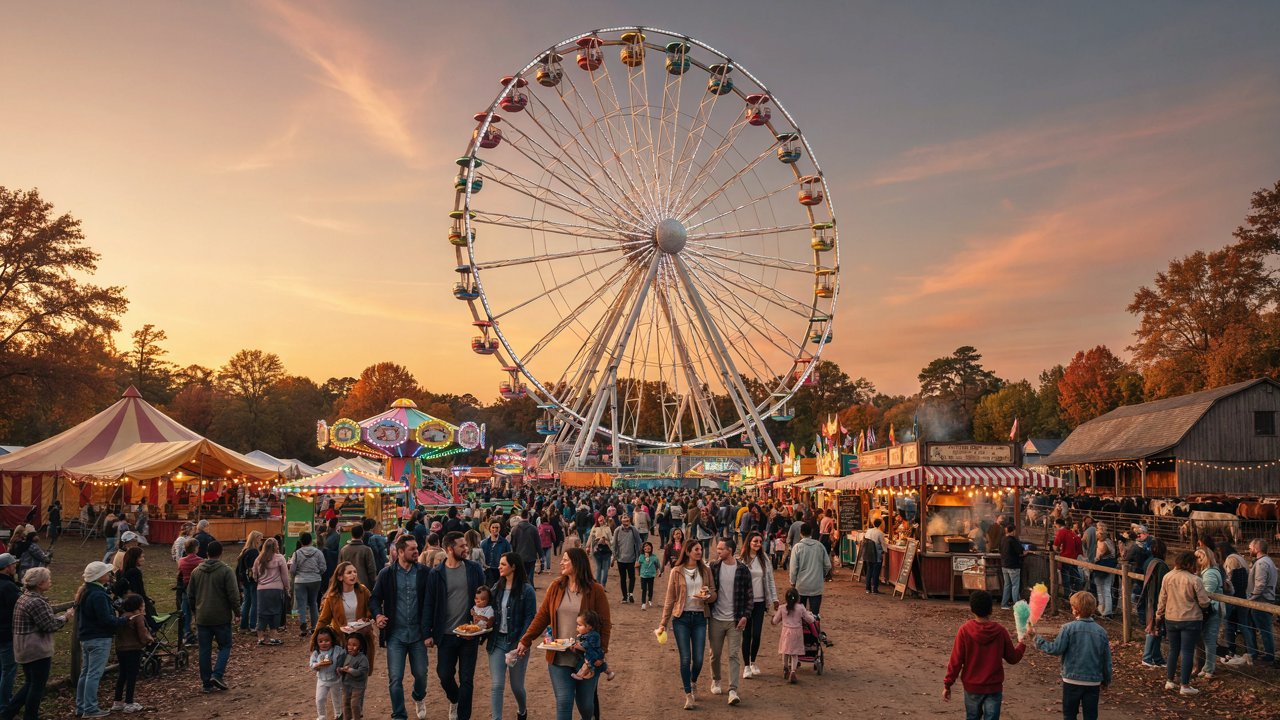
North Carolina State Fair Drives Major Autumn Tourism Surge as Raleigh Welcomes Near-Million Visitors Through October 25.The North Carolina State Fair 2026, taking place from 15 to 25 October at the North Carolina State Fairgrounds in Raleigh, USA, brings together agricultural exhibitions, livestock competitions, carnival rides, traditional crafts and regional food experiences. The 11-day celebration attracts families, farmers, exhibitors and travellers from across North Carolina and neighbouring states. With nearly one million visitors attending in some recent years, the fair plays an important role in supporting Raleigh’s tourism industry, local hotels, restaurants, transport services and small businesses. International agricultural events in Canada, France, the United Kingdom and Australia offer comparable experiences, highlighting the wider appeal of agricultural tourism. The fair also promotes North Carolina’s rural heritage, supports young agricultural professionals and strengthens connections between farming communities and urban visitors.
Where Does This Event Happen and Who Is Participating?
The fair takes place directly at the North Carolina State Fairgrounds, situated at 4285 Trinity Road in West Raleigh, flanked by Carter-Finley Stadium and the Lenovo Center.
Unlike purely commercial street carnivals, the North Carolina State Fair operates as a statutory agrarian showcase and civic institution:
- Agricultural & Livestock Showcases: Over 4,000 animals compete across the Jim Graham Building, Exposition Center, and the Gov. James B. Hunt Jr. Horse Complex. Participants include youth breeders from North Carolina 4-H and Future Farmers of America (FFA) chapters alongside veteran cattle, swine, dairy goat, and sheep ranchers.
- Heritage Artisans & Cultural Groups: The Village of Yesteryear features traditional master woodcarvers, blacksmiths, and textile weavers. Nearby, the Heritage Circle Folk Festival stages over 1,500 folk musicians, cloggers, and square dancers competing for the Bascom Lamar Lunsford Trophy.
- Agribusiness Commercial Vendors & Food Operators: More than 700 commercial, institutional, and food vendors populate the midway. Highlighting regional agribusiness, the NC Public House and Got to Be NC pavilion showcase dozens of independent Tar Heel breweries, wineries, cideries, and small-batch food manufacturers.
- Midway Carnival & Entertainment: Powers Great American Midways operates over 90 mechanical thrill rides and attractions, anchored by the 155-foot SkyGazer Ferris wheel and the permanent State Fair Flyer sky ride.
What Is the 5-Year Attendance Comparison?
Audited gate statistics, turnstile telemetry, and transportation filings released by the North Carolina Department of Agriculture and Consumer Services (NCDA&CS) reflect resilient post-pandemic recovery and consistent box-office volume:
Advertisement
Advertisement
| Year | Edition | Total Audited Attendance | Peak Single-Day Turnout | Operational Dynamics & Weather Catalysts |
| 2021 | 153rd | ~822,410 | ~118,000 (2nd Sat) | First physical staging post-2020 disruption; clear bag protocols enacted. |
| 2022 | 154th | ~960,172 | ~132,000 (2nd Sat) | Unrestricted return of school field trips; launch of expanded local music stages. |
| 2023 | 155th | 926,425 | ~129,500 (2nd Sat) | Resilient attendance despite intermittent mid-week rain bands. |
| 2024 | 156th | 998,926 | ~136,000 (2nd Sat) | 6th highest turnout in fair history; major relief benefit for MANNA FoodBank. |
| 2025 | 157th | ~985,000+ | ~134,000 (2nd Sat) | Strong weekend turnstile pacing; record participation in junior livestock auctions. |
| 2026 | 158th (Current) | ~980,000–1,000,000 (Paced) | Tracking Peak | Pacing toward 1 million benchmark through closing weekend on Oct. 25. |
Which Other Countries Have This Same Event?
While the North Carolina State Fair is unique to Raleigh, sovereign agricultural nations worldwide celebrate harvest and agrarian enterprise with structurally identical multi-day agricultural expositions:
- Canada (The Royal Agricultural Winter Fair, Toronto & Pacific National Exhibition, Vancouver): Combines indoor agricultural judging, draft horse competitions, and regional crop markets with massive public midways.
- France (Salon International de l’Agriculture, Paris): Europe’s flagship national agricultural fair, drawing over 600,000 visitors to competitive regional cattle judging, agricultural policy summits, and regional culinary corridors.
- United Kingdom (The Royal Welsh Show, Llanelwedd & Royal Highland Show, Edinburgh): Century-old agricultural gatherings that unite forestry competitions, competitive livestock judging, and rural artisanal trade.
- Australia (Sydney Royal Easter Show, New South Wales): Staged at Sydney Olympic Park over twelve days, pairing competitive agriculture and woodchopping championships with midway thrills.
- Germany (Kieler Woche Harvest Fairs & Bavarian Central Agricultural Festivals): Structured state-level exhibitions combining livestock breeding competitions with folk carnival midways.
Which Region of Travelers Comes to This Event Most?
Mobility analytics and passenger telemetry monitored by the Economic Development Partnership of North Carolina (EDPNC) and state transport bodies outline three clear inbound pipelines:
Advertisement
Advertisement
- North Carolina Drive Core (Over 78% of Gate Volume): Commuters arrive along the Interstate 40, Interstate 85, and US-1 corridors. The Research Triangle (Wake, Durham, Orange counties) provides steady weekday evening traffic, while the Piedmont, Sandhills, and Coastal Plain regions dominate weekend family day-trips.
- Southeastern Interstate Basin (Roughly 16% of Inbound Arrivals): Travelers commute 2 to 5 hours from Virginia, South Carolina, Tennessee, and northern Georgia, driving weekend hotel bookings across Wake County.
- Out-of-Region & Transatlantic Agronomists (~6% of Visitors): Specialized agricultural science delegates, university researchers, and seasonal international road-trippers arriving via Raleigh-Durham International Airport (RDU).
To mitigate highway gridlock, the state-supported NC By Train service sets up a dedicated passenger platform at the fairgrounds, connecting passengers along Amtrak’s Piedmont and Carolinian rail lines directly from Charlotte, Greensboro, and Selma.
Which Country Benefits Most and How Are Tourism and the Economy Impacted?
The United States—and specifically the State of North Carolina, Wake County, and the City of Raleigh—stands as the primary economic beneficiary.
Advertisement
Advertisement
- Direct Regional Economic Footprint: According to statewide economic benchmarks published by the State of North Carolina (NC.gov) and destination data from Visit NC (EDPNC), the 11-day fair injects an estimated $100 million to $115 million into the regional economy through dining, fuel, retail, and hospitality.
- Hospitality and Hotel Compression: Hotels across West Raleigh, Downtown Raleigh, Cary, and RTP regularly exceed 88% to 94% occupancy during peak fair weekends, generating county occupancy taxes that support municipal civic funds.
- Reinvestment in Agricultural Capital: The fair receives no direct state legislative tax funding; it is fully self-supporting. Operational profits are directly reinvested into capital improvements on the fairgrounds, while the Junior Livestock Sale of Champions auctions hundreds of thousands of dollars directly into collegiate youth scholarships and rural development grants.
By converting regional agrarian heritage into a high-density autumn tourism engine, the North Carolina State Fair remains one of the South’s most vital municipal economic drivers.
Raleigh’s Iconic Agricultural Celebration Creates Lasting Tourism Opportunities
The North Carolina State Fair 2026 demonstrates how agricultural traditions can support tourism growth and regional economic development. Beyond its carnival attractions and livestock competitions, the event creates opportunities for local businesses, hospitality providers, food producers and agricultural communities. Its combination of rural heritage, family entertainment and cultural experiences makes Raleigh an attractive autumn travel destination. As visitors explore the fairgrounds, nearby attractions and surrounding communities, the benefits can extend across Wake County and the wider state. Although final 2026 attendance and economic impact figures remain unconfirmed, the fair’s established popularity highlights its importance to North Carolina’s visitor economy. For travellers seeking authentic American culture, agricultural experiences and seasonal entertainment, the North Carolina State Fair remains one of the state’s most distinctive annual celebrations.
Advertisement
