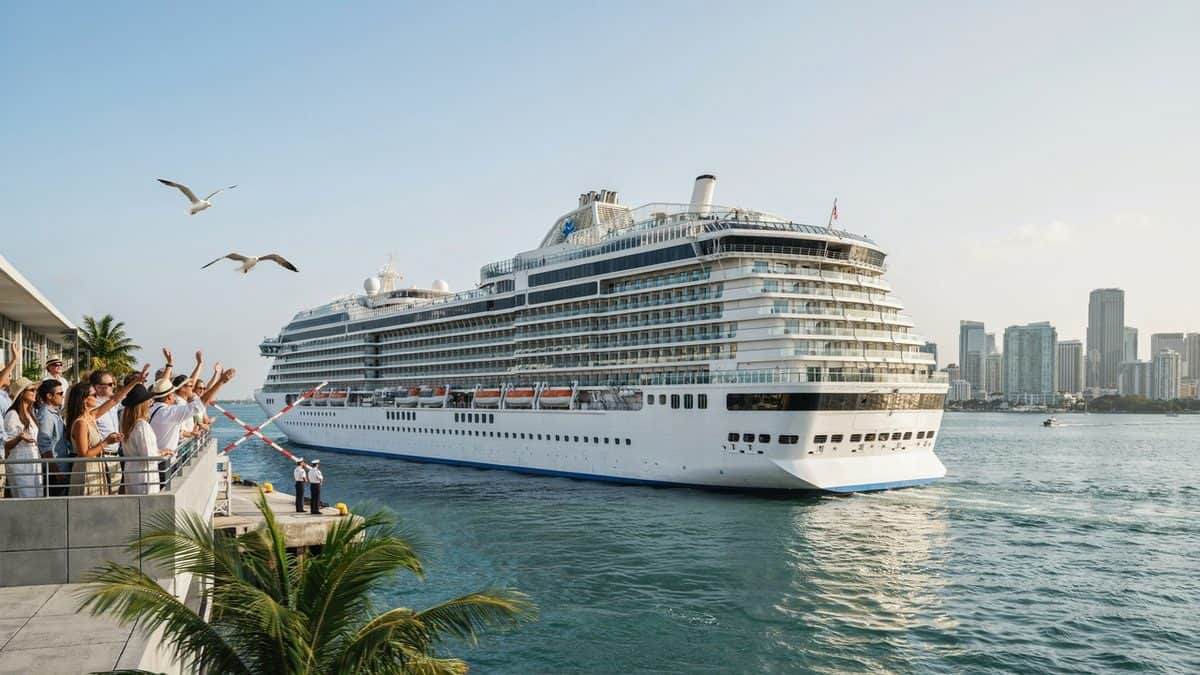
Image generated with Ai
The United States has become the centre of the global cruise tourism economy, driven by strong passenger demand, expanding ship capacity and growing interest in experience-based holidays. Cruise travel has recovered strongly after the pandemic disruption, with American travellers once again becoming the world’s largest cruise customer base.
According to the Cruise Lines International Association (CLIA), global ocean cruise passenger volume reached 34.6 million travellers in 2024, exceeding previous records. The industry is projected to continue expanding through 2025 and 2026 as cruise companies introduce larger vessels, new destinations and improved passenger experiences.
Advertisement
| Category | Latest Data | Tourism Impact |
|---|---|---|
| Global cruise passengers | 34.6 million passengers in 2024 | Strong recovery and record demand |
| US cruise passengers | More than 17 million Americans cruise annually | Largest cruise traveller market worldwide |
| Global cruise economic impact | More than $168 billion contribution | Supports jobs, ports and tourism businesses |
| Cruise industry employment | Around 1.6 million jobs globally | Strengthens travel economy |
| Average cruise capacity growth | Hundreds of new ships and expansions planned | More choices for travellers |
| Florida cruise ports | Among the busiest cruise hubs globally | Major gateway for Caribbean tourism |
Florida has strengthened its position as the world’s leading cruise departure region, with Miami, Port Canaveral and Fort Lauderdale handling millions of passengers every year.
The state benefits from its location near the Caribbean, strong airport connectivity and year-round warm weather. These factors make Florida the preferred starting point for Caribbean cruise holidays.
Advertisement
| Port | Importance |
|---|---|
| PortMiami | One of the world’s busiest cruise ports and a major Caribbean gateway |
| Port Canaveral | Major hub for family and mega-ship cruises |
| Port Everglades, Fort Lauderdale | Key port for international cruise operations |
The growth of Florida’s cruise sector also supports hotels, restaurants, transport companies and local tourism businesses.
Carnival Cruise Line’s launch of Carnival Rewards highlights a major shift in how cruise companies compete for passengers. Instead of focusing only on sailing frequency, cruise brands are building wider travel ecosystems that reward spending, engagement and long-term loyalty.
Carnival’s programme allows guests to earn points and status through eligible cruise purchases, onboard spending and partner activities. The company also introduced milestone recognition based on sailing achievements.
| Feature | Traveller Benefit |
|---|---|
| Reward points | More value from cruise spending |
| Status stars | Higher recognition levels |
| Mastercard partnership | Rewards beyond cruise holidays |
| Sailing milestones | Benefits for long-term passengers |
Royal Caribbean has become one of the strongest symbols of America’s mega-ship cruise expansion.
The company’s strategy focuses on:
The growth of mega-ships is changing cruise tourism by turning vessels into complete holiday destinations.
| Trend | Impact |
|---|---|
| Bigger ships | Higher passenger capacity |
| Private destinations | New cruise-only tourism experiences |
| Premium services | Increased traveller spending |
Norwegian Cruise Line continues to strengthen its position through flexible cruise experiences and loyalty incentives.
The company attracts travellers through:
The strategy reflects a wider US cruise industry movement where companies compete not only for bookings but for repeat customer relationships.
Although the United States dominates cruise passenger demand, European operators are becoming stronger global competitors.
MSC Cruises, based in Italy, has expanded rapidly through Mediterranean routes, new ships and loyalty programmes.
| Region | Cruise Strength |
|---|---|
| United States | Largest passenger source market |
| Italy | Mediterranean cruise powerhouse |
| Spain | Major European cruise destination |
| Greece | Strong island cruise tourism |
| Caribbean | High-value cruise destination market |
The 2025–26 cruise market is expected to focus on personalisation, digital rewards and premium experiences. Cruise companies are moving from simple holiday packages towards complete lifestyle ecosystems.
The loyalty competition between Carnival, Royal Caribbean and Norwegian shows how the US cruise industry is preparing for the next generation of travellers.
Future growth will depend on:
The United States is not only the world’s biggest cruise market but also the main testing ground for how global cruise tourism will evolve in the coming decade.
Advertisement
Advertisement
Advertisement












Wednesday, September 2, 2026

Tuesday, September 1, 2026

Wednesday, September 2, 2026

Wednesday, September 2, 2026

Tuesday, September 1, 2026

Tuesday, September 1, 2026

Tuesday, September 1, 2026

Tuesday, September 1, 2026



