

Australian Travellers Are Finding Their Way Back to Island Holidays

Published
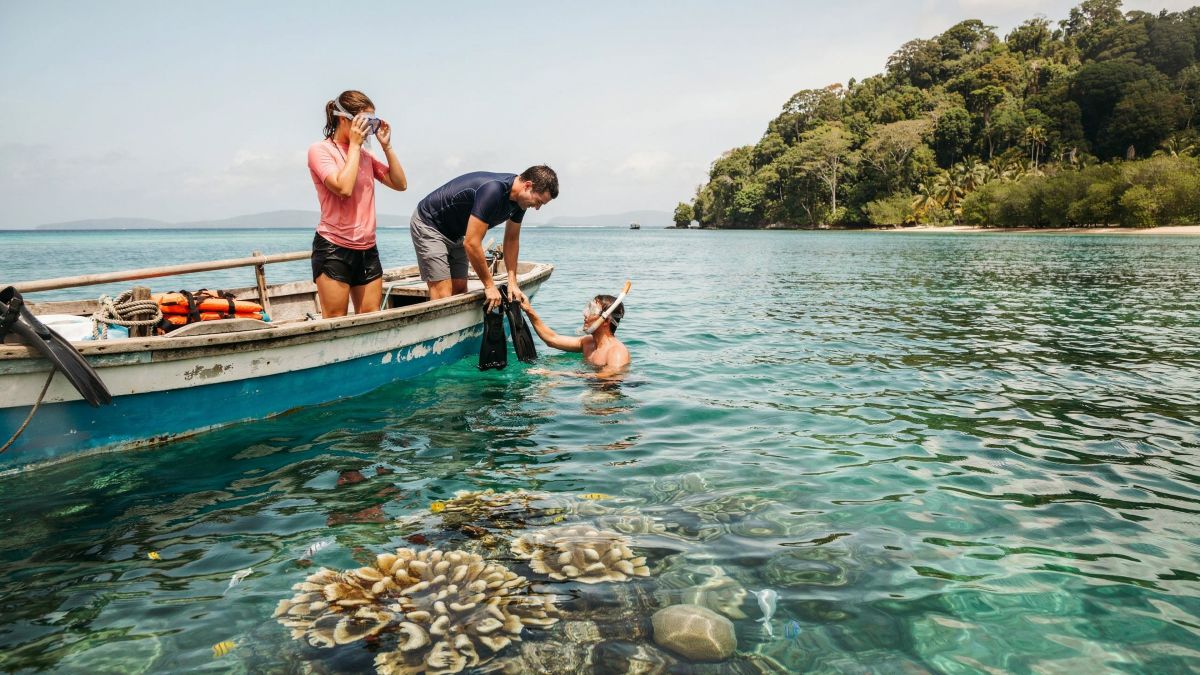
Tourism Revival in Vanuatu as Australian Tourists Come Back to Its Island Experience, presenting some positive prospects for the island communities and local businesses. The latest statistics on arrival reveal an increase in the number of tourists, but the destination is still among the top choices for Australian tourists. Nevertheless, there is much more in the situation than just increased numbers of tourists. The better connectivity by air allows tourists to get to Santo and go further than Port Vila. On the other hand, such activities as diving, beaches and nature tours are excellent reasons to prolong one’s stay in the destination.
What do the latest visitor figures show?
Vanuatu recorded 11,106 international visitors arriving by air in August 2026. That was 20% more than in August 2025, though 9% fewer than in July. Holidays made up 80% of air visitor arrivals. Australia was the leading source market, at 54%. Visitors stayed for an average of 11 days. The Vanuatu Bureau of Statistics says its monthly arrival figures are provisional while it checks the data with other government departments.
New Caledonia’s numbers also rose. It welcomed 39,646 international tourists between January and July 2026, up 41% on the same period in 2025. Yet the total was still 40% below the same period in 2023. That earlier year gives a useful measure of how much ground the destination has to regain. The figures show a clear rebound, but they do not yet point to a full return to earlier visitor levels.
Why does Australia matter to the Pacific rebound?
Australia is both a nearby source of visitors and a hub for flights to the islands. In Vanuatu, it was the biggest source market for air arrivals in August. New Zealand ranked second, at 14%. This places Australian travellers at the centre of Vanuatu’s current visitor market.
Advertisement
Advertisement
Australia is important to New Caledonia, too. The territory welcomed 6,832 Australian tourists in the first half of 2026. That was a 73% increase on the first half of 2025. Yet the total remained 53% below the same period in 2023. The rising number suggests Australian demand is returning, while the gap shows that much of the recovery is still ahead.
This makes Australia a useful focus for the story. Rather than treating the two destinations as one market, the article can ask how Australian travellers reach them, which islands they visit and what they do once they arrive.
Advertisement
Advertisement
Are more visitors reaching Vanuatu beyond Port Vila?
Vanuatu’s first-half tourism figures show the scale of the recovery. Visitor arrivals grew by about 30% between January and June 2026 compared with the same period a year earlier. A tourism survey estimated the sector’s economic contribution at US$87.8 million during those six months. Holiday travel was the main reason for visits, at 81% of surveyed visitors.
Santo is a key part of the island-access story. Solomon Airlines began a second direct Brisbane–Santo service in April, taking the route to two weekly flights. Direct access can save some travellers the need to connect through Port Vila. The route gives visitors a more direct path to Santo’s diving, beaches and local experiences.
However, flight schedules can change. In September, Solomon Airlines announced a reduced international operating plan because one aircraft was undergoing repairs, alongside fuel costs and other operating pressures. The airline said Brisbane–Santo would remain at two weekly services, with a change proposed to the second flight’s day. The announcement shows why visitors and tour operators need to check current schedules before fixing island stays and transfers.
Can New Caledonia’s domestic flights help visitors see more islands?
New Caledonia has made changes to its domestic flight network in 2026. Air Calédonie moved its domestic operations from Magenta Airport in Nouméa to La Tontouta International Airport on 2 March. Flights to the Isle of Pines resumed on 30 March, while services to Lifou began operating from La Tontouta on 3 June. Both islands are around a 40-minute flight from the international airport.
Ouvéa’s connection returned later in the year. Air Calédonie resumed flights there on 10 September, after a suspension that began on 2 March. The flights now operate from La Tontouta, allowing travellers to continue to the island without first transferring through Nouméa. The schedule is expected to change gradually according to demand.
These changes could make it easier to build trips around more than the capital. The next question is whether easier connections lead to more stays and spending on the islands. The flight announcements confirm that links have returned. They do not yet show how much extra visitor income the links have generated.
Advertisement
Advertisement
Could diving give travellers a stronger reason to visit?
Diving gives Vanuatu and New Caledonia a powerful way to stand out. Vanuatu offers very different underwater experiences across its islands. Santo is known for the SS President Coolidge wreck. Efate has sheltered sites that can suit new divers. Tanna offers cave diving. Visitors should match each dive site to their experience and qualification level.
New Caledonia offers a wide range of reef and lagoon sites. These include locations around Hienghène, Poindimié, Lifou, the Isle of Pines and Bourail. Sites feature arches, caves, coral formations and deeper passages. These options let the territory appeal to beginners and experienced divers, as well as visitors who want more than a beach stay.
Still, diving’s appeal should not be presented as the proven cause of visitor growth. The official arrival data record where people come from and how many arrive. They do not show how many booked a dive. A sound article can explain how diving strengthens the tourism offer while being clear that its share of the 2026 rise has not been measured in the figures reviewed.
Does ecotourism match what visitors say they want?
A first-half visitor survey in Vanuatu found strong interest in responsible tourism. Ninety-one per cent of respondents said it mattered to them. Sixty-three per cent said they were likely to choose an operator based on its sustainability practices. The survey also found that 95% would recommend Vanuatu and 80% said they would return.
These results are encouraging, but the survey had 299 valid responses from 1,473 invitations. Its findings describe the respondents. They should not be treated as a full count of every visitor’s views. That detail gives the article useful balance: travellers show interest in responsible tourism, while the survey has a limited number of replies.
Vanuatu lists activities such as rainforest visits, hiking, canoe trips, snorkelling, whale watching and wildlife viewing as ecotourism opportunities. The aim is to help protect the environment and support local people. The article can examine how that goal works in practice by asking about local guides, community income and conservation support.
Advertisement
Advertisement
Why do New Caledonia’s reefs need careful management?
New Caledonia’s lagoons are more than a scenic draw. UNESCO recognises six marine clusters for their reef diversity and associated ecosystems. The area includes habitats such as mangroves, seagrass beds and coral reefs. UNESCO also says tourism growth needs careful planning and management to help protect the site.
This makes conservation central to the destination’s future. More visitors can support guides, accommodation and transport businesses. They also bring more pressure to manage busy sites, water quality and access. The available facts do not establish that tourism caused a particular change in reef health. The article should therefore focus on the need for responsible management rather than claim that visitor growth is already damaging the lagoons.
What does Amédée Islet reveal about the work behind tourism?
A current example comes from Amédée Islet, a popular lagoon destination near Nouméa. In October, New Caledonia Tourism reported work to address changes to the coastline and erosion. Crews removed old concrete slabs and strengthened the walkway linking the wharf to the islet. The tourism authority said the islet remained open and excursions continued during the work.
Province Sud says the coastline at Amédée is being affected by erosion. It also reported that the works are funded by the French state through a development contract and a reconstruction plan. A separate environmental assessment covers plans to rebuild damaged tourist facilities with structures designed for local conditions and future climate pressures.
This is a strong way to show that tourism depends on more than new flights and visitor campaigns. Destinations must also maintain the paths, wharves and facilities that let visitors reach the places they came to see.
Do cruise passengers and overnight tourists support the same recovery?
The visitor figures show why the article should distinguish between cruise passengers and tourists arriving by air. In Vanuatu, four cruise ships brought 11,820 day visitors in August. That month’s 11,106 international air visitors are counted separately. These groups have different trip lengths and may spend money in different ways.
Advertisement
Advertisement
New Caledonia also saw these visitor types move in different directions. In the second quarter of 2026, international tourist arrivals rose 37% year on year, while the number of cruise visitors fell 14% to about 52,300. The figures suggest that overnight tourism and cruise travel did not follow the same path during the period. They do not, on their own, reveal how much either group spent locally.
That distinction will help readers understand what “tourism growth” means. A higher day-visitor count does not automatically mean more hotel nights. To measure the wider benefit, the report would need data on visitor spending and the businesses that receive it.
Can New Caledonia meet its long-term tourism target?
New Caledonia’s government has set a target of welcoming at least 250,000 tourists by 2032, the year Brisbane hosts the Olympic Games. The territory welcomed more than 126,000 tourists in 2023, excluding cruise passengers. Its recovery plan calls for stronger promotion, improved air access and a wider range of tourism activities. These are government goals and plans, not guaranteed results.
The 2026 figures make the scale of that ambition clear. Arrivals are rising, but the territory still sits below its 2023 level. To reach the longer-term target, it will need to rebuild visitor confidence, maintain useful air links and support accommodation and activities across the islands.
Australia is part of that plan. It is one of the priority markets named in New Caledonia’s recovery strategy. In September, an Australian government minister also identified tourism as an area for stronger ties with the territory.
What should Australian travellers know before booking?
Travel advice differs between the two destinations. As of 13 October 2026, Australia advised travellers to exercise normal safety precautions in Vanuatu. For New Caledonia, the advice was to exercise a high degree of caution, citing the risk of civil disorder and violence. Travellers were also warned that flights may be suspended with little notice.
Advertisement
Advertisement
Vanuatu’s advice notes that reconstruction continues in parts of Port Vila following the December 2024 earthquake. It also reports a dengue outbreak declared in June in the south of Efate Island. New Caledonia’s advice highlights political tensions and possible disruptions to transport and flights. Travellers should check current official advice and airline updates when planning their trip.
These practical details belong in any article aimed at Australians. They help explain the difference between renewed interest in a destination and the conditions travellers should consider before they go.
A recovery story that reaches beyond the arrival gate
The tourism comeback of Vanuatu and New Caledonia takes off in 2026 with the re-opening of the Pacific routes from Australia, bringing new opportunities for two beautiful islands. What does the new-found interest in the destination hold for the islands’ local population? Numbers confirm that there are indeed new arrivals, with tourists from Australia still being an important element of the comeback. It is one thing to experience growth, but it does not say everything. Better connectivity will help the visitors get to Santo, Lifou and Ouvéa Islands, and dive vacations and tours will attract them further from the capital cities. However, the destination should make sure to preserve the reefs, coasts and the culture of its locals.
Advertisement
