
France Joins Germany and Others as US Airlines Push for Faster EES Border Checks Across Major European Destinations

Published
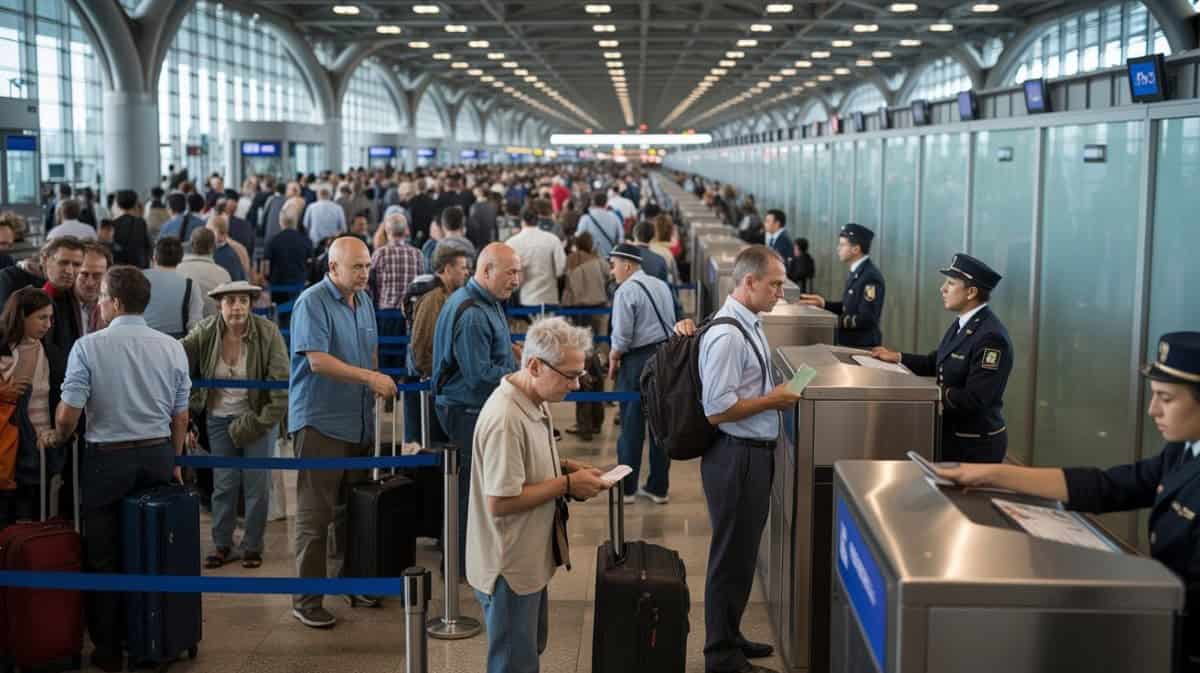
France joins Germany and others among the major European destinations in focus as US airlines push for faster Entry/Exit System (EES) border checks across the Schengen area. On 22 October, Airlines for America backed six proposed reforms to reduce repeated checks, improve biometric processing and address long queues that can disrupt holidays and flight connections. For travellers heading to France, Germany, Italy and Spain, the goal is a more predictable journey. These remain industry proposals, with existing entry requirements still applying.
Six EES Reforms That Could Save Travellers Time
On 22 October, Airlines for America (A4A) backed a six-point European industry plan. Its endorsement seeks practical changes while supporting border security. The countries named here are affected destinations; the statement does not announce a joint agreement by their governments.
Airlines for Europe and ACI EUROPE published their proposals on 12 October. Each targets a different part of border processing.
| Reform sought | What it could improve |
|---|---|
| Remove repeated verification | Reduce unnecessary duplicate checks. |
| Streamline biometric verification | Process identity checks more efficiently. |
| Prevent duplicate EES profiles | Keep traveller records consistent. |
| Improve the Travel to Europe app and portal | Make preparation before arrival more useful. |
| Expand consistent automated border controls | Help eligible non-EU travellers use automated processing. |
| Restore permanent flexibility during excessive queues | Allow authorities to pause biometric registration temporarily. |
The last proposal requires particular care. It requests a mechanism authorities could use. It gives passengers no right to decline checks and provides no guaranteed waiting time.
Advertisement
Advertisement
Your EES Check May Come Before Your Holiday Destination
Find the external Schengen border crossing in your itinerary. That determines where EES entry or exit processing takes place.
| Illustrative journey | Where the EES check falls |
|---|---|
| New York–Paris–Rome | Entry in Paris, before the flight to Rome. |
| Madrid–Frankfurt–New York | Exit in Frankfurt, before the transatlantic flight. |
These examples follow Frontex’s official guidance. A passenger staying within an international transit area without entering Schengen is a different case.
Advertisement
Advertisement
The planning insight is simple: assess the connecting airport alongside the destination. A Paris border queue can consume time intended for a Rome connection. On the return journey, exit processing can use part of the transfer window in Frankfurt.
What Two-Hour Border Queues Mean for Your Flight
ACI EUROPE and Airlines for Europe reported waits routinely exceeding two hours, reaching five hours in extreme peak cases. Their 12 October release linked congestion with missed flights and connections.
However, the statement provides no airport-by-airport measurements or detailed sampling method. Those figures cannot predict the queue at your terminal or justify labelling every French, German, Italian or Spanish airport equally affected.
The practical response is route-specific preparation. Follow current airline and airport instructions, especially when onward transport depends on clearing passport control. No official source reviewed establishes one connection allowance that guarantees a smooth journey everywhere.
Why These Four European Countries Matter to US Travellers
The latest listed US government quarterly air-travel survey provides useful scale. It estimates 15.9 million US-resident overseas air departures in April–June 2026. The findings were released on 16 October.
| Destination | Share of US-resident overseas air travellers visiting |
|---|---|
| France | 8.6% |
| Germany | 5.0% |
| Italy | 11.1% |
| Spain | 6.9% |
“Overseas” excludes Canada and Mexico. These figures cover residents, not exclusively US passport holders. Country totals overlap because one journey can include several destinations.
Advertisement
Advertisement
A4A also cites 20 new routes added by its members during 2026. Together, the evidence explains the commercial stakes: growing flight choice works better for travellers when the border process supports the rest of their itinerary. Neither source measures booking losses caused by EES.
Airport Queue Times Need Their Own Performance Test
The European Commission confirms that EES became fully operational across 29 countries on 10 April 2026. It records eligible non-EU travellers’ external border movements and helps detect overstays and document fraud.
In an article published on 13 October, eu-LISA described its central system as stable and reliable. It also identified national technology, passenger-flow design and trained border staff as separate responsibilities.
The implication matters: a working database and a predictable passenger journey measure different things.
The Commission had recorded more than 150 million entries and exits by 6 August. That is a count of movements, not unique visitors or an October total. It demonstrates scale without showing how long passengers waited.
Travel to Europe App: Check Your Airport Before Relying on It
The app’s potential value lies in moving suitable preparation ahead of the airport queue. Its usefulness depends on local availability and supported functions.
Advertisement
Advertisement
Frontex says the app is free and cannot collect fingerprints. Where supported, travellers can submit journey details no earlier than 72 hours before travel. Border officers still check documents and decide admission.
Check the actual crossing before using it. If pre-registration fails, regular border processing remains available. The useful question is whether the tool removes a step from your journey; a successful submission alone does not establish shorter waiting times.
EES Travel Checklist: Protect Your Arrival and Return
Keep these essentials close when planning:
- Budget time for both directions. EES applies at external entry and exit. Online airline check-in does not remove the border check.
- Expect free registration. Eligible first-time visa-exempt visitors normally provide passport details, a facial image and fingerprints. Children under 12 do not provide fingerprints.
- Carry exemption documents. A qualifying residence permit or long-stay visa issued by an EES country can exempt its holder.
- Count your Schengen days. The usual short-stay limit remains 90 days within any rolling 180 days across the area.
- Separate EES from ETIAS. On 23 October, the official ETIAS website still states that it is not operating and accepts no applications.
Already registered? UK government guidance says later crossings normally involve scanning the passport and confirming identity with a facial image or fingerprint. An existing valid record can make processing more straightforward, but travellers still pass border control. Previous registration does not promise priority access. Families should also remember that children under 12 remain subject to registration even though they do not provide fingerprints.
What Would Make Faster European Border Checks Meaningful?
A Council agenda dated 19 October schedules an EES update from the Commission and eu-LISA for 28 October. It does not announce approval of the six-point industry plan.
For travellers, useful proof of progress would include:
Advertisement
Advertisement
- Shorter usual waits and fewer extreme delays.
- Fewer repeated or unsuccessful registration steps.
- Clear assistance when automated processing cannot be completed.
- Reliable information for planning connections.
These are proposed measures of success, not results already established.
For visitors to France, Germany, Italy and Spain, the real benefit would be a more dependable journey from landing to onward transport. Faster identity checks matter most when they give passengers greater confidence in the whole trip.
| Focus | Update or improvement to look for | What it means for travellers |
|---|---|---|
| Next EU review | The 19 October agenda schedules an EES update for 28 October 2026. | Further information is expected; the agenda does not approve the six-point reform plan. |
| Border queues | Shorter typical waits and fewer extreme delays. | More predictable arrivals and departures. |
| Registration | Fewer repeated checks or unsuccessful registration steps. | Smoother processing at passport control. |
| Passenger assistance | Clear support when automated checks cannot be completed. | Travellers understand what to do next and where to get help. |
| Flight connections | Reliable information about border processing. | Better planning for connecting flights and onward transport. |
In conclusion, France joins Germany and others as US airlines push for faster EES border checks across major European destinations, where smoother processing could protect flight connections and holiday time. The proposed reforms target repeated checks, biometric procedures and excessive queues. For visitors to France, Germany, Italy and Spain, success will depend on official action that delivers shorter waits and more dependable journeys. These remain industry requests, so travellers should follow existing EES requirements and airport guidance until authorities confirm changes.
Advertisement
