
Morocco Follows UAE as Michlifen Recognition Puts Hidden Luxury Destinations in the Global Spotlight

Published
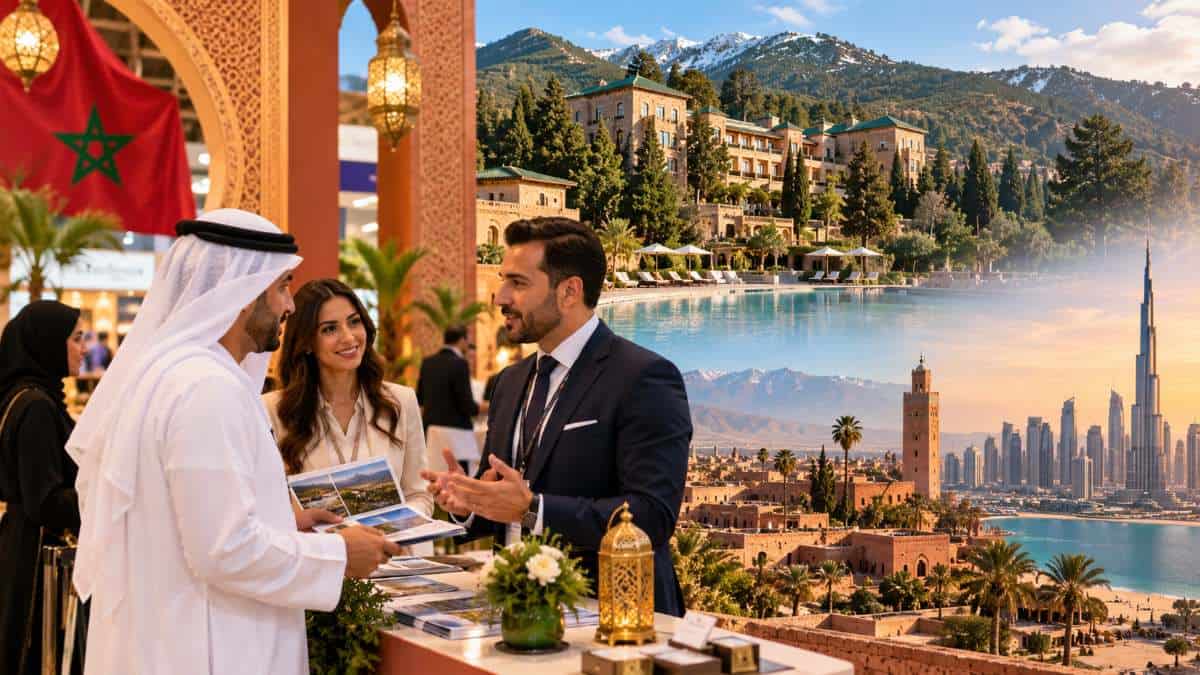
Image generated with Ai
Morocco is putting a fresh spotlight on its luxury tourism ambitions as Michlifen Resort gains international recognition and draws attention to the country’s lesser-known destinations. At Arabian Travel Market 2026, the resort’s sales manager, Muad Elmoose, highlighted how this recognition can help showcase hidden luxury destinations beyond Morocco’s major tourism cities. Meanwhile, engagement with UAE-based and wider GCC luxury travel representatives created an important platform for exchanging ideas about Morocco’s hospitality offering. Rather than promoting a single city or hotel, Morocco is seeking to present its tourism product in its globality, with quieter places also becoming part of the story. This approach gives the Michlifen recognition wider significance. It can help introduce international travellers and travel buyers to destinations that remain less familiar. As Morocco follows UAE-linked luxury market conversations at ATM 2026, the evolving strategy raises an important question: can global recognition help hidden Moroccan destinations capture greater international attention? Travel And Tour World explores the story.
Morocco Tourism Takes a Wider Luxury Approach as Michlifen Resort Highlights Hidden Destinations at ATM 2026
Morocco is taking a broader approach to luxury tourism, with hospitality representatives using Arabian Travel Market 2026 to promote not only established destinations but also smaller cities and lesser-known places across the country.
Advertisement
Advertisement
Speaking at the event, Muad Elmoose, Sales Manager for Michlifen Resort & Golf, highlighted the importance of presenting Morocco as a complete tourism destination rather than focusing on a single city or hotel. His comments point to a wider strategy in which luxury travel can extend beyond Morocco’s best-known urban and resort destinations.
The conversation also touched on the significance of Michlifen Resort & Golf receiving international recognition through the Michelin Key system. For the resort, the recognition is not viewed simply as an accolade for the property. Elmoose described it as an opportunity to draw attention to a destination that is less familiar to international travellers and, in turn, encourage greater interest in other smaller places across Morocco.
Advertisement
Advertisement
The message from the Morocco stand at ATM 2026 was therefore broader than a conventional hotel promotion. It centred on showcasing the country’s hospitality offering as a whole and encouraging luxury travellers and travel buyers to look beyond the most familiar names.
Arabian Travel Market provides a platform for Morocco’s wider tourism story
Arabian Travel Market 2026 brought together tourism professionals, travel buyers and hospitality representatives, creating an opportunity for destinations and properties to discuss changing demand and emerging opportunities.
Advertisement
Advertisement
For Elmoose, the event provided a particularly useful setting for conversations with buyers and luxury travel representatives from the Gulf Cooperation Council market.
He described the ATM experience as positive, noting that he had met with a number of buyers and luxury representatives. These meetings provided an opportunity to exchange views on the luxury market in the GCC and discuss what Morocco can offer travellers from the region.
Advertisement
Advertisement
Importantly, his comments did not present ATM as a measure of actual bookings or confirmed growth. Instead, the event served as a business-to-business platform where hospitality professionals could exchange information, discuss products and understand market interests.
That distinction matters.
Travel trade events often provide an early indication of the conversations taking place between destinations, hotels, tour operators and buyers. They do not, by themselves, establish how many travellers will ultimately visit a destination.
For Morocco, however, such conversations offer a way to communicate a more diverse tourism proposition.
Advertisement
Advertisement
Elmoose explained that the objective was not simply to promote one destination or one hotel. Instead, the focus was on Moroccan hospitality and tourism “in its globality”.
That approach places the individual resort within a much larger national tourism story.
Michlifen Resort & Golf puts a spotlight on a less familiar destination
Michlifen Resort & Golf is located in Ifrane, a city that Elmoose described as not being widely known among international tourists.
This was central to his explanation of why the resort’s recent international recognition matters.
Rather than presenting recognition as an end in itself, he suggested that it can help introduce a lesser-known destination to an international luxury audience.
The distinction between promoting a hotel and promoting its location is important in luxury tourism.
Advertisement
Advertisement
A globally recognised property can become a gateway through which travellers discover a destination they might not otherwise have considered. In this case, the resort’s recognition provides an additional reason to talk about Ifrane and the surrounding area when engaging with international travel professionals.
Elmoose indicated that this is part of the wider ambition to encourage attention towards smaller Moroccan cities and places that receive less international visibility than the country’s major destinations.
The idea challenges a familiar pattern in destination marketing.
International travellers often begin with a small number of recognisable names. Major cities can dominate promotional campaigns because they already have strong awareness among overseas audiences. Yet a country’s tourism identity is rarely limited to those established destinations.
Morocco has a range of cities, towns and landscapes with different characteristics. Promoting that variety can give travel professionals more options when designing experiences for clients.
Michelin recognition becomes a destination marketing tool
During the interview, the discussion turned to Michlifen Resort & Golf’s recent recognition through the Michelin Key system.
Advertisement
Advertisement
Elmoose stressed that the resort does not see the recognition purely as a culinary achievement.
This is an important clarification because Michelin recognition can refer to different parts of the organisation’s hospitality and restaurant ecosystem. In the interview, the representative framed the accolade primarily as an international recognition of the property and an opportunity to increase awareness.
The significance, therefore, lies partly in visibility.
For a resort located in a destination that is less familiar to international tourists, global recognition can help create a conversation that extends beyond the property itself.
Elmoose connected the recognition with the resort’s location and Morocco’s broader tourism offering. His argument was that luxury does not have to be concentrated in the country’s largest or most internationally established cities.
Instead, luxury can also be found in quieter and less familiar locations.
Advertisement
Advertisement
That idea is increasingly relevant to how travellers understand luxury.
Luxury is not necessarily defined only by the scale of a city, the number of attractions or the familiarity of a destination name. For some travellers, privacy, tranquillity and a distinctive sense of place are important parts of the experience.
The interview did not claim that all Middle Eastern luxury travellers are changing their preferences in this direction. Nor did it provide booking figures demonstrating such a shift.
What it did demonstrate was a clear effort by a Moroccan hospitality representative to present quieter destinations as relevant to the luxury travel conversation.
From famous Moroccan cities to smaller places
One of the strongest themes in the interview was the desire to move attention beyond Morocco’s major cities.
Elmoose explained that Morocco should not be promoted through only one city. Instead, he argued for greater attention to smaller cities and places that may be known primarily by local communities.
Advertisement
Advertisement
This approach can broaden the way international visitors understand the country.
A traveller familiar with Morocco may already recognise destinations such as Marrakech, Casablanca, Rabat or Fez. These places have strong international visibility and established tourism identities.
But destination development does not have to stop there.
Smaller cities can provide a different travel experience. They may offer quieter surroundings, local character and opportunities to explore parts of a country that are less familiar to international visitors.
The interview referred specifically to “hidden” places and smaller destinations. It did not identify a long list of individual locations or make claims about their visitor numbers.
That is significant because the central message was not a statistical one. It was a positioning strategy.
Advertisement
Advertisement
Morocco’s tourism product, from this perspective, can be presented as a network of different experiences rather than a single destination story.
For travel buyers, that can create room to build more varied itineraries.
For hotels and resorts, it can also create an opportunity to make their location part of the product rather than treating it simply as an address.
Why quieter places can matter to luxury tourism
The interview repeatedly returned to the relationship between luxury and quieter destinations.
Elmoose described luxury as something travellers can find in “quiet places” and “unknown places”. His comments suggest that the resort’s positioning is closely connected to the idea of escaping the most familiar tourism routes.
This does not mean that quiet destinations automatically qualify as luxury destinations.
Advertisement
Advertisement
Instead, it highlights one possible dimension of luxury travel: the value of a distinctive and less crowded setting.
For travel advisers working with high-value clients, the appeal of a lesser-known destination can lie in its ability to offer something different from a standard city break.
A traveller who has already visited Morocco’s best-known destinations may be interested in discovering another side of the country.
The challenge for destinations such as Ifrane is awareness.
International visitors cannot easily consider a destination they do not know exists. This makes international recognition, travel trade engagement and relationships with buyers potentially important tools for destination visibility.
The ATM platform allowed Michlifen Resort & Golf to communicate precisely that message to travel professionals.
Advertisement
Advertisement
GCC buyers are an important audience at ATM 2026
The interview also provides a window into the importance of Gulf-based travel trade conversations for Moroccan hospitality businesses.
Elmoose said that he met buyers and luxury representatives from the GCC at ATM 2026. The discussions focused on what was happening in the luxury market in the region and what Morocco could offer.
Again, the interview does not provide specific figures for GCC arrivals, bookings, or spending at Michlifen Resort & Golf.
Instead, it shows the importance of direct engagement between Moroccan hospitality businesses and travel professionals serving the Gulf market.
These conversations can help properties explain their products in a market-specific context.
They also allow buyers to ask questions and clarify perceptions about Morocco.
Advertisement
Advertisement
Elmoose noted that some conversations involved clarifying information about Morocco and encouraging people to consider making a first visit.
That detail is revealing.
Destination marketing is not always about convincing a traveller who already knows exactly where they want to go. It can also involve addressing uncertainty, explaining what a destination offers and helping travel professionals understand how a property fits into an itinerary.
For lesser-known destinations, that educational element can be especially important.
Building awareness beyond the traditional tourism map
Morocco’s appeal to international travellers is often associated with its most recognisable destinations.
But the interview suggests a different promotional philosophy: use established international platforms to broaden the tourism map.
Advertisement
Advertisement
In this model, a resort such as Michlifen can become more than an accommodation provider.
Its international recognition can create an entry point for conversations about Ifrane. Those conversations can then contribute to a wider discussion about smaller Moroccan destinations.
The approach is not about replacing major tourism cities.
Rather, it is about adding more destinations to the story.
This can be particularly useful for travellers seeking experiences that feel different from conventional sightseeing. It can also give travel companies more flexibility when designing itineraries around different interests and travel styles.
The interview did not provide evidence that this strategy has already transformed international visitor patterns. It described an ambition and a promotional approach rather than a completed market shift.
Advertisement
Advertisement
That distinction should remain clear.
Michlifen’s recognition has value beyond the property
International hospitality recognition can serve several purposes.
For a hotel, it can provide credibility. For a destination, it can create visibility. For travel professionals, it can provide another property or experience to consider when building itineraries.
In Michlifen’s case, Elmoose sees the recognition as having a role beyond the resort itself.
His comments connected the accolade with the opportunity to showcase a city that is less known internationally and, more broadly, to encourage attention towards Morocco’s smaller places.
This creates an interesting relationship between hotel marketing and destination marketing.
Advertisement
Advertisement
The property benefits from greater visibility because of its recognition. At the same time, the destination can benefit when the property encourages travellers to look beyond the hotel and explore the location around it.
That relationship can be particularly valuable in emerging or lesser-known tourism markets.
Instead of asking travellers simply to stay somewhere, the destination story becomes part of the reason to travel.
Morocco’s tourism proposition becomes more diverse
The central message from the interview is straightforward: Morocco does not need to be represented by only its biggest or best-known destinations.
Elmoose repeatedly returned to the idea of promoting Morocco as a whole.
That means presenting its hospitality and tourism products as part of a broader national offering, while allowing individual destinations and properties to retain their own identity.
Advertisement
Advertisement
The approach could help create a more diverse tourism narrative.
Major cities remain important. They provide international recognition and established tourism infrastructure. But smaller cities can add another layer to the visitor experience.
For international travel buyers, this diversity can be useful. It gives them the possibility of presenting Morocco through different types of experiences rather than relying on one established route.
The interview at ATM 2026 therefore reflected a conversation about more than one resort.
It was about how a lesser-known destination can use international hospitality recognition and travel trade engagement to become part of a larger national tourism story.
A broader vision for Morocco tourism
The comments from Michlifen Resort & Golf at Arabian Travel Market 2026 offer a clear picture of the property’s promotional priorities.
Advertisement
Advertisement
The resort is using its international recognition to increase awareness, but the stated ambition extends beyond the property. Elmoose described the goal as promoting Morocco in its entirety and bringing greater attention to smaller cities and lesser-known places.
The discussion with GCC buyers and luxury travel representatives also shows the role of business-to-business events in this process. ATM provides a space for hospitality representatives to explain their products, exchange market insights and address questions from travel professionals.
There is no evidence in the interview itself to suggest that these conversations have already produced a measurable increase in bookings or international arrivals. What the interview establishes is an active effort to broaden the conversation around Moroccan luxury tourism.
For Michlifen Resort & Golf, that means turning international recognition into an opportunity to tell a bigger story.
And for Morocco, the story being presented is not confined to one famous city. It reaches towards smaller destinations, quieter settings and places that international travellers may not yet have on their maps.
Advertisement
