
France Teams Up With Italy and More as Europe’s Most-Loved Destinations Enter a New Era of EES Border Checks for Travellers

Published
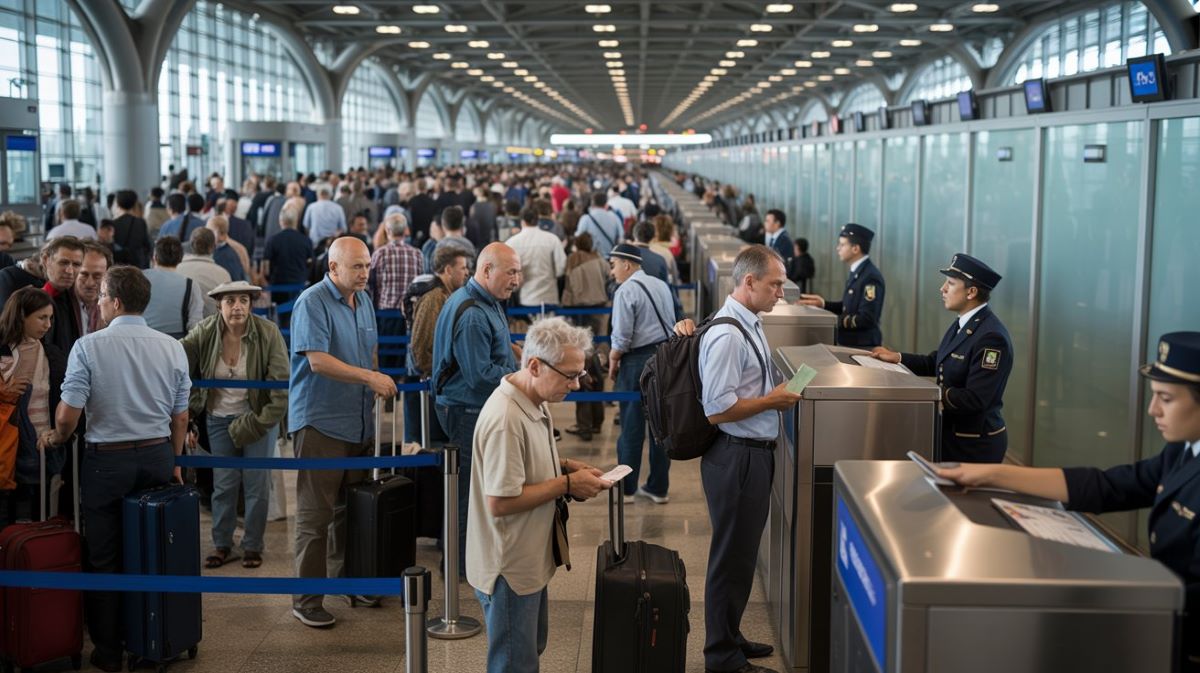
France Teams Up With Italy as Europe’s most-loved destinations enter a new era of EES border checks for travellers. Meanwhile, Italy and France remain among Europe’s most-loved destinations, attracting travellers with culture, food and unforgettable experiences. However, new EES border checks are changing how many travellers enter Europe. These EES border checks could affect journeys across France, Italy and more European destinations. Therefore, travellers should understand the new rules before planning their next European trip. Travel And Tour World urges global travellers to read the entire story for essential guidance on France, Italy, Europe, EES border checks and the new travel procedures shaping journeys across Europe.
EES Border Checks: Nine European Countries Under the Spotlight as Tourism Data Reveals Where Travellers May Face Busy Borders
The dispute surrounding EES border checks matters far beyond immigration procedures. For international tourists, the countries involved are among Europe’s most important holiday, business and cultural destinations.
Advertisement
Advertisement
France, Belgium, the Netherlands, Germany, Greece, Malta, Portugal, Italy and Switzerland attract millions of visitors and generate hundreds of millions of accommodation nights every year.
The latest European tourism figures show why border-management capacity is such an important travel issue. EU tourist accommodation recorded almost 3.1 billion nights in 2025, up 2.2% from 2024. International guest nights increased 3.4%, showing that cross-border travel continued expanding.
Advertisement
Advertisement
The figures below use tourist-accommodation nights, rather than claiming they represent unique international visitors. This is important because one traveller can generate several overnight stays.
EES Border Checks: What Travellers Need to Understand
The EU Entry/Exit System covers 29 European countries and applies primarily to non-EU nationals making short stays. It digitally records entries and exits and uses biometric information during registration.
Advertisement
Advertisement
The participating countries include all nine destinations examined here.
Ireland and Cyprus are outside the EES framework, while several categories of travellers, including qualifying residence-permit and long-stay-visa holders, are exempt.
For tourists, the practical consequence is straightforward.
A first qualifying crossing can require additional processing because the traveller’s details and biometric information have to be registered.
That makes airports, ferry terminals and international rail crossings particularly important during busy travel periods.
The Nine Countries at a Glance
| Destination | 2021 accommodation nights | 2022 | 2023 | 2024 | 2025 | Key 2025 tourism position |
|---|---|---|---|---|---|---|
| France | 137.5m | 211.8m | 217.4m | 214.5m | 471.7m* | One of Europe’s largest tourism markets |
| Belgium | 10.9m | 19.3m | 20.6m | 20.9m | 21.4m | Record-level accommodation demand |
| Netherlands | 30.9m | 55.1m | 62.0m | 64.3m | — | Strong international demand |
| Germany | 168.2m | 268.5m | 294.0m | 299.9m | 442.1m* | One of EU’s four biggest markets |
| Greece | 58.3m | 101.9m | 112.5m | 116.9m | 119.0m | Strong Mediterranean tourism |
| Malta | 11.6m** | 20m+** | 26m+** | 30m+** | 12.2m hotel nights*** | International tourism dominates |
| Portugal | 35m+ | 70m+ | 77m+ | 80m+ | 80m+ | Strong international holiday market |
| Italy | 169.5m hotel nights | 252.7m | 275.4m | 283.9m | 476.9m* | Europe’s No. 2 tourism market |
| Switzerland | 45.9m | 55.6m | 59.3m | 60.1m | 62.0m | Alpine and city tourism remain strong |
*2025 figures for France, Germany and Italy refer to total tourist-accommodation nights from Eurostat and are therefore not directly equivalent to the hotel-only series shown in some historical rows.
**Malta’s total-accommodation series differs from its official inbound-arrival series.
***Malta recorded 4.022 million inbound tourists in 2025, while hotel accommodation alone recorded 12.217 million nights.
Advertisement
Advertisement
This table should therefore be treated as a tourism-demand comparison, not a ranking of unique foreign visitors.
France: Paris, Riviera and Alpine Holidays Meet Europe’s Biggest Travel Flows
France remains the most significant destination among the nine from a global tourism perspective.
Official French tourism figures show that France welcomed 102 million international tourists in 2025, compared with 100 million in 2024. International tourism receipts reached a record €77.5 billion, while international visitors generated 743 million nights across paid and unpaid accommodation.
For travellers facing EES processing, Paris is the obvious gateway, but France offers far more than the capital.
A first-time visitor can spend three days exploring Paris, including the Eiffel Tower, Louvre area, Notre-Dame and Seine.
A longer itinerary can continue to Lyon, Provence and the Côte d’Azur.
Advertisement
Advertisement
Travellers interested in mountains can choose the French Alps, while Bordeaux and the Loire Valley provide alternatives for food, wine and heritage experiences.
French cuisine is another major attraction. Visitors can look for regional dishes such as bouillabaisse in Marseille, galettes in Brittany, Lyonnaise specialities around Lyon and pastries across the country.
Accommodation ranges from central Paris hotels to countryside guesthouses and Alpine resorts.
A practical 10-day plan could include four nights in Paris, two in Lyon, two around Provence and two on the Riviera.
France’s tourism recovery also shows why border capacity matters. In 2025, international visitors increased while tourism receipts rose 9% year-on-year.
Travellers should therefore allow additional time when entering through major international gateways, especially during summer and major events.
Advertisement
Advertisement
Belgium: Brussels, Bruges and Ghent Offer Compact Multi-City Travel
Belgium is smaller than most of the other countries on this list, but its tourism network makes it especially attractive for short European holidays.
Statbel recorded 44.84 million overnight stays in Belgian tourist accommodation in 2024, a record for the national series. The figure was slightly higher than 2023.
The country’s compact geography allows visitors to combine several destinations without long journeys.
Brussels is the logical starting point for many international tourists.
Visitors can explore the Grand-Place, museums, historic districts and European institutions before continuing to Bruges.
Bruges is particularly suitable for travellers seeking medieval architecture, canals and quieter walking experiences.
Advertisement
Advertisement
Ghent offers another combination of historic buildings, museums, waterfront scenery and student energy.
Food should form part of the itinerary. Belgian chocolate, waffles, fries and regional beer culture are internationally famous, while seafood and local dishes provide additional choices.
A four-day plan could include two nights in Brussels, one night in Bruges and one in Ghent.
Travellers can use Belgium’s rail network for city-to-city movement, reducing the need for rental cars.
The country’s tourism data also highlights the importance of international demand. In 2024, Belgium recorded a record accommodation performance, while Eurostat data shows international visitors formed a substantial share of tourism activity.
For non-EU visitors entering Belgium from outside Schengen, biometric border processing should be factored into the arrival schedule.
Advertisement
Advertisement
Netherlands: Amsterdam Beyond the Crowded Canal Core
The Netherlands recorded 52.2 million accommodation guests in 2025, including 22.3 million international guests. International arrivals increased 5% during the year, according to Statistics Netherlands.
Amsterdam remains the country’s strongest international magnet.
However, tourists looking for a less congested experience can extend their journey to Rotterdam, Utrecht, The Hague, Delft or the northern provinces.
Amsterdam works well for a three-night stay.
Visitors can combine canal districts, museums, historic neighbourhoods and cycling experiences.
Rotterdam offers modern architecture and a different urban atmosphere.
Advertisement
Advertisement
The Hague provides access to museums, government institutions and the North Sea coast.
Dutch food can be explored through stroopwafels, herring, cheese, poffertjes and Indonesian-influenced cuisine.
Travellers should consider staying outside the busiest central canal area and using public transport to reach attractions.
The Netherlands also recorded 78.4 million air passengers in 2025, with 74% travelling within the EU or elsewhere in Europe.
That enormous aviation flow explains why border infrastructure remains important for international visitors.
A five-day itinerary could divide time between Amsterdam, Rotterdam and The Hague.
Advertisement
Advertisement
Germany: Berlin, Munich and the Rhine Create a Longer Holiday Route
Germany recorded 442.1 million tourism nights in 2025, placing it among the four largest tourism markets in the European Union.
The country’s scale means travellers can build very different holidays from the same entry point.
Berlin is ideal for history, museums, contemporary culture and nightlife.
Munich offers Bavarian traditions, major museums and easy access to Alpine destinations.
Cologne provides cathedral heritage and Rhine experiences.
Hamburg is another strong option for maritime culture and architecture.
Advertisement
Advertisement
Travellers interested in castles can explore Bavaria and the Rhine Valley.
German cuisine varies significantly by region. Visitors can try sausages, pretzels, schnitzel, regional breads and seasonal specialities.
A seven-day route could include three nights in Berlin, two in Munich and two around the Rhine.
Germany’s tourism recovery has been substantial. Accommodation nights increased from 168.2 million in 2021 to almost 300 million in 2024 in the comparable historical series, before the broader 2025 measure reached 442.1 million.
For travellers, this means popular gateways can become extremely busy.
Visitors should avoid building a short connection between an international arrival and another flight or train.
Advertisement
Advertisement
Greece: Athens, Islands and a Highly Seasonal Holiday Market
Greece recorded about 119.0 million accommodation nights in 2025, up from 116.9 million in 2024.
The country’s recovery from pandemic-era disruption has been especially strong.
Accommodation nights increased from 58.3 million in 2021 to 101.9 million in 2022 and 112.5 million in 2023.
Athens provides the strongest cultural starting point.
Visitors can explore the Acropolis, Acropolis Museum, Plaka and central historic districts.
A second phase can move toward the islands.
Advertisement
Advertisement
Santorini and Mykonos remain internationally famous, while Crete, Rhodes, Corfu and the Cyclades provide broader options.
Food is a central part of Greek travel. Visitors should consider moussaka, souvlaki, grilled seafood, Greek salads, feta, yoghurt-based dishes and regional pastries.
Greece is highly seasonal.
Eurostat reports that July and August accounted for 41.6% of Greece’s tourism nights in 2025.
That concentration makes summer border and transport pressure especially relevant.
A 10-day itinerary could use three nights in Athens, four nights in Crete and three nights on another island.
Advertisement
Advertisement
Travellers should book ferries and accommodation early during peak periods.
Malta: A Small Island With Exceptionally High International Demand
Malta presents one of the clearest examples of international tourism concentration.
The National Statistics Office reported 4,022,310 inbound tourists in 2025, compared with 3,563,618 in 2024. That represented an increase of approximately 12.9%.
The 2025 inbound total was also significantly above the country’s pandemic-era tourism levels.
International visitors are attracted by Valletta, Mdina, the Three Cities, Gozo, Comino and Malta’s coastal scenery.
A five-day itinerary can combine Valletta and the surrounding harbour area with Mdina and a longer day on Gozo.
Advertisement
Advertisement
Travellers interested in swimming and coastal scenery can add Comino, subject to local visitor-management conditions.
Maltese food combines Mediterranean influences with distinctive island traditions.
Visitors can try pastizzi, rabbit dishes, ftira, seafood and local cheeses.
The official 2025 data shows inbound tourists spent an estimated €3.7 billion in Malta, while single-centre visitors averaged 6.2 nights.
Malta is therefore particularly dependent on smooth international arrivals.
For tourists, that makes advance airport planning especially valuable.
Advertisement
Advertisement
Portugal: Lisbon, Porto and the Atlantic Coast
Portugal combines compact geography with strong international tourism demand.
Lisbon is the natural starting point for many visitors.
Its historic districts, riverfront, viewpoints, museums and food culture can comfortably fill three days.
Porto provides a different urban experience, with historic streets, the Douro waterfront and access to wine-country excursions.
The Algarve adds beaches and resort tourism, while Madeira offers a completely different landscape for longer stays.
Travellers should consider at least seven days for a first trip.
Advertisement
Advertisement
A practical itinerary could include three nights in Lisbon, two in Porto and two in the Algarve.
Portuguese cuisine includes cod dishes, grilled fish, seafood rice, pastries and regional specialities.
Portugal’s official statistics programme for 2025 includes arrivals, overnight stays, average stays, occupancy and tourism revenues, demonstrating the breadth of the national tourism data system.
For international travellers, the key planning point is to distinguish between arriving in Portugal from outside the Schengen area and moving between Portugal and another Schengen country.
EES processing concerns external-border crossings.
Once visitors are inside the Schengen area, ordinary travel between participating countries does not create a new external-border entry each time.
Advertisement
Advertisement
Italy: Rome, Florence and Venice Remain Global Tourism Powerhouses
Italy is the second-largest EU tourism market by accommodation nights.
ISTAT recorded 139.6 million tourist arrivals and 466.2 million overnight stays in 2024, both record levels.
International demand was particularly important.
Foreign arrivals increased 8.9% and foreign overnight stays rose 8.4% compared with 2023.
Eurostat later placed Italy at 476.9 million tourism nights in 2025.
Rome is the obvious first stop.
Advertisement
Advertisement
The Colosseum, Vatican Museums, Pantheon and historic centre require several days.
Florence provides Renaissance art and architecture.
Venice offers canals, historic palaces and lagoon experiences.
Travellers wanting coastal scenery can continue to the Amalfi Coast, Puglia, Sicily or Sardinia.
Food is one of Italy’s strongest travel advantages.
Visitors can build an entire journey around regional cuisine, including Roman pasta, Tuscan dishes, Neapolitan pizza, Sicilian specialities and northern Italian cuisine.
Advertisement
Advertisement
A 10-day itinerary could include three nights in Rome, two in Florence, two in Venice and three in southern Italy.
Because international tourism is growing strongly, major attractions can become crowded.
Travellers should reserve high-demand attractions in advance and leave additional time for airport or rail transfers.
Switzerland: Zurich, Lucerne and the Alps Extend the Journey
Switzerland recorded 62.0 million tourism accommodation nights in 2025, up from 60.1 million in 2024 and 59.3 million in 2023.
The country offers a different tourism profile from Mediterranean destinations.
Zurich combines business travel with museums, shopping and urban experiences.
Advertisement
Advertisement
Lucerne is particularly popular for lake and mountain excursions.
Interlaken provides access to the Bernese Oberland.
Zermatt is a major Alpine destination, while Geneva provides an international-city experience around Lake Geneva.
Swiss travel is especially suited to rail-based itineraries.
A seven-day plan could include two nights in Zurich, two in Lucerne and three in the Bernese Oberland.
Visitors should budget carefully because accommodation, transport and dining can be expensive.
Advertisement
Advertisement
Swiss cuisine includes fondue, raclette, rösti, regional cheeses and chocolate.
Winter travellers should allow additional time for weather-related transport changes.
Summer visitors can use Switzerland’s extensive rail and mountain transport network for hiking and panoramic journeys.
For EES purposes, Switzerland is part of the participating 29-country framework.
Five-Year Tourism Recovery: The Biggest Patterns
| Country | 2021 | 2022 | 2023 | 2024 | 2025 |
|---|---|---|---|---|---|
| France | 137.5m | 211.8m | 217.4m | 214.5m | 471.7m* |
| Belgium | 10.9m | 19.3m | 20.6m | 20.9m | 21.4m |
| Netherlands | 30.9m | 55.1m | 62.0m | 64.3m | — |
| Germany | 168.2m | 268.5m | 294.0m | 299.9m | 442.1m* |
| Greece | 58.3m | 101.9m | 112.5m | 116.9m | 119.0m |
| Malta | recovery year | strong recovery | strong growth | 3.56m inbound visitors | 4.02m inbound visitors |
| Portugal | strong recovery | sharp rebound | further growth | record-era demand | continued growth |
| Italy | 169.5m hotel nights | 252.7m | 275.4m | 283.9m | 476.9m* |
| Switzerland | 45.9m | 55.6m | 59.3m | 60.1m | 62.0m |
Sources: Eurostat, national statistical offices and official tourism authorities.
The pandemic recovery is most obvious in Greece, Italy, Germany and the Netherlands.
Advertisement
Advertisement
Greece’s accommodation nights more than doubled between 2021 and 2025.
Germany increased from about 168 million nights in 2021 to almost 300 million by 2024.
Italy’s hotel-only series climbed from about 169.5 million nights in 2021 to 283.9 million in 2024.
Switzerland followed a steadier trajectory, rising from 45.9 million nights in 2021 to 62.0 million in 2025.
Which Destinations Are Most Seasonal?
| Country | 2025 peak-season observation |
|---|---|
| Greece | July-August represented 41.6% of annual tourism nights |
| Malta | July-August represented 21.9% |
| Germany | July-August represented 24.0% |
| EU average | July-August represented 31.1% |
This is particularly important for travellers concerned about queues.
High seasonal concentration means airports, ferry terminals, attractions and hotels can experience simultaneous demand.
Advertisement
Advertisement
Greece is especially exposed because more than four in ten annual accommodation nights occurred during July and August.
Malta has a much more evenly distributed tourism pattern than Greece, despite its heavy dependence on international visitors.
What This Means for Travellers Using EES Borders
| Traveller situation | Practical advice |
|---|---|
| First EES registration | Allow additional time |
| International flight connection | Avoid very short connections |
| Summer holiday | Expect heavier passenger volumes |
| Multi-country Schengen trip | Understand where external border control occurs |
| Residence permit holder | Check whether EES exemption applies |
| Long-stay visa holder | Confirm exemption before travelling |
| Family/group trip | Keep everyone’s travel documents ready |
| Ferry crossing | Check operator and border instructions |
| Rail journey from outside Schengen | Allow additional border-processing time |
| Peak airport arrival | Arrive earlier than usual |
The EES is not a new visa.
It is also not a requirement for every traveller entering Europe.
Its principal purpose is to electronically register eligible non-EU short-stay visitors crossing participating external borders.
A Traveller-Friendly Seven-Country Style Route
For visitors with two weeks, the nine countries do not need to be treated as separate holidays.
Advertisement
Advertisement
A practical route can combine several of them.
A traveller could begin in Paris, continue by rail to Brussels, travel onward to the Netherlands, then fly or rail toward Germany.
From Germany, a longer European journey could continue toward Switzerland and Italy.
Portugal and Greece are better treated as separate air-based extensions because their geography makes them less convenient for the same overland itinerary.
For a 14-day holiday, three nights in Paris, two in Brussels, three in Amsterdam, two in Germany and four in Switzerland or Italy can create a balanced city-and-culture journey.
Travellers should avoid adding too many cities.
Advertisement
Advertisement
Moving hotels every night increases stress and reduces the time available for actual sightseeing.
Border Timing Should Now Be Part of the Holiday Plan
The most important lesson from the EES transition is that border time should be treated like flight time.
Travellers routinely calculate airport transfer times.
They should now do the same for external Schengen border processing.
The European Commission says EES is fully operational, with the system intended to strengthen and modernise external border management.
At the same time, Europe’s tourism market continues expanding.
Advertisement
Advertisement
The EU recorded nearly 3.1 billion accommodation nights in 2025, with international nights growing faster than domestic demand.
That combination creates an important travel reality.
Europe is attracting more visitors while simultaneously changing how many non-EU travellers are processed at its borders.
Final Travel Guidance
For global tourists, the latest EES developments should not be interpreted as a reason to cancel European holidays.
Instead, they provide a reason to plan more carefully.
Check whether EES applies to your nationality and travel status.
Advertisement
Advertisement
Confirm the external border where registration will take place.
Keep your passport and relevant residence or visa documents accessible.
Allow extra time during your first qualifying entry.
Avoid tight onward connections after international arrivals.
Most importantly, check official government and EU travel information shortly before departure because border procedures can change as systems develop.
France, Belgium, the Netherlands, Germany, Greece, Malta, Portugal, Italy and Switzerland remain major destinations with enormous tourism demand.
Advertisement
Advertisement
Their latest statistics show that Europe continues to attract travellers at scale.
For tourists, the smartest response to changing EES border checks is therefore not to avoid Europe, but to build border-processing time into the itinerary from the beginning.
Conclusion
Europe’s most-loved destinations are entering a significant new era as EES border checks reshape the arrival experience for international travellers. France, Italy and other participating countries remain highly attractive, but visitors now need to plan their journeys with greater awareness of border procedures. Although EES is designed to make Europe’s external borders more secure and efficient, the transition can bring additional processing time, particularly at busy airports and border points. Therefore, travellers should check official requirements, keep their documents ready and allow extra time when entering Europe. Travel And Tour World urges global travellers to prepare carefully so that new EES border checks do not overshadow their European holiday experience.
Advertisement
