
Al Shaqab Arabian Horse Show 2026 Returns to Qatar With Four Days of International Equestrian Competition

Published
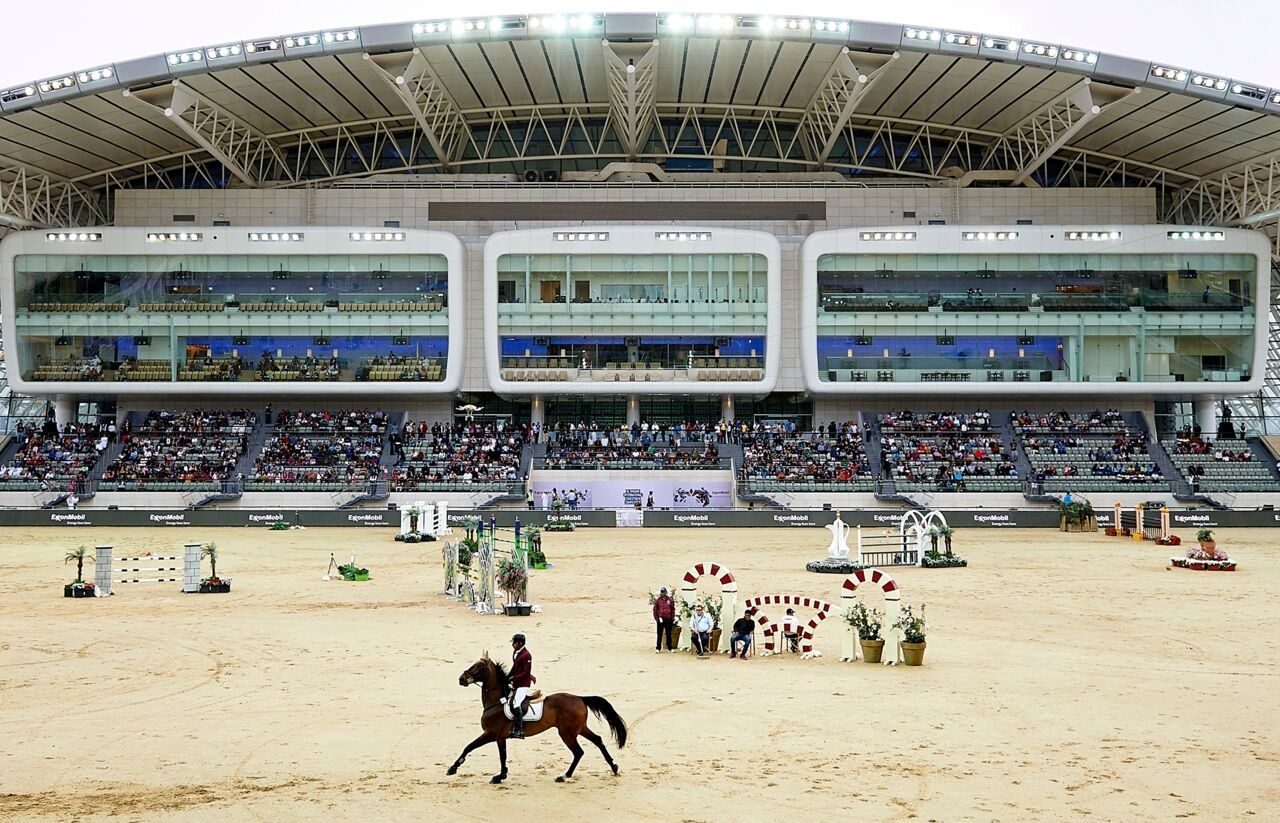
Qatar will welcome international equestrian competitors to the Al Shaqab Arabian Horse Show 2026 from 4–7 November at the Longines Outdoor Arena in Doha. The fourth edition will showcase purebred Arabian horses and bring together owners, breeders and specialist enthusiasts under the patronage of Sheikh Joaan bin Hamad Al-Thani, President of the Qatar Olympic Committee and Chairman of Al Shaqab. Classified as a B International show under the European Conference of Arab Horse Organizations (ECAHO), the competition offers qualifying opportunities for higher-ranked championships. Beyond the arena, the event gives travellers a reason to explore Qatar’s equestrian heritage, specialised sporting infrastructure and cultural attractions during the country’s milder winter season.
Qatar’s Arabian Horse Showcase Returns to Doha
The four-day championship will be supported by the Social & Sport Contribution Fund, known as DAAM. Al Shaqab, a member of Qatar Foundation, will host the event at its outdoor arena. Organisers have positioned the show around the preservation and presentation of purebred Arabian horses, bringing Qatar’s equestrian traditions into an international competition setting.
Advertisement
Advertisement
The event’s international classification is important for participants and travelling spectators alike. ECAHO lists the show as a B International competition, placing it within the organisation’s recognised framework for Arabian horse shows. Successful participation can provide horses with opportunities to qualify for higher-ranked international and global championships, although qualification depends on the applicable regulations and results.
For visitors, the attraction extends beyond watching horses enter the arena. The show offers an introduction to a specialist equestrian discipline in which breed characteristics, presentation, movement and pedigree matter. It also presents an opportunity to explore a side of Doha that differs from the city’s familiar skyline, luxury retail districts and waterfront developments.
Advertisement
Advertisement
The fourth edition follows the 2025 show, which took place from 5–8 November at Al Shaqab’s Longines Outdoor Arena. The shift to 4–7 November in 2026 keeps the competition within the same broad seasonal window, offering visitors another opportunity to combine equestrian sport with Qatar’s cultural calendar.
Arabian Heritage Meets Modern Equestrian Sport
Al Shaqab’s significance predates the current competition. The centre was established in 1992 by Qatar’s Father Amir, Sheikh Hamad bin Khalifa Al-Thani, to revive the country’s Arabian horse heritage and help preserve the breed. It became a member of Qatar Foundation in 2004, linking equestrian development with a wider institutional focus on education and community engagement.
Advertisement
Advertisement
Arabian horses hold a longstanding place in the history of the Arabian Peninsula. Their association with endurance, mobility and close relationships with human handlers helped shape their cultural significance across the region. Modern Arabian horse shows interpret that heritage through structured competition, breeding programmes and the assessment of individual horses against established standards.
Al Shaqab combines these traditions with contemporary equine facilities and international competition. Its work encompasses breeding, horse care, education, riding instruction and events. This breadth makes the centre relevant to more than professional breeders: it also offers a window into the infrastructure required to sustain a specialist sporting discipline.
The distinction matters for tourism. A visitor who understands the cultural background of Arabian horses can engage more deeply with the show than someone who sees it solely as a beauty contest. The competition also gives Doha an opportunity to present an aspect of its heritage through a living institution rather than a museum display alone.
What Judges Look for in Arabian Horses
The competition’s specialist appeal lies in how judges assess each horse. ECAHO’s published show rules describe five principal criteria: type, head and neck, body, legs, and movement. These categories help spectators understand why a horse’s overall presentation involves more than appearance alone. The precise scoring procedures for the 2026 show should be checked against its final regulations.
| Judging criterion | What spectators can observe |
|---|---|
| Type | The horse’s overall expression of Arabian breed characteristics |
| Head and neck | Facial profile, proportions and neck carriage |
| Body | Conformation and physical proportions |
| Legs | Limb structure and overall presentation |
| Movement | The horse’s action, balance and presence in motion |
These criteria provide a useful introduction for first-time spectators. Visitors can watch how horses are presented individually, compare their movement and observe how judges evaluate different characteristics. However, the event’s final judging procedures and championship format should take precedence over general descriptions of ECAHO rules.
The show also offers a different perspective on equestrian sport. Unlike endurance riding, which tests performance over long distances, or show jumping, which focuses on navigating obstacles, Arabian breed shows place particular emphasis on breed type and conformation. That distinction makes the event an informative addition to Doha’s wider sporting calendar.
Advertisement
Advertisement
Inside a 980,000-Square-Metre Equestrian Complex
The venue itself is a major part of the story. Al Shaqab covers 980,000 square metres, equivalent to 98 hectares or approximately 242 acres. Its horseshoe-shaped design incorporates green spaces, a central water feature and a landmark arena complex. The scale reflects its role as a permanent equestrian centre rather than a venue created solely for an annual competition.
The Longines Outdoor Arena measures 120 metres by 60 metres, giving it a 7,200-square-metre rectangular footprint. Al Shaqab’s wider facilities include an indoor arena, a warm-up arena, breeding units, stables and equine exercise infrastructure. Its official visitor information describes hydrotherapy and exercise equipment, including a swimming pool, an equine jacuzzi and a dry treadmill.
The centre’s architecture also contributes to its identity. The Longines Arena complex draws inspiration from a traditional desert tent, reinterpreted through contemporary design. The wider site combines competition infrastructure with facilities dedicated to horse welfare, training and education. Visitors therefore encounter a purpose-built equestrian environment rather than an isolated sporting arena.
| Al Shaqab facility | Published detail | Relevance to visitors |
|---|---|---|
| Entire equestrian centre | 980,000 m² | Establishes the scale of the destination |
| Longines Outdoor Arena | 120 × 60 metres | Main venue for the November show |
| Longines Indoor Arena | Air-conditioned arena; 6,000 seats listed by Al Shaqab | Demonstrates the complex’s broader event capacity |
| Breeding and show facilities | Dedicated breeding units, stables and paddocks | Shows the infrastructure behind Arabian horse preservation |
| Equine exercise centre | Hydrotherapy and exercise equipment | Illustrates the role of specialist horse care |
The indoor arena’s published capacity should not be mistaken for the outdoor show’s available seating. Nor does the overall site area indicate how much of the complex will be accessible to ticket holders. Event-specific access, spectator facilities and movement around the venue should be confirmed before travel.
Qatar’s Tourism Figures Add Wider Context
The championship arrives as Qatar continues to attract international visitors through sport, culture, hospitality and seasonal events. Qatar Tourism’s 2025 annual performance report recorded 5.1 million international visitors, a rise of 3.7% year on year. The figures provide a useful snapshot of the destination’s scale, although they do not establish how many people will attend the horse show.
Accommodation data also indicates sustained demand. Qatar recorded approximately 42,500 hotel room keys by the end of 2025, while room nights sold reached 10.84 million. Average full-market occupancy stood at 71.3%, up 2.6 percentage points from 2024. These annual figures offer industry context, not a prediction of hotel availability or prices during the November competition.
Advertisement
Advertisement
| Qatar tourism indicator | 2025 figure | Change or significance |
|---|---|---|
| International visitors | 5.1 million | Up 3.7% year on year |
| Hotel room nights sold | 10.84 million | Up 8.6% |
| Average hotel occupancy | 71.3% | Up 2.6 percentage points |
| Hotel room supply | Approximately 42,500 keys | Supply recorded at year-end |
| International visitors arriving by air | 61% | Air travel remained the leading arrival mode |
The composition of the visitor market is also relevant. The Gulf Cooperation Council accounted for 35% of international visitors in 2025, followed by Europe at 25%. This provides context for Qatar’s regional and international appeal, although the published national figures do not reveal the origin markets of attendees at this particular event.
For travel businesses, the show represents a specialist product that can complement established city attractions. Equestrian enthusiasts may plan a trip around the competition, while other visitors could include it in a wider cultural itinerary. Whether the event produces additional hotel nights, longer stays or increased visitor spending remains an open question until event-specific data becomes available.
November Offers Favourable Conditions for Exploring Doha
The event falls within Qatar’s generally milder winter season, which runs from November to February. Visit Qatar describes typical winter temperatures as ranging between 15°C and 20°C, although actual conditions vary by day and time. The seasonal change makes outdoor sightseeing more comfortable than during the country’s intense summer heat.
For visitors attending the outdoor competition, comfortable clothing, sun protection and water remain sensible precautions. Evening temperatures can feel cooler, so a light layer may be useful. Travellers should check the local forecast before departure rather than treating seasonal averages as a guarantee.
The November dates also suit a broader Doha itinerary. Visitors can combine time at Al Shaqab with traditional markets, museums, waterfront walks and cultural districts. The most practical approach is to group attractions by location and allow enough time for transport, meals and the event itself.
How to Reach Al Shaqab from the Airport
Al Shaqab is located in Education City, in the greater Doha area. Visit Qatar identifies Al Shaqab Metro Station on the Green Line as the closest station. The centre is also accessible by road, with parking listed at the Ceremonial Court parking lot. Visit Qatar estimates the journey from Hamad International Airport at approximately 30 minutes by road, depending on conditions.
Advertisement
Advertisement
| Travel detail | Information for visitors |
|---|---|
| Event venue | Longines Outdoor Arena, Al Shaqab |
| Nearest metro station | Al Shaqab, Green Line |
| Airport transfer | Approximately 30 minutes by road, subject to traffic |
| Parking | Ceremonial Court parking is listed by Visit Qatar |
| Event access | Confirm the designated entrance, parking arrangements and any shuttle service with organisers |
The Doha Metro provides a useful alternative to travelling entirely by taxi. The network has three lines and 37 stations, connecting key areas of the city. The Red Line serves Hamad International Airport, while the Green Line includes Al Shaqab and Education City. Travellers changing lines can use designated interchange stations.
However, proximity to a metro station does not necessarily mean the arena entrance is immediately outside the station. Visitors should check the walking route, event signage and any temporary access restrictions. Those travelling with children, older relatives or mobility requirements should confirm the most suitable drop-off and entrance arrangements in advance.
Extend the Trip Beyond the Arena
A visit to the championship can anchor a short cultural break in Doha. Souq Waqif offers traditional market streets, dining and a different pace from the city’s modern commercial districts. The Doha Corniche provides waterfront views, while Katara Cultural Village adds galleries, public spaces and cultural programming to a wider itinerary.
These attractions serve different interests, so travellers should avoid trying to fit everything into a single day. A half-day around the horse show may leave room for a market visit or evening meal, while a longer stay allows more time for museums, the waterfront and other neighbourhoods. Opening hours and individual attraction schedules should be checked close to the travel date.
Al Shaqab also offers guided tours for local and international visitors. Its official tours programme lists standard visits, school tours and arrangements for certain groups, including cruise passengers and visiting media or travel agents. The centre describes opportunities to learn about Arabian horse breeding, horsemanship and its equestrian facilities. Tour availability during competition days is not guaranteed, so visitors should contact Al Shaqab before building a booking around the show.
A practical itinerary could therefore combine the competition with a separate cultural day. This gives visitors time to appreciate the horses without rushing through the arena, while also making room for Doha’s food, architecture and heritage.
Advertisement
Advertisement
What Travellers Should Confirm Before Booking
The most important remaining details concern admission, programme timings and access. Third-party event listings advertise sessions from 3pm to 11pm, but travellers should verify the final timetable through the organiser’s official channels before arranging flights, transport or accommodation. Public admission, ticket prices, daily class schedules and any restrictions on photography should also be confirmed.
| Booking consideration | Recommended action |
|---|---|
| Tickets and admission | Check the official event page for confirmed public-access arrangements |
| Competition timetable | Verify daily start times and championship sessions |
| Accommodation | Compare cancellation terms and rates before committing |
| Transport | Check metro service information and event-day access |
| Guided tours | Ask Al Shaqab whether tours operate during the championship |
| Travel documents | Check current entry and visa requirements for your nationality |
The event’s official listing and Al Shaqab’s visitor information should take priority over general event calendars. Travellers should also check Qatar’s current entry requirements through official government channels. No ticket price, hotel rate or attendance forecast should be treated as confirmed without a current, authoritative source.
A Distinctive Addition to Qatar’s Winter Calendar
The November championship offers more than an opportunity to watch exceptional Arabian horses. It brings together a living equestrian tradition, an expansive specialist venue and a destination with established cultural and hospitality infrastructure. Al Shaqab’s history, breeding facilities and educational work give the event depth beyond the competition itself, while Doha provides visitors with options for extending their stay. Qatar’s 2025 tourism figures demonstrate the scale of its visitor economy, but the show’s individual economic contribution remains unquantified. For travellers, the strongest proposition is a focused cultural experience that can anchor a broader winter itinerary. Confirmed event details and practical planning will determine how easily that opportunity translates into a worthwhile trip.
Advertisement
