
Qatar Hosts Three FIFA Intercontinental Cup Finals as Doha Braces for an Influx of Global Football Travellers

Published
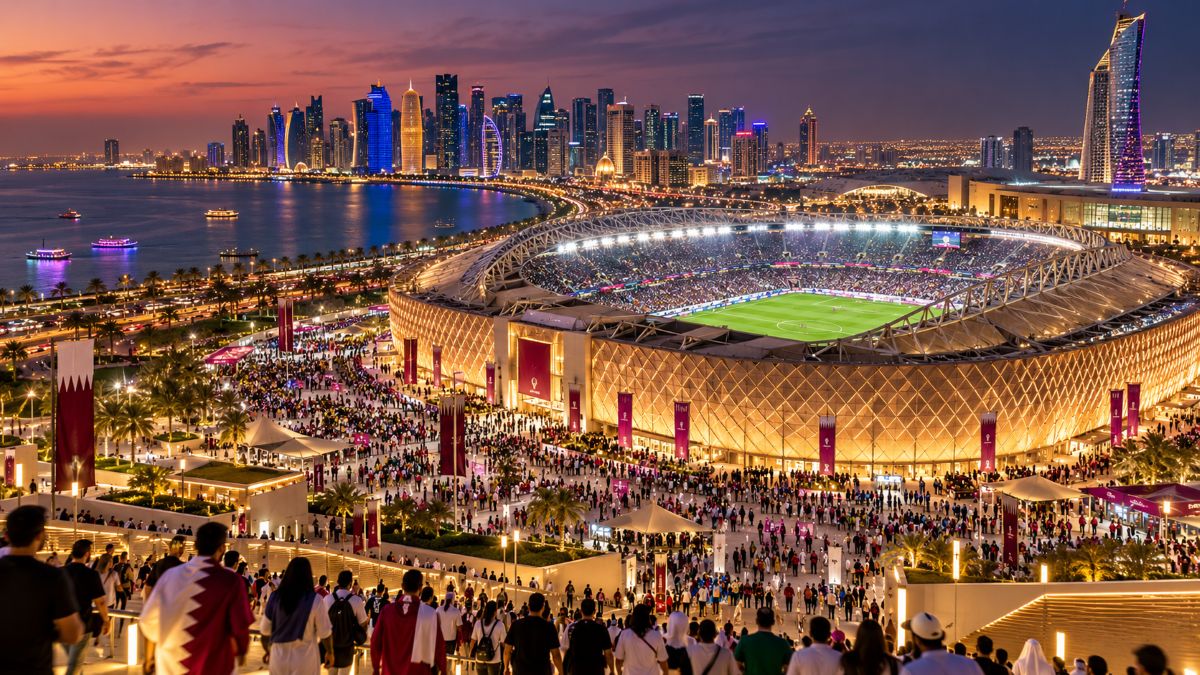
Qatar will host the final three matches of the FIFA Intercontinental Cup 2026 on 9, 12 and 16 December, bringing continental champions and international football supporters to Doha. Confirmed by FIFA on 22 October, the announcement strengthens Qatar’s position as a major destination for sports tourism, following two consecutive years of hosting the competition’s closing fixtures. Paris Saint-Germain (PSG), the defending champions, will contest the final at Ahmad bin Ali Stadium in Al Rayyan. Meanwhile, Jassim bin Hamad Stadium will stage the preceding matches. The fixtures coincide with Qatar’s wider winter events calendar, creating opportunities for hotels, airlines, restaurants and tour operators.
Three Fixtures Put Qatar at the Centre of World Football
The FIFA Intercontinental Cup returns to Qatar for its third consecutive final stage, reinforcing the country’s strategy of attracting international visitors through major sporting events. The tournament brings together continental champions, offering supporters a rare opportunity to watch clubs from different football confederations compete for global honours.
FIFA confirmed the schedule on 22 October. The final three matches will take place across two stadiums, with the competition culminating on Wednesday, 16 December. PSG will enter the final directly as the reigning champions and winners of the 2025–26 UEFA Champions League. Their opponents will emerge from the preceding knockout fixtures.
The announcement matters beyond the football calendar. It gives international visitors a defined reason to travel to Qatar during December, traditionally an attractive period for outdoor sightseeing and cultural activities. It also creates a concentrated window of demand for accommodation, ground transport, dining and organised excursions.
Advertisement
Advertisement
However, FIFA has not published an official attendance forecast or a tourism-spending estimate for these three matches. Any projected economic benefit should therefore remain an opportunity rather than a guaranteed outcome.
The immediate commercial question is how effectively Qatar converts match attendance into longer stays and spending beyond the stadiums.
Advertisement
Advertisement
Match Dates Reveal a Wider Tourism Opportunity
The three fixtures create a structured sequence of international sporting events, allowing travelling supporters to plan trips around the competition’s progression. Each match carries a distinct sporting purpose, while the venues offer opportunities to explore Doha and the wider metropolitan area.
| Date | Match | Venue | Tourism significance |
|---|---|---|---|
| 9 December 2026 | FIFA Derby of the Americas | Jassim bin Hamad Stadium, Doha | Opens the Qatar-hosted final stage and may attract supporters of Mexican and South American clubs |
| 12 December 2026 | FIFA Challenger Cup | Jassim bin Hamad Stadium, Doha | Gives travelling fans a second matchday and a potential reason to extend their stay |
| 16 December 2026 | FIFA Intercontinental Cup final: PSG versus the Challenger Cup winner | Ahmad bin Ali Stadium, Al Rayyan | Provides the tournament’s headline event and a focal point for international sports travel |
The schedule creates two distinct travel windows. The first centres on 9 and 12 December, when supporters can potentially attend consecutive matches. The second culminates in the final on 16 December, which could attract visitors who prefer a shorter trip focused on PSG and the championship decider.
Nevertheless, the tournament does not guarantee that visitors will attend multiple matches. Ticket availability, flight prices, hotel rates and individual club followings will influence travel decisions. Qatar’s tourism industry will need to make the destination attractive beyond the ninety minutes of football.
Record Visitor Numbers Set the Tourism Context
Qatar enters the tournament with an established international visitor market and a growing hospitality sector. Qatar Tourism reported 5.1 million international visitors in 2025, representing 3.7% growth compared with 2024. The country also recorded more than 10.8 million accommodation room nights sold, an 8.6% annual increase. Average hotel occupancy reached 71%, while accommodation revenue rose to QAR 8.3 billion.
These figures provide a useful baseline for assessing the tournament’s potential contribution. They do not, however, establish how much additional demand the December fixtures will generate. That assessment requires post-event data on visitor arrivals, hotel performance, expenditure and length of stay.
The December calendar offers a particularly relevant comparison. Qatar welcomed more than 674,000 visitors in December 2025, nearly 16% more than in December 2024. Major events, including the FIFA Arab Cup, contributed to the month’s strong performance. The figures illustrate how a concentrated sporting calendar can coincide with increased travel demand, although they do not isolate the contribution of any single event.
Advertisement
Advertisement
The 2026 competition therefore arrives at a significant moment for Qatar’s tourism strategy. Rather than relying exclusively on landmark tournaments, the country continues to use international sporting events to support year-round destination marketing.
Qatar’s Tourism Indicators at a Glance
| Tourism indicator | Latest verified figure | Relevance to the tournament |
|---|---|---|
| International visitors in 2025 | 5.1 million | Establishes the destination’s recent visitor scale |
| Annual visitor growth | 3.7% | Indicates continued expansion |
| Accommodation room nights sold in 2025 | More than 10.8 million | Demonstrates existing demand for overnight stays |
| Average hotel occupancy in 2025 | 71% | Provides a baseline for measuring December performance |
| Accommodation revenue in 2025 | QAR 8.3 billion | Shows the economic importance of overnight tourism |
| International visitors in December 2025 | More than 674,000 | Offers a seasonal benchmark for December 2026 |
The figures also highlight a practical distinction for travel businesses. Rising room-night demand does not automatically mean every hotel will experience the same occupancy or revenue growth. Performance will depend on location, price, accommodation category and the timing of visitor bookings.
A Second FIFA Event Could Extend December Demand
The Intercontinental Cup will overlap with another major sporting event in Qatar. The FIFA U-17 World Cup Qatar 2026 is scheduled from 19 November to 13 December, placing its final stages alongside the Intercontinental Cup’s opening two fixtures.
This overlap creates a potentially valuable opportunity for destination marketing. Football supporters, youth-team families, officials, media representatives and other event visitors may generate demand across different accommodation categories and travel budgets.
The combined calendar could also encourage some visitors to remain longer. A traveller arriving for the U-17 World Cup might consider attending an Intercontinental Cup match before departing. Similarly, international visitors travelling specifically for the Intercontinental Cup could explore other attractions during their stay.
However, these are potential travel patterns, not confirmed booking trends. The events attract different audiences, and their overlap does not establish that visitors will attend both competitions.
Advertisement
Advertisement
The timing nevertheless gives Qatar’s tourism operators a clear commercial opportunity. They can promote additional sightseeing, heritage experiences and dining options to visitors already planning their trips. Travel packages should remain flexible, particularly for supporters whose clubs may qualify for later rounds or whose match plans depend on ticket availability.
The overlap also creates operational considerations. Hotels, transport providers and attractions will need to manage demand across several event dates rather than concentrate exclusively on the final. Visitors should book accommodation early if they require particular locations, room types or accessible facilities.
Two Stadiums Connect Football With City Exploration
The venue arrangement gives visitors a straightforward starting point for planning their trips. Jassim bin Hamad Stadium will host both the Derby of the Americas and the Challenger Cup. Ahmad bin Ali Stadium will stage the final in Al Rayyan.
Doha offers the principal base for visitors interested in combining football with museums, waterfront walks, shopping and Qatari cultural experiences. Al Rayyan adds another destination within the wider metropolitan area, although travellers should check the precise journey from their accommodation before selecting a hotel.
Qatar’s established transport infrastructure can support this kind of multi-stop itinerary. The country’s public transport network and road connections give visitors several ways to move between accommodation, attractions and sporting venues. However, journey times and available services will depend on the matchday arrangements announced closer to the tournament.
For travel companies, the two-venue format offers scope to develop itineraries around match attendance rather than sell tickets as an isolated product. Packages could combine stadium transfers, guided city visits and dining reservations, provided the schedules allow sufficient travel time.
Advertisement
Advertisement
For visitors, the most useful approach is to choose accommodation according to the entire itinerary. A central Doha hotel may suit travellers prioritising cultural attractions and restaurants, while those focused on particular matchdays should compare transfers and journey times to both stadiums.
Hotels and Airlines Face a Concentrated Booking Window
Three international fixtures can generate demand across several tourism businesses, but the commercial effects will differ by sector. Hotels may benefit from overnight stays, while airlines and travel agents could see increased interest from supporters seeking convenient connections. Restaurants, shopping destinations, museums and excursion providers may also gain from spending outside match venues.
Qatar’s international connectivity provides a foundation for attracting visitors from multiple markets. Hamad International Airport is a major regional aviation hub, connecting Qatar with destinations worldwide. Its extensive network supports the country’s broader ambition to develop international leisure and business travel.
Yet additional passengers do not necessarily translate into equivalent tourism revenue. Some supporters may already live in Qatar or neighbouring Gulf countries. Others may make short trips, share accommodation or return home immediately after a match. The strongest tourism benefits will depend on how many visitors stay overnight and spend beyond the event itself.
For hotel operators, the relevant indicators will include average daily room rates, occupancy, revenue per available room and length of stay. Airlines and travel agents should also examine booking lead times and demand by origin market.
The tournament offers an opportunity to distribute spending across the destination. However, businesses should avoid assuming that all three matchdays will produce identical demand. The final may attract a different mix of international visitors from the earlier fixtures.
Advertisement
Advertisement
Qatar’s Hosting Record Builds on Earlier Finals
The 2026 edition extends a hosting pattern established in the previous two years. Real Madrid won the inaugural FIFA Intercontinental Cup under its current format in 2024, before Paris Saint-Germain lifted the trophy in 2025. Qatar will now stage the closing matches for a third consecutive year.
This continuity offers a different proposition from hosting a one-off global tournament. An annual event can give tourism businesses repeated opportunities to develop specialist football packages, strengthen relationships with overseas travel agents and refine their event-day services.
The Intercontinental Cup also differs from the expanded FIFA Club World Cup. The Intercontinental Cup brings together continental champions through a sequence of qualifying and knockout matches. The Club World Cup features a broader field of participating clubs and a different competition structure. Their respective tourism effects should not be compared without considering duration, attendance, venue distribution and visitor spending.
Qatar’s 2026 hosting programme also includes the FIFA U-17 World Cup, reinforcing its use of football as a recurring international visitor draw. The strategy relies not simply on attracting major events, but on converting sporting visibility into wider destination demand.
| Development | What it demonstrates | Potential tourism benefit |
|---|---|---|
| FIFA Intercontinental Cup 2024 | Qatar hosted the closing stage, won by Real Madrid | Established an international club-football showcase |
| FIFA Intercontinental Cup 2025 | PSG won the final, which attracted 42,150 spectators at Ahmad bin Ali Stadium, according to the supplied report | Demonstrated the final’s capacity to attract a substantial stadium audience |
| FIFA Intercontinental Cup 2026 | Qatar will host the final three fixtures for a third consecutive year | Creates another opportunity for repeatable sports-travel products |
| FIFA U-17 World Cup 2026 | The tournament runs from 19 November to 13 December | Offers a broader event calendar that overlaps with the first two Intercontinental Cup matches |
The comparison also highlights an important measurement issue. A large stadium audience does not necessarily represent an equal number of overseas tourists. Local residents, repeat attendees and visitors travelling for other reasons may all contribute to attendance.
Consequently, Qatar’s tourism authorities and industry operators should evaluate the event through visitor-origin data, accommodation demand and spending patterns. Those measures would provide a clearer picture of the tournament’s contribution than attendance alone.
Advertisement
Advertisement
What International Travellers Should Plan Before Booking
Supporters considering December travel should begin with match tickets, accommodation and entry requirements. FIFA has confirmed the fixtures and venues, but travellers should consult official channels for ticket releases, matchday instructions and any subsequent schedule changes.
Visitors should also verify their entry eligibility before purchasing non-refundable travel. Qatar’s official tourism website provides a nationality-based visa checker, including information on visa-free entry and applications through the Hayya platform. Requirements vary by passport and circumstances, so travellers should confirm the rules that apply to them directly.
Transport planning deserves similar attention. Visitors attending matches at both stadiums should check the official venue guidance, public transport arrangements and any special matchday services. They should not assume that ordinary service times or access arrangements will remain unchanged during the tournament.
Travellers can also use the match calendar to build a more rewarding itinerary. A stay of several days could include the Museum of Islamic Art, the National Museum of Qatar, Souq Waqif and Doha’s waterfront. These attractions provide alternatives to a football-only visit and allow spending to reach businesses beyond the immediate stadium areas.
The table below summarises the main planning considerations.
| Travel requirement | Recommended action | Why it matters |
|---|---|---|
| Match tickets | Follow FIFA’s official tournament channels | Helps avoid unauthorised sellers and outdated information |
| Accommodation | Compare cancellation terms, location and transport access | Protects flexibility if plans change |
| Entry requirements | Check the official Visit Qatar visa guidance | Eligibility depends on nationality and individual circumstances |
| Airport transfers | Confirm arrival options and onward connections | Helps manage travel time and costs |
| Stadium access | Review official venue and matchday guidance | Reduces uncertainty around entry and transport |
| Sightseeing | Reserve additional activities where necessary | Makes better use of the visit and spreads spending |
| Travel insurance | Review medical, cancellation and disruption cover | Helps manage unexpected costs |
For international visitors, the key is to plan around confirmed information rather than assume that every travel detail is already available. Flight prices, hotel rates and availability can change as departure dates approach.
Advertisement
Advertisement
Industry Should Measure the Wider Economic Return
The tournament’s longer-term value will depend on how effectively Qatar converts international exposure into measurable tourism activity. Hotels, airlines, restaurants and tour operators can all benefit, but the size of that benefit will depend on visitor behaviour and spending.
A useful post-event assessment would compare December 2026 performance against the same month in previous years. It should also examine the dates immediately surrounding each match, rather than relying exclusively on monthly totals. This would help distinguish event-related demand from ordinary seasonal travel.
Several indicators would provide a clearer picture. International arrivals could reveal whether the tournament coincided with increased inbound travel. Hotel occupancy and room rates could show whether demand strengthened in key locations. Average length of stay and visitor expenditure would help establish whether football supporters contributed to broader tourism activity.
The U-17 World Cup overlap makes careful analysis especially important. Since the two tournaments share part of the same calendar, a rise in visitor numbers could reflect several events rather than the Intercontinental Cup alone. Researchers would need to consider overlapping events, seasonality, regional travel patterns and other factors before attributing growth to the final matches.
For Qatar, the strongest outcome would extend beyond a successful final. It would mean converting the international audience into repeat visitors, longer stays and greater interest in the country’s cultural and leisure attractions.
Qatar’s December Fixtures Could Deliver Lasting Value
Qatar’s return as host of the FIFA Intercontinental Cup’s final stage places international football at the heart of its December tourism calendar. The three fixtures offer hotels, airlines and travel businesses another opportunity to attract overseas visitors and encourage spending beyond stadiums. The overlap with the FIFA U-17 World Cup could strengthen the wider event proposition, although the actual economic contribution remains to be measured. Qatar sports tourism will ultimately benefit most if visitors extend their stays, explore local attractions and return for future events. December’s performance will therefore provide a valuable test of how effectively Qatar converts global sporting attention into sustainable tourism demand.
Advertisement
