
Sierra Leone Tracks Alongside Ghana as African Tourism Investment Opens New Travel Frontiers

Published
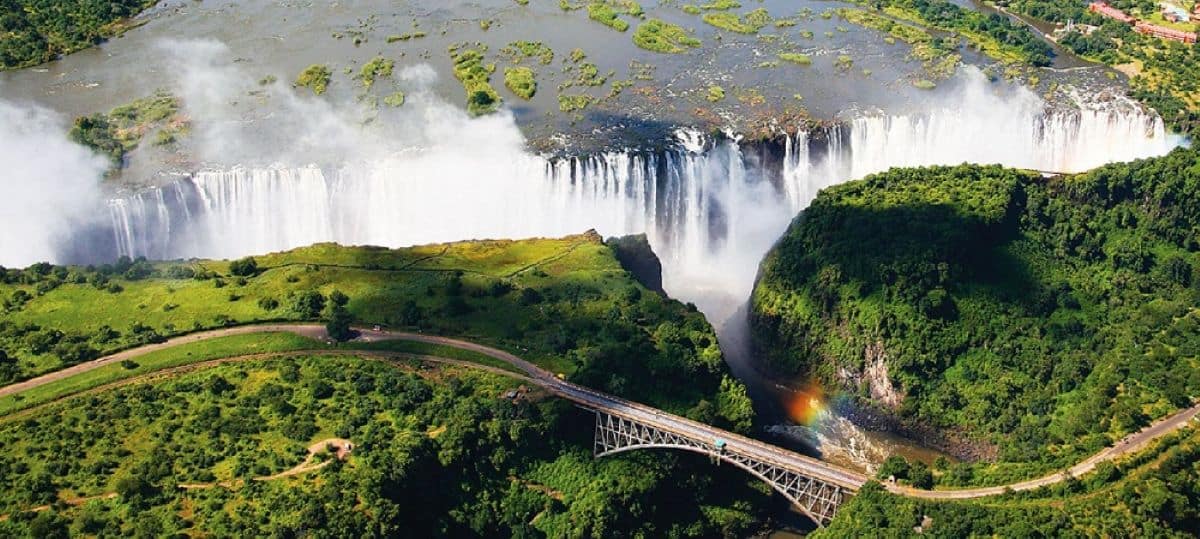
Africa’s tourism map is changing as Benin, Togo, Senegal, Sierra Leone, Ghana, Zambia, Mozambique and Madagascar expand infrastructure and visitor capacity. The shift is not simply about attracting more tourists. Governments are upgrading airports, developing tourism zones, courting hotel brands and creating investment-ready destinations. Ghana recorded 1.31 million international arrivals and US$4.34 billion in tourism revenue in 2025. Zambia reached 2.3 million arrivals, while Madagascar recorded 330,909 non-resident visitors. Meanwhile, Sierra Leone has leveraged more than US$92 million in private investment through a World Bank-backed tourism programme. Together, these markets reveal a wider African strategy. They are building the physical and commercial foundations that could shape the continent’s next tourism growth cycle.
Africa’s Next Tourism Capacity Cycle
The most revealing trend is not visitor numbers alone. It is the relationship between demand, infrastructure and investment readiness across destinations at different stages of development. Some markets already have established tourism industries, while others are creating the accommodation, aviation and destination infrastructure needed to expand internationally.
That makes the term “underrated” somewhat misleading. Ghana and Senegal already attract substantial international demand, while Zambia has rapidly expanded arrivals. The stronger story concerns destinations where investment is moving alongside tourism growth, potentially creating new travel corridors and dispersing visitors beyond Africa’s established hotspots.
| Country | Latest key tourism indicator | Major investment signal | Emerging travel proposition |
|---|---|---|---|
| Benin | Major hotel pipeline | Ouidah coastal projects | Heritage and beach tourism |
| Togo | 500,000+ arrivals in 2024 | Airport hotel proposal | MICE, culture and regional travel |
| Senegal | Tourism budget doubled for 2026 | Pointe Sarène and Dakar infrastructure | Beach, culture and events |
| Sierra Leone | International arrivals doubled since project launch | US$92m+ private investment leveraged | Beaches and ecotourism |
| Ghana | 1.31m arrivals in 2025 | New branded midscale hotel supply | Culture, diaspora and business travel |
| Zambia | 2.3m arrivals in 2025 | K1.5bn tourism ministry budget | Safari and Victoria Falls |
| Mozambique | Multiple investment-ready projects | US$232m+ identified in three projects | Resorts and coastal tourism |
| Madagascar | 330,909 visitors in 2025 | Ar62.24bn sector investment | Biodiversity, islands and cruises |
The table also exposes an important distinction. Announced investment is not the same as completed capacity, so this analysis treats hotel proposals, investment zones and government targets as pipeline indicators rather than guaranteed outcomes.
Advertisement
Advertisement
Benin Builds A New Coastal Proposition
Benin is developing one of the clearest hotel-capacity stories among West Africa’s emerging destinations. The government has been positioning Ouidah and the Route des Pêches as anchors for a broader leisure and heritage economy, combining coastal development with historical tourism.
In February 2025, Benin approved the creation of an operating company for the 130-room, four-star Atlantic Hotel complex at Ouidah Marina. The property is planned with two restaurants, a bar, café and swimming pool, with commissioning targeted for 2026.
Advertisement
Advertisement
The pipeline extends beyond one property. A government-approved project at Avlékété includes a 336-room Club Med holiday village, 30 high-end suites, restaurants, four pools, a spa and wellness facilities. Separately, plans for Avlékété include a Banyan Tree property with 30 private bungalows and an Angsana hotel with 120 rooms.
For travellers, this signals a destination moving beyond heritage sightseeing towards integrated coastal stays. The real test will be whether new accommodation connects successfully with air access, road infrastructure, attractions and local tourism businesses.
Togo Turns Lomé Into A Regional Gateway
Togo offers a different model. Its tourism strategy is increasingly linked to Lomé’s role as a compact regional gateway, rather than relying solely on large leisure resorts.
The Ministry of Tourism currently cites more than 500,000 tourist arrivals in 2024, alongside more than 205 sites and monuments. Its recent programmes also combine cultural heritage with wildlife and regional travel experiences.
An earlier government investment portfolio identified an US$83.4 million airport hotel project near Lomé. The proposal envisages two hotels with 200 to 400 rooms and explicitly targets MICE and transit tourism.
That model could matter to business travellers as much as leisure visitors. A stronger airport hospitality cluster can support conferences, short stays and regional connections while increasing the number of visitors who extend business trips into leisure travel.
Advertisement
Advertisement
Senegal Moves Beyond Its Established Base
Senegal should not be described as a tourism newcomer. Instead, it represents a mature destination entering another phase of capacity renewal and strategic repositioning.
The country’s 2026 budget allocated 28 billion CFA francs to Culture, Tourism and Craft, compared with 14 billion CFA francs in 2025. That represents an increase of approximately 97 per cent. The programme includes hotel inventory work, tourism governance reforms and rehabilitation of visitor-facing infrastructure.
The government has also identified Pointe Sarène as a priority integrated tourism zone. Its stated ambition is to create a high-quality coastal destination combining modern infrastructure, sustainability and local cultural assets.
The Dakar 2026 Youth Olympic Games provide another catalyst. Government preparations include hotel rehabilitation, airport freight coordination and logistics measures for international delegations.
For travellers, the implication is broader than an event-driven spike. Senegal is attempting to strengthen accommodation, coastal destinations and cultural tourism simultaneously, giving the market a wider geographic footprint.
Sierra Leone Converts Tourism Into Investment
Sierra Leone presents perhaps the clearest example of tourism development being treated as an economic diversification mechanism.
Advertisement
Advertisement
A World Bank-backed programme has leveraged more than US$92 million in private investment. The programme has also contributed to more than 35,000 direct and indirect jobs through tourism infrastructure, enterprise support and site development.
The results are beginning to appear at individual attractions. The Leicester Peak viewpoint opened in April 2026 after infrastructure improvements, while Tacugama Chimpanzee Sanctuary received visitor facilities, access improvements and conservation infrastructure. The World Bank reports that international arrivals have doubled since the project began.
Sierra Leone’s aviation indicators also provide a useful signal. World Bank tourism monitoring showed 23 per cent year-on-year growth in aviation passenger arrivals in the first quarter of 2026.
For travellers, this means the destination is becoming more accessible while its tourism product is becoming more structured. Beaches remain central, but wildlife, mountain viewpoints, conservation and community-based experiences are increasingly part of the proposition.
Ghana Shows What Scaling Looks Like
Ghana illustrates the transition from emerging destination to scaled tourism economy.
The country welcomed 1,306,962 international tourists in 2025, compared with 1,288,804 in 2024. International tourism generated US$4.34 billion, while domestic tourism increased from 1.68 million visits to 1.79 million.
Advertisement
Advertisement
The supply side is expanding as well. Licensed tourism enterprises rose from 6,702 to 7,109 in 2025, while accommodation businesses increased from 5,210 to 5,424. Travel and trade enterprises grew particularly quickly, rising 18.6 per cent to 804 businesses.
Accra is now attracting internationally branded midscale accommodation. IFC is financing a 170-room Hampton by Hilton near Accra International Airport, expected to support about 990 direct and indirect jobs. The hotel is designed to use at least 40 per cent less energy and 20 per cent less water than a conventional building.
That development matters because Ghana’s hotel market has historically skewed towards upscale international accommodation. More branded midscale supply could widen options for business travellers and independent leisure visitors.
Zambia’s Visitor Surge Meets Public Spending
Zambia’s tourism trajectory has changed sharply since the pandemic period. International arrivals climbed from just over one million in 2022 to about 2.2 million in 2024 and 2.3 million in 2025.
The government has simultaneously increased tourism spending. The Ministry of Tourism’s budget rose from about K303 million in 2021 to K1.3 billion in 2025 and K1.5 billion in 2026. Officials say the additional resources support marketing, infrastructure, wildlife management and community participation.
The government has set an ambitious 2026 target of more than 2.5 million international arrivals and US$1 billion in tourism revenue.
Advertisement
Advertisement
The practical significance is clear for safari travellers. Zambia is attempting to spread tourism beyond Victoria Falls by improving access to national parks, wildlife areas and other attractions. Better roads, aviation access and destination marketing could therefore influence where visitors spend their time.
Mozambique Prepares Large Coastal Bets
Mozambique has perhaps the most conspicuous resort-development pipeline in this group.
The national tourism investment platform currently lists a US$20 million Vilankulos project close to the international airport. The development includes villas, a commercial centre and a hotel with 56 suites.
Further north along the coast, the proposed Inhassoro integrated resort carries an estimated US$200 million investment value. Government documents envisage up to 6,000 beds and at least 7,000 jobs across a 2,700-hectare tourism-interest zone. A separate Dobela resort proposal is valued at US$12 million.
Mozambique also offers tax incentives for qualifying investments inside integrated tourism resorts and special economic zones. These include customs and VAT exemptions on eligible imported construction materials and equipment, alongside graduated corporate tax incentives.
For travellers, the opportunity is obvious but the development challenge remains significant. Coastal resorts require reliable aviation, roads, utilities, environmental management and security alongside hotel construction.
Advertisement
Advertisement
Madagascar Builds Around High-Value Nature
Madagascar’s tourism proposition differs sharply from conventional beach destinations. Its competitive advantage rests on biodiversity, endemic wildlife, protected areas, islands and nature-led travel.
Official provisional statistics show 330,909 non-resident visitors in 2025. Of these, 171,631 arrived through Antananarivo by air, 118,728 through regional airports and 40,550 through maritime or cruise arrivals.
The tourism ministry recorded Ar62.24 billion in tourism investment during 2025 and 2,035 newly created jobs. Air travel accounted for 87.8 per cent of visitor arrivals, highlighting how heavily tourism depends on aviation infrastructure.
Airport capacity has therefore become strategically important. An IFC-backed concession covers the expansion, rehabilitation and operation of Ivato Airport in Antananarivo and Fascene Airport on Nosy Be. The original project cost was estimated at €220 million.
That aviation link could be transformative for island tourism. Better gateways can reduce friction between international arrival points and high-value nature destinations.
What The Investment Pattern Reveals
The eight markets do not follow one tourism template. Instead, they demonstrate three distinct development pathways.
Advertisement
Advertisement
| Tourism pathway | Countries | Defining feature |
|---|---|---|
| Capacity before wider scale | Benin, Sierra Leone | New hotels, attractions and visitor infrastructure |
| Scaling an established market | Ghana, Senegal, Zambia | Rising demand combined with larger public and private investment |
| Destination-building pipeline | Togo, Mozambique, Madagascar | Connectivity, investment zones and specialised tourism products |
This distinction is important for travellers and industry professionals. A hotel announcement alone does not guarantee a destination boom, while rising arrivals do not automatically mean sufficient accommodation or transport capacity.
The strongest signals appear when visitor demand, aviation access and investment converge. Ghana and Zambia already demonstrate that convergence through rising arrivals and expanding tourism infrastructure. Sierra Leone is showing how targeted development can accelerate visitor activity, while Benin and Mozambique are building substantial coastal capacity.
What Travellers Should Watch Next
For travellers, these markets could become increasingly relevant because tourism growth changes the practical travel equation. New hotels can broaden accommodation choices, airport improvements can simplify connections and destination investment can make previously difficult attractions easier to reach.
However, travellers should distinguish between operational infrastructure and announced projects. A planned resort, proposed airport expansion or investment-zone incentive does not mean the facility is open. Checking official tourism authorities, airlines and airport operators remains essential before booking.
The next useful indicators are therefore straightforward. Watch international arrivals, new air routes, hotel openings, airport passenger volumes, tourism receipts and the conversion of announced projects into operating businesses.
Africa’s Tourism Map Is Being Rewritten
The emerging picture is less about discovering eight secret destinations and more about identifying where tourism capacity is being assembled today. Benin is expanding its coastal and heritage proposition, Sierra Leone is converting development finance into visitor infrastructure, and Ghana is adding branded accommodation to a growing tourism economy.
Advertisement
Advertisement
Meanwhile, Zambia is pairing record-level arrivals with larger public spending, Senegal is renewing established tourism infrastructure, and Mozambique is marketing large coastal projects. Madagascar is strengthening aviation gateways around an exceptionally distinctive biodiversity proposition, while Togo is developing Lomé’s role as a regional business and leisure gateway.
The important question is not whether mass tourism will arrive in every market. It is whether today’s investment becomes tomorrow’s usable tourism capacity. That will depend on connectivity, execution, sustainability, local participation and demand. For travellers and travel companies, these are the markets worth watching as Africa’s next tourism cycle takes shape.
Advertisement
