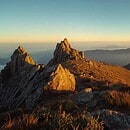

Image generated with Ai
Greece’s Mount Olympus stands as one of the world’s most famous natural landmarks, a destination where mythology, history and nature converge on an extraordinary scale. Rising dramatically along the eastern coast of mainland Greece between the regions of Thessaly and Macedonia, the mountain has captivated imaginations for thousands of years and remains one of the country’s most iconic tourism attractions.
For many travellers, Mount Olympus represents far more than a mountain. It is the legendary home of the Greek gods, the mythical realm where Zeus ruled the heavens and where some of the most enduring stories of ancient civilisation were born.
Advertisement
Today, visitors arrive from across the globe to experience a landscape that combines mythological significance, breathtaking scenery and some of Greece’s most impressive outdoor adventures.
In Greek mythology, Mount Olympus was regarded as the dwelling place of the Twelve Olympian Gods.
Advertisement
Advertisement
According to ancient beliefs, the summit was the divine court where Zeus, Hera, Poseidon, Athena, Apollo, Artemis, Ares, Aphrodite, Hermes, Demeter, Hephaestus and Hestia gathered to govern both gods and mortals.
Ancient Greeks imagined the gods living in magnificent palaces hidden among the clouds near the mountain’s highest peaks.
From this elevated realm, Zeus was believed to control thunder and lightning while overseeing the fate of humanity.
The stories associated with Olympus became central to Greek culture and continue to influence literature, art, philosophy and popular culture throughout the world.
Advertisement
Advertisement
More than two millennia later, the mountain remains one of the most recognisable symbols of Greek mythology.
While mythology gives Mount Olympus its legendary status, the mountain’s physical presence is equally remarkable.
As Greece’s highest mountain, Olympus rises to an elevation of 2,917 metres at Mytikas Peak.
Its towering profile dominates the surrounding landscape, creating a dramatic backdrop visible from large parts of northern Greece.
The mountain features deep gorges, dense forests, alpine meadows, rugged cliffs and high-altitude plateaus that contribute to its extraordinary natural beauty.
Visitors often describe their first view of Olympus as unforgettable, particularly when clouds gather around its highest summits, recreating the mysterious atmosphere that inspired ancient myths.
Mount Olympus is not only a mythological treasure but also one of Greece’s most important environmental assets.
The mountain forms the centrepiece of Olympus National Park, the country’s first national park, established in 1938.
The protected area safeguards a remarkable diversity of ecosystems and wildlife.
More than 1,700 plant species have been recorded within the park, making it one of the most biologically diverse regions in Europe.
Rare flowers, ancient forests and unique alpine habitats thrive across the mountain’s varied elevations.
Wildlife found in the region includes foxes, deer, wild boar, eagles and numerous bird species.
The mountain’s ecological significance has earned international recognition as a UNESCO Biosphere Reserve.
Most visitors begin their Mount Olympus journey in the charming town of Litochoro.
Situated at the foot of the mountain, Litochoro combines traditional Macedonian architecture with modern tourism facilities.
The town offers accommodation, restaurants, outdoor activity providers and visitor services that support exploration of the surrounding region.
Its location allows travellers to experience both mountain landscapes and nearby coastal attractions along the Aegean Sea.
For many visitors, Litochoro provides the perfect introduction to the natural and cultural richness of Olympus.
Mount Olympus has become one of Europe’s most popular hiking and mountaineering destinations.
Every year, thousands of visitors undertake treks through its forests and alpine landscapes.
Routes range from gentle nature trails suitable for casual walkers to demanding summit ascents requiring preparation and experience.
The climb to Mytikas Peak is considered one of Greece’s most rewarding mountain adventures.
Reaching the summit allows travellers to stand atop the country’s highest point while enjoying panoramic views stretching across the mainland and the Aegean Sea.
The experience combines physical achievement with a deep connection to one of history’s most legendary landscapes.
Interest in mythology-based travel continues expanding globally, and Mount Olympus remains at the centre of this trend.
Visitors increasingly seek destinations connected to legendary stories and ancient civilisations.
Olympus offers a unique opportunity to experience a place that exists simultaneously as a real geographic landmark and a powerful symbol of human imagination.
Museums, cultural centres and guided tours throughout the region help travellers understand the myths associated with the mountain while exploring its natural beauty.
This combination of education and adventure strengthens the destination’s appeal across multiple tourism segments.
The Olympus area offers much more than mountain climbing.
Visitors can enjoy:
This diversity makes the region attractive to families, outdoor enthusiasts and cultural travellers alike.
Many visitors spend several days exploring the wider area rather than focusing solely on the summit.
Few places connect mythology, history and nature as effectively as Mount Olympus.
For centuries, the mountain has symbolised the cultural achievements of ancient Greece while continuing to inspire modern visitors.
Its role within mythology transformed it into one of the most recognised mountains on Earth.
At the same time, its protected landscapes, biodiversity and outdoor recreation opportunities ensure that it remains relevant to contemporary tourism.
This blend of legend and reality continues to attract travellers seeking meaningful experiences.
Mount Olympus remains one of Greece’s most extraordinary destinations, where mythology and reality meet beneath some of the country’s highest peaks. As the legendary home of the Greek gods, the mountain continues to inspire travellers with stories that have endured for thousands of years. At the same time, its dramatic landscapes, rich biodiversity and world-class hiking opportunities make it one of Europe’s premier natural attractions. For visitors exploring Greece in 2026, Mount Olympus offers a rare chance to experience a destination where ancient legends still feel very much alive.
Advertisement
Tags: ancient Greek mythology, cultural tourism Greece, greece, Greece travel news, Greek mythology tourism
Advertisement
Advertisement













Friday, September 4, 2026

Friday, September 4, 2026

Friday, September 4, 2026

Thursday, September 3, 2026

Wednesday, September 2, 2026

Friday, September 4, 2026

Friday, September 4, 2026