
Georgia Suffers with New York, Virginia and More US States to Face Hellish Saudi Arabia Flight Chaos After Federal Aviation Administration Warning

Published
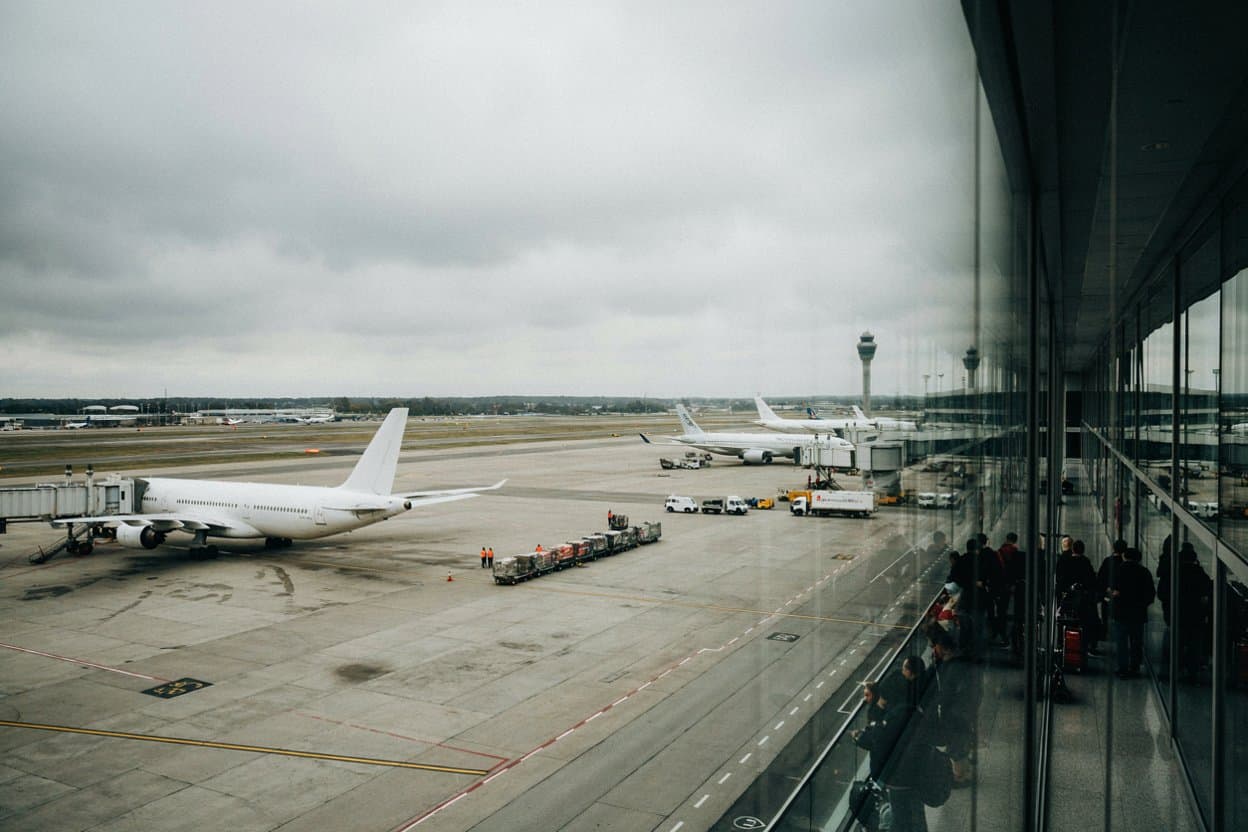
Georgia suffers with New York, Virginia and more US states facing hellish Saudi Arabia flight chaos after the FAA warning. Deadly attacks on Riyadh Airport have disrupted international travel, forcing Delta Air Lines to postpone its Atlanta route. Travellers now face uncertainty over flights, connections and security across multiple states.
The growing aviation security crisis in Saudi Arabia is beginning to affect travel plans across the United States. Georgia has already experienced a significant change to its international flight network, while New York, Virginia and California face uncertainty over established air connections with the kingdom. Travellers in Texas, Illinois, Florida, Massachusetts, New Jersey and Michigan could also encounter difficulties when connecting through international airports.
The disruption follows deadly attacks on Riyadh’s King Khalid International Airport, which prompted the Federal Aviation Administration (FAA) to warn American airlines about the risks of operating in Saudi Arabian airspace. With Delta Air Lines postponing its new Atlanta–Riyadh route until March 2027, the situation is raising important questions about airline safety, international connectivity and the future of travel between the two countries.
Saudi Arabia Airport Attacks Create New Challenges for American Aviation
A journey from the United States to Saudi Arabia now requires more careful planning than it did just a few weeks ago.
Advertisement
Advertisement
The attacks on King Khalid International Airport have disrupted operations at one of the kingdom’s most important international gateways. The violence intensified on 10 October 2026, when a projectile reportedly struck a passenger terminal, killing at least 12 people and injuring hundreds.
The attacks, claimed by Yemen’s Iran-backed Houthi movement, have prompted airlines to suspend services and passengers to reconsider their journeys.
Advertisement
Advertisement
The FAA has advised American aircraft operators to exercise caution when flying into, out of or through Saudi Arabian airspace because of risks associated with military activity. The warning remains effective until 10 December 2026.
This does not mean that airports across America are experiencing widespread closures. The impact is more specific. It concerns flights serving Saudi Arabia, passengers using connecting services and airlines planning new routes to the kingdom.
Advertisement
Advertisement
For American travellers, the consequences will depend largely on where their journey begins, which airline they use and whether Riyadh is their final destination.
State-by-State US Travel Impact Assessment
The following ranking is based on direct Saudi Arabia air connectivity, Delta’s confirmed route postponement, international hub connections and potential passenger exposure. It is an editorial risk assessment, not an official FAA ranking or a verified count of disrupted passengers.
| Indent | US state | Main airport | Potential impact | Research assessment |
|---|---|---|---|---|
| 1 | Georgia | Atlanta (ATL) | Very high | Confirmed postponement of Delta’s Riyadh route |
| 2 | New York | New York JFK | High | Established direct Saudi Arabia services and connecting traffic |
| 3 | Virginia | Washington Dulles (IAD) | High | Direct Saudi Arabia services serving the Washington region |
| 4 | California | Los Angeles (LAX) | Moderate | Saudi-bound travellers may face connecting itinerary changes |
| 5 | Texas | Dallas–Fort Worth (DFW) | Moderate | International connections and possible Saudi-bound rebooking |
| 6 | Illinois | Chicago O’Hare (ORD) | Moderate | Indirect exposure through international airline partners |
| 7 | Florida | Miami (MIA) | Moderate | Connecting travellers may need revised itineraries |
| 8 | Massachusetts | Boston Logan (BOS) | Moderate | Saudi-bound passengers may rely on other international hubs |
| 9 | New Jersey | Newark (EWR) | Lower, indirect | Exposure through connecting services to Saudi Arabia |
| 10 | Michigan | Detroit (DTW) | Lower, indirect | Potential changes for passengers connecting through other gateways |
FAA Warns US Airlines of Saudi Arabia Flight Risks as Riyadh Airport Attacks Disrupt Travel
The Federal Aviation Administration (FAA) has issued a safety warning to US airlines operating in and around Saudi Arabia following deadly attacks on Riyadh’s King Khalid International Airport. The escalating security situation has disrupted international flights, forced airlines to review their schedules and raised fresh concerns about aviation safety across the region.
The warning follows a series of attacks on the Saudi capital’s main international airport, reportedly claimed by Yemen’s Iran-backed Houthi movement. The violence has affected passenger operations and prompted airlines to reassess the risks of flying through Saudi Arabian airspace.
Advertisement
Advertisement
The disruption has also affected plans by Delta Air Lines to introduce a new nonstop service between Atlanta and Riyadh, highlighting how regional security developments can influence international airline expansion.
“The current aviation challenges involving Saudi Arabia remind us that passenger safety must always remain the highest priority in international travel. While Georgia faces a direct setback following Delta Air Lines’ decision to postpone its Atlanta–Riyadh service, travellers across New York, Virginia and other American states may also need to reconsider their international connections.
However, this situation also presents an opportunity for airlines, airports and tourism authorities to demonstrate resilience, responsibility and effective communication. Saudi Arabia remains an important destination for business, tourism and cultural exchange, with considerable long-term potential for international aviation growth.
The industry’s immediate responsibility is to support affected passengers through flexible booking arrangements, accurate information and practical travel alternatives. We remain confident that stronger cooperation between aviation authorities, airlines and destination stakeholders can help rebuild traveller confidence, restore essential connections and support the continued development of safe, accessible and sustainable international tourism in the years ahead.”— Anup Kumar Keshan, Founder and Editor-in-Chief, Travel And Tour World
FAA Issues Aviation Safety Warning Until December
The FAA has advised American airlines and pilots to exercise additional caution when operating flights within or through Saudi Arabian airspace.
The advisory cites “safety-of-flight risks associated with ongoing military activities”, reflecting concerns about the potential dangers facing civilian aircraft during periods of armed conflict.
Advertisement
Advertisement
The warning is scheduled to remain in effect until 10 December 2026.
Such advisories help airlines assess operational risks before deciding whether to continue, suspend or reroute services. They are particularly important when military activity creates uncertainty about airspace security, airport operations and the safety of passengers and crew.
The FAA warning does not automatically mean that every commercial flight to Saudi Arabia must stop. Instead, it signals that airlines should carefully evaluate the security situation and take appropriate precautions.
For international aviation, the development underlines the importance of monitoring conflict-related threats, even when commercial airports remain important gateways for business, tourism and international travel.
Deadly Riyadh Airport Attacks Trigger Major Flight Disruptions
King Khalid International Airport, one of Saudi Arabia’s most important aviation gateways, has faced serious disruption following repeated attacks reported during the second week of October.
According to reports cited by CNBC, the situation intensified on Saturday, 10 October, when a projectile struck a passenger terminal.
Advertisement
Advertisement
The attack reportedly killed at least 12 people and injured more than 300 others, marking a significant escalation in the security crisis.
Airport operations were subsequently suspended, leaving airlines and passengers facing uncertainty over departures, arrivals and connecting services.
Flight-tracking platform FlightAware was reported to have recorded nearly 500 daily flight cancellations by the morning of Monday, 12 October.
The scale of the reported disruption demonstrates how attacks on major aviation infrastructure can affect travel far beyond the immediate location.
Passengers travelling to Riyadh, connecting through the Saudi capital or planning onward journeys may face changes to their itineraries. Airlines must also manage aircraft positioning, crew schedules and passenger rebooking arrangements when airport operations are interrupted.
Georgia Faces Immediate Setback as Delta Delays Atlanta–Riyadh Flights
Georgia has become the most visible American state affected by the aviation crisis.
Advertisement
Advertisement
Delta Air Lines had been preparing to introduce nonstop flights between Hartsfield-Jackson Atlanta International Airport and Riyadh on 23 October 2026. The service would have created a new direct connection between the southeastern United States and Saudi Arabia.
However, the airline has postponed the launch until March 2027 following the security developments.
The decision has disappointed travellers who were expecting a more convenient journey between the two countries.
Atlanta is not simply an airport serving Georgia. It is one of the world’s busiest aviation hubs, connecting passengers from cities across the United States.
A traveller from Tennessee, Alabama, North Carolina or Florida could have used Atlanta to reach Riyadh without another international connection.
That option will now take longer to become available.
Advertisement
Advertisement
For Georgia’s business community, the delay also postpones a new travel link with Saudi Arabia, where opportunities exist in aviation, technology, investment and tourism.
Importantly, Delta has postponed a planned service rather than cancelled an established route. The immediate effect concerns future connectivity and existing bookings for the proposed launch.
New York Faces Uncertainty Over Flights Connecting America and Saudi Arabia
New York has long been an important departure point for Americans travelling to the Middle East.
John F. Kennedy International Airport provides international connections to Saudi Arabia, including services operated by Saudia.
This makes New York particularly relevant to the current disruption.
Passengers who planned to travel to Riyadh may face cancellations, revised schedules or uncertainty about when flights can resume.
Advertisement
Advertisement
The effects extend beyond residents of New York City. Travellers from Connecticut, Pennsylvania and other neighbouring areas also use JFK for long-distance international journeys.
For some passengers, changing travel dates may be straightforward. Others may have business meetings, family commitments or prepaid accommodation that cannot easily be rearranged.
Travellers heading to Jeddah or other Saudi destinations should not assume that their flights are cancelled simply because Riyadh airport has been affected.
Saudi Arabia has several international airports, and their operational circumstances may differ.
The main concern for New York passengers is whether their specific flight and any onward connection remain available.
Virginia Travellers Face Disruption Through Washington Dulles Airport
Virginia is another important state in the American travel network connecting with Saudi Arabia.
Advertisement
Advertisement
Washington Dulles International Airport, located in northern Virginia, serves travellers from Washington, DC, Maryland and the wider Mid-Atlantic region.
The airport has established air links with Riyadh, making it particularly exposed to changes affecting the Saudi capital.
The disruption could create difficulties for government officials, business executives, international consultants and families travelling between the two countries.
Washington’s international connections are especially important for professional travel, where passengers often work around fixed meetings and official appointments.
A cancelled flight can therefore create consequences beyond the cost of a replacement ticket.
Some travellers may need to postpone meetings, extend accommodation arrangements or arrange alternative travel through another international gateway.
Advertisement
Advertisement
However, there is no evidence that the crisis has caused widespread disruption to ordinary domestic flights at Washington Dulles.
The problem concerns Saudi-bound journeys and the availability of safe, reliable international connections.
California Travellers Face Questions Over Los Angeles–Saudi Arabia Connections
California’s connection with Saudi Arabia gives the state a different type of exposure.
Los Angeles International Airport has established Saudia services to Jeddah, offering West Coast passengers a direct route into the kingdom.
This connection serves travellers visiting family, attending business meetings, exploring Saudi Arabia or travelling for religious purposes.
Although the recent attacks have centred on Riyadh, passengers travelling onward from Jeddah to the Saudi capital may still experience difficulties.
Advertisement
Advertisement
A traveller could arrive in Jeddah as planned but discover that the next part of the journey is unavailable.
Such situations can be especially challenging when flights are booked separately.
California also serves a large international passenger market. Travellers from neighbouring western states often use Los Angeles for overseas departures.
Any major change to Saudi Arabia’s aviation network could therefore affect passengers far beyond Southern California.
Nevertheless, the disruption should not be presented as a general shutdown of flights between Los Angeles and Saudi Arabia. The operational status of each route must be checked individually.
Texas Could Experience Connecting-Flight Disruption Through Dallas and Houston
Texas is an important American business and aviation market, with strong international connections through Dallas–Fort Worth and Houston.
Advertisement
Advertisement
Many travellers departing from these airports reach Saudi Arabia through connecting flights.
Some itineraries involve transfers through European airports, while others use major Middle Eastern aviation hubs.
This creates a potential problem when the final destination is Riyadh.
A passenger may complete the first part of a journey without difficulty, only to find that the connecting flight into Saudi Arabia has been suspended.
For business travellers, such disruption can affect meetings, project schedules and corporate travel arrangements.
Texas has commercial links with Saudi Arabia, particularly in industries involving energy, engineering and technology.
Advertisement
Advertisement
However, the existence of these business relationships does not mean that every company or traveller is directly affected.
There is currently insufficient evidence to establish widespread Saudi-related cancellations at Dallas–Fort Worth or Houston.
The main risk is uncertainty over connecting itineraries rather than disruption across Texas airports.
Illinois Travellers Could Face Longer Journeys from Chicago
Chicago O’Hare International Airport makes Illinois an important connecting point for travellers from the American Midwest.
Passengers departing from Chicago can reach Saudi Arabia through several international airline networks.
When a destination airport closes, these journeys become more complicated.
Advertisement
Advertisement
An airline may be able to transport passengers to a connecting hub but may not be able to complete the final flight to Riyadh.
Travellers may then need to wait for services to resume, change their destination or return home.
For Illinois residents travelling on business, delays can affect scheduled meetings and professional commitments.
Families travelling together may face additional difficulties if alternative flights have limited seat availability.
Chicago’s extensive international network provides different travel options, but alternative routes do not remove the underlying security concerns.
The impact on Illinois remains indirect. No widespread disruption at O’Hare has been established as a result of the Riyadh attacks.
Advertisement
Advertisement
Florida Travellers May Need to Rethink Saudi Arabia Holiday Plans
Florida is widely associated with leisure travel, but its international airports also serve passengers heading to destinations across the Middle East.
Miami and Orlando are important departure points for travellers who connect through other American or overseas airports before reaching Saudi Arabia.
The current crisis could affect visitors planning holidays, family reunions or organised travel programmes involving Riyadh.
A sudden flight cancellation can be particularly difficult when a holiday includes several prepaid services.
Hotel reservations, guided tours, domestic transport and other arrangements may all depend on arriving on a particular date.
Florida-based travel agencies may need to help affected customers review their options.
Advertisement
Advertisement
Passengers should also understand that a flight cancellation does not automatically guarantee compensation for every associated holiday expense.
Airline refunds, travel insurance and hotel cancellation conditions operate under different rules.
At present, Florida’s exposure is best understood as a potential connecting-flight issue rather than a confirmed statewide aviation disruption.
Massachusetts Passengers Could Encounter Changes to Boston Connections
Boston Logan International Airport provides Massachusetts with extensive international connectivity.
Travellers from Boston heading to Saudi Arabia generally have access to connecting itineraries through other major aviation hubs.
The Riyadh airport disruption could affect passengers who depend on those connections.
Advertisement
Advertisement
A traveller leaving Boston may find that the first international flight is operating normally while the onward service to Riyadh has been cancelled.
This can create confusion, particularly when different airlines operate different parts of the itinerary.
Passengers travelling for education, business, healthcare or family reasons may find it difficult to rearrange their plans at short notice.
Massachusetts also serves travellers from neighbouring New England states, increasing the number of people who could potentially use Boston for Saudi-bound journeys.
However, there is no verified evidence that the security crisis has caused significant cancellations across Boston Logan’s wider flight network.
The risk remains concentrated on affected Saudi Arabia itineraries.
Advertisement
Advertisement
New Jersey Faces Indirect Effects Through Newark International Airport
New Jersey’s international gateway, Newark Liberty International Airport, serves millions of passengers from the New York metropolitan region.
Travellers heading to Saudi Arabia from Newark may use connecting services through Europe, the Middle East or other American airports.
The disruption in Riyadh could require these passengers to reconsider their routes.
Some may look at departing from JFK instead, while others may explore flights to different Saudi cities.
However, changing the departure airport will not necessarily solve the problem if the final destination remains inaccessible.
For New Jersey travellers, the most useful approach is to confirm the status of every flight before making new reservations.
Advertisement
Advertisement
Passengers should also check whether their airline will arrange alternative connections or whether they must request a refund and book another journey independently.
The crisis has not been shown to have caused widespread cancellations at Newark itself.
New Jersey’s potential exposure is primarily linked to international connecting passengers.
Michigan Could See Secondary Effects Through Detroit’s Delta Network
Michigan is another state where the consequences are likely to be indirect.
Detroit Metropolitan Airport is an important Delta Air Lines hub, serving passengers from Michigan and other parts of the Midwest.
Travellers who intended to connect through Atlanta onto Delta’s planned Riyadh service will now need different arrangements.
Advertisement
Advertisement
The postponement of the Atlanta route removes a future option for reaching Saudi Arabia through Delta’s American network.
However, it does not mean that an existing nonstop Detroit–Riyadh service has been cancelled.
Passengers from Michigan may still explore itineraries involving other international airlines and connecting airports.
The available evidence does not establish major Saudi-related disruption across Detroit’s broader flight schedule.
Michigan’s inclusion reflects its position within Delta’s connecting network and the possible effects on future Saudi-bound journeys.
Why the FAA Warning Matters Beyond These Ten States
Although Georgia, New York, Virginia, California, Texas, Illinois, Florida, Massachusetts, New Jersey and Michigan provide useful examples of American travel exposure, the FAA warning is not limited to these states.
Advertisement
Advertisement
An American passenger can begin a journey almost anywhere in the country and connect through an international hub to Saudi Arabia.
This means travellers from smaller states may also be affected, particularly if they have already booked flights to Riyadh.
The FAA warning concerns risks in Saudi Arabian airspace. It is not a declaration that American airports are unsafe or that domestic aviation operations are under threat.
Airlines must assess several factors before operating in areas affected by military activity, including possible missile threats, navigation interference and rapidly changing airspace restrictions.
Safety decisions can lead to delays or cancellations even when an airport is technically capable of handling aircraft.
For passengers, the distinction matters. A flight may be suspended because of security assessments rather than a problem with the aircraft or departure airport.
Advertisement
Advertisement
Saudi Arabia Tourism Faces a Test as Airlines Review Flight Operations
Saudi Arabia has spent recent years developing its tourism industry, attracting international visitors and expanding its aviation infrastructure.
Riyadh plays an important role in those ambitions.
The capital is a major centre for government activity, business, conferences and international investment.
Reliable air connections are essential for supporting these activities and encouraging visitors to travel.
The airport attacks have created an immediate challenge because travellers need confidence that they can arrive and depart safely.
Airlines also require predictable operating conditions before committing aircraft, crews and resources to international routes.
Advertisement
Advertisement
Delta’s decision to postpone its Atlanta service illustrates the commercial consequences of security uncertainty.
However, it would be premature to conclude that the attacks will cause lasting damage to Saudi Arabia’s tourism industry.
The longer-term outcome will depend on how quickly airport operations recover, whether further attacks occur and how international airlines respond.
What US Travellers Should Do Before Flying to Saudi Arabia
Passengers planning journeys from any American state should check their airline’s latest operational announcements before leaving for the airport.
Those travelling to Riyadh should pay particular attention to the status of King Khalid International Airport and any restrictions affecting incoming flights.
Travellers should also review the US Department of State’s Saudi Arabia travel advisory and follow official embassy guidance.
Advertisement
Advertisement
The department’s updated advice recommends reconsidering travel to Saudi Arabia because of security concerns.
Passengers with connecting itineraries should confirm that every segment remains valid.
If an airline cancels a flight, travellers should ask about rebooking options, refunds and any applicable travel waivers.
Those who decide not to travel voluntarily should check their ticket conditions before cancelling, as different rules may apply.
Travel insurance policies should also be reviewed carefully, particularly where military conflict or security-related disruption is involved.
Delta Air Lines Delays Atlanta to Riyadh Route Until March 2027
The security situation has directly affected Delta Air Lines, which had planned to launch its first nonstop passenger service between Atlanta and Riyadh on 23 October 2026.
Advertisement
Advertisement
The proposed route represented an important expansion of direct air connectivity between the United States and Saudi Arabia.
However, following the airport attacks and growing security concerns, Delta postponed the launch until March 2027.
Before the latest escalation, Delta Chief Executive Officer Ed Bastian had indicated that safety would determine whether the new service could begin as planned.
The airline’s decision illustrates how security assessments can take priority over commercial schedules, particularly when a new international route is approaching its launch date.
For travellers, the postponement means that the planned direct connection between Atlanta and Riyadh will not become available in October as originally expected.
For Saudi Arabia’s tourism and aviation sectors, the delay also represents a setback to efforts to strengthen direct connectivity with the American market.
Advertisement
Advertisement
US Embassy Advises Americans to Avoid Riyadh Airport
The US Embassy in Saudi Arabia has urged American citizens to avoid King Khalid International Airport while the security situation remains uncertain.
Travellers have also been advised to monitor airline announcements, check flight schedules and remain prepared for further changes.
The guidance is particularly relevant to passengers with confirmed bookings, business travellers and visitors planning to enter or leave Saudi Arabia.
Passengers should contact their airlines before travelling to the airport and review available rebooking or refund arrangements.
Travellers should also consult official US government travel advice and local security announcements rather than relying solely on previously issued flight schedules.
Saudi Arabia Aviation Disruption Raises Wider Industry Concerns
The attacks have created challenges for airlines operating across the Middle East. International carriers must consider whether their existing flight paths remain safe and whether alternative routes are available.
Advertisement
Advertisement
Reuters reported that several airlines suspended services following the attacks. Saudi authorities also extended the closure of Riyadh’s airport until 17 October, subject to further operational and security assessments.
The disruption affects more than passenger flights. Air cargo operations, international business connections and airport service providers can also experience delays when a major aviation hub suspends operations.
For Saudi Arabia, reliable air connectivity is an important part of its wider economic development and tourism ambitions. The kingdom has invested in expanding international aviation links to support visitor growth, business travel and major events.
Continued disruption could therefore affect short-term travel demand and airline confidence, although the longer-term impact will depend on how quickly security conditions improve.
Aviation Safety Remains Central to Recovery
The FAA warning demonstrates the importance of aviation safety during periods of regional conflict.
Airlines will need to follow developments closely, review operational risks and coordinate with aviation authorities before restoring affected services.
Advertisement
Advertisement
For passengers, the immediate priority is to confirm that flights are operating before departure and follow official security advice.
The situation also highlights the need for clear communication between airlines, airports and travellers when sudden security incidents disrupt international transport.
Saudi Arabia remains an important destination for tourism, religious travel and business. However, the return of normal aviation operations will depend on security assessments, airport readiness and airline decisions.
With the FAA advisory remaining in effect until 10 December and Delta’s Atlanta–Riyadh launch postponed until March 2027, the latest developments show how quickly regional security threats can reshape international air travel.
US–Saudi Arabia Aviation Recovery Will Depend on Safety and Confidence
The attacks on Riyadh’s international airport have demonstrated how a security crisis thousands of miles away can influence travel decisions across the United States.
Georgia has experienced the clearest confirmed consequence through Delta’s postponed Atlanta–Riyadh launch. New York, Virginia and California have established Saudi Arabia air connections that may be affected by changes to flight operations. Texas, Illinois, Florida, Massachusetts, New Jersey and Michigan face possible disruption through connecting international services.
Advertisement
Advertisement
The situation is not a nationwide American airport crisis. It is a disruption to international travel involving Saudi Arabia, with different consequences for individual states, airlines and passengers.
As the FAA warning remains in place until 10 December 2026, travellers and airlines will continue to monitor developments closely.
For the wider tourism industry, restoring reliable air connectivity will require more than reopening an airport. It will depend on stable security conditions, airline confidence and clear information for passengers planning journeys between the United States and Saudi Arabia.
Saudi Arabia’s aviation crisis highlights the growing challenges facing international travel. Georgia faces a confirmed route postponement, while New York, Virginia and other states remain exposed to potential disruptions. As airlines review security conditions, passenger safety, reliable connections and timely travel information will remain essential to restoring confidence.
Advertisement
