
Sri Lanka Tourism Shifts To High-Value Travel As Luxury And Wellness Take Centre Stage

Published
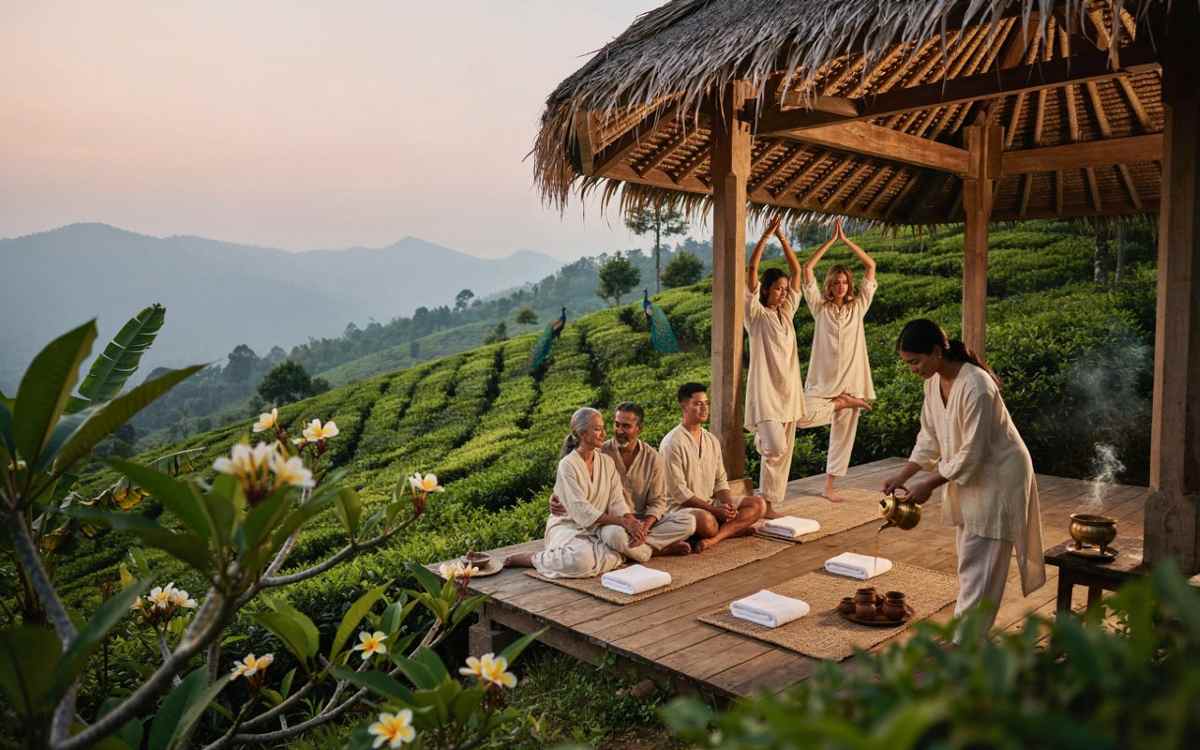
Image generated with Ai
Sri Lankan Tourism is slowly writing a new rule book, and the tale isn’t merely about the growth of tourism through airport gates. The island nation is slowly shifting towards how much money a tourist spends, how long they stay, and what they do with their money. With over 58,000 hotel rooms, tourism boards along with the hospitality sector are now paying particular attention to lucrative segments like luxury health spas, extended stay tourism, premium rail tours, and eco-tourism in communities.
Sri Lanka Tourism Moves Beyond The Arrival Count
For years, tourist arrivals have been one of the easiest ways to measure tourism success. But Sri Lanka’s latest tourism planning is putting more attention on revenue per visitor, average spending and length of stay.
The distinction matters.
A traveller staying several nights, booking premium accommodation, taking curated excursions, using wellness services and travelling across multiple regions can generate considerably more tourism value than a short visit built around a limited number of low-cost activities.
Advertisement
Advertisement
Sri Lanka Tourism’s own market analysis has recommended moving beyond arrival numbers and focusing more closely on visitor revenue, spending and length of stay. It also identifies high-yield markets and diversified tourism products as strategic priorities.
Advertisement
Advertisement
And with the country already attracting millions of visitors, the conversation is shifting from simply filling rooms to creating richer tourism experiences.
Luxury Wellness Gets A Bigger Role
Wellness is emerging as one of the clearest pillars of Sri Lanka’s high-value tourism strategy.
The island already has established Ayurveda traditions, spa resorts, yoga retreats and nature-based wellness experiences. Tourism authorities have been actively promoting luxury wellness products internationally, including through a dedicated programme highlighted in July 2026.
Advertisement
Advertisement
Sri Lanka also presented wellness, Ayurveda, luxury accommodation, wildlife, cultural heritage and bespoke experiences at ILTM Asia Pacific 2026 in Singapore, where 15 Sri Lankan companies participated in a dedicated tourism pavilion.
For travellers, this opens the door to itineraries that combine wellness retreats with destinations such as Kandy, Ella, Galle and Yala rather than treating a spa stay as a standalone holiday.
Advertisement
Advertisement
The focus is increasingly on complete experiences where accommodation, food, wellness, nature and local culture form one premium itinerary.
Longer Stays Become The New Tourism Currency
Here is the part that could quietly reshape the Sri Lankan holiday.
Authorities are placing greater emphasis on encouraging visitors to stay longer. Longer stays can increase spending across hotels, restaurants, transport operators, guides, attractions and local businesses while allowing travellers to explore more than one region.
Sri Lanka’s geography makes this particularly suitable for multi-stop holidays.
A visitor can begin in Colombo, travel towards Kandy, continue through the hill country to Ella, head south towards Yala and finish along the southern coast around Galle. Such an itinerary can combine cultural tourism, rail travel, wildlife, wellness and coastal experiences in a single trip.
Advertisement
Advertisement
The country’s 2026 growth scenarios specifically identify product diversification across wellness, nature-based, cultural and MICE tourism as important to future tourism growth.
Premium Rail Travel Enters The Picture
Rail travel is another piece of the high-value tourism puzzle.
Sri Lanka’s railway network already provides one of the country’s most recognisable travel experiences, particularly through the central highlands around Kandy and Ella. The emphasis now is increasingly on developing rail journeys as tourism products rather than treating trains purely as a means of getting from one destination to another.
That distinction could support premium sightseeing journeys, curated experiences and longer itineraries connecting the island’s major attractions.
For travellers, the attraction is obvious: a journey through tea country and mountain landscapes can become part of the holiday itself.
Advertisement
Advertisement
The strategy also aligns with identified infrastructure challenges. Sri Lanka’s public investment programme has highlighted weaknesses in rail and road infrastructure and the need for better tourism transport services.
Eco-Lodges Spread Tourism Beyond Major Hubs
Sri Lanka’s high-value strategy is not restricted to five-star resorts.
Community-based eco-lodges and smaller tourism businesses can distribute visitor spending into rural areas while giving travellers access to nature and local communities.
This matters because tourism activity remains concentrated in selected destinations. Government planning documents have identified the need to spread tourism geographically and develop underused products including wildlife, wellness, marine and nature-based tourism.
Areas around Yala, Sigiriya, Ella, the eastern coast and other secondary destinations can therefore play a larger role in longer, experience-led itineraries.
Advertisement
Advertisement
The objective is not simply more accommodation. It is a broader tourism ecosystem in which local businesses participate in visitor spending.
Sri Lanka Already Has A Larger Hotel Base
The high-yield shift comes alongside substantial accommodation growth.
Sri Lanka added approximately 4,600 rooms during 2025, taking registered accommodation capacity beyond 58,000 rooms, according to tourism officials. The country recorded a record 2,362,521 international tourist arrivals in 2025, surpassing its previous 2018 benchmark.
That expanding supply makes product differentiation increasingly important.
Instead of competing only on room numbers, Sri Lanka can use its hotels, boutique properties, villas, wellness resorts, heritage accommodation and eco-lodges to target distinct traveller segments.
Advertisement
Advertisement
Key Stats
- 58,000+: Registered accommodation rooms in Sri Lanka.
- 4,600: New rooms added during 2025.
- 2,362,521: International tourist arrivals recorded in 2025.
- US$148: Revised estimated average daily tourist spending used by SLTDA.
- 15: Sri Lankan companies showcased luxury tourism products at ILTM Asia Pacific 2026.
- 3 million: Approximate optimistic 2026 arrival scenario in SLTDA projections.
Timeline And Events
2025: Sri Lanka records 2.36 million international tourist arrivals and adds around 4,600 accommodation rooms.
January–July 2026: Sri Lanka records 1,343,418 tourist arrivals.
29 June–2 July 2026: Sri Lanka promotes luxury, wellness and bespoke tourism at ILTM Asia Pacific in Singapore.
July 2026: Sri Lanka Tourism highlights wellness, marine, cultural and nature-based tourism initiatives.
FAQ
1. What is high-yield tourism?
It focuses on attracting visitors who spend more, stay longer and participate in higher-value tourism experiences.
Advertisement
Advertisement
2. Which experiences are being prioritised in Sri Lanka?
Luxury wellness, longer stays, premium rail journeys, nature tourism and community-based eco-lodges are among the key areas.
3. Why is Sri Lanka focusing on visitor value?
Tourism planning increasingly measures revenue, spending and length of stay alongside arrival numbers to strengthen the sector’s economic contribution.
Conclusion
Tourism in Sri Lanka is progressing into an approach that incorporates value as well as the quantity of tourists that arrive, duration of stay, and money spent in their experience. High-end wellness retreats, luxury train rides and community-based eco-lodges ensure there is enough diversity in experiences that Sri Lanka can offer tourists who are looking for something unique. Its increasing accommodation network ensures that there is capacity to accommodate longer itineraries for travellers visiting the country.
Advertisement
