
Italy Follows France and Other European Countries in Dominating the Global Travel and Tourism Development Index in 2026

Published
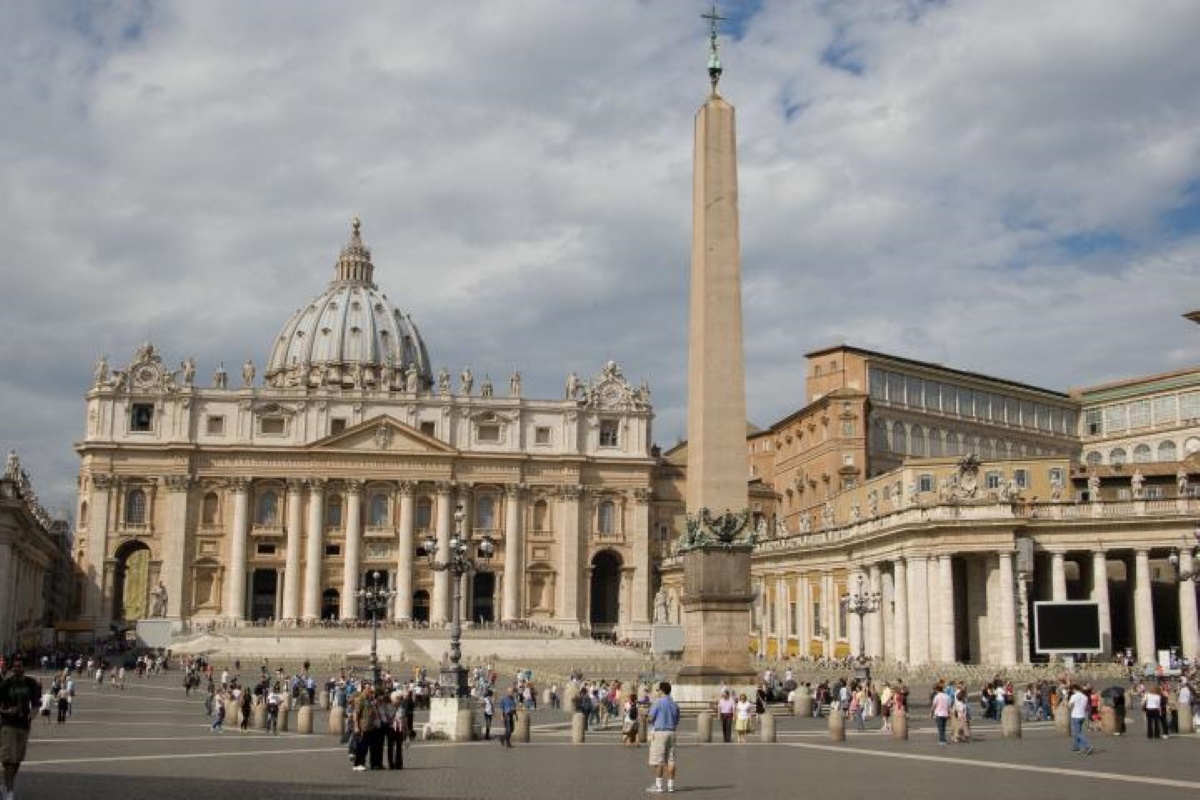
Italy follows France and other European countries in dominating the Global Travel and Tourism Development Index in 2026, as Europe secures six positions in the global Top 10, led by Spain ranking third globally with a score of 5.22, followed by France in fifth, Germany in sixth, the United Kingdom in seventh, Switzerland in ninth and Italy in tenth. The strong performance reflects Europe’s advanced tourism infrastructure, connectivity, cultural resources and resilient visitor economies.
Europe has delivered a commanding performance in the Travel & Tourism Development Index 2026, taking six of the world’s Top 10 positions and reinforcing the region’s status as one of the strongest environments for building a competitive, resilient and high-value tourism economy.
The latest index puts Japan first globally with 5.27, followed by the United States at 5.23. But Europe dominates the rest of the leaderboard. Spain ranks third globally with 5.22, followed by France in fifth, Germany sixth, the United Kingdom seventh, Switzerland ninth and Italy tenth.
The ranking comes as global tourism reaches new heights. International tourist arrivals hit a record 1.5 billion in 2025, while Travel & Tourism contributed a record US$11.6 trillion to global GDP and supported 366 million jobs. Around 307 million international trips were already recorded globally during the first quarter of 2026.
Advertisement
Advertisement
Europe Takes Six Places in the Global Top 10
The scale of Europe’s representation is striking. Of the ten economies identified as having the strongest enabling conditions for Travel & Tourism development, 60% are European.
| European Rank | Global Rank | Country | TTDI 2026 Score |
|---|---|---|---|
| 1 | 3 | Spain | 5.22 |
| 2 | 5 | France | 5.17 |
| 3 | 6 | Germany | 5.09 |
| 4 | 7 | United Kingdom | 5.08 |
| 5 | 9 | Switzerland | 4.97 |
| 6 | 10 | Italy | 4.93 |
Europe’s dominance is not simply a measure of how many tourists visit these countries. The TTDI examines the conditions that enable tourism to develop, including infrastructure, resources, connectivity, business conditions and sustainability.
Advertisement
Advertisement
Europe’s leading economies benefit from highly developed transport and tourism infrastructure, economic integration, international openness and extensive cultural and natural resources. Another notable feature is consistency. Spain, France, Germany, the UK, Switzerland and Italy have established tourism ecosystems that allow them to compete at the highest global level even as destinations in Asia-Pacific and the Middle East expand rapidly.
Spain: Europe’s No.1 Tourism Economy in the Index Turns Strength Into Record Spending
Spain is Europe’s highest-ranked economy in the 2026 TTDI, scoring 5.22 and taking third place globally. That ranking is supported by an enormous tourism economy that continues to translate visitor demand into spending.
During January–July 2026, Spain welcomed 58.1 million international tourists, an increase of 4.6% year on year. Britain alone supplied 11.51 million visitors, followed by France with 7.22 million and Germany with 6.88 million.
The revenue story is even stronger. International tourists spent €82.05 billion during the first seven months, up 7.8%. July alone generated €18.22 billion, a jump of 10.9%. Average expenditure reached €1,579 per tourist in July, while average daily spending climbed to €218.
This gap between arrival and expenditure growth is crucial. Spain is not merely attracting more travellers; spending is increasing considerably faster than visitor volume. Its mixture of beaches, islands, cultural cities, rail and aviation connectivity, gastronomy and extensive accommodation infrastructure helps explain why Spain combines exceptional demand with such a strong enabling environment.
For Europe, Spain provides an important competitive anchor. It demonstrates that a mature destination can remain globally competitive while extracting greater economic value from an already enormous visitor base.
Advertisement
Advertisement
France: Fifth Globally as International Tourism Revenue Heads Towards €80 Billion
France follows Spain as Europe’s second-highest-ranked economy, securing fifth place globally with a TTDI score of 5.17.
Its 2026 tourism economy is also delivering substantial financial results. International tourism receipts reached €40 billion during the first half of 2026, an increase of 7% year on year. France’s travel balance surplus reached €14.4 billion, up 23%.
July added another €9.4 billion in international receipts, up 3.7%. Spending from British visitors increased 13%, German receipts rose 9% and Dutch receipts advanced 6%.
France could reach approximately €80 billion in international tourism receipts during 2026, after €77 billion in 2025. Commercial accommodation demand also remained resilient, increasing around 2% during the first half. Tourist rentals grew 4%, while hotel demand increased 2%.
France’s strength extends from Paris and major cultural attractions to Mediterranean resorts, Alpine tourism, gastronomy and regional destinations. That breadth supports Europe’s ability to compete simultaneously in city, cultural, luxury, nature and leisure tourism.
Germany: Sixth Globally as Overnight Stays Reach a New January–July Record
Germany takes sixth place globally with a TTDI score of 5.09, putting another major European economy immediately behind France.
Advertisement
Advertisement
Its strength is particularly interesting because Germany combines leisure tourism with powerful business, cultural, urban and events markets.
German accommodation establishments recorded 58.4 million overnight stays in July 2026, an increase of 3.2% compared with July 2025. Domestic travellers generated 47.7 million nights, while international guests produced 10.8 million, with both segments growing 3.2%.
More importantly, January–July overnight stays reached 282.1 million, establishing a new record for the period. That was 0.9% higher than 2025 and even 0.4% above the previous January–July record established in pre-pandemic 2019.
International visitors generated 47.1 million overnight stays, up 1%, while domestic tourism produced 235 million.
Germany therefore strengthens European tourism through both international and enormous domestic demand. Its transport infrastructure, major cities, trade fairs, cultural assets and central position within Europe’s integrated travel network give the region another highly developed tourism platform.
United Kingdom: Seventh Globally With £33.9 Billion in Forecast Inbound Spending
The United Kingdom ranks seventh globally with 5.08, giving Europe four economies among positions three through seven.
Advertisement
Advertisement
The UK is forecast to welcome 44.2 million inbound visits in 2026, with international travellers expected to spend £33.9 billion. Both visits and nominal expenditure are projected to rise around 2% compared with 2025.
European markets are particularly important. Inbound visits from Europe are expected to increase 4% in volume and 7% in value, even as some long-haul markets face weaker conditions.
The 2026 outlook nevertheless carries some uncertainty, with forecasts having been revised from stronger expectations earlier in the year. This illustrates the competitive pressure facing even highly developed tourism economies.
London’s global appeal, heritage attractions, major events, cultural tourism and extensive aviation network continue to support the UK’s position among the world’s strongest tourism environments.
Its seventh-place ranking also strengthens Europe’s geographic diversity. The continent’s Top 10 representation extends well beyond Mediterranean leisure tourism into one of the world’s largest city, cultural and business-travel markets.
Switzerland: Ninth Globally as Premium Tourism Strengthens Europe’s Diversity
Switzerland ranks ninth globally with a TTDI score of 4.97, giving Europe another distinctive tourism model.
Advertisement
Advertisement
Unlike Spain, France or Italy, Switzerland does not depend on enormous mass-market visitor volumes to demonstrate tourism competitiveness. Its proposition is built around Alpine landscapes, winter sports, lakes, rail travel, premium accommodation, outdoor recreation and high-quality infrastructure.
That makes Switzerland strategically important to Europe’s overall tourism position.
The TTDI is not simply an arrivals ranking. A smaller country can outperform much larger tourism markets when it provides the infrastructure, resources and operating environment needed for tourism development.
Switzerland illustrates this clearly. Its inclusion means Europe’s Top 10 representation stretches across Mediterranean leisure destinations, major urban economies and Alpine nature markets.
That diversity reduces the region’s dependence on any single tourism product. European tourism can simultaneously compete for beach travellers, cultural visitors, business travellers, winter-sports tourists, luxury customers and nature-focused holidays.
Italy: Tenth Globally as Foreign Visitors Drive Nearly 148 Million Q2 Nights
Italy completes Europe’s extraordinary representation, ranking tenth globally with a score of 4.93.
Advertisement
Advertisement
Its 2026 accommodation statistics reveal why Italy remains such an important component of European tourism.
During the second quarter of 2026, Italian accommodation establishments recorded almost 47 million arrivals and nearly 148 million overnight stays. Arrivals declined slightly by 0.8%, but overnight stays increased 3.9%.
Foreign visitors drove much of that strength. International tourists accounted for 61.6% of all overnight stays, with their nights increasing 4.6%.
Hotels recorded 27.6 million arrivals and 77.6 million overnight stays. Alternative accommodation generated more than 19.3 million arrivals and approximately 70.3 million nights.
Non-hotel overnight stays grew 5.6%, more than twice the 2.4% increase recorded by hotels. Foreign demand in alternative accommodation increased an even stronger 6.4%.
Italy’s combination of cultural cities, Mediterranean coastline, gastronomy, heritage and regional tourism consequently remains one of Europe’s most powerful tourism assets.
Advertisement
Advertisement
Six European Nations Reveal Why the Continent Still Sets the Global Benchmark
The combined Top 10 representation tells a bigger story than any single country’s score.
Spain, France, Germany, the United Kingdom, Switzerland and Italy occupy six of the ten highest positions globally. Japan, the United States, Australia and China are the only non-European economies breaking into that group.
The advantage is structural.
Europe possesses some of the world’s densest aviation and rail networks. Travellers can cross multiple countries during one holiday. Mature hotel markets support everything from budget travel to luxury tourism. Cultural and natural resources are spread across hundreds of destinations rather than concentrated in one tourism corridor.
Spain provides Mediterranean scale and exceptional international expenditure. France combines global city tourism with cultural and regional depth. Germany brings enormous domestic and international overnight demand. Britain adds one of the world’s most important aviation and urban tourism systems. Switzerland demonstrates premium and nature-based competitiveness. Italy contributes extraordinary heritage alongside massive accommodation demand.
The result is not merely six successful national tourism economies. Together, they form part of a highly interconnected European visitor economy.
Advertisement
Advertisement
Europe Faces Growing Competition Despite Its 2026 Dominance
Europe’s commanding position should not be interpreted as permanent.
The 2026 index shows that tourism competitiveness is improving across a broad range of global economies. Emerging destinations in Asia-Pacific and the Middle East are investing heavily in airports, hotels, attractions, technology and tourism infrastructure.
Japan’s rise to first place is particularly significant. With a score of 5.27, it sits above the United States at 5.23 and Spain at 5.22.
European destinations also face internal challenges. These include labour shortages, infrastructure pressure, sustainability requirements, overcrowding in popular destinations and the need to balance resident quality of life with continued tourism growth.
The next phase will therefore be about protecting quality as much as generating higher visitor numbers.
European Tourism Enters 2026 From a Position of Extraordinary Strength
The Travel & Tourism Development Index 2026 delivers a clear message: Europe remains exceptionally well positioned to enable tourism development at global scale.
Advertisement
Advertisement
Spain leads the European group at 5.22, followed by France at 5.17, Germany at 5.09, the United Kingdom at 5.08, Switzerland at 4.97 and Italy at 4.93.
Those rankings are reinforced by powerful real-world tourism indicators. Spain generated more than €82 billion in international visitor expenditure in seven months. France recorded €40 billion in international receipts in the first half. Germany reached a record 282.1 million overnight stays through July. Britain is forecasting £33.9 billion in inbound expenditure. Italy recorded nearly 148 million accommodation nights in Q2 alone.
The figures help explain why Europe occupies six positions in the global Top 10.
Its advantage is not built on one country, one tourism product or one source market. It comes from an interconnected ecosystem of infrastructure, aviation, rail, accommodation, culture, nature, cities and mature visitor economies.
As international tourism continues expanding, Europe enters the next phase from a formidable position. The challenge now is ensuring that its tourism leadership remains competitive, resilient and capable of converting enormous visitor demand into sustainable long-term economic value.
Italy follows France and other European countries in dominating the Global Travel and Tourism Development Index in 2026, as Europe secures six positions in the global Top 10 through strong tourism infrastructure, connectivity, cultural assets and resilient economies that continue strengthening the region’s worldwide competitiveness.
In conclusion, Italy follows France and other European countries in dominating the Global Travel and Tourism Development Index in 2026, as Europe secures six positions among the world’s top tourism economies. Strong infrastructure, connectivity, cultural heritage, sustainability efforts and mature visitor markets continue driving this leadership. Italy’s tenth-place ranking, alongside France, Spain, Germany, the United Kingdom and Switzerland, highlights how European countries maintain global tourism competitiveness through diverse and resilient travel ecosystems.
Advertisement
