

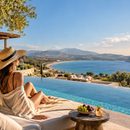
Image generated with Ai
A new ultra-luxury cruise era is being reshaped in the Caribbean and the Antilles.
The 94-guest yacht Amangati is preparing a major debut in late 2027 after its Mediterranean launch in spring 2027.
This matters now because high-end cruise demand is shifting away from large-ship mass tourism toward ultra-small, exclusive yacht experiences.
The development directly affects luxury travellers, boutique cruise operators, and Caribbean island economies competing for high-value visitors.
The vessel’s arrival signals a sharp change in how elite travel routes are being designed, especially across Nevis, Saint Barthélemy, Barbados, and the Dutch Caribbean. What many operators are still missing is the speed of this shift toward ultra-limited capacity, high-spend voyages.
Advertisement
The centrepiece of this transformation is the vessel Amangati, developed by Aman at Sea in collaboration with Cruise Saudi.
Built at T. Mariotti in Italy, the yacht is designed for only 94 guests across 47 suites, positioning it in the ultra-luxury micro-cruise category.
Advertisement
Advertisement
This is not a mass cruise product. It is a controlled-capacity travel model.
It prioritises privacy, time ashore, and access to ports that large cruise ships cannot reach.
The Caribbean deployment begins on 21 November 2027 and runs until 2 January 2028, directly targeting peak winter luxury travel demand from North America and Europe.
Before arriving in the Caribbean, Amangati will complete its inaugural Mediterranean season in spring 2027. That phase includes curated voyages such as:
The repositioning crossing from Málaga to Antigua is itself positioned as a wellness-focused ocean journey, including stops in Cádiz and Ponta Delgada in the Azores.
Advertisement
Advertisement
This transition is critical. It signals how ultra-luxury cruise brands are no longer simply repositioning ships. They are designing narrative-led voyages that extend the guest experience across continents.
Once in the Caribbean, Amangati operates tightly curated 5–8 night itineraries across three core zones.
The programme ends with a 2-night New Year’s anchorage in Nevis, reinforcing the island’s positioning as a high-end private celebration hub.
The most important transformation is not just the ship. It is the strategy behind it.
Most mainstream cruise operators continue to focus on volume-based tourism, larger vessels, and high passenger density. However, Amangati represents a direct counter-movement.
Three key shifts are emerging:
With only 94 guests, revenue is driven by premium pricing rather than passenger volume. This reduces pressure on destinations and increases exclusivity value.
Smaller ports such as Saba, Montserrat, and Prickly Pear Cay are central to the itinerary. These destinations are typically bypassed by larger cruise ships.
Longer port stays and slower sailing routes prioritise experience over speed, aligning with high-net-worth traveller expectations.
This is where many operators are falling behind. They are still building capacity. Amangati is building scarcity.
For destinations like Nevis, Saint Lucia, and Barbados, the arrival of ultra-luxury micro-yachts represents a structural tourism shift.
Instead of focusing on mass arrivals, governments and tourism boards are increasingly prioritising:
According to regional tourism strategies supported by Caribbean tourism authorities, the focus is shifting toward sustainability-driven luxury growth rather than volume expansion.
This aligns strongly with Amangati’s operational model.
A new trend is emerging in global tourism—an “invisible cruise economy”.
This refers to ultra-luxury vessels that do not dominate ports visually or numerically but generate disproportionate economic impact per guest.
Amangati is positioned at the centre of this shift.
Key characteristics include:
This model also reduces overtourism pressure on fragile island ecosystems while increasing spending efficiency per stop.
Caribbean governments are expected to increasingly compete for such vessels due to their economic efficiency and low infrastructure strain.
The partnership between Aman and Cruise Saudi is expanding the competitive landscape of ultra-luxury cruising globally.
It signals that the future of cruise tourism is no longer defined by ship size but by exclusivity architecture.
Operators focusing on mega-ships may find themselves under pressure as demand shifts toward:
Amangati’s deployment is one of the clearest examples of this transition being executed at scale.
The arrival of Amangati in the Caribbean is not a routine fleet expansion.
It represents a structural redesign of how luxury tourism is distributed across islands like Nevis, Barbados, and Saint Barthélemy.
As the 2027–2028 season approaches, destinations positioned along its route stand to benefit from high-value, low-volume tourism that prioritises experience over scale.
The wider industry signal is clear. Ultra-luxury cruising is moving away from visibility and toward exclusivity.
Stakeholders who fail to adapt to this shift risk being left outside the next wave of premium tourism growth.
The Caribbean is not just hosting a new yacht.
It is entering a new tourism hierarchy.
Advertisement
Advertisement
Advertisement













Friday, September 4, 2026
Friday, September 4, 2026

Friday, September 4, 2026

Thursday, September 3, 2026

Wednesday, September 2, 2026

Friday, September 4, 2026
Friday, September 4, 2026