
Greece Faces Nationwide 24-Hour Tourism Strike as Bulgaria Holiday Travel Surges, Hotels and Restaurants Expected to Stay Open While Demonstrations Continue: What Every Traveller Should Know Before Visiting

Published
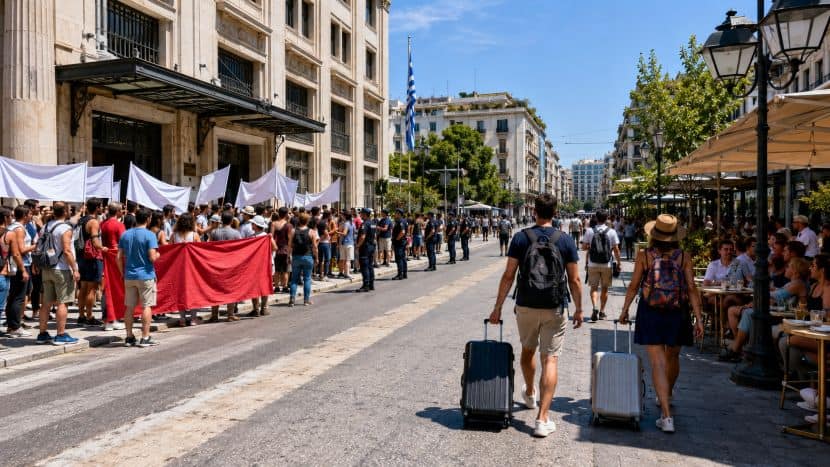
Greece 24-hour strike has arrived at one of the busiest periods of the country’s tourism calendar, drawing attention from travellers, tour operators and hospitality businesses across Europe. Employees working in hotels, restaurants and other tourism-related services have launched coordinated industrial action, calling for better wages, improved workplace conditions and stronger implementation of collective labour agreements. Although demonstrations are expected in several Greek cities, including Athens, authorities and tourism stakeholders anticipate that hotels, restaurants and the majority of visitor services will continue operating throughout the day. Consequently, most international visitors are not expected to face widespread disruptions to their holidays, even as protests highlight the growing labour challenges confronting one of Europe’s largest visitor economies.
The timing of the Greece 24-hour strike is particularly significant because summer demand is already placing considerable pressure on transport infrastructure linking Bulgaria and Greece. Thousands of holidaymakers are travelling south through major border crossings every day, creating congestion along the Struma Motorway and around the Kresna Gorge. While the industrial action itself is unlikely to interrupt accommodation or tourism services on a large scale, travellers are still being advised to allow additional journey time, monitor official travel information and prepare for heavier-than-normal road traffic. For the travel industry, the strike serves as another reminder that labour shortages and workforce expectations are becoming increasingly influential factors in maintaining Europe’s highly competitive tourism economy.
Advertisement
Advertisement
A Summer Protest That Reflects Wider Challenges Across European Tourism
Industrial disputes within tourism are no longer isolated incidents. Over the past several years, many European destinations have experienced increasing pressure from hospitality workers seeking higher salaries and improved employment standards as visitor numbers recovered strongly following the pandemic.
Greece has experienced one of the fastest tourism recoveries in Europe. International arrivals have continued to rise, hotels have reported high seasonal occupancy, and demand for restaurants, resorts, transport services and visitor attractions has remained robust throughout successive summer seasons. However, rapid growth has also increased operational pressures across the hospitality workforce.
Advertisement
Advertisement
Many tourism businesses continue to face recruitment difficulties, seasonal staffing shortages and increasing labour costs. Employees argue that while visitor spending has risen, wages have not always kept pace with inflation or the rising cost of living. These concerns have contributed to the latest nationwide industrial action involving workers from multiple tourism-related sectors.
Unlike transport strikes that can halt airports, ferries or railways, this coordinated action is primarily intended to raise awareness while minimising direct disruption to visitors. Industry observers therefore expect hotels, restaurants and tourism businesses to remain largely operational despite demonstrations taking place in several cities.
Advertisement
Advertisement
Why Tourism Matters So Much to Greece
Tourism remains one of Greece’s most important economic pillars. According to official government and national tourism statistics, the sector supports hundreds of thousands of jobs directly while contributing substantially to national GDP through accommodation, food services, transport, entertainment and cultural attractions.
The country’s tourism economy extends well beyond the famous islands. Cities including Athens and Thessaloniki, alongside destinations such as Crete, Rhodes, Corfu and the Peloponnese, rely heavily on seasonal visitor spending during the summer months.
Advertisement
Advertisement
The current strike therefore arrives during a period when businesses are handling some of the year’s highest visitor volumes.
| Greek Tourism Economic Indicator | Latest Available Figures | Travel Industry Significance |
|---|---|---|
| International visitor arrivals | Over 36 million annually | Continues placing pressure on hospitality capacity |
| Tourism contribution to GDP | Approximately one-fifth of national economy | Demonstrates strategic importance of tourism |
| Tourism employment | Hundreds of thousands of direct and indirect jobs | Labour shortages directly affect service quality |
| Peak travel season | June to September | Highest accommodation occupancy and visitor spending |
| Primary source markets | Germany, United Kingdom, Italy, France, Balkans | Diverse international visitor base |
The figures illustrate why employment issues within tourism attract considerable national attention. Maintaining service quality during peak demand depends heavily upon retaining experienced hospitality professionals.
Bulgaria-Greece Travel Corridor Remains Exceptionally Busy
While demonstrations are occurring within Greece, another challenge for travellers originates outside the tourism industry itself—road congestion.
Every summer, Bulgaria becomes one of the principal outbound markets for northern Greece. Families, independent travellers and organised tour groups travel by private vehicles and coaches to coastal resorts throughout Macedonia, Halkidiki, Kavala and neighbouring regions.
Advertisement
Advertisement
This seasonal migration creates significant traffic flows along the Bulgarian motorway network before reaching the Greek border.
Authorities have continued advising motorists to begin journeys early in the morning, particularly when travelling through the Kresna Gorge section of the Struma Motorway, where geography limits opportunities for road expansion and overtaking.
| Travel Route | Current Summer Situation | Traveller Advice |
| Bulgaria–Greece border crossings | Heavy seasonal demand | Allow additional travel time |
| Struma Motorway | Increased vehicle volumes | Travel outside peak hours where possible |
| Kresna Gorge section | Frequent congestion during weekends | Expect slower traffic movement |
| Northern Greece coastal routes | High tourist traffic | Monitor local traffic information |
| Athens metropolitan area | Demonstrations expected | Plan alternative city routes if necessary |
Although these transport delays are unrelated to the labour protests, both developments coincide during one of the busiest travel periods of the year, requiring visitors to plan more carefully.
Hotels and Restaurants Expected to Continue Serving Visitors
One reassuring aspect for international tourists is that hospitality operations are expected to remain largely unaffected.
Industry expectations suggest accommodation providers will continue welcoming guests, restaurants will maintain normal meal services and tourist attractions should generally remain accessible. Some establishments may operate with reduced staffing levels, but widespread closures have not been anticipated.
For tour operators, this distinction is particularly important. Unlike aviation strikes or nationwide transport shutdowns, the current industrial action is centred on employment conditions rather than restricting visitor movement.
Advertisement
Advertisement
Consequently, package holidays, hotel stays and organised excursions are expected to proceed largely according to schedule.
At the same time, tourism professionals across Europe will be watching developments closely. Labour relations have become an increasingly important operational risk for destinations experiencing record visitor numbers. As demand continues growing, ensuring competitive employment conditions may become just as important as investing in new hotels, airports and tourism infrastructure.
How the Greece 24-Hour Strike Could Influence Summer Travel Planning
For most holidaymakers, the immediate impact of the Greece 24-hour strike is expected to remain limited. Nevertheless, the event highlights how labour-related issues can influence travel planning, particularly during the busiest months of the year.
Travellers arriving by air are unlikely to encounter major disruptions solely because of the hospitality strike. Hotels are expected to honour reservations, restaurants are anticipated to continue serving guests, and organised excursions should largely operate as scheduled. However, demonstrations in central Athens could result in temporary traffic diversions and slower road movement around government buildings and key public squares.
Visitors planning day trips within the capital should therefore allow additional travel time, especially if using taxis or coaches. Those with museum visits, guided tours or cruise transfers should remain in contact with tour operators for the latest operational updates.
For travellers driving from Bulgaria into Greece, road congestion remains a more significant concern than the strike itself. Peak summer weekends regularly generate extended waiting times at border crossings and on major highways, particularly as holiday traffic heads towards popular beach destinations in northern Greece.
Advertisement
Advertisement
Labour Pressures Are Becoming a Wider European Tourism Challenge
The latest industrial action reflects a broader trend across Europe’s tourism and hospitality sector. Since international travel rebounded strongly after the pandemic, many destinations have experienced record visitor demand alongside persistent recruitment difficulties.
Hotels, restaurants, resorts and seasonal tourism businesses have increasingly competed for experienced workers. Rising inflation, higher housing costs in tourist destinations and longer working hours during peak seasons have intensified discussions over employee welfare across several European markets.
The issue extends beyond Greece. Tourism businesses throughout Southern Europe continue investing in recruitment, staff retention and training programmes to improve service standards while responding to increasing visitor expectations.
For travel companies, workforce stability has become a commercial priority. Consistent staffing levels help maintain guest satisfaction, reduce operational risks and support destination competitiveness during periods of exceptionally high demand.
| European Tourism Workforce Trends | Current Industry Position | Potential Impact on Travellers |
|---|---|---|
| Seasonal labour shortages | Continuing in many destinations | Possible pressure on service capacity |
| Rising wage expectations | Increasing across hospitality | Higher operating costs for businesses |
| Recruitment competition | Strong demand for skilled workers | Greater focus on employee retention |
| Summer occupancy | Near annual peak | Higher workload for tourism staff |
| Visitor expectations | Continuing to rise | Increased emphasis on service quality |
Bulgaria-Greece Tourism Links Continue to Strengthen
Despite the current strike, Greece remains one of the most popular overseas holiday destinations for Bulgarian travellers.
The close geographical proximity between the two countries allows visitors to reach Greek resorts by private car within a relatively short journey. Destinations including Halkidiki, Kavala, Thassos, Alexandroupoli and the wider Macedonian coastline continue attracting significant numbers of Bulgarian holidaymakers each summer.
Advertisement
Advertisement
This sustained demand benefits accommodation providers, restaurants, retailers and local tourism businesses throughout northern Greece. It also reinforces the importance of efficient cross-border transport infrastructure and reliable visitor services during the peak holiday season.
Travel agencies have continued promoting Greek seaside holidays throughout the summer, while accommodation demand remains healthy despite temporary labour demonstrations.
| Travel Factor | Current Situation | Advice for Visitors |
| Hotel reservations | Operating normally | Confirm booking before departure |
| Restaurants | Expected to remain open | Allow flexibility during busy meal periods |
| Demonstrations | Mainly concentrated in cities | Avoid protest locations where possible |
| Border traffic | Heavy seasonal demand | Travel early and monitor road conditions |
| Coastal resorts | High visitor numbers | Book accommodation well in advance |
What International Travellers Should Keep in Mind
Although the strike is attracting considerable media attention, tourism professionals continue advising visitors not to alter their holiday plans unnecessarily.
Instead, travellers should focus on practical preparation. Checking accommodation confirmations before departure, allowing additional road travel time and following official travel information remain sensible precautions throughout the busy holiday period.
Those staying in Athens may encounter demonstrations or temporary road restrictions in parts of the city, but these are expected to remain localised. Visitors heading directly to island destinations or coastal resorts are unlikely to experience significant interruptions linked to the industrial action.
The combination of strong tourism demand and seasonal traffic means journey planning remains particularly important this summer, regardless of the strike.
Advertisement
Advertisement
The Bigger Picture for Greece’s Tourism Economy
The Greece 24-hour strike illustrates the growing balance that successful tourism destinations must maintain between economic growth and workforce sustainability.
As international arrivals continue reaching historically high levels, the hospitality sector faces increasing pressure to recruit, retain and support employees capable of delivering high-quality visitor experiences. Competitive wages, improved working conditions and effective labour relations are becoming increasingly important components of destination competitiveness alongside investment in hotels, airports and tourism infrastructure.
For the wider European travel industry, the strike serves as a reminder that tourism success depends not only on attracting visitors but also on maintaining a resilient workforce capable of supporting continued growth. While the current industrial action is not expected to significantly disrupt holidays, it reflects structural challenges that many tourism economies are likely to address in the coming years.
For travellers, the outlook remains reassuring. Greece continues welcoming millions of international visitors during the summer season, and the country’s accommodation, dining and tourism services are expected to operate largely as normal. Nevertheless, visitors should remain informed, monitor official travel updates and allow additional flexibility when travelling through busy transport corridors, particularly between Bulgaria and Greece.
Advertisement
