
Thailand and More Reshape Asia Tourism with New Air Routes, Visa Reforms and Regional Travel Corridors

Published
There is currently a shift in the architecture of the structural nature of cross-border tourism in Asia through deregulation, aviation pacts, and diplomatic relationships. In East and Southeast Asia, visa policies and traditional flight paths have been broken down in light of sovereign policy making, monetization of stopovers, and decentralized passenger corridors. Overcrowded urban centers are being abandoned by selective travelers for cultural cities, and regional economic connections are being developed through bilateral flight pacts. There has been a clear shift away from past patterns of tourism in this system transformation, and a flexible commercial system has been created that will alter regional traffic and capital movement indefinitely.
Macroeconomic Blueprint and the Great Realignment of Cross-Border Tourism in Asia
A transformative juncture has been reached in the structural reorganisation of international passenger mobility across the Asia-Pacific region. Historically, cross-border leisure and corporate travel in Asia was operated along heavily regulated, hub-and-spoke civil aviation corridors defined by the restrictive bilateral frameworks established under the Chicago Convention. Legacy flag carriers were systematically protected by sovereign states through rigid frequency controls, tightly constrained point-of-entry designations, and cumbersome consular visa barriers. However, policymakers and destination marketing organisations have been compelled by global inflationary headwinds, sustained operational expenditure pressures, and volatile aviation fuel prices to abandon protectionist models in favour of dynamic border deregulation and sovereign travel facilitation.
It was reported by UN Tourism in its World Tourism Barometer that international tourist arrivals recorded a modest global increase in the first half of the year, even as discretionary travel across several traditional markets was constrained by geopolitical instability and rising transportation costs. In contrast to the plateau observed in mature Western economies, the Asia-Pacific sector was expanded in early periods, led by robust cross-border activity across North-East and Southeast Asia. It is projected by the Pacific Asia Travel Association that hundreds of millions of international visitor arrivals across thirty-nine Asia-Pacific destinations will be recorded, underpinned by regional deregulation and intra-Asian demand.
Structural Comparison of Regional Travel Frameworks
| Mobility Dimension | Traditional Operating Framework | Realignment Framework | Commercial and Strategic Yield |
| Geopolitical Routing | Fixed seasonal itineraries to Tier-1 capitals | Diplomatic realignments and mutual visa exemptions | Redirection of high-yield outbound flows to emerging hubs |
| Transit Passenger Economics | Passive lounge and duty-free terminal dwell | Municipal layover tours and short-stay packages | Conversion of airport dwell times into regional economic spend |
| Geographic Dispersion | Hyper-concentration in primary gateways | Decentralisation to secondary cultural enclaves | Mitigation of overtourism and expanded rural development |
| Bilateral Air Services | Restrictive flight caps protecting flag carriers | Capacity-doubling open skyways and secondary routing | Direct point-to-point operations bypassing legacy mega-hubs |
This fundamental transition is underpinned by four mutually reinforcing trends: the diplomatic diversion of mass tourist flows during peak holiday cycles, the municipal monetisation of long-haul airport dwell times, a decisive structural migration away from oversubscribed primary metropolitan centres toward secondary cultural enclaves, and aggressive bilateral air services liberalisation between high-growth emerging economies. Through the dismantling of institutional bottlenecks, resilient corridors designed to capture high-margin passenger revenue are being engineered by Asian transport ministries and national tourism authorities.
Advertisement
Advertisement
Deconstructing Legacy Air Regimes and Sovereign Travel Hacks
International aviation across Asia was historically engineered around bilateral capacity reciprocity. Flying rights were strictly regulated by governments through air services agreements that specified exact flight frequencies, aircraft gauges, and designated port gateways. Artificial bottlenecks were created by this regulatory rigidity, compelling secondary-city passengers to be funneled through congested national hubs such as Tokyo Haneda, Singapore Changi, or Bangkok Suvarnabhumi. Heightened transit friction, higher itinerary costs, and vulnerability to localized supply disruptions were consequently experienced.
These legacy constraints are being dismantled during the modern phase of cross-border tourism in Asia through sovereign policy adaptations. Unilateral and bilateral visa-waiver protocols are being enacted by individual states, reciprocal visa exemptions are being granted, and outdated frequency-based air agreements are being replaced with flexible capacity ceilings, rather than waiting for multilateral treaties. Seamless, inclusive mobility has been prioritised under the ASEAN Tourism Sectoral Plan by reducing institutional border friction and integrating regional circuits. Civil aviation is being transformed by these administrative interventions from an instrument of national carrier protectionism into an engine of regional macroeconomic development.
Advertisement
Advertisement
Geopolitical Re-Routing: Southeast Asia Captures China Outbound Travel
How rapidly regional travel hierarchies can be reshaped by sovereign policy choices and diplomatic frictions is illustrated by the redistribution of outbound tourist capital from Mainland China. For decades, primary metropolitan centres across Japan—predominantly Tokyo, Osaka, and Kyoto—were represented as the premier destinations for Chinese holidaymakers during the traditional National Day Golden Week. However, a pronounced market contraction was triggered by heightened bilateral friction between Beijing and Tokyo. It has been reported by Chinese travel platforms that Japan has fallen completely out of the top ten holiday destination rankings compiled by major booking agencies like Tuniu, with sharp multi-month declines in flight and accommodation reservations from Mainland hubs to Japanese metropolitan centres being recorded.
This displaced consumer volume has been aggressively captured by Southeast Asian destinations. Bangkok has been ranked as the undisputed primary outbound international destination for Chinese travellers during Golden Week by outbound tracking data released by Tongcheng Travel, with its Japanese competitors being unseated. Even steeper growth trajectories were recorded by island destinations in Thailand, where a surge in forward flight bookings from China to Phuket was registered.
Advertisement
Advertisement
This outbound pivot has occurred against the backdrop of unprecedented domestic and outbound holiday movement within China itself. It was recorded by the Ministry of Transport of the People’s Republic of China that hundreds of millions of interregional and cross-border passenger trips were logged on a single peak holiday day, representing the most congested travel day in the nation’s operational history and nearly doubling baseline travel velocity. Across the entirety of the Golden Week holiday window, billions of domestic and international journeys were projected by China’s transport authorities, demonstrating that the structural appetite for high-density holiday travel remains exceptionally resilient despite macroeconomic adjustments.
Strategic Execution of Thailand’s Nihao Month Campaign
To convert this macroeconomic flow into sustained economic output, the nationwide “Nihao Month” campaign was initiated by the Tourism Authority of Thailand, structured under the diplomatic umbrella theme of “Zhong Tai Yi Jia Qin”—proclaiming that China and Thailand are family. It was confirmed by TAT Governor Thapanee Kiatphaibool that pre-departure digital conversion was directly linked to on-ground merchant privileges by the initiative, targeting a significant influx of Chinese visitor arrivals and generating substantial foreign exchange during the extended Golden Week holiday period, representing notable increases in arrivals and expenditure yield over the previous year.
The commercial execution of Nihao Month was supported by strategic integrations across Chinese digital platforms and domestic Thai retail infrastructure. Operational alliances were established by TAT with Meituan, WeChat Pay, Grab Thailand, and Alipay, deploying real-time booking discounts and curated lifestyle itineraries. On the ground, twenty major enterprise groups across five primary service sectors were assembled under the Chinese Passport Privilege programme, providing commercial benefits at major retail complexes operated by Central Pattana, Siam Piwat, The Mall Group, and the newly unveiled One Bangkok commercial district. Concurrently, familiarisation initiatives were deployed with Chinese content creators across regional circuits—spanning Krabi, Phetchaburi, Chiang Rai, and Koh Samet—under the marketing banner “Healing is a New Luxury”, directing affluent Chinese travellers into provincial economies.
Urban Mitigation and Climate Resilience in Metropolitan Bangkok
These critical revenue streams were safeguarded against environmental disruption through urban flood-control interventions implemented by the Thai government. Confronted with late-monsoon rainfall and northern riverine runoff threatening the capital basin, industrial water-pushing vessels were deployed across eight strategic drainage canals by the Bangkok Metropolitan Administration, and vulnerable low-lying tourist enclaves along the Chao Phraya River were fortified. High-density cultural corridors—such as Song Wat and Khlong Bang Luang, where international visitor footfall surged substantially—were shielded by these infrastructure defences, ensuring that projected tourism receipts were not derailed by external environmental volatility.
Advertisement
Advertisement
How climate adaptation policy directly intersects with international tourism competitiveness is illustrated by these public works. While water levels were managed by municipal engineers through automated sluice gates and secondary pumping networks, hyper-local cultural marketing was capitalised upon by local business associations, including the viral lotus-garland craze that drew tens of thousands of international visitors to Pak Khlong Talat. Both transport continuity and physical access to historic trading quarters were protected by Bangkok, preserving consumer confidence during the most lucrative holiday window on the commercial calendar.
The Layover Revolution: Converting Airport Dwell Time into Local Economic Yield
While long-stay visitors are competed for by destination countries, the commercial economics of the long-haul transit passenger are being overhauled by major aviation hubs. Historically, transfer travellers were treated as passive consumers by hub airports across Asia, being confined to duty-free shopping arcades, franchised lounges, and sterile departure concourses. However, it has been identified by forward-thinking airport authorities that extended flight connections represent an underutilised pool of high-margin economic activity.
This operational paradigm has been pioneered in Japan through the formal relaunch and structural expansion of the Narita Airport Transit & Stay Program, colloquially termed the “Narita Protocol”. Spearheaded by the Narita International Airport Corporation in direct collaboration with the Narita International Airport Promotion Foundation and local municipal authorities, unproductive terminal dwell time is converted by the programme into substantive economic development for surrounding provincial communities.
Rather than the airport being treated as an isolated transit enclave, six neighbouring Chiba Prefecture administrative jurisdictions are integrated under the Narita framework: Narita City, Katori City, Tako Town, Shibayama Town, Sakae Town, and Kozaki Town. The operational backbone of this initiative is supported by an organised corps of accredited volunteer guides, stationed directly at dedicated transit promotion desks across Narita’s passenger terminals. International transit passengers are conducted by these guides through curated itineraries, synchronised with airport rail schedules and ground shuttle networks to guarantee punctuality for connecting flights.
The Commercial Architecture of the Narita Protocol
A bifurcated service model designed to cater to diverse demographic segments is operated under the commercial execution of the Narita Protocol:
Complimentary volunteer-led walking tours to landmark cultural heritage monuments are comprised within the primary tier. Excursions to the millennium-old Naritasan Shinshoji Temple in Narita City, traditional canal navigation through the Edo-period merchant quarters of Sawara in Katori City, and guided electric-bicycle tours across the rural farmlands and rice paddies of Tako Town are included. No upfront participation fee is required for these tours, removing conversion friction for international passengers holding brief connection windows.
Advertisement
Advertisement
Monetised immersion upgrades, branded as “Transit & Stay Plus”, are comprised within the secondary tier, delivering bespoke cultural experiences. Specialised sake-brewing and fermentation masterclasses in Kozaki Town, authentic temple stays, and immersive martial arts workshops where traditional attire is donned by transit guests to participate in regulated exhibitions are featured within these premium itineraries.
A substantial economic multiplier is delivered by this operational model. By routing transit visitors out of the airport concourse and onto municipal high streets, foreign exchange is channeled directly into independent craft shops, historic restaurants, rural transport operators, and heritage preservation trusts. More critically, an experiential marketing funnel is served by the initiative. A high statistical likelihood of booking secondary regional Japanese destinations on subsequent long-haul journeys is exhibited by transit travellers exposed to Chiba’s rural heritage during short layovers, illustrating how long-term national tourism pipelines are seeded directly at the port of entry through short-duration transit facilitation.
The Experiential Pivot: Decentralisation and the Boom in Secondary Regional Hubs
Parallel to the rise of tactical transit layovers, a broader structural migration away from over-commercialised Tier-1 metropolises and toward regional, secondary destinations is being observed across Asia. For years, structural friction in primary urban nodes was created by the rapid growth of mass international tourism. Local civil infrastructure was eroded, real estate costs were elevated, and resident fatigue was produced by overtourism in capitals like Tokyo, Bangkok, and Seoul. In response, targeted dispersion policies have been instituted by national destination marketing organisations, supported by algorithmic distribution engines.
It has been indicated by aggregated accommodation search telemetry from digital travel platforms such as Agoda that search growth for secondary regional Asian cities outpaced primary metropolitan hubs. A shift in consumer psychology is reflected by this demand migration: fast-paced, checklist-style itineraries are actively being traded by modern Asian travellers for “experience density”—a preference for immersive cultural depth, tranquil natural environments, and authentic local heritage.
Provincial Divergence in Japan and Indonesia’s Viral Cultural Momentum
Historic visitation gains across regional prefectures have been generated in Japan by this dispersion dynamic. While infrastructure bottlenecks are faced by international arrivals to Tokyo and Osaka, unprecedented search velocity is being captured by secondary provincial cities. Significant increases in accommodation searches were recorded in Takamatsu, the administrative capital of Kagawa Prefecture, driven by international interest in the Setouchi International Art Triennale, the historic landscape gardens of Ritsurin Koen, and artisanal culinary tourism. Concurrently, a demand surge was recorded in Matsuyama following the completed restoration of Dogo Onsen Honkan, while an increase was registered in Sendai as uncrowded access to the natural landscapes and samurai heritage of northern Honshu was sought by travellers.
This decentralisation wave has been extended into Southeast Asia, where domestic and regional international travellers are being mobilised by cultural heritage events. In Indonesia, an increase in domestic travel volume and a rise in international booking interest were registered in the Riau archipelago and surrounding Sumatra mainland. This spike was ignited by the viral global transmission of digital media documenting the centuries-old Pacu Jalur longboat racing festival along the Batang Kuantan River in Kuantan Singingi Regency.
Advertisement
Advertisement
Historically an insular community tradition commemorating harvest cycles and regional rivalries, Pacu Jalur was evolved into an international sports tourism asset following its formal induction into the Kharisma Event Nusantara by Indonesia’s Ministry of Tourism and Creative Economy. Hundreds of millions of viewers across global media channels were reached by digital storytelling featuring synchronised boat steersmen performing acrobatic dances at the prow of elongated wooden canoes. Tens of thousands of travellers were driven directly into provincial Sumatra by this visibility, transforming local guesthouses, riverine transport cooperatives, and micro-merchant markets into beneficiaries of cross-border cultural tourism.
This geographic decentralisation is being fueled by a structural realignment in consumer spending habits. It has been demonstrated by regional market surveys that boutique, independent, or alternative accommodation options priced moderately are actively sought by a clear majority of Asian travellers. An unwillingness to pay premium rates for commodified luxury international chain hotels in congested city centres has been shown by these travellers. Instead, discretionary capital is allocated toward unique, place-based hospitality experiences—such as restored colonial shophouses in Hoi An, architectural tea plantation eco-lodges in Da Lat, or family-operated ryokans in Shikoku—where cultural authenticity and personalised service are perceived to deliver superior value.
Eco-Sanctuaries and Heritage Preservation in Central and Highland Vietnam
Compelling evidence of this behavioural pivot is provided by Vietnam’s provincial hospitality market. In the central highlands surrounding Da Lat, high-spending international cohorts seeking respite from coastal heat and urban congestion have been captured by boutique coffee estates and organic agro-resorts. Agro-forestry tours, specialty Arabica cupping sessions, and architectural glamping platforms are integrated by these properties, allowing high room yields to be commanded by highland operators despite low overall bed densities.
Similarly, the commercial appeal of the historical trading hub of Hoi An in Quang Nam province has been insulated by enforcing pedestrian-only corridors and directing capital into outer craft communities. Rather than competing with high-density resort towers, artisanal pottery workshops, organic agricultural homestays in Tra Que, and guided bicycle circuits along the Thu Bon River estuary have been prioritised by Hoi An’s destination managers. The preference of the majority of regional travellers who reject mass-market hotel formats in favour of culturally rooted accommodations is satisfied by this deliberate emphasis on spatial de-densification.
The South-to-Southeast Skyway: India–Vietnam Bilateral Aviation Expansion
The aggressive modernisation of bilateral air services agreements serves as a primary structural driver of cross-border mobility realignment. Historically, aviation connectivity between South Asia and Southeast Asia was bottlenecked by restrictive government quotas that capped passenger volumes to insulate state-owned flag carriers. Travellers journeying between non-capital economic centres in India and destinations in the Indochinese peninsula were routinely forced to transit through intermediary mega-hubs—primarily Singapore Changi, Bangkok Suvarnabhumi, or Kuala Lumpur International.
This legacy bottleneck was dismantled following comprehensive bilateral civil aviation negotiations conducted between the Civil Aviation Authority of Vietnam and the Ministry of Civil Aviation of India. Co-chaired in Hanoi by CAAV Director General Uong Viet Dung and Indian Additional Secretary of Civil Aviation Puneet Kansal, the reciprocal passenger seat quota was raised significantly with immediate effect under the formal consultations. The second major capacity enlargement on the India–Vietnam corridor since recent years was represented by this pact, more than doubling commercial flying rights between the two nations.
Advertisement
Advertisement
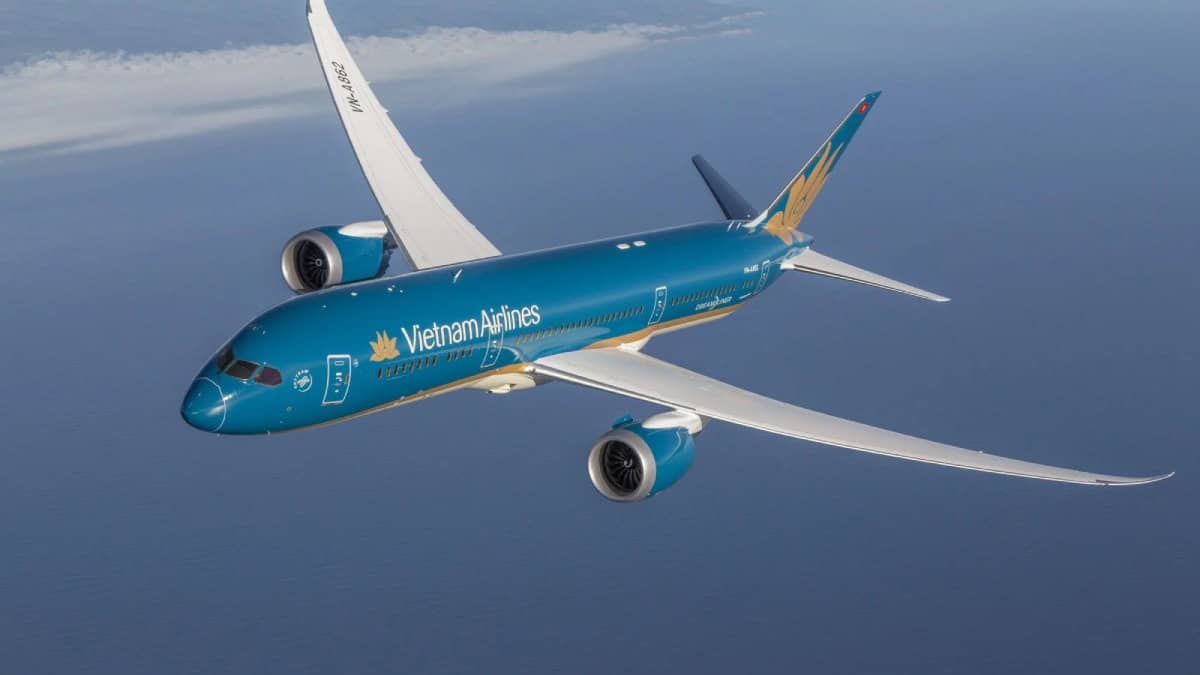
The diplomatic framework established during the state visit of General Secretary and President To Lam to New Delhi was directly followed by this regulatory breakthrough, during which an ambitious bilateral trade target was formalised and a commitment to deepen bilateral infrastructure integration was pledged by state leaders. Commercial carriers on both sides had entirely exhausted their operating allocations under the prior ceiling, stranding market demand just as high-growth leisure travel began accelerating. A significant volume of bilateral air traffic was carried across direct routes operated by Vietnam Airlines, VietJet Air, IndiGo, and Air India.
Fleet Optimisation and the Elimination of Legacy Mega-Hub Transfers
Airline fleet economics are fundamentally changed by the enlargement of capacity allocations. Carriers are no longer constrained by rigid frequency controls, allowing aircraft assignments to be optimized based on route density. Wide-body Airbus A350-900 aircraft equipped with full-flat business class suites have been deployed on flagship New Delhi and Mumbai routes by Vietnam Airlines, while high-density Airbus A321neos are utilized by low-cost operator VietJet Air to open direct services from non-capital Indian economic hubs—including Kolkata, Bengaluru, and Hyderabad. Furthermore, the corridor is being entered by newly chartered carriers, such as Sun PhuQuoc Airways, with dedicated wide-body Airbus A330 services designed to ferry leisure passengers directly to island resorts.
Total transit times between Indian economic hubs and Vietnamese coastal destinations have been reduced from more than half a day to several hours through the establishment of direct point-to-point flight corridors. Ticket costs and baggage handling errors are substantially reduced by this elimination of intermediate mega-hub transfers at Singapore Changi or Bangkok Suvarnabhumi, making direct leisure and commercial travel significantly more attractive.
Niche Market Acceleration: Destination Weddings and Corporate MICE Corridors
Two high-value market segments are directly served by the expansion in available air capacity:
First, central Vietnam’s luxury resort coastline—anchored by Da Nang, Cam Ranh, and Nha Trang—has become a premier destination for multi-day Indian wedding parties. Full buyouts of beachfront properties, specialized catering facilities, and high-frequency passenger airlift are required by these gatherings. The logistical risks of multi-leg baggage handling and customs clearances at secondary transfer hubs are eliminated by direct wide-body flights.
Second, regional conferences are being redirected to Vietnamese coastal centres by corporate MICE delegations representing India’s expanding pharmaceutical, engineering, and financial software sectors. With direct flight times shortened, multi-day regional summits can be staged by corporate event organisers at substantially lower costs than comparable venues in Singapore or Dubai.
Advertisement
Advertisement
It is indicated by sovereign projections that annual Indian visitor arrivals to Vietnam will be doubled within two years if the newly agreed seat capacity is fully utilised, providing a powerful tailwind for central Vietnam’s coastal hospitality sector and proving how international tourism geography is rewritten by direct air corridors.
Systemic Industry Impact and Strategic Future Outlook
The operating economics of the Asian tourism sector are being permanently restructured by the convergence of sovereign visa deregulation, layover monetisation protocols, provincial decentralisation, and bilateral skyway expansions. For airport authorities, legacy revenue models that relied primarily on duty-free retail, luxury goods, and airport landing fees are being superseded by holistic regional development strategies. It is being established by facilities like Narita International Airport that an airport functions best not as an insular consumption machine, but as an interactive gateway through which arriving travellers are projected directly into regional small businesses, culinary hubs, and cultural institutions.
The historic dependency on legacy mega-hubs is eliminated for commercial airlines by the rapid expansion of direct secondary corridors. Modern narrow-body aircraft possess the range and operational economics to bypass traditional connection points entirely. Point-to-point connections linking secondary cities—such as Hyderabad to Da Nang or Sendai to Bangkok—are transitioning from speculative routes to essential network stabilisers. Passenger transit friction is reduced, airspace congestion around overstretched global hubs is minimised, and airline balance sheets are protected from fuel price spikes associated with multi-leg routings.
For destination marketing organisations, the imperative has shifted from raw passenger acquisition to the strategic optimisation of length of stay and local economic yield. Mass-market group itineraries characterised by rigid sightseeing schedules and low per-capita spending are increasingly viewed by policymakers as an unsustainable burden on urban municipal infrastructure. In their place, the penetration of cross-border economic yield into rural economies that have historically sat outside the formal tourism perimeter is ensured by cultivating boutique, heritage-led, and community-integrated tourism assets—exemplified by the Pacu Jalur festival supported by Indonesia’s Kemenparekraf and the curated regional wellness routes established in Thailand.
As cross-border policy architecture is modernised by sovereign governments throughout Asia, the traditional friction points of international travel are progressively disappearing. Resilient economic corridors capable of withstanding global macroeconomic and geopolitical volatility are being established by nations that align bilateral aviation rights with domestic infrastructure investment, streamlined border protocols, and authentic provincial destination marketing.
Conclusion
A revolutionary change towards decentralized, profitable, and sustainable modes of mobility finds its reflection in the transformation of the structural underpinnings of intercountry tourism in Asia. With the emergence of geopolitical challenges in Southeast Asia leading to the redirection of holiday traffic from one nation to another and the conversion of time spent at terminals into city revenues through effective modes of transport, old tourism paradigms have become obsolete. At the same time, it is exemplified by air routes and secondary destinations of the region whereby sustainable economic gains are governed by the depth of experience and geographical spread. The next wave of growth in global tourism will be led by countries that remove bilateral constraints, upgrade secondary facilities, and develop visa procedures.
Advertisement
Advertisement
Advertisement
