

Vietnam Gets Ready for More Visitors as Neighbouring Countries Work Together in the Skies

Published
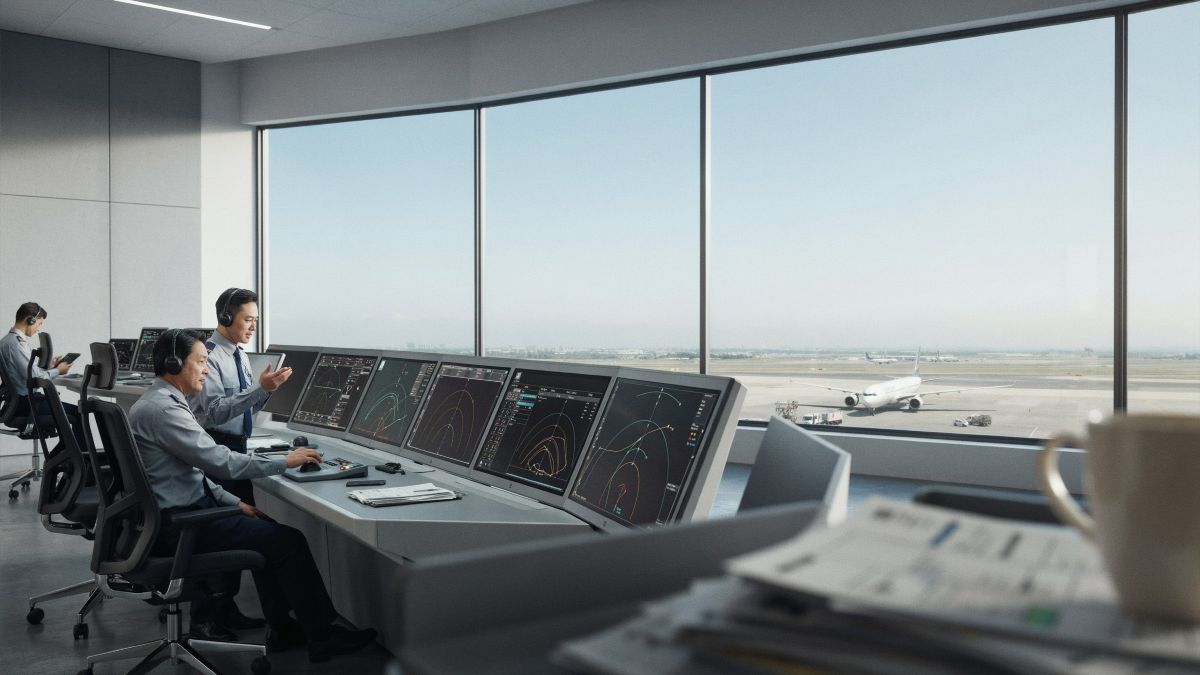
Vietnam gears up for an increased flow of tourists amid regional cooperation in air travel, as the sector of tourism and air transportation becomes a period of transition. Vietnam received 17.7 million tourists during the first nine months of 2026, most of them accessing their destinations by air travel. Hence, issues of air safety and management of flights have emerged as major concerns for tourists, airlines, and companies. Vietnam is one of six countries in Asia that participate in the exchange of safety information. Nevertheless, this collaboration has not demonstrated yet its effectiveness in decreasing delays and boosting arrivals.
Seven countries share a safety goal
The initiative began with Indonesia, Malaysia, the Philippines, Singapore and Thailand. Sri Lanka and Vietnam joined the group in September 2026, taking its membership to seven countries.
Advertisement
Advertisement
The countries share safety information with identifying details removed. The data does not name individual airlines, flights or staff. The initiative is designed to help authorities identify hazards and improve safety oversight. It is not meant to support punishment or enforcement.
That distinction matters. Safety reporting works best when people and organisations can share useful information without the system becoming a tool for blame. Authorities can then look for repeated patterns across the region and consider what measures could reduce risk. The agreement provides a framework for cooperation. Its practical value will depend on how the countries use the information.
Advertisement
Advertisement
What the shared reports reveal
By September 2026, more than 13,000 safety reports had been pooled by the five original participants. The reports covered the period from January 2023 to April 2026.
More than 80 per cent concerned bird strikes and other wildlife sightings. The rest covered subjects such as alerts that warn pilots of a possible collision, warnings about nearby terrain, severe turbulence and windshear. The reporting scope had also grown from seven categories to ten. New categories included runway incursions and unstable approaches that continued to landing.
Advertisement
Advertisement
These figures are not a count of accidents. Nor do they show the share of flights affected by each risk. They are reports of safety occurrences. Their purpose is to help regulators see regional patterns that may not be clear from one country’s data alone.
Tourism growth gives the issue urgency
Aviation connects visitors to the places they want to explore. It also supports hotels, restaurants, tour companies and local transport. When air services work well, travellers can move between destinations with fewer interruptions. When weather, congestion or safety concerns affect flights, the effects can reach far beyond an airport.
This makes regional safety cooperation relevant to tourism, but the connection must be described carefully. The September agreement has not been shown to increase visitor numbers or reduce delays. It is a step towards improving how authorities identify and manage aviation risks.
The wider context is a region where tourism demand varies sharply. Vietnam has reported strong growth in international arrivals. Sri Lanka’s figures show a more uneven year. Those different stories make Asia an especially useful setting for examining how aviation readiness supports travel.
Vietnam’s visitor numbers climb
Vietnam welcomed around 17.7 million international visitors in the first nine months of 2026, up 14.5 per cent from the same period in 2025, according to the country’s government and National Statistics Office.
The air travel figures are striking. Around 14.7 million visitors arrived by air, equal to 83.2 per cent of the total. Air arrivals rose 11.9 per cent year on year. In September alone, Vietnam received about 1.77 million international visitors. That was 16.1 per cent higher than a year earlier.
Advertisement
Advertisement
Vietnam’s government says October to March is usually its peak international tourism season. These figures show why air travel matters so much to its tourism economy. They do not show that the new safety initiative caused the increase. The agreement came in September, after most of the year’s arrivals had already taken place.
Sri Lanka’s tourism picture is more mixed
Sri Lanka welcomed 1,693,679 visitors between January and September 2026. The comparable total for 2025 was 1,725,494. That means arrivals were down by about 1.8 per cent over the nine-month period, based on the country’s monthly figures.
September brought 158,557 visitors, almost level with September 2025, when 158,971 arrived. Earlier months had stronger and weaker results. February arrivals rose by 16.2 per cent year on year. March fell by 19.7 per cent, and April declined by 22.3 per cent.
This uneven pattern gives the article balance. Regional aviation cooperation is relevant to both destinations, but their tourism conditions are not the same. Vietnam is managing rising visitor volumes. Sri Lanka is seeking to sustain its recovery while arrivals fluctuate. Neither trend can be credited to the safety agreement.
India is a vital market for Sri Lanka
India was Sri Lanka’s largest source market in the first nine months of 2026. It contributed 437,414 arrivals, according to the Sri Lanka Tourism Development Authority’s report. The United Kingdom ranked second, followed by China.
The latest weekly report available by 13 October covered the first eight days of that month. Sri Lanka recorded 40,942 arrivals in that period, bringing the year-to-date total to 1,734,621. India again ranked first among source markets, with 453,986 visitors for the year to 8 October. China ranked third, with 115,877.
Advertisement
Advertisement
These figures help make the aviation story more specific to Asian tourism. India and China are important visitor markets for Sri Lanka, while China and South Korea are Vietnam’s two largest. Reliable regional air services are therefore part of the travel infrastructure linking Asian visitors with destinations across the region.
Better coordination can help manage busy skies
The safety data initiative is one part of a wider effort to coordinate aviation across national borders. In July 2026, Singapore’s Civil Aviation Authority said that daily operational coordination calls had been running since September 2025.
The calls began between Singapore, China’s air traffic management bureau and Hong Kong’s Civil Aviation Department. South Korea, Thailand and Vietnam later joined. The participants share information and coordinate traffic flows.
These calls are separate from the seven-country safety data initiative. One focuses on operational coordination. The other pools de-identified safety reports. Both show how aviation authorities can work together even when each country remains responsible for its own airspace.
For travellers, better coordination could help authorities prepare for changing traffic conditions. But the source does not report measured reductions in delays or diversions. Those results would need to be tracked and published before the benefits could be stated as proven.
Singapore is investing in future capacity
Singapore is planning a major upgrade of its air navigation services. The Civil Aviation Authority of Singapore announced a S$4 billion programme over 15 years to prepare for rising demand and support the country’s role as an air hub.
Advertisement
Advertisement
The plan includes growing its air traffic controller workforce from around 500 to about 700 by the mid-2030s. Singapore also plans to replace or upgrade more than 30 air navigation systems. Its next-generation air traffic management system is expected to be completed in 2030.
This investment highlights a point often missed in tourism coverage: airports need more than terminals and runways. They also need trained controllers, reliable systems and ways to manage aircraft in the skies. The Singapore plan is a national investment, not a joint project under the seven-country safety agreement. It is a useful example of the wider capacity challenge facing the region.
Tropical weather can disrupt air travel
Weather is another important part of the Asian aviation story. Singapore’s aviation authority says tropical storms can be difficult to forecast accurately. They can affect airports and airspace, create delays and make flight operations more complex.
The authority is working with Singapore’s National Environment Agency and regional partners to improve the way weather forecasts feed into air traffic management. Its prototype tools aim to show how weather could affect operations and support decisions by controllers.
This work could matter to travellers when storms affect departure times, connections or airport capacity. Yet the available information does not quantify how many delays the tools have prevented. The article should describe them as developing systems, not as a guarantee of smoother journeys.
Weather also explains why sharing timely information can matter across borders. A storm affecting one part of a route may influence decisions elsewhere. Coordination may help authorities prepare, but the final effect depends on accurate forecasts, operational readiness and cooperation between the relevant agencies.
Advertisement
Advertisement
Regional progress still faces gaps
Cooperation is growing, but implementation remains uneven. An ICAO presentation to the Asia-Pacific aviation directors’ conference in September 2026 said that 67 of 84 high-density international airports had introduced airport collaborative decision-making.
The same presentation said that only six Asia-Pacific administrations reported “robust” implementation of air traffic management contingency plans. These plans help countries prepare for disruptions and keep air traffic moving safely when normal operations are affected.
The figures point to an important question: how can regional cooperation work well if national systems have different levels of readiness? Sharing data is one step. Authorities also need suitable technology, trained staff, clear procedures and plans that work across borders.
These figures are regional indicators. They are not a safety ranking of individual airports, and they do not mean that the remaining airports are unsafe. They show that aviation authorities still have work to do to make systems more consistent.
Safety and security are related, but distinct
The wider September ICAO conference also discussed aviation security. Its priorities included cybersecurity, risks from unmanned aircraft, cargo and mail protection, digital identity systems and passenger information programmes.
Those issues belong in the wider regional picture, but they should not be confused with the seven-country safety data initiative. That initiative concerns the sharing of de-identified reports about aviation safety occurrences. It is not a joint border control system or an anti-terrorism agreement.
Advertisement
Advertisement
Clear distinctions will make the article more trustworthy. The security work may affect how governments protect aviation systems and passenger journeys. The safety data initiative focuses on identifying hazards and improving oversight. Both involve cooperation, but they have different aims and tools.
For readers, the practical point is that safe and secure travel depends on several systems working well. A useful report can explain how those systems fit together without suggesting that one agreement covers them all.
The traveller impact is a question of reliability
For holidaymakers, aviation policy can sound remote. Yet it affects the networks that bring people to a destination and connect them with onward flights. If authorities identify risks early and coordinate operations effectively, they may be better prepared to manage challenges.
That is a potential benefit, not a guarantee. The available information does not show that the new initiative has already reduced delays, changed flight schedules, lowered ticket prices or expanded tourism. Nor does it announce new routes between the seven countries.
A careful article should tell readers what the agreement does: it supports the sharing and analysis of safety information. It can then explain why that work matters to a region where millions of visitors travel by air. Any claim of improved reliability should be supported by later evidence, such as published delay data, safety analysis or operational results.
That balance makes the story useful to travellers without overstating what the agreement has achieved so far.
What to watch next
The issue of aviation safety is important because of the increase in tourism that creates more crowded skies in Asia. In 2026, Vietnam received 17.7 million tourists, while the achievements of Sri Lanka were not entirely positive. Vietnam and Sri Lanka, together with five other countries, agreed to exchange safety information and detect threats early. However, the deal has not yet demonstrated its ability to reduce delays and increase tourist traffic. Singapore’s technological advances and improved staff prove that country’s preparedness. All these factors prove why an increase in tourism poses challenges for those countries that depend on aviation safety.
Advertisement
