
Asia Backpacking Faces a Major Shake-Up as Rising Travel Costs End the Era of Ultra-Cheap Adventures

Updated
Published
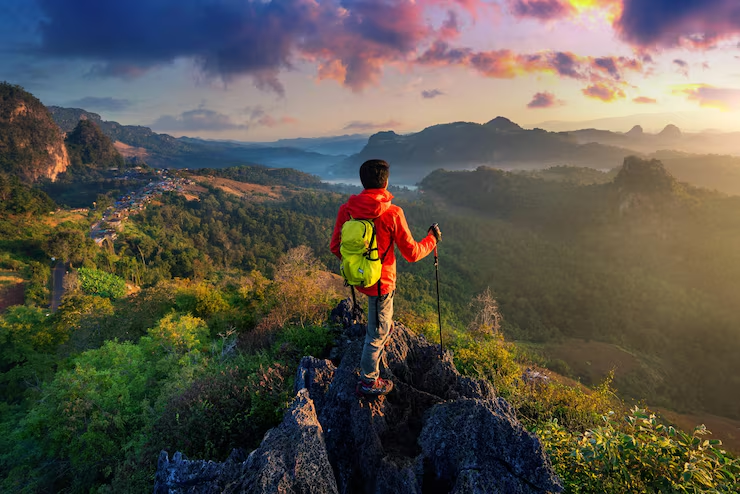 Image generated with Ai
The traditional backpacking experience across Southeast Asia is undergoing a major transformation as rising travel expenses, changing accommodation preferences and new tourism strategies reshape independent travel. The once-familiar image of young travellers exploring several countries with minimal savings, inexpensive hostels and paper maps is gradually giving way to a more connected and comfort-focused generation.
However, budget backpacking is not disappearing. Instead, it is evolving into a travel market influenced by technology, changing consumer expectations and the growing importance of higher-value tourism.
Advertisement
Advertisement
Rising Airfares and Accommodation Costs Challenge Traditional Backpacking
For decades, Southeast Asia attracted international backpackers with affordable flights, inexpensive accommodation and low daily living costs.
Countries such as Thailand, Vietnam, Cambodia, Indonesia and Laos became popular among students and long-term travellers seeking extended holidays without substantial financial commitments.
Advertisement
Advertisement
That affordability is now facing pressure.
Higher fuel prices, inflation and increased operating expenses have affected airlines, including low-cost carriers that traditionally supported budget tourism across the region.
Advertisement
Advertisement
Accommodation options are also changing. Many destinations now offer boutique hostels, often described as poshtels, which combine shared social spaces with upgraded facilities.
These properties frequently provide private rooms, modern interiors, reliable internet connections and dedicated working areas.
While these developments improve comfort, they can also increase accommodation costs compared with traditional dormitory-style hostels.
Restrictions on short-term rentals in some destinations have added further complexity to the affordable accommodation market.
Social Media and Digital Technology Transform Independent Travel
Technology has fundamentally changed how backpackers discover destinations, arrange transport and experience local cultures.
Previously, travellers depended on printed guidebooks, paper maps and recommendations from fellow backpackers.
Advertisement
Advertisement
Today, mobile applications, online booking platforms, digital maps and social media influence almost every stage of the journey.
Instagram and TikTok have made lesser-known destinations more visible to international audiences.
However, this exposure can also encourage large numbers of visitors to follow similar routes and visit the same attractions.
The growing popularity of online travel content has transformed some previously quiet destinations into highly commercialised tourism centres.
Meanwhile, the cost of travel equipment, insurance and digital connectivity can make extended independent journeys more expensive.
Although technology has improved convenience and safety, it has also changed the spontaneous nature traditionally associated with backpacking.
Advertisement
Advertisement
Vietnam and Southeast Asia Shift Towards Higher-Value Tourism
Tourism strategies across parts of Southeast Asia are increasingly focused on attracting visitors who spend more and contribute greater economic value to local destinations.
Vietnam provides an important example of this changing direction.
While the country remains popular with budget travellers, its tourism development increasingly includes premium accommodation, cultural experiences, wellness tourism and services for higher-spending international visitors.
Travellers from South Korea, China and India represent important markets for Vietnam’s tourism industry.
Middle-class couples, independent travellers and older holidaymakers with greater disposable income are also important audiences for tourism businesses.
This approach reflects a broader regional interest in balancing visitor numbers with tourism revenue, infrastructure capacity and environmental sustainability.
Advertisement
Advertisement
Destinations are increasingly recognising that visitor spending, length of stay and benefits to local communities can be as important as overall arrival figures.
Digital Nomads Bring a New Model of Long-Term Travel
Digital nomads represent one of the most visible groups reshaping independent tourism.
These travellers combine professional responsibilities with extended stays in international destinations.
Rather than moving continuously between inexpensive hostels, they often choose accommodation offering reliable internet, comfortable working environments and access to co-working facilities.
Destinations such as Bali, Chiang Mai and Ho Chi Minh City have become associated with remote-working communities.
For tourism businesses, digital nomads can generate demand for longer accommodation stays, cafés, transport services and local experiences.
Advertisement
Advertisement
However, their accommodation preferences and spending patterns differ considerably from those of traditional shoestring backpackers.
Slow Travel Gains Importance Among Younger Travellers
Slow travel is another emerging alternative to conventional backpacking.
Instead of visiting numerous destinations within a short period, slow travellers spend more time exploring individual locations.
This approach places greater emphasis on cultural understanding, local food, community interaction and environmentally responsible travel.
Younger travellers, including members of Generation Z and Millennials, are among the audiences interested in these experiences.
Slow travel can also create opportunities for smaller tourism businesses, particularly locally owned accommodation providers, restaurants and community-based tour operators.
Advertisement
Advertisement
By spending longer in one destination, visitors may develop stronger connections with local communities while reducing the pressure associated with frequent travel between attractions.
However, the environmental and economic benefits depend on individual travel choices rather than the length of stay alone.
Flashpacking Combines Backpacking Freedom With Greater Comfort
Another growing travel style is flashpacking, which combines the independence of traditional backpacking with a higher level of comfort.
Flashpackers generally have greater spending flexibility and prefer convenient transport, private accommodation and quality dining experiences.
They may still explore multiple destinations independently, meet other travellers and participate in local cultural activities.
However, they are less likely to sacrifice comfort simply to minimise daily expenses.
Advertisement
Advertisement
Private hostel rooms, boutique hotels, domestic flights and organised experiences are common features of this travel approach.
For hospitality operators, flashpackers represent an opportunity to serve independent travellers seeking flexibility without relying exclusively on the lowest-priced services.
What the Changing Backpacking Market Means for Asian Tourism
The transformation of backpacking presents both opportunities and challenges for tourism destinations.
Higher-spending visitors can support investment in accommodation, transport, hospitality and visitor experiences.
At the same time, rising prices may make independent international travel less accessible to students and younger travellers with limited budgets.
The expansion of premium hostels and lifestyle-focused accommodation could also reduce the availability of genuinely inexpensive options in popular tourism centres.
Advertisement
Advertisement
Tourism authorities and businesses therefore face the challenge of maintaining affordability while developing higher-value travel products.
Protecting locally owned businesses, improving public transport and offering accommodation across different price categories could help destinations serve a broader range of visitors.
Budget Backpacking Across Asia Enters a New Era
Traditional backpacking may no longer offer the same ultra-low-cost experience associated with the 1990s and early 2000s, but independent travel remains an important part of Asia’s tourism landscape.
Digital nomads, slow travellers and flashpackers are expanding the definition of backpacking by combining flexibility with technology, cultural experiences and varying levels of comfort.
For Southeast Asia, the next chapter of backpacking will depend on balancing affordability, visitor expectations and sustainable tourism development.
The era of travelling across the region on just a few dollars a day may be increasingly difficult to recreate, but the appeal of independent exploration continues to evolve.
Advertisement
