
Las Vegas Tourism Woes Continue as Harry Reid International Airport Sees 4.5 Million Passengers and Sharp Drop in Domestic and International Traffic

Published
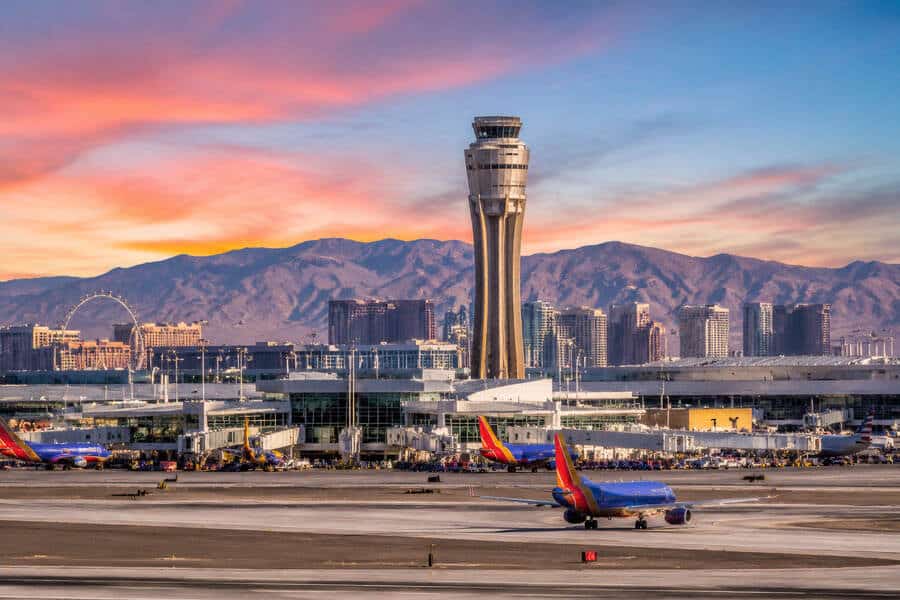
Las Vegas tourism came under continued pressure in May 2026 as Harry Reid International Airport processed around 4.5 million passengers, reflecting a noticeable year-on-year decline and reinforcing signs of weakening travel demand to the destination. The downturn was evident across both domestic and international segments, indicating reduced visitor inflows amid shifting market conditions.
The contraction in traffic was largely driven by softer demand in key source markets, alongside structural changes in airline capacity, including the withdrawal of a major ultra-low-cost carrier that significantly reduced available seats at the airport. Smaller declines from leading airlines further added to the overall reduction in passenger volumes, strengthening the broader downward trend in airport activity.
Overall passenger movement through LAS fell by more than 8% compared to May 2025, when nearly five million travellers passed through the hub. Domestic traffic, which accounts for the majority of connectivity, dropped by 8.6%, while international volumes declined by 5.7%, signalling a broad-based slowdown across both short-haul and long-haul travel flows into Las Vegas.
Year-to-Date Passenger Traffic Falls Over 6% at LAS
From January through May 2026, total passenger traffic at Harry Reid International Airport reached approximately 21.5 million travellers. This represents a contraction of around 6.2% year-on-year, equivalent to a loss of nearly 1.42 million passengers compared to the same period in 2025.
Advertisement
Advertisement
The cumulative decline indicates that the downturn is not isolated to a single month but reflects a sustained trend throughout the early part of the year. Analysts often view airport throughput as a key proxy for tourism performance in Las Vegas, where air arrivals account for a major share of visitor inflow.
Airline Performance Mixed as Capacity Adjusts in Las Vegas Market
Airline data reveals uneven performance among major carriers operating at LAS.
Advertisement
Advertisement
A major structural shift occurred in May following the cessation of Spirit Airlines operations on May 2, 2026. The ultra-low-cost carrier had carried more than 511,000 passengers in May 2025, but this figure collapsed to fewer than 4,000 passengers this year, creating a significant gap in low-cost seat supply.
Among remaining carriers:
Advertisement
Advertisement
- Southwest Airlines, the dominant operator in Las Vegas, transported over 1.95 million passengers, but still recorded a 0.4% decline year-on-year
- American Airlines, the second-largest carrier at LAS, reported a 2.9% decrease in passenger volumes
The combined effect of reduced ultra-low-cost capacity and softer demand among legacy carriers contributed significantly to the overall downturn in airport traffic.
Tourism Indicators Signal Mixed Economic Signals for Las Vegas
Passenger traffic at Harry Reid International Airport is closely linked with broader tourism and economic indicators in the Las Vegas region. The decline in air arrivals contrasts with relatively stable performance in other sectors of the tourism economy.
Preliminary trends indicate that Las Vegas visitation levels remain slightly subdued in 2026, with year-to-date figures showing a decline of around 1.8% through April, following a sharper 7.5% drop in the previous year.
However, gaming activity has demonstrated resilience despite lower visitor volumes. Las Vegas Strip gross gaming revenue (GGR) rose by nearly 7% in April 2026, even as overall visitation declined. Year-to-date Strip GGR has reached more than $2.9 billion, reflecting a 1.9% increase compared to the same period last year.
Advertisement
Advertisement
This divergence between visitor volumes and gaming revenue suggests higher per-visitor spending patterns or stronger performance in premium gaming segments.
May 2026 Gaming Outlook Faces Calendar and Market Variables
Industry expectations for May 2026 gaming performance remain cautiously optimistic. Analysts note that May 2025 benefited from one additional weekend day, which creates a slightly more challenging year-over-year comparison.
Despite this, projections suggest that Strip gaming revenue may still exceed May 2025 levels, when total revenue reached approximately $713.7 million.
However, the scale of growth is expected to depend heavily on high-value gaming segments, particularly baccarat performance. The game, which attracts high-spending international players, delivered unusually strong results in April due to elevated winning margins. If these conditions normalise, gaming revenue growth in May could remain modest.
Drive-In Tourism Also Faces Pressure from High Fuel Costs
Beyond air travel, road-based tourism indicators are also expected to reflect weaker conditions. The Las Vegas Convention and Visitors Authority (LVCVA) is set to release updated data on drive-in traffic via major corridors such as I-15 and I-11, which connect Las Vegas to key regional markets in California and Arizona.
Early expectations suggest a decline in vehicle arrivals, driven largely by elevated transportation costs.
Advertisement
Advertisement
Fuel prices remained high across the western United States in May 2026. In Southern California, the average price of regular gasoline exceeded $6 per gallon, placing additional financial pressure on short-haul travellers. California continues to record the highest fuel prices in the country due to a combination of taxation structures, environmental compliance costs, and limited refining capacity.
Higher fuel costs typically reduce discretionary travel, particularly for weekend and short-duration trips that form a significant share of Las Vegas tourism.
Outlook: Structural Adjustment Phase for Las Vegas Travel Demand
The combined impact of lower air passenger volumes, reduced ultra-low-cost carrier capacity, and weaker regional drive-in traffic points to a broader adjustment phase in Las Vegas tourism demand.
While gaming revenues continue to show resilience, the decline in passenger throughput suggests that the destination is experiencing a shift in visitor patterns, potentially toward higher-value but lower-volume travel.
Las Vegas tourism continued to weaken as Harry Reid International Airport recorded around 4.5 million passengers in May 2026, reflecting a sharp year-on-year decline in both domestic and international traffic. The drop was driven by softer travel demand and reduced airline capacity, including the exit of a major low-cost carrier and slight volume declines among key operators.
Overall, the latest figures from Harry Reid International Airport underline a continued cooling in Las Vegas tourism demand, with declining passenger volumes across both domestic and international markets pointing to softer travel appetite and reduced airline capacity. While the city remains a major global leisure destination, the drop in traffic suggests a clear shift in visitor flows, influenced by changing market conditions, airline network adjustments, and weaker inbound demand.
Advertisement
