
Sydney Named World’s Best City for People in Their 20s, Ahead of Zurich and Copenhagen

Published
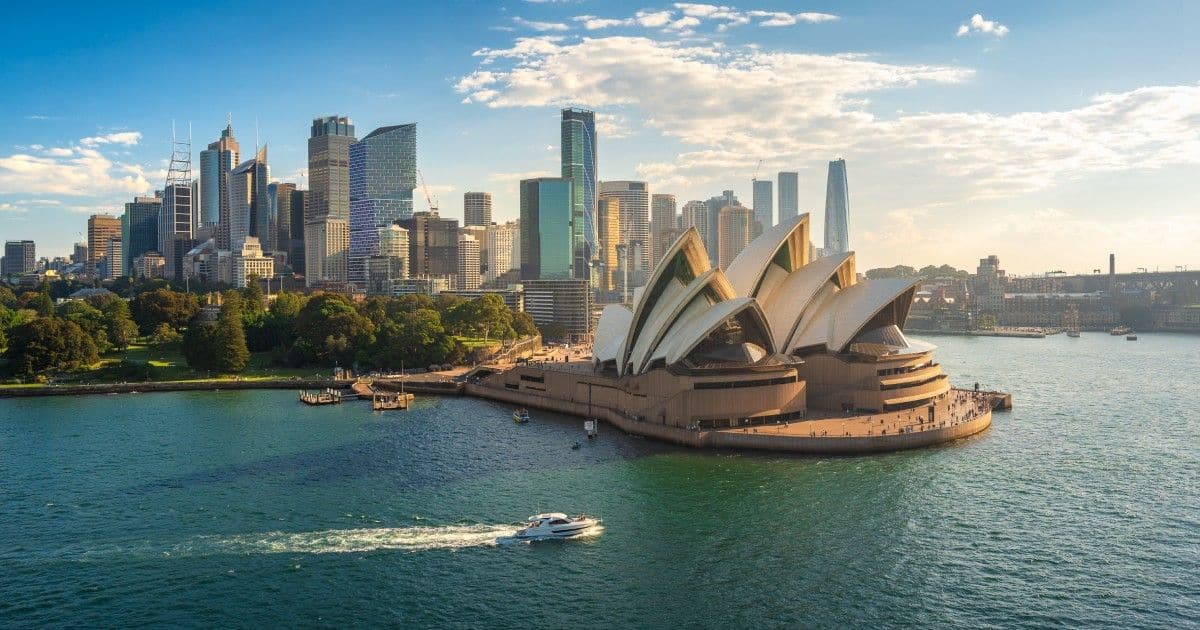
Sydney has been named the world’s best city for people in their 20s, ranking ahead of Zurich and Copenhagen in a new global study. The research assessed 40 major cities across employment, disposable income, safety, nightlife, dining, quality of life and public transport to measure their appeal to young adults.
Sydney Named World’s Best City for People in Their 20s
Sydney has emerged as the world’s best city for people in their 20s, according to an October 2026 study by digital entertainment platform BC Game. The Australian city leads a ranking of 40 major global destinations assessed for their ability to combine employment opportunities, disposable income, safety, social life, dining, nightlife and public transport.
The research provides a snapshot of what everyday urban life can look like for young adults balancing the priorities of starting a career, managing living costs and maintaining an active social life.
Zurich takes second place, followed by Copenhagen, Tokyo and Amsterdam. Seoul, Paris, Vienna, Boston and Singapore complete the top 10.
Advertisement
Advertisement
What makes Sydney the leading city for young adults?
Sydney’s position is strongly linked to its combination of social opportunities, employment prospects and transport connectivity. The study gives the city a safety score of 66.2, while its public transport quality score reaches 81.2.
The city also records disposable income of about $1,308 a month after rent and living costs, according to the research. While that figure is significantly below Zurich’s result, Sydney performs particularly strongly in dining and nightlife.
Advertisement
Advertisement
The study records almost 230 restaurants and cafés per square kilometre and more than 15 nightlife venues and activities per square kilometre. That creates a broad choice of places for young residents to meet friends, eat out and socialise.
Sydney’s unemployment rate is reported at 4.4%, suggesting a relatively accessible employment environment compared with several other cities in the ranking.
Why does Zurich rank second despite its smaller social scene?
Zurich is the standout city for disposable income. According to BC Game’s research, young professionals in the Swiss city retain approximately $4,029 a month after rent and other living costs.
That figure is considerably higher than the disposable income recorded in Sydney, Copenhagen and Amsterdam. Zurich also combines its financial advantage with a strong employment market, with unemployment reported at just 3%.
The city receives a safety score of 75.9 and a public transport quality score of 91.4. These factors make Zurich particularly attractive for young professionals who place greater emphasis on financial stability and efficient urban infrastructure.
However, its dining and nightlife figures are more modest than Sydney’s or Tokyo’s. The research records 24 restaurants and cafés and two nightlife venues and activities per square kilometre.
Advertisement
Advertisement
How does Copenhagen perform for young professionals?
Copenhagen ranks third and records one of the strongest employment performances in the study. Its unemployment rate is just 2.7%, placing it ahead of Sydney, Amsterdam and Boston.
Young residents retain an estimated $1,741 each month after rent and living expenses. The city also receives a public transport score of 88 and a safety rating of 73.7.
Copenhagen’s social infrastructure adds another dimension to its appeal. The research identifies around 33 restaurants and cafés per square kilometre and three nightlife venues and activities per square kilometre.
For young adults seeking a balance between employment prospects, income, safety and urban mobility, Copenhagen therefore offers a relatively even profile rather than relying on a single dominant advantage.
Why is Tokyo one of the strongest cities for jobs and nightlife?
Tokyo ranks fourth, combining a low unemployment rate with an exceptionally extensive dining and entertainment environment.
The city’s unemployment rate is reported at 2.5%, the second-lowest figure among the top five cities. Tokyo also achieves a public transport quality score of 94.8, making it one of the strongest-performing cities for urban mobility in the ranking.
Advertisement
Advertisement
Its major attraction for young adults is its enormous social and entertainment offering. BC Game’s research identifies almost 15,000 restaurants, cafés and bars across the city, while the nightlife figure is approximately 10 venues and activities per square kilometre.
Disposable income is comparatively modest at around $881 a month. However, the study suggests that Tokyo’s overall position reflects the combination of affordable daily life, employment availability, transport and extensive opportunities for dining and entertainment.
Why does Amsterdam remain in the global top five?
Amsterdam ranks fifth and stands out particularly for quality of life. The city records a quality of life score of 196.4 out of 200 in the study, the highest among the cities highlighted.
Disposable income reaches approximately $1,500 a month after rent and bills, while unemployment stands at 3.8%. Amsterdam also receives an 88 public transport score and a safety rating of 70.
The city has around 27 restaurants and cafés per square kilometre, providing a substantial social and dining network for young residents. Its compact urban environment also supports walking and public transport, reducing the need for private car ownership.
Amsterdam’s position demonstrates that financial considerations are only one part of the equation for young adults. Quality of life, mobility and access to social spaces can also have a significant influence on how attractive a city feels.
Advertisement
Advertisement
Which other cities make the top 10?
Seoul ranks sixth, supported by a safety score of 74.6, disposable income of $1,671 a month and unemployment of 2.8%. Its public transport score of 93 also places it among the strongest cities for getting around without relying heavily on private vehicles.
Paris takes seventh place. It offers an extensive dining scene, with the research recording 100 restaurants and cafés per square kilometre, alongside approximately 10 nightlife venues and activities per square kilometre. However, its unemployment rate of 8.3% and safety score of 42.1 weigh on its overall position.
Vienna ranks eighth, with a safety score of 70.6 and public transport score of 91. Its disposable income figure is $1,270 a month, although unemployment is higher at 6.9%.
Boston ranks ninth with disposable income of $1,848 a month and unemployment of 4.1%. Its public transport score of 78 is lower than several European and Asian cities in the ranking.
Singapore completes the top 10. It records the strongest safety score in the group at 77.7, while unemployment stands at just 2%. Its public transport score of 94 is also among the highest. Disposable income, at $940 a month, is more limited than in Zurich or Boston.
What does the ranking reveal about life for Gen Z?
The study highlights a broader shift in the factors young adults may consider when choosing where to live. A strong labour market remains important, but employment alone does not necessarily make a city attractive.
Advertisement
Advertisement
Disposable income after housing and everyday expenses provides an indication of how much financial flexibility young workers may have. Safety can influence whether residents feel comfortable using public spaces and participating in evening activities, while transport can determine how easily they can move between work, home and social venues.
The findings also show that different cities appeal for different reasons. Zurich is particularly strong financially, Tokyo excels in transport and entertainment, Copenhagen performs well on employment, and Sydney offers a broad combination of social and lifestyle factors.
BC Game’s CEO said safety deserves greater attention when considering cities for Gen Z, particularly as younger generations may be more selective about going out when they do not feel secure. The executive also pointed to the importance of employment and disposable income as young people enter an increasingly challenging labour market.
The research therefore presents the ranking not simply as a list of desirable destinations, but as an indication of the competing pressures facing young adults in major international cities. This October 2026 research by the digital entertainment platform BC Game examined 40 major cities across the world to find the best places for people in their 20s to live. The report measured disposable income after rent and living costs, restaurant and café counts, and nightlife options. It also looked at safety ratings, quality of life scores, unemployment rates, and public transport quality. These figures were combined into a single score out of 100, revealing what day-to-day life actually looks like for young adults in each city.
Why does this matter for the travel and tourism industry?
The findings have implications beyond residential relocation. Cities that attract young professionals can also benefit from stronger demand for restaurants, cafés, nightlife, cultural experiences, public transport and short-break travel.
For the travel industry, Gen Z represents an important audience whose destination choices can be influenced by affordability, connectivity, safety and opportunities for social interaction. Cities that perform well across these categories may have an advantage in attracting both longer-term residents and younger visitors.
Advertisement
Advertisement
At the same time, the figures should be interpreted as a comparative snapshot rather than a definitive measure of personal affordability. Individual housing costs, salaries, taxation, lifestyle choices and neighbourhood-level differences can significantly alter the experience of living in any city.
BC Game’s research examined 40 major cities and combined multiple indicators into an overall score out of 100. The methodology included disposable income after rent and living costs, restaurant and café availability, nightlife, safety, quality of life, unemployment and public transport.
For young adults deciding where to build a career and establish a social life, the results suggest that the strongest cities are those capable of balancing economic opportunity with the wider quality of urban life.
Sydney leads the 2026 ranking because it combines employment opportunities, dining, nightlife, safety and public transport into a strong overall package. Zurich offers the greatest disposable income, while Tokyo excels in transport and entertainment. The results underline how young adults increasingly weigh financial security alongside lifestyle, mobility and social opportunitie
“This ranking highlights how the next generation of travellers and professionals is redefining what makes a city attractive. Sydney’s leadership reflects the growing importance of combining career opportunities with safety, mobility and social experiences. These factors will increasingly shape tourism, urban development and destination choices as Gen Z gains greater influence.”
— Anup Kumar Keshan, Founder and Editor-in-Chief, Travel And Tour World
Advertisement
Advertisement
Sydney’s top ranking reflects its ability to combine career opportunities with an active social scene, reliable transport and broad lifestyle choices. Zurich stands out for exceptional disposable income, while Copenhagen performs strongly on employment. Together, the results show that young adults increasingly value financial stability, safety, mobility and meaningful experiences when choosing cities.
Advertisement
