
Serbia Sees Longer Foreign Stays Boost Mokra Gora Travel During Šargan Eight Season Near Užice and Zlatibor

Updated
Published
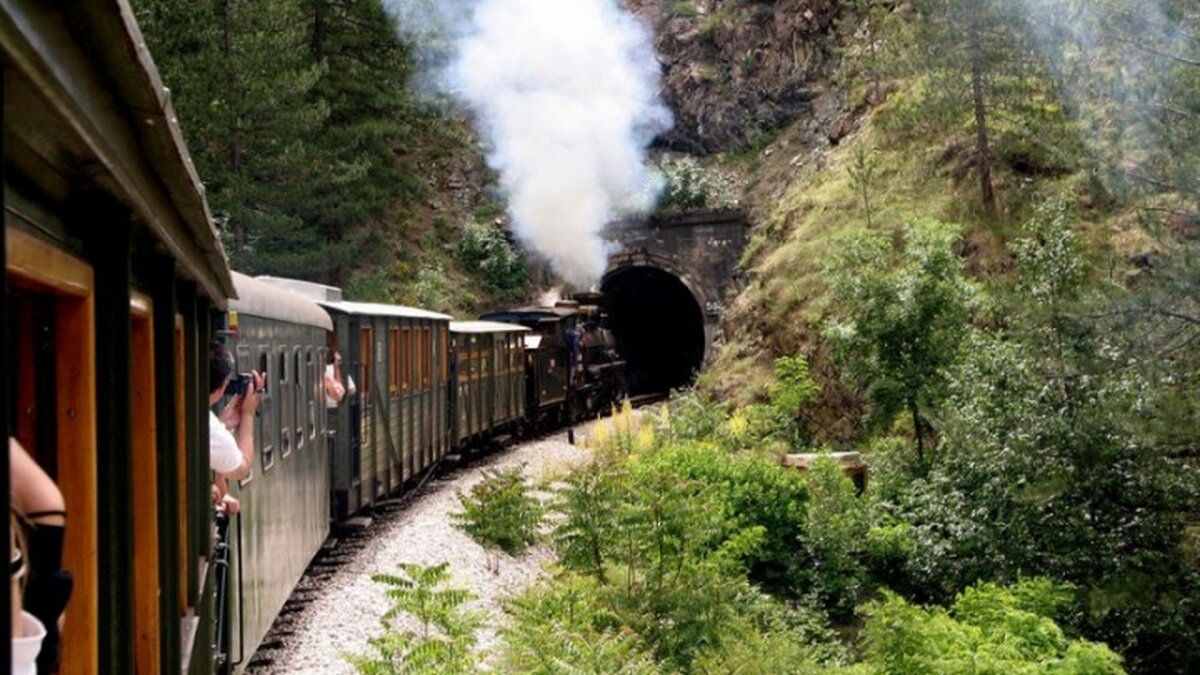
Serbia’s Mokra Gora is showing an unusually strong shift towards longer international stays during the 2026 Šargan Eight heritage-rail season. Foreign arrivals reached 854 in July up 55.3 percent year on year. Foreign overnight stays grew faster reaching 1,930 with an increase of 151.3 percent. Official tourism data show that average foreign stays rose from about 1.40 nights in July 2025 to 2.26 nights in July 2026. This change matters because Mokra Gora has been well known as a railway trip yet the newest accommodation figures suggest that Mokra Gora is developing a wider tourism market.
Mokra Gora Is Showing a Different Tourism Pattern From Serbia’s Wider Mountain Market
The newest official Serbian tourism figures available on 17 September 2026 reveal a striking divergence in Mokra Gora tourism.
Advertisement
Advertisement
According to the Statistical Office of the Republic of Serbia, Mokra Gora registered 1,497 tourist arrivals during July 2026, 34.4% more than in July 2025. Overnight stays reached 3,278, increasing considerably faster at 73.3%.
The international segment produced the clearest change. Foreign arrivals increased from 550 in July 2025 to 854 in July 2026. Foreign overnight stays moved from 768 to 1,930 over the same period.
Advertisement
Advertisement
That means the increase was not simply the result of more visitors entering Mokra Gora. International travellers were also staying substantially longer.
| Mokra Gora tourism indicator | July 2025 | July 2026 | Year-on-year change |
|---|---|---|---|
| Total tourist arrivals | 1,114 | 1,497 | +34.4% |
| Total overnight stays | 1,892 | 3,278 | +73.3% |
| Domestic arrivals | 564 | 643 | +14.0% |
| Domestic overnight stays | 1,124 | 1,348 | +19.9% |
| Foreign arrivals | 550 | 854 | +55.3% |
| Foreign overnight stays | 768 | 1,930 | +151.3% |
| Calculated average foreign stay | 1.40 nights | 2.26 nights | +61.8% |
| Calculated average total stay | 1.70 nights | 2.19 nights | +28.9% |
The average-stay figures above are calculations based on official arrivals and overnight-stay totals rather than separately published Statistical Office indicators.
Advertisement
Advertisement
The result places Mokra Gora well outside the July pattern for Serbia’s selected mountain destinations as a group.
Across those mountain resorts, foreign arrivals rose 8.0% and foreign overnight stays increased 12.1%. Mokra Gora recorded increases of 55.3% and 151.3% respectively.
| July 2026 year-on-year performance | Mokra Gora | Serbian mountain resorts overall |
|---|---|---|
| Total arrivals | +34.4% | +9.7% |
| Total overnight stays | +73.3% | +3.8% |
| Foreign arrivals | +55.3% | +8.0% |
| Foreign overnight stays | +151.3% | +12.1% |
This does not make Mokra Gora one of Serbia’s largest mountain destinations by volume. Zlatibor, for example, recorded 45,375 arrivals and 144,641 overnight stays in July.
The important development is instead behavioural. Mokra Gora’s comparatively small tourism base is producing a much faster international overnight expansion.
Foreign Visitors Are Becoming More Important to Mokra Gora’s Stay Economy
The shift is also visible beyond a single month.
Between January and July 2026, Mokra Gora recorded 7,020 arrivals, up 8.2% from 6,485 during the equivalent period of 2025. Overnight stays increased 5.8%, from 15,030 to 15,904.
Advertisement
Advertisement
Foreign performance was considerably stronger.
International arrivals rose from 1,938 to 2,414, an increase of 24.6%. Foreign overnight stays climbed from 3,124 to 4,600, up 47.2%.
Calculated foreign length of stay therefore increased from approximately 1.61 nights to 1.91 nights over the first seven months.
Domestic tourism followed a different trajectory. Domestic arrivals edged up 1.3% to 4,606, while domestic overnight stays declined 5.1% to 11,304.
| January–July Mokra Gora | 2025 | 2026 | Change |
|---|---|---|---|
| Total arrivals | 6,485 | 7,020 | +8.2% |
| Total overnight stays | 15,030 | 15,904 | +5.8% |
| Foreign arrivals | 1,938 | 2,414 | +24.6% |
| Foreign overnight stays | 3,124 | 4,600 | +47.2% |
| Domestic arrivals | 4,547 | 4,606 | +1.3% |
| Domestic overnight stays | 11,906 | 11,304 | -5.1% |
| Calculated foreign stay | 1.61 nights | 1.91 nights | +18.2% |
| Calculated domestic stay | 2.62 nights | 2.45 nights | -6.3% |
Foreign guests accounted for around 28.9% of Mokra Gora’s overnight stays during January–July 2026, compared with approximately 20.8% in the corresponding 2025 period.
In July alone, international travellers generated almost 59% of all overnight stays.
Advertisement
Advertisement
For tour operators, accommodation suppliers and destination planners, this is more commercially significant than a simple arrival increase. More nights create opportunities for accommodation sales, food and beverage expenditure, local guiding, nature activities and multi-day itinerary development.
Šargan Eight Gives Serbia an Anchor Attraction Capable of Supporting Longer Itineraries
The Šargan Eight railway remains the defining visitor anchor.
According to the Tourist Organisation of Užice, the restored narrow-gauge line climbs roughly 300 metres between Mokra Gora and Šargan through its distinctive figure-eight alignment. The tourist railway and associated stations form part of a wider open-air railway heritage complex.
The Šargan–Mokra Gora Nature Park identifies the railway as a museum-tourist railway and records the historical section as crossing bridges and numerous tunnels through the mountainous landscape. The Mokra Gora railway-station complex also contains accommodation infrastructure, including the Šargan Eight hotel with 50 beds.
The National Tourism Organisation of Serbia places the railway within a much wider nature proposition. Its official destination material links Mokra Gora with forests, the Beli and Crni Rzav rivers, caves, Skakavac waterfall, mineral springs and nearby Drvengrad.
This combination is central to the latest tourism data.
Advertisement
Advertisement
The evidence does not establish that the Šargan Eight itself caused the growth in overnight stays. No publicly identified official dataset currently separates railway passengers according to whether they are day visitors or registered overnight guests.
What the figures do show is that Mokra Gora’s international visitor economy is developing during the operating environment of one of western Serbia’s best-established heritage attractions.
That distinction creates the new B2B travel opportunity: packaging the railway as the anchor of a stay, rather than the entirety of the trip.
Current Šargan Eight Operations Give Travel Sellers a Clear Packaging Window
The official Tourism Organisation of Zlatibor currently lists Šargan Eight summer-season operations between 1 April and 31 October, with departures from Mokra Gora at 10:30, 13:30 and 16:10.
It lists an adult fare of RSD1,500 and a child fare of RSD750 for travellers aged six to 14. Children younger than six can travel without charge when they do not occupy a separate seat. Advance reservation contacts are also published for the railway.
This operating window overlaps the period when western Serbia receives substantial mountain-tourism demand and allows agencies to construct itineraries involving the railway, Mokra Gora, Drvengrad and nearby natural areas.
Advertisement
Advertisement
Zlatibor is especially relevant as an established tourism centre rather than an administrative city. Serbia’s July statistics recorded 273,536 arrivals there during January–July 2026 and 805,799 overnight stays, giving operators a large nearby visitor pool from which excursions or longer regional circuits can potentially be structured.
Užice Connectivity Exposes the Main Constraint on Independent Visitor Dispersal
Mokra Gora belongs to the territory of the City of Užice, making Užice the most important administrative and public-transport connection in this story.
The Tourist Organisation of Užice places Mokra Gora about 45 kilometres from Užice and identifies nearby Zlatibor, Tara and Perućac among the recognised tourism centres relevant to its geographical position. It also notes the road connection running through the settlement towards the Bosnia and Herzegovina direction.
Public transport, however, remains relatively limited for travellers without private vehicles or organised transfers.
The current Užice public-transport system lists two daily Line 12A departures towards Mokra Gora on weekdays, Saturdays and Sundays. The route from Užice bus station towards Kotroman covers approximately 52.9 kilometres, includes Mokra Gora and has a published end-to-end journey time of around one hour and 24 minutes.
The reverse service also operates twice daily.
Advertisement
Advertisement
This creates an important trade consideration. Heritage-rail capacity can attract visitors, but successful dispersal into accommodation, restaurants and nature experiences also depends on how easily travellers can remain in the destination and continue their journey afterwards.
For organised tourism, the limited public frequency strengthens the case for pre-arranged road transfers, multi-night western Serbia programmes and coordinated departures rather than loose day-trip products.
Mokra Gora’s 2026 Numbers Suggest a Shift From Sightseeing Stop to Rural Stay
This is where the greatest information gain appears.
Mokra Gora has long possessed the components required for a multi-experience destination: industrial heritage, protected landscape, accommodation, rural culture and proximity to major western Serbian tourism centres.
UN Tourism recognised Mokra Gora as a Best Tourism Village in 2021. Its institutional profile specifically identifies the reconstruction of the narrow-gauge railway as part of tourism routes supporting smaller rural centres. Mokra Gora is also formally identified as being within the territory of Užice and positioned between the slopes associated with Tara and Zlatibor.
What is different in 2026 is that the accommodation statistics are beginning to provide measurable evidence of deeper international stay behaviour.
Advertisement
Advertisement
A 151.3% increase in foreign nights against a 55.3% increase in foreign arrivals means July growth cannot be explained by volume alone.
Foreign visitors are both more numerous and, on average, staying longer.
For destination-management organisations, that distinction matters. Arrival growth can increase attraction congestion while producing limited local retention if visitors leave within hours. Longer stays distribute spending across accommodation, evening dining, local transport and secondary experiences.
The July figures therefore strengthen the commercial case for selling Mokra Gora as a two-day or regional western Serbia product, rather than relying exclusively on the heritage railway as a stand-alone excursion.
Latest Data Cut-Off Matters for September Travel Planning
July 2026 remains the latest officially released monthly tourism dataset available from Serbia as of 17 September 2026.
The Statistical Office published the July release on 31 August and has scheduled the next monthly tourism publication for 30 September 2026. August destination-level figures should therefore not be assumed before that official update.
Advertisement
Advertisement
This is particularly important because August sits inside the principal summer travel period. The next release will show whether July’s exceptional foreign overnight growth was sustained, moderated or reversed.
Until then, the July data provide the most recent official basis for commercial planning.
Operational Takeaways for Travel Agents and Tour Operators
- Build overnight products rather than automatic day trips. July data show foreign stays expanding substantially faster than arrivals.
- Pre-arrange Šargan Eight reservations. The railway is seasonally popular and official tourism bodies publish advance booking channels.
- Coordinate transfers from Užice. Public bus frequency towards Mokra Gora is limited to two listed daily Line 12A services in each direction.
- Use Zlatibor as a regional demand hub. Its substantially larger accommodation market can support western Serbia extensions into Mokra Gora.
- Package secondary experiences. Drvengrad, protected landscapes, rivers, caves, waterfalls and local heritage can extend time spent beyond the railway journey.
- Do not attribute accommodation growth directly to rail passengers. Official statistics do not establish individual visitor causation.
- Watch the 30 September release. August figures will be the next test of whether the foreign overnight trend represents sustained demand rather than a single exceptional month.
Longer International Stays Could Redefine Serbia’s Heritage-Rail Tourism Model
Mokra Gora’s latest performance points towards a more valuable form of tourism growth for western Serbia.
The headline figure is the 151.3% rise in foreign overnight stays in July, but the more important structural signal lies underneath it: average international stay length expanded sharply while foreign arrivals also increased.
That creates a different commercial proposition for Serbia.
Instead of measuring the Šargan Eight mainly through excursion demand, the travel trade can increasingly examine how heritage rail, rural accommodation, nature tourism and neighbouring destinations work together to retain visitors.
Advertisement
Advertisement
Užice provides the administrative and transport gateway. Zlatibor supplies a major nearby mountain-tourism market. Mokra Gora supplies the railway, protected landscape and rural destination identity that can connect those wider visitor flows with a smaller local economy.
The next challenge is about conversion: taking seasonal interest and turning it into steady demand over several days. This needs to be done while keeping the landscape and cultural features that make the place special and different from destinations.
If August and later official numbers continue to show the trend of visitors staying overnight Mokra Gora could become an important example in Europe. It could show how a known heritage site moves from being just a place to visit into a main point for wider rural tourism. It could also help attract longer stays from travelers, around the world.
Advertisement
