
The Rise of Border Tourism in Kashmir: From Conflict to Connection

Published
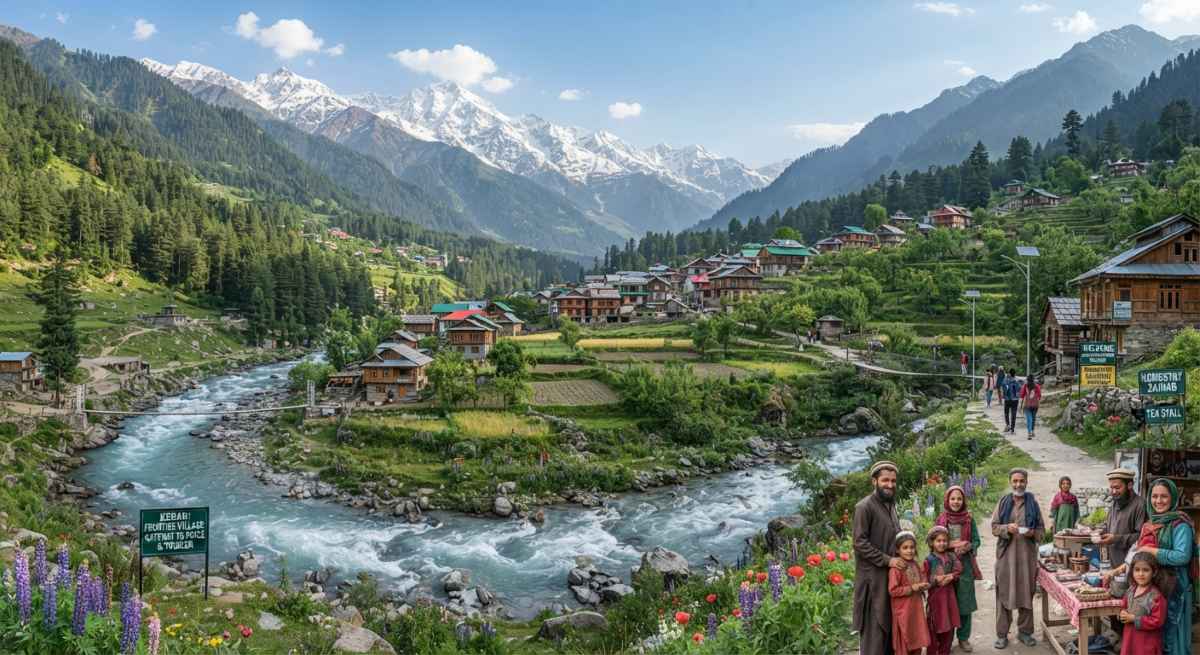
Image generated with Ai
For several decades, the frontier regions of Kashmir, particularly those situated along the Line of Control, were primarily associated with narratives of military tension. Settlements such as Keran, Tangdhar, uris, and Gurez were defined by security infrastructure and challenges.
These areas were largely excluded from mainstream itineraries. However, a significant shift has been observed since the establishment of a ceasefire understanding.
Advertisement
Advertisement
Practical Information for India Travel in the Himalayas
For travellers planning India travel within the majestic landscapes of the Himalayas, exploring the frontier regions requires both preparation and cultural awareness. While these areas offer extraordinary experiences, visitors must remain mindful of the sensitive geopolitical nature of these zones.
- Tangdhar Exploration: The journey to this remote valley involves driving across the magnificent Sadhna Pass, which provides breathtaking, panoramic views of sprawling alpine meadows and snow-capped peaks. Travellers should allocate extra time for transit due to changing mountain weather and security check-posts along the route.
- Cultural Heritage in Teetwal: Positioned securely along the banks of the pristine Kishanganga River, Teetwal has emerged as a vital focal point for historical exploration. The major highlight here is the historic restoration of the ancient Sharada Temple, drawing pilgrims, historians, and cultural enthusiasts alike.
- Historical Landmarks in uris: Beyond its strategic identity, uris offers deep historical insights through key landmarks like the Aman set. This bridge serves as a poignant reminder of past divisions, regional dialogue, and the enduring spirit of cross-border history.
- Cultural Immersion in Gurez Valley: Tucked deep within the northern mountains, the Gurez Valley offers rare, authentic encounters with the indigenous Dard-Shin community. Visitors can experience their unique traditions, distinct dialects, and traditional wooden architecture, all framed by the striking backdrop of the iconic Habba Khatoon Peak.
Consequently, the reduction in cross-border hostilities has facilitated a return to normalcy. Supported by infrastructure enhancements, these remote villages have transitioned into destinations of interest. This transformation aligns with the broader resurgence of tourism across Jammu and Kashmir.
Advertisement
Advertisement
- Ceasefire agreements reduced hostilities significantly.
- Infrastructure upgrades improved regional accessibility.
- Remote villages transitioned into active travel spots.
The Impact on Travellers and Sustainable Development
The phenomenon known as border tourism is fundamentally changing how individuals interact with the geography of Kashmir. Unlike traditional leisure travel, this trend is driven by curiosity and a desire to witness history. Travellers seek deeper engagement with the region’s complex identity.
Advertisement
Advertisement
Furthermore, this movement intersects with goals of sustainable development. Visitors observe natural landscapes where rivers flow uninterrupted across political boundaries, encouraging reflection on human resilience. By visiting sites like the Kishanganga River, tourists gain a tangible connection to frontier communities.
- Travel is driven by historical curiosity.
- Visits foster appreciation for regional resilience.
- Eco-friendly practices protect the local environment.
Industry Insights and Rural Tourism
The rise of this niche sector provides substantial economic stimulation. Statistics indicate that tourism accounts for a vital portion of the regional Gross State Domestic Product. As rural tourism expands, economic benefits become increasingly decentralized.
Local entrepreneurship is fostered through government-sponsored homestay schemes. In villages such as Keran, traditional dwellings are repurposed into visitor accommodations. Additionally, local services provide young residents with sustainable employment opportunities.
Advertisement
Advertisement
- Homestay initiatives decentralize financial gains.
- Small businesses generate local employment.
- Youth migration is reduced through new opportunities.
Comparison with Previous Developments
A stark contrast is visible when comparing current village statuses with past representations. Previously, localities were synonymous with security challenges and restricted access. Today, infrastructure supports a growing civilian economy.
Whereas earlier decades saw regions defined by conflict, the modern era introduces organized hospitality. The transition represents a fundamental shift in how the frontier is perceived. Ultimately, stability allows landscapes of uncertainty to be integrated into the national economic map.
- Past infrastructure was dictated by military necessity.
- Modern development prioritizes civilian commerce.
- Frontiers are now viewed as spaces of peace.
Advertisement
