

Nepal Adventure Travel Faces Fresh Disruption as Manaslu Floods Cut Mountain Access

Published
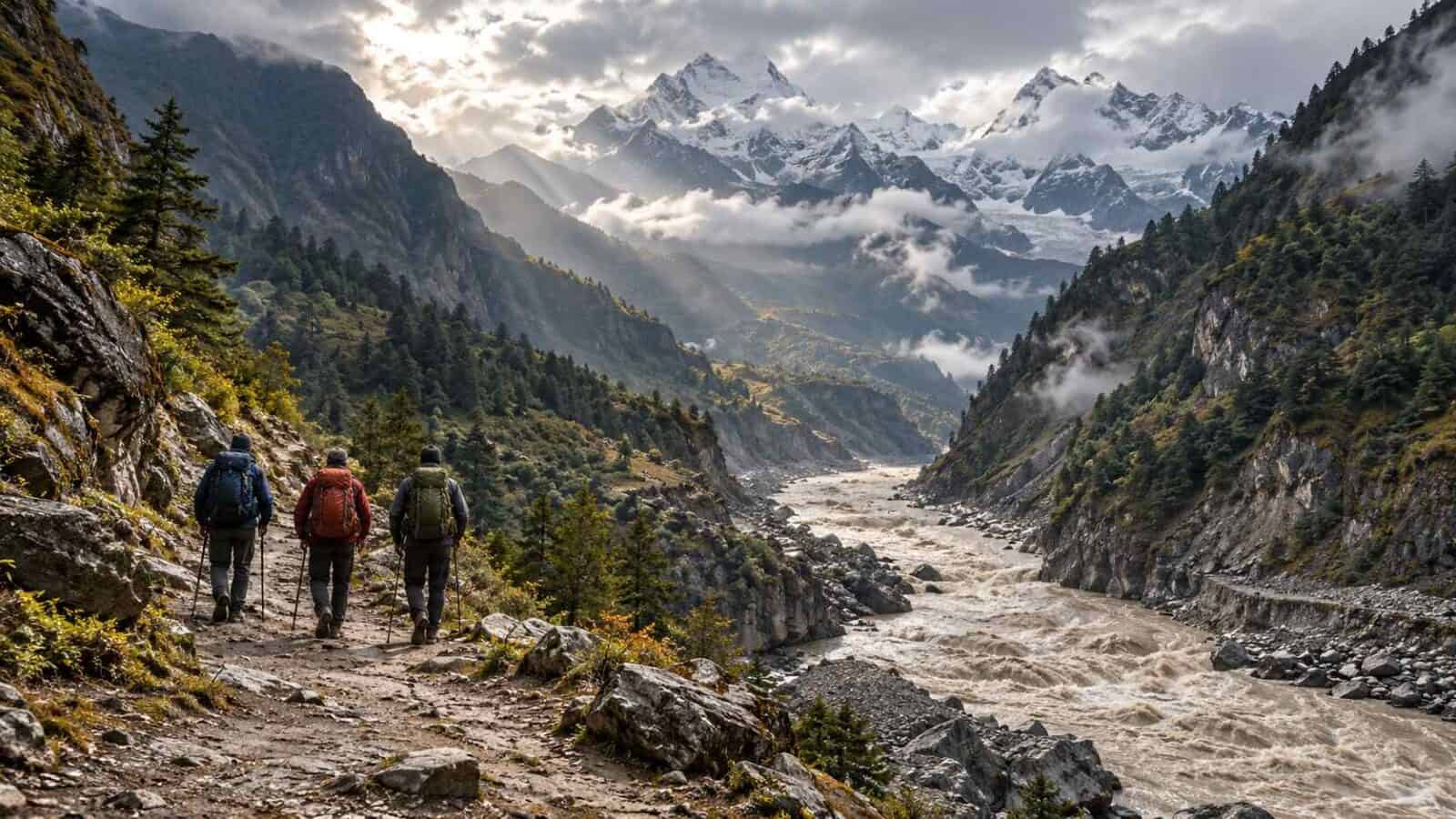
Tourism in Nepal has now been subjected to yet another setback due to flooding on October 11 in Gorkha district which has destroyed bridges and pathways leading to the Manaslu and Tsum Valley trekking destinations. Efforts have begun in the area to aid rescue and recovery while the Australian government has issued an update on October 13, warning travelers against going to the affected areas. For trekkers planning their trips, the first question that comes to mind would be whether the chosen path is accessible. nrcs.org
Nepal travel advisory changes as rescue work continues
Australia’s Smartraveller advisory, updated on 13 October, specifically identifies flooding along the Budhi Gandaki River in Gorkha. It confirms that local authorities are conducting rescue and recovery operations.
The advice tells visitors to avoid affected areas, follow local instructions and check arrangements with transport providers or tour operators. It also warns that conditions can change quickly.
This is a regional disruption with consequences for particular journeys. Travellers should check their actual route rather than assume that every destination in Nepal faces identical conditions. Smartraveller
Advertisement
Advertisement
Damaged bridges create an immediate access problem
The Nepal Red Cross situation bulletin, dated 11 October, describes damage across the Manaslu and Tsum Valley regions. Its preliminary assessment records approximately 50 affected households, displaced communities and damaged infrastructure.
The bulletin identifies destroyed suspension bridges in Chumnubri and Dharche. It also reports that the Soti steel bridge and part of the Nayapul bridge were washed away.
Advertisement
Advertisement
For Manaslu trekking, these losses make access a central concern. An itinerary needs usable connections between settlements, overnight stops and onward transport; a permit alone does not establish that those connections are safe. nrcs.org
| Official indicator | Reported position | Source and date |
|---|---|---|
| Flood occurrence | Early morning on 11 October | Nepal Red Cross, 11 October 2026 |
| Households affected | Approximately 50, preliminary estimate | Nepal Red Cross, 11 October 2026 |
| Infrastructure | Suspension bridges, roads and communications affected | Nepal Red Cross, 11 October 2026 |
| Current response | Rescue and recovery operations | Smartraveller, 13 October 2026 |
These figures describe early assessments, not a final damage total or a current count of stranded visitors. nrcs.org
Advertisement
Advertisement
Scientists examine a possible landslide blockage
The International Centre for Integrated Mountain Development, or ICIMOD, says a temporary landslide blockage may have triggered the flood. Its 11 October assessment places the possible blockage near Chumchet in Gorkha district.
The organisation estimates that flooding began around 4am Nepal time, carrying sediment and debris downstream. It describes its explanation as preliminary, based on information available that morning.
That distinction matters. The event should not be labelled a confirmed glacial lake outburst, nor should its cause be presented as settled before investigations establish what happened. ICIMOD
Manaslu combines conservation with community livelihoods
The National Trust for Nature Conservation identifies Jagat as the main entrance to Manaslu Conservation Area. The protected area covers 1,663 square kilometres, with landscapes encompassing the Nubri, Kutang and Tsum valleys.
Advertisement
Advertisement
The Trust began its Manaslu ecotourism programme in 1997, with support from Nepal’s government and the Asian Development Bank. Its approach connects conservation with local participation and livelihood development.
This background explains why disrupted access matters beyond holiday schedules. Tourism is part of a wider effort to support communities while protecting natural resources and cultural heritage. ntnc.org.np
Local businesses face uncertainty without a verified loss estimate
Industry analysis: When bridges and communications fail, trekking operators must reassess departures, accommodation arrangements and support services. Visitors may need to change dates or routes, creating uncertainty for businesses expecting their arrival.
The official assessments reviewed do not quantify tourism revenue losses, cancelled bookings or employment effects from this flood. They also provide no verified national visitor-growth figure attributable to the emergency.
A responsible economic assessment must therefore remain limited. The disruption threatens access-dependent business activity, but its financial scale cannot yet be stated.
Travellers should verify each stage before departure
Ask your trekking provider for a dated assessment covering the approach journey, walking stages and planned overnight stops. Seek clear answers about damaged crossings and the arrangements available if a route becomes unusable.
Advertisement
Advertisement
Keep a written record of agreed changes. Check cancellation terms and speak to your insurer about the specific cover attached to your booking.
For mountain travel, Smartraveller advises insurance covering the altitude reached, altitude sickness and emergency evacuation. Its wider guidance also recommends reputable trekking companies and professional guides. www.smartraveller.gov.au
Recovery depends on assessment rather than a fixed timetable
ICIMOD recommends that future risk assessment and infrastructure planning consider interacting hazards, including unstable slopes and river dynamics. Its assessment highlights how damage can spread downstream through settlements, transport networks and essential services.
That is a published risk-management recommendation, not an announced reconstruction budget or reopening programme. No verified completion date appears in the official sources reviewed.
For booked travellers, the useful next development will be a clear, dated statement identifying which connections are usable and under what conditions. ICIMOD
Traveller FAQs
Should I begin a booked Manaslu trek now?
Advertisement
Advertisement
Contact your operator before travelling towards the affected corridor. Obtain current confirmation of access and follow authorities’ instructions; older route descriptions cannot establish present conditions.
Has all tourism in Nepal been suspended?
The official advisory identifies flood-affected areas in Gorkha. It does not announce a nationwide tourism suspension, so decisions should reflect your destination and route.
Has an official reopening date been confirmed?
No verified reopening timetable was found in the official material reviewed. Do not treat an operator’s provisional departure date as a government clearance.
Safe access will shape the next stage
In regard to Manaslu, restoration starts with the establishment of safe passage and good communication channels, along with support for the affected communities. Travellers need to make their choices based on the dated advisories from the concerned agencies and the guidance of their trekking operators. From the 13th of October advisory, it is evident that the rescue and recovery operation are ongoing in this area. From the earliest findings, it is evident that there is significant destruction in the form of roads and bridges. There is no timeline for reopening available in the official literature checked.
Official Sources
- Department of Foreign Affairs and Trade — Nepal travel advisory
- Nepal Red Cross Society — Gorkha flood situation bulletin
- ICIMOD — Preliminary Budhi Gandaki flood assessment
- National Trust for Nature Conservation — Manaslu Conservation Area Project
Advertisement
