
Texas Joins California and More US States in Hammering Mexico Tourism as Tourist Arrivals From Dallas, Los Angeles and Other Major Hubs Decline Throughout 2026

Updated
Published
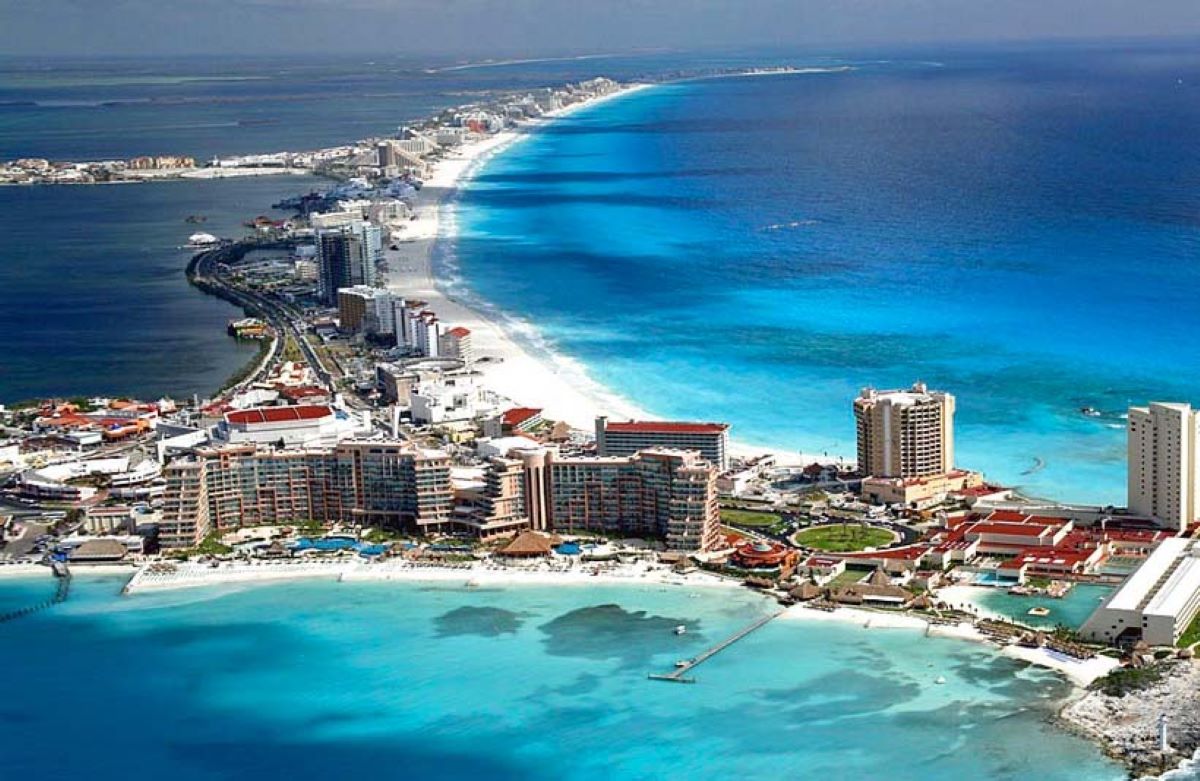
Texas joins California and more US states in hammering Mexico tourism as tourist arrivals from Dallas, Los Angeles and other major US hubs decline throughout 2026, driven by weaker outbound demand, shifting airline capacity and more destination choices.
Mexico’s tourism story in 2026 is becoming more complicated than the headline growth figures suggest. On the surface, the country continues to attract millions of international visitors and remains the dominant foreign destination for US travellers. But beneath that strength, some of the most important American feeder markets are weakening sharply. Dallas, Houston, Los Angeles and San Francisco all recorded year-over-year declines in US-citizen-originating traffic to Mexico in every month from January through August 2026. Miami has been negative since March, while Orlando fell in seven of the first eight months. The story is not that Americans have stopped travelling to Mexico. It is that demand is becoming less predictable, more selective and increasingly fragmented across origin markets.
The Real Story Is Not Collapse but Uneven Demand
That distinction matters. Mexico can still post rising national tourism numbers while key US gateways lose traffic because international travel is no longer moving in one uniform direction. Some Americans may be choosing different Mexican airports. Others may be shifting towards cruises, the Caribbean, Europe, domestic beach destinations or shorter trips. Airline capacity decisions can also change the picture dramatically from one hub to another. That is why Dallas, Houston, Los Angeles, San Francisco, Miami and Orlando should be treated as signals rather than the whole market. Together, however, they reveal an important trend: the United States may still be Mexico’s most important source market, but that demand is becoming more volatile beneath the national total.
Six Major US Hubs Lose More Than Half a Million Mexico-Bound Passengers
Across the six city markets examined, US-citizen-originating traffic fell from about 4.08 million passengers in January-August 2025 to roughly 3.56 million in the same period of 2026. That represents a loss of more than 517,000 passengers and a combined decline of about 12.7%.
Advertisement
Advertisement
| State | Hub | Jan-Aug 2026 | Jan-Aug 2025 | YoY Change |
|---|---|---|---|---|
| Texas | Dallas | 1,080,052 | 1,233,584 | -12.4% |
| Texas | Houston | 935,190 | 1,043,784 | -10.4% |
| California | Los Angeles | 900,663 | 1,025,732 | -12.2% |
| California | San Francisco | 313,095 | 381,066 | -17.8% |
| Florida | Miami | 236,781 | 278,465 | -15.0% |
| Florida | Orlando | 96,376 | 117,069 | -17.7% |
The most important point is not simply that every state weakened. It is that the pattern stretches across three of the most influential US aviation markets feeding Mexico.
Texas Is the Biggest Volume Shock
Texas carries the largest absolute decline. Dallas and Houston together lost roughly 262,000 US-originating passengers to Mexico compared with the same period a year earlier. That matters because Texas is not a marginal leisure feeder. It is one of the deepest travel corridors between the United States and Mexico, supported by geography, family ties, business links and dense airline networks. When both Dallas and Houston weaken simultaneously, the signal becomes harder to dismiss as a route-specific anomaly. The Texas story suggests that even deeply embedded travel relationships can soften when consumers change trip timing, destination choices or travel modes. It also shows how a comparatively modest percentage decline can create a very large absolute loss when the underlying market is this big.
Advertisement
Advertisement
Dallas Shows How a Strong Market Can Still Turn Down
Dallas remained a high-volume market throughout 2026, yet it was weaker than 2025 in every single month. The deterioration was especially visible during the summer, when June fell 19.1%, July 15.7% and August 12.6% year over year. That is important because summer is normally one of the strongest outbound travel periods. The decline suggests that the issue is not simply seasonality. Dallas travellers were still going to Mexico in large numbers, but not at the same intensity as a year earlier. This is what makes 2026 difficult to interpret: the market is not empty, but it is clearly cooler. For Mexican destinations that rely on Texas demand, that can mean fewer hotel nights, softer resort occupancy and less spending even while flights remain visibly busy.
Dallas to Mexico
| Month | US Citizens Originating | YoY Change |
|---|---|---|
| January | 131,350 | -2.8% |
| February | 128,000 | -3.3% |
| March | 142,813 | -17.1% |
| April | 118,009 | -7.5% |
| May | 135,070 | -15.2% |
| June | 154,525 | -19.1% |
| July | 162,142 | -15.7% |
| August | 108,143 | -12.6% |
Houston Confirms the Texas Weakness Is Broad
Houston tells a similar story, which makes the Texas trend more convincing. Passenger demand was down in every month from January through August, with declines deepening after February. March fell 17.1%, June 12.9% and August 14.2%. Houston’s market is more diverse than pure resort travel. It includes family visits, business traffic, leisure demand and connecting passengers. That means weakness here can reflect several pressures at once rather than a simple change in holiday sentiment. The important point is consistency. Houston never moved back into positive territory during the eight-month period. When two major Texas hubs show the same sustained pattern, it suggests that Mexico is losing some intensity from one of its most structurally important US source regions.
Houston to Mexico
| Month | US Citizens Originating | YoY Change |
|---|---|---|
| January | 102,823 | -1.4% |
| February | 100,077 | -3.6% |
| March | 108,910 | -17.1% |
| April | 94,772 | -10.4% |
| May | 117,716 | -10.1% |
| June | 148,140 | -12.9% |
| July | 159,000 | -9.9% |
| August | 103,752 | -14.2% |
California Is Losing More Than Just Volume
California’s combined decline is steeper than Texas in percentage terms, with Los Angeles and San Francisco down about 13.7% across the first eight months. The significance is not only numerical. California has historically been one of Mexico’s most natural outbound markets because of proximity, air connectivity and deep cultural ties. When both Los Angeles and San Francisco fall in every month, the weakness looks more structural. It may reflect consumers spreading travel across a wider set of global destinations, airlines reallocating capacity or travellers becoming more selective about resort-heavy trips. California’s travellers also have unusually broad alternatives, from Hawaii to Asia to domestic West Coast holidays. Mexico is therefore competing inside a far more crowded leisure marketplace than it did a decade ago.
Los Angeles Remains Huge but Clearly Softer
Los Angeles generated more than 900,000 US-originating passengers to Mexico in the first eight months of 2026, so this is still a giant market. But it was down about 12.2% year over year. The most notable feature is the absence of any recovery month. Every month was negative. March fell 17.4%, April 15.4% and August 17.1%. For a destination like Mexico, Los Angeles matters because it feeds both leisure and family-travel segments and has strong nonstop connectivity to major Mexican cities and resorts. A decline here can therefore affect several destination types at once. The scale also means that even a mid-teens percentage drop translates into a substantial number of missing passengers.
Los Angeles to Mexico
| Month | US Citizens Originating | YoY Change |
|---|---|---|
| January | 112,636 | -4.3% |
| February | 97,032 | -10.1% |
| March | 110,446 | -17.4% |
| April | 107,966 | -15.4% |
| May | 109,635 | -8.8% |
| June | 130,138 | -12.8% |
| July | 140,812 | -11.1% |
| August | 91,998 | -17.1% |
San Francisco Is the Sharpest Warning Signal
San Francisco recorded the steepest decline among the six hubs, down about 17.8% in January-August 2026. Several months were especially weak: March fell 24.1%, June 25.9% and August 22.8%. This matters because the Bay Area is an affluent source market where travellers typically have a high propensity for long-haul and premium leisure travel. Persistent weakness from such a market suggests that the issue cannot be reduced to affordability alone. Travellers may simply have more competing options. Mexico may also be losing some share to other destinations with aggressive airline growth or different seasonal appeal. San Francisco therefore stands out less because of raw volume and more because of the depth and consistency of the contraction.
San Francisco to Mexico
| Month | US Citizens Originating | YoY Change |
|---|---|---|
| January | 43,202 | -6.1% |
| February | 39,117 | -7.0% |
| March | 39,715 | -24.1% |
| April | 39,706 | -20.9% |
| May | 36,126 | -12.7% |
| June | 43,063 | -25.9% |
| July | 45,503 | -19.3% |
| August | 26,663 | -22.8% |
Florida Shows How Leisure Competition Can Hurt Mexico
Florida recorded the steepest combined percentage decline among the three states analysed, down about 15.8% across Miami and Orlando. That is particularly interesting because Florida residents have some of the strongest alternatives to Mexico anywhere in the United States. Beaches, domestic resorts, cruises, the Bahamas and the Caribbean all compete for the same leisure budget. In that context, Mexico does not merely compete on destination appeal. It competes on airfare, convenience, travel time and package value. When Caribbean cruising is strong or domestic travel becomes more attractive, Mexico can lose share even if total outbound travel remains healthy. Florida therefore illustrates how destination substitution can quietly erode a traditionally strong international market.
Advertisement
Advertisement
Miami’s Reversal Is One of the Most Striking Stories
Miami began 2026 positively, with January up 0.9% and February up 3.8%. Then the market reversed sharply. March fell 12.8%, May 27.4%, June 20.2%, July 19.5% and August 23.3%. That sequence suggests more than a temporary wobble. Miami is one of the most internationally connected airports in the United States, giving travellers enormous choice across Latin America and the Caribbean. Mexico therefore competes directly with dozens of warm-weather alternatives. The sustained declines from spring onward suggest that Mexico may be losing some leisure share in a market where travellers can easily redirect spending elsewhere without abandoning international travel.
Miami to Mexico
| Month | US Citizens Originating | YoY Change |
|---|---|---|
| January | 29,464 | +0.9% |
| February | 31,768 | +3.8% |
| March | 33,498 | -12.8% |
| April | 24,679 | -15.1% |
| May | 26,610 | -27.4% |
| June | 33,420 | -20.2% |
| July | 33,791 | -19.5% |
| August | 23,551 | -23.3% |
Orlando Is Smaller but More Volatile
Orlando’s Mexico market is far smaller than Dallas, Houston or Los Angeles, but its volatility is revealing. The city was negative in seven of the first eight months. July briefly surged 20.3% year over year, only for August to collapse 29.0%. That kind of swing often reflects a combination of demand and airline capacity rather than pure traveller sentiment. A small number of frequency changes can move percentages sharply when the underlying market is smaller. Still, the overall pattern is clearly weak, with January-August traffic down roughly 17.7%. Orlando shows why airport-level analysis matters: even if national tourism looks strong, local feeder markets can behave very differently.
Orlando to Mexico
| Month | US Citizens Originating | YoY Change |
|---|---|---|
| January | 9,994 | -20.8% |
| February | 11,069 | -16.2% |
| March | 15,213 | -20.0% |
| April | 9,514 | -21.9% |
| May | 11,982 | -29.3% |
| June | 16,299 | -17.9% |
| July | 14,233 | +20.3% |
| August | 8,072 | -29.0% |
The National Mexico Tourism Story Is Still Positive
This is the most important counterpoint. Mexico’s broader tourism market continues to expand even while these US hubs weaken. That means the country is either gaining visitors from other US cities, benefiting from different transport modes, attracting more travellers from Canada, Europe or Latin America, or some combination of all four. This divergence is strategically important. It means Mexico is not necessarily facing a tourism downturn. It is facing a more fragmented source-market landscape. National growth can mask significant shifts underneath. For hotels and destinations that depend heavily on Texas, California or Florida, the national headline may therefore feel disconnected from local booking patterns.
Cruise Growth Is Helping Mexico Absorb Aviation Weakness
One of the clearest buffers is cruise tourism. If air-originating traffic from some US hubs weakens while cruise passenger arrivals expand, Mexico can still post strong total tourism numbers. This matters especially for Caribbean and Pacific ports where cruise passengers contribute heavily to excursions, retail and local transport. Cruise growth also changes how Americans consume Mexico. A traveller who might once have booked a five-night resort stay could instead visit for one day as part of a cruise. That still counts as tourism activity but produces a very different spending pattern. This shift between modes is one reason airline declines should not automatically be read as a collapse in destination demand.
A Strong 2025 Base Is Making 2026 Look Worse
Another part of the story is statistical. Many of these markets were exceptionally strong in 2025. Dallas, for example, handled more than 192,000 US-originating passengers in July 2025, while Los Angeles exceeded 158,000. Those are difficult benchmarks to beat. When the prior-year base is unusually high, 2026 can produce large absolute passenger totals and still show double-digit declines. That distinction matters because a cooling market is very different from a collapsing one. The former still offers airlines, hotels and destinations a substantial customer base. The challenge is that growth is no longer automatic.
Airline Capacity Is Part of the Story Too
Passenger demand does not move independently of airline scheduling. If airlines reduce frequencies, shift aircraft to other destinations or use smaller planes, originating passenger counts can fall even when traveller interest remains healthy. Conversely, adding capacity can create growth in a market that might otherwise be flat. This is especially important in San Francisco and Orlando, where route economics can change quickly. Dallas and Houston are also connecting hubs, so network decisions affect how passengers are routed. Mexico’s tourism authorities therefore need to watch capacity deployment just as closely as consumer sentiment. A declining route may sometimes reflect an airline strategy change more than a collapse in destination appeal.
Advertisement
Advertisement
Americans May Be Travelling More but Spreading Their Trips Further
The wider US outbound market remains enormous. Americans have more international choices than ever, and those choices are becoming easier to access through nonstop routes. Europe has expanded transatlantic capacity. Caribbean islands continue adding service. Central America has become more competitive. Cruising remains strong. Even domestic US destinations can pull travellers away from Mexico when fares or hotel prices are attractive. This means Mexico increasingly competes within a broader global leisure marketplace. Its historical advantage of proximity remains powerful, but proximity alone is no longer enough to guarantee automatic growth from every US city.
August Is the Month Mexico Should Watch Most Closely
August may be the clearest signal that the weakness is broadening. Every one of the six markets was down year over year: Miami -23.3%, Orlando -29.0%, Los Angeles -17.1%, San Francisco -22.8%, Houston -14.2% and Dallas -12.6%. When six geographically separate hubs all weaken simultaneously, the explanation is less likely to be purely local. That does not prove a single national cause, but it raises the possibility of a wider shift in outbound travel behaviour or airline network allocation. The autumn and winter booking periods will show whether August was a temporary low point or part of a more durable pattern.
Texas Delivers the Largest Absolute Loss
| State | Passenger decline Jan-Aug |
|---|---|
| Texas | -262,126 |
| California | -193,040 |
| Florida | -62,377 |
| Combined | -517,543 |
Texas leads the absolute decline because Dallas and Houston are so large. California posts the sharper percentage contraction, while Florida shows the most severe combined percentage weakness. These differences matter because each state tells a different story: Texas is a volume problem, California is a sustained market-share problem, and Florida is a highly competitive leisure-substitution problem.
Mexico’s Biggest Risk Is Becoming Too Comfortable With National Growth
The danger for Mexico is not that tourism suddenly collapses. It is that national growth hides weakening performance in strategically important US feeder markets. A country can keep posting higher total arrivals while quietly losing share in specific gateways. Over time, that can matter because US travellers remain Mexico’s dominant air tourism source market. If Dallas, Houston, Los Angeles, San Francisco and Miami continue weakening into 2027, destination marketers will need to understand whether the issue is price, capacity, competition, perception or changing travel habits.
The Bigger Vision Is About Quality of Demand, Not Just Volume
The most important question is not simply how many Americans still travel to Mexico. It is what kind of travellers they are becoming. Are they staying fewer nights? Are they shifting from resorts to cruises? Are they booking later? Are they choosing different Mexican destinations? Are they spreading trips across more countries instead of repeating Mexico every year? Those behavioural changes matter more than a single headline arrival number. Tourism strategy in 2026 increasingly depends on understanding the traveller behind the statistic.
Mexico Is Still Strong, but the US Market Is Becoming Harder to Read
Mexico remains one of the most powerful tourism destinations in the world and the dominant foreign destination for US travellers. That position has not disappeared. What has changed is the consistency of the US feeder market. Texas, California and Florida show that demand can weaken materially even while national totals remain healthy.
Advertisement
Advertisement
The first eight months of 2026 produced more than 517,000 fewer US-citizen-originating passengers across the six hubs examined. That is too large to ignore.
But it is also not the whole story.
Mexico is still growing. Cruise arrivals are strong. Other source markets are contributing. The challenge is now more sophisticated: protect the strength of the national tourism brand while rebuilding momentum in major US gateways that once looked almost automatic.
That may be the defining Mexico tourism story of 2026 — not decline, but fragmentation.
Texas joins California and more US states in hammering Mexico tourism as tourist arrivals from Dallas, Los Angeles and other major US hubs decline throughout 2026, due to weaker demand, airline shifts and wider travel choices.
In conclusion, Texas joins California and more US states in hammering Mexico tourism as tourist arrivals from Dallas, Los Angeles and other major US hubs decline throughout 2026, driven by weaker outbound demand, airline capacity shifts, stronger competition from cruises and other destinations, and changing traveller behaviour. Mexico remains a powerful tourism market, but sustained weakness across major US feeder hubs shows that growth is becoming more fragmented and less predictable.
Advertisement
