
Middle East Airports Face 836 Delays and 28 Cancellations as Travel is Disrupted at Dubai, Jeddah and Others

Published
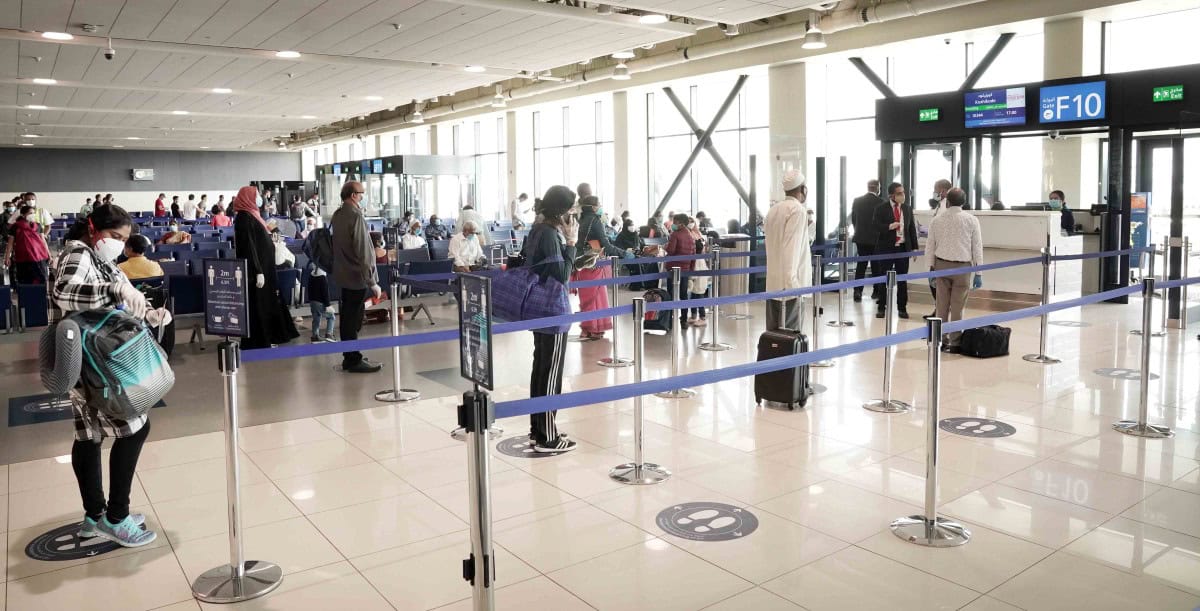
Middle East Airports Face a major travel disruption today, with 836 delays and 28 cancellations affecting aviation operations across Dubai, Jeddah and others. The disruption has created challenges for passengers travelling through key regional hubs. However, airlines and airports continue managing the situation through operational adjustments and schedule updates. The delays and cancellations have affected multiple Middle East Airports, including Dubai International Airport, Jeddah’s King Abdulaziz International Airport and other important gateways. The travel disruption is linked to changing flight operations, network pressures and wider regional challenges. Therefore, passengers are advised to check flight updates regularly and prepare for possible changes to their journeys.
Middle East aviation network sees widespread delays and cancellations
Major airports across the Middle East are experiencing significant flight disruption today, with 836 delays and 28 cancellations recorded across 12 key airports. The disruption has affected major aviation hubs connecting Europe, Asia, Africa and the Gulf region, with 864 total flight disruptions reported from the provided airport data.
Advertisement
Advertisement
The largest impact has been recorded at Istanbul Airport, which reported 225 delays and 3 cancellations, followed by major Gulf gateways including King Abdulaziz International Airport in Jeddah with 114 delays, Dubai International Airport with 105 delays and 10 cancellations, and King Khalid International Airport in Riyadh with 94 delays.
The disruption pattern shows that Middle East aviation is facing pressure across multiple countries rather than being limited to a single airport or airline. Recent regional flight operations have also been affected by changing schedules, airline adjustments and continued operational caution across the region.
Advertisement
Advertisement
Which Middle East airports and countries are most affected today?
The data highlights widespread pressure across airports in Türkiye, the Gulf region, Saudi Arabia, Israel and Jordan.
| Airport | Country | Delays | Cancellations |
|---|---|---|---|
| Istanbul Airport | Türkiye | 225 | 3 |
| Ben Gurion International Airport | Israel | 56 | 2 |
| King Fahd International Airport | Saudi Arabia | 36 | 1 |
| Kuwait International Airport | Kuwait | 34 | 1 |
| Bahrain International Airport | Bahrain | 15 | 4 |
| Seeb International Airport | Oman | 22 | 1 |
| Hamad International Airport | Qatar | 67 | 1 |
| Sharjah International Airport | UAE | 49 | 1 |
| Dubai International Airport | UAE | 105 | 10 |
| King Abdulaziz International Airport | Saudi Arabia | 114 | 1 |
| King Khalid International Airport | Saudi Arabia | 94 | 1 |
| Queen Alia International Airport | Jordan | 19 | 2 |
Türkiye’s Istanbul Airport recorded the highest number of delays among all listed airports, with 225 delayed flights, showing pressure on one of the region’s most important international transfer points.
Advertisement
Advertisement
In the UAE, both Dubai International Airport and Sharjah International Airport recorded disruption. Dubai reported 105 delays and 10 cancellations, making it the airport with the highest number of cancellations in the data set. Sharjah recorded 49 delays and 1 cancellation.
Saudi Arabia also experienced notable disruption across its major aviation centres. King Abdulaziz International Airport in Jeddah recorded 114 delays and 1 cancellation, while King Khalid International Airport in Riyadh reported 94 delays and 1 cancellation. King Fahd International Airport added another 36 delays and 1 cancellation.
Advertisement
Advertisement
Qatar’s Hamad International Airport reported 67 delays and 1 cancellation, while Kuwait, Bahrain, Oman and Jordan also recorded operational impacts.
| Airport | Destination Cancelled % | Origin Cancelled % |
|---|---|---|
| Dubai Int’l | <1% | <1% |
| Bahrain Int’l | 1% | 1% |
| Istanbul Airport | <1% | <1% |
| King Khalid Int’l | — | <1% |
| King Abdulaziz Int’l | — | <1% |
Airlines affected as Flydubai, Saudia and Qatar Airways see highest disruptions
Regional airlines have also faced operational challenges, with several carriers recording delays and cancellations.
| Airline | Country/Region | Cancelled Flights | Cancellation Rate | Delayed Flights | Delay Rate |
|---|---|---|---|---|---|
| FlyDubai | UAE | 6 | 1% | 30 | 9% |
| Royal Jordanian | Jordan | 2 | 1% | 6 | 4% |
| El Al | Israel | 2 | 50% | 0 | 0% |
| Saudia | Saudi Arabia | 1 | 0% | 64 | 11% |
| Qatar Airways | Qatar | 1 | 0% | 60 | 9% |
| Air Arabia | UAE | 1 | 0% | 43 | 18% |
| Oman Air | Oman | 1 | 0% | 18 | 15% |
| Syrian Arab Airlines | Syria | 1 | 8% | 0 | 0% |
Among airlines, Saudia recorded the highest number of delayed flights with 64, followed closely by Qatar Airways with 60 delays.
UAE-based carriers also faced disruption. Flydubai recorded six cancellations and 30 delays, while Air Arabia reported one cancellation and 43 delayed flights with an 18% delay rate, the highest delay percentage among the listed airlines.
Advertisement
Advertisement
Oman Air recorded 18 delays with a 15% delay rate, while Royal Jordanian experienced six delays and two cancellations. Israel’s El Al recorded two cancellations with a 50% cancellation rate, although no delays were reported in the provided data.
Why Middle East aviation operations are under pressure
The current disruption reflects a combination of regional aviation challenges, including changing airline schedules, operational adjustments and increased caution among carriers operating through the Middle East. Airlines have continued reviewing routes and schedules as regional conditions evolve, creating knock-on effects across connecting airports.
Major hub airports such as Dubai, Doha, Istanbul, Jeddah and Riyadh rely heavily on connecting passengers. When flights are delayed at these locations, the impact can spread quickly through international networks, affecting passengers travelling between Asia, Europe and Africa.
The Middle East’s position as a global aviation crossroads means even limited operational changes can create wider delays. Aircraft rotations, crew availability and connecting passenger movements can all contribute to longer waiting times and schedule adjustments.
What affected passengers should do now
Passengers travelling through affected Middle East airports should take several steps before heading to the airport:
- Check flight status directly with the airline before leaving for the airport, as departure times can change quickly.
- Arrive earlier than usual, especially at major hubs such as Dubai, Istanbul, Doha, Jeddah and Riyadh where delays are higher.
- Keep airline notifications active through mobile apps, email or SMS updates.
- Confirm connecting flight options if travelling through major transit hubs, as a delayed first sector could affect onward journeys.
- Contact airlines directly for rebooking options if flights are cancelled.
- Avoid making airport transfers too tightly scheduled, as delayed arrivals may affect connecting flights.
Airlines operating in the region continue advising passengers to monitor individual flight information as schedules remain subject to change.
Advertisement
Advertisement
Data Verification Notice
The data has been extensively curated by our editorial team using real-time aviation figures recorded on 12 September 2026 at 3:03 pm ET USA (12 September 2026, 11:04 pm GST).
Primary Source: FlightAware.
Verification Protocol: All statistics have been independently reviewed and cross-checked by our human editorial desk. Timestamped records, data logs and feed snapshots are securely archived internally to support historical accuracy and editorial transparency.
Note: Real-time flight-tracking figures reflect active airspace and operational data. Minor variations may occur when compared with information displayed at individual airport terminals or airline departure gates.
Yesterday, airports across the Middle East reported 58 flight cancellations and 890 delays, highlighting continued pressure on regional aviation operations. Read the complete coverage here.
Advertisement
Verified by Somudranil Sarkar
