
Blackpool Stands Alongside Cornwall and Yorkshire as After-Dark Attractions Target Britain’s Winter Tourism Season

Published
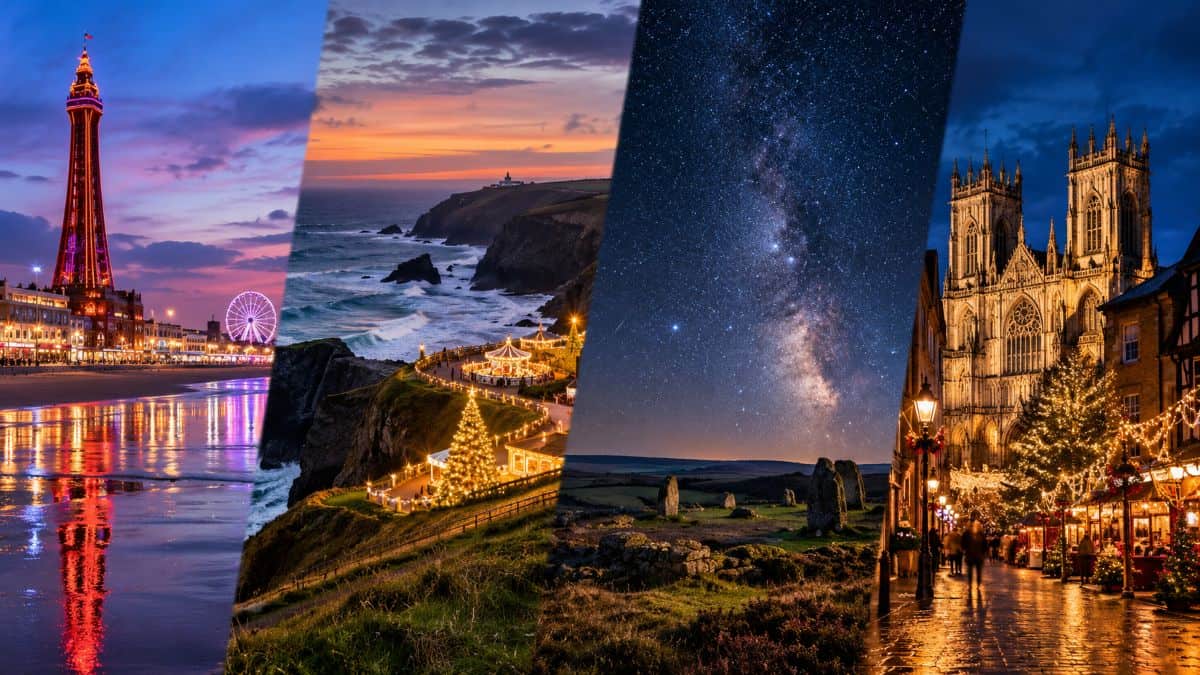
Britain’s winter tourism season faces a fresh test as illuminated seafronts, festive attractions and dark-sky experiences offer visitors new reasons to travel beyond summer. Blackpool’s Illuminations run until 3 January 2027, while Cornwall’s Eden Project stages Halloweden and Northumberland promotes stargazing experiences. Yorkshire adds festive attractions in York and dark-sky activities across the North York Moors. These contrasting offers raise a significant question for the travel industry: can after-dark attractions convert shorter daylight hours into additional overnight stays? National tourism figures reveal mounting pressure on domestic overnight travel, particularly along England’s coast. However, event calendars alone cannot prove economic success. Accommodation availability, transport connections and visitor spending will determine which destinations can turn seasonal spectacle into sustainable tourism demand.
The National Numbers Reveal a Seasonal Tourism Challenge
The latest official figures provide a compelling backdrop to the comparison. England recorded 87 million domestic overnight trips in 2025, down 3% from 2024. Yet domestic tourism expenditure rose 3% to £78 billion, reflecting a market where spending and trip volumes are moving in different directions. Coastal overnight travel suffered a sharper decline, falling 18% from 11.1 million trips to 9.1 million. These figures underline the importance of finding fresh reasons to visit seaside and rural destinations outside traditional holiday periods.
Advertisement
Advertisement
The final-quarter figures offer a more nuanced picture. England recorded 23 million domestic overnight trips in October–December 2025, up 5% year on year. However, overnight-trip expenditure fell 3% to £7 billion, while average spending per overnight trip declined 8% to £312. Holiday trips recorded an average spend of £370, down 1%. More trips do not automatically translate into stronger visitor spending, making accommodation and local expenditure crucial measures for this investigation.
| Official tourism indicator | Latest reported figure | Relevance to winter travel |
|---|---|---|
| England overnight trips, 2025 | 87 million | Domestic trip volumes remain under pressure |
| England domestic tourism expenditure, 2025 | £78 billion | Spending has grown despite fewer overnight trips |
| Coastal overnight trips, 2025 | 9.1 million | An 18% annual decline highlights coastal challenges |
| Q4 overnight trips, 2025 | 23 million | Autumn and winter already attract substantial demand |
| Q4 overnight-trip spending | £7 billion | Expenditure fell 3% year on year |
| Average Q4 overnight-trip spend | £312 | Spending per trip fell 8% year on year |
The figures do not prove that seasonal attractions can reverse these trends. Nevertheless, they establish a clear commercial opportunity. Destinations need to understand whether events create genuinely additional trips, encourage longer stays or simply shift existing visits to different dates.
Advertisement
Advertisement
Blackpool’s Illuminations Set the Extended-Season Benchmark
Blackpool offers the clearest example of a destination using darkness as a long-running visitor proposition. The 2026 Illuminations are scheduled from 4 September 2026 to 3 January 2027, extending well beyond the main summer holiday period. VisitEngland describes a six-mile illuminated promenade featuring more than 500 designs, accessible on foot, by car or aboard an illuminated tram.
The attraction’s duration gives travellers flexibility. Visitors can plan autumn weekends, festive breaks or early-January outings without relying on a single switch-on night. Furthermore, the display can complement entertainment, dining and indoor attractions, potentially creating a fuller overnight itinerary.
Advertisement
Advertisement
However, the key question concerns conversion. A visitor who drives along the promenade and returns home generates a different economic outcome from someone who books a hotel, eats locally and stays for another day. Blackpool’s tourism businesses would need to demonstrate that the illumination period sustains accommodation demand beyond peak dates.
Transport also influences that decision. Blackpool’s tram network provides a distinctive way to experience the seafront, but travellers should verify current operating times against their chosen attraction and return journey. Rail passengers should check onward connections and local transport rather than assume every evening service accommodates late finishes.
For accommodation comparisons, the most revealing test would compare similar Saturday and weekday stays in October, November, December and early January. Room prices, minimum-stay conditions and actual availability should be recorded consistently. A long attraction calendar creates booking opportunities; only visitor and hotel data can establish its economic effect.
Cornwall Tests the Appeal of Winter Coastal Breaks
Cornwall faces a different challenge because its attractions and accommodation are spread across a large coastal region. Its winter offer must persuade visitors that a journey remains worthwhile even when beaches, outdoor activities and some seasonal businesses operate differently from summer.
The Eden Project provides a timely example. VisitEngland’s autumn calendar lists Halloweden from 24 October to 1 November 2026, creating a defined reason for families and other visitors to travel during the autumn half-term period.
Yet an event concentrated into a short window presents a different commercial proposition from Blackpool’s months-long display.
Advertisement
Advertisement
For Cornwall, the investigation should examine how event-led visits combine with coastal accommodation, local food, heritage attractions and indoor experiences. A single evening attraction may justify one night’s stay, but a stronger regional itinerary could encourage visitors to arrive earlier or remain for a second day.
Transport presents an important constraint. Travellers visiting dispersed attractions should compare rail and bus connections with the practicalities of driving between coastal towns. They should also check whether restaurants, attractions and accommodation providers operate throughout the intended stay. A lower advertised room rate offers limited value if the surrounding visitor economy has largely closed for the season.
The region’s commercial opportunity lies in coordinating experiences rather than relying on one headline event. A bookable evening attraction, an open restaurant and a suitable place to stay can form a compelling short break. However, evidence of additional overnight bookings is needed before concluding that such combinations have materially extended Cornwall’s tourism season.
Northumberland Turns Natural Darkness Into an Attraction
Northumberland offers the most distinctive alternative to conventional illumination tourism. Rather than adding artificial light, the county promotes the quality of its night skies as a reason to visit. Visit Northumberland reports that 572 square miles hold Gold Tier dark-sky status, making the region particularly relevant to stargazing and astronomy-led tourism.
The visitor proposition includes dark-sky landscapes, observatory experiences and guided astronomy activities. VisitEngland’s autumn coverage has also highlighted planned stargazing stays at The Tempus, in partnership with Kielder Observatory, across the September 2026–March 2027 period. Travellers should verify the current package dates, inclusions and booking availability before committing.
This model could appeal to visitors seeking a specialist experience rather than a conventional festive outing. Longer nights provide more darkness for observation, although cloud cover, rain and visibility can determine whether a session succeeds. Travellers should therefore check cancellation policies and whether alternative activities or rescheduled sessions are available.
Advertisement
Advertisement
Accessibility remains central. Rural observatories and dark-sky locations may require a car or organised transfer, particularly after evening events. Accommodation packages that coordinate the experience, dinner and an overnight stay could reduce the planning burden. Nevertheless, the article should distinguish between the availability of dark skies and evidence that visitors purchase overnight packages.
Northumberland’s potential lies in selling an experience that depends on the landscape itself. Its long-term appeal may extend beyond a particular festival, but the commercial case rests on bookable experiences, reliable visitor access and measurable local spending.
Yorkshire Builds a Network of Winter Night-Time Experiences
Yorkshire’s advantage is the breadth of its regional offer. York attracts festive visitors, while rural landscapes and national parks provide opportunities for stargazing, night walks and seasonal events. This creates a different model from Blackpool’s continuous seafront display or Northumberland’s specialist astronomy proposition.
Yorkshire’s Winter Wonderland is scheduled in York from 13 November 2026 to 3 January 2027. Its programme includes an ice rink, illuminated funfair and family entertainment, giving visitors several activities to combine within a city break.
Beyond York, the North York Moors’ Dark Skies Fringe Festival runs from 23 October to 1 November 2026. Its programme includes a UV fungi woodland walk, a dark-sky-themed silent disco, storytelling and night-time navigation using the stars. The festival demonstrates how darkness can support experiences extending beyond conventional light displays.
The distinction between the two offers matters. York provides a concentrated festive experience with city accommodation and dining nearby. Rural events require more careful planning around driving, local transport, opening times and the distance between attractions. A regional itinerary only works when its individual components align with the visitor’s dates and transport options.
Advertisement
Advertisement
Yorkshire’s opportunity is therefore to develop connected evening experiences rather than isolated events. A city stay might be paired with a separate rural excursion, but travellers should not assume that distant attractions can be combined conveniently in one evening. For tourism businesses, the priority is to make multi-night itineraries straightforward to book and practical to complete.
Four Destinations Compared on Practical Value
The four regions demonstrate different approaches to extending the visitor calendar. The table below compares their published offers and the evidence still needed to establish their economic impact.
| Destination | Confirmed seasonal example | Principal strength | Main limitation to investigate |
|---|---|---|---|
| Blackpool | Illuminations: 4 September 2026–3 January 2027 | Long operating window and recognisable seafront attraction | Whether visitors stay overnight rather than make evening trips |
| Cornwall | Halloweden: 24 October–1 November 2026 | A defined autumn event within a wider coastal destination | Short event window and dispersed visitor services |
| Northumberland | Dark-sky tourism and planned stargazing stays | Specialist experiences based on natural darkness | Weather dependence and rural transport |
| Yorkshire | Winter Wonderland: 13 November 2026–3 January 2027 | Festive city attractions and a wider regional events network | Distances between urban and rural experiences |
Published event details are based on VisitEngland, Visit Northumberland and North York Moors National Park information. Dates and booking conditions should be rechecked before travel.
No destination can be declared the strongest performer from these calendars alone. Blackpool has a longer event window, but that does not establish higher overnight conversion. Northumberland offers a distinctive natural attraction, yet weather and access may constrain demand. Cornwall and Yorkshire have broader visitor portfolios, but their commercial performance depends on how effectively those experiences translate into bookable trips.
The comparison becomes more meaningful when each destination is measured against the same indicators: opening days, ticket costs, accommodation availability, transport after dark, visitor spending and average length of stay.
What the Numbers Must Prove About Overnight Stays
The most important distinction in this story is between attracting attendance and generating additional overnight tourism. An event may draw large crowds without materially increasing hotel occupancy. It may also encourage existing visitors to spend more locally without creating additional trips.
Advertisement
Advertisement
The strongest evidence would combine attraction attendance with hotel occupancy, room-night bookings and visitor surveys. Surveys should establish whether the event was the principal reason for travel, how far visitors came and whether they would have visited without it. Local businesses could also provide evidence of changes in trading patterns during comparable periods.
Researchers should compare event dates with similar weekdays and weekends, while accounting for school holidays, Christmas, other festivals and weather. Where possible, the analysis should examine equivalent dates across multiple years. Without these controls, higher occupancy during an event cannot be attributed confidently to the attraction.
Official national statistics provide a baseline, while regional and county-level data can help establish the wider market context. VisitBritain’s regional and subregional dataset covers overnight trips, nights and expenditure, although some smaller-area estimates rely on multi-year averages. The published figures are also classified as statistics in development, and methodological changes mean results from 2022 onwards are not directly comparable with data before 2020.
This distinction should shape the article’s claims. Verified attendance is not the same as proven economic impact, and reported business confidence is not a substitute for occupancy or expenditure data.
The Wider Market Still Faces Cost and Weather Barriers
Consumer sentiment adds another dimension to the investigation. VisitBritain’s September 2026 Domestic Sentiment Tracker found that 78% of UK adults intended to take an overnight domestic trip within the following 12 months. That was three percentage points higher than August and above September 2025 levels. However, weather and affordability remained prominent obstacles.
| Reported barrier to an overnight UK trip | September 2026 |
|---|---|
| UK weather | 35% |
| Rising cost of living | 29% |
| Rising holiday and leisure costs | 28% |
The findings reveal a tension for winter tourism operators. Darker evenings create more opportunities to stage light displays and night-time activities, but poor weather and trip costs can still deter visitors. Attractions therefore need to offer convincing value, clear booking information and practical alternatives when outdoor conditions deteriorate.
Advertisement
Advertisement
Accommodation packages may help visitors understand the total cost of a break. However, discounts alone will not guarantee additional demand. Transport, meal costs, event admission and the availability of activities the following day also shape the overall experience.
For tourism businesses, the challenge is to convert intention into action. A well-promoted event may generate interest, but a seamless booking journey and reliable visitor information can make the difference between a day trip and an overnight stay.
Practical Checks Before Booking a Winter Break
Travellers comparing these destinations should assess the whole journey rather than choosing an attraction in isolation. An evening event can be the centrepiece of a winter break, but the surrounding transport and accommodation arrangements determine how easily visitors can enjoy it.
| Before booking | What travellers should verify |
|---|---|
| Event dates | Exact operating dates, start times and last admission |
| Tickets | Advance booking requirements, family pricing and cancellation terms |
| Accommodation | Seasonal opening, room availability and minimum-stay rules |
| Return transport | Last train or bus, local tram times and onward transfers |
| Weather | Cancellation policies and alternative indoor activities |
| Itinerary | Nearby dining, daytime attractions and realistic journey times |
Blackpool is well suited to visitors who want an extended illuminated seafront experience. Cornwall requires more attention to the distance between attractions and seasonal services. Northumberland rewards careful planning around observatory sessions, darkness and weather. Yorkshire offers a choice between a concentrated city break and rural experiences that may require additional transport.
For budget-conscious travellers, the most useful comparison is the total cost of the trip, not the entry price alone. A free or inexpensive display may still involve substantial travel expenses, while a package that includes accommodation and a guided activity may offer clearer overall value.
The Long-Term Opportunity for Regional Tourism
The strongest strategic lesson is that after-dark attractions should form part of a wider visitor proposition. Their value depends on how well they connect with accommodation, hospitality, transport and daytime activities. That connection matters particularly in coastal and rural areas where some businesses operate on shorter seasonal calendars.
Advertisement
Advertisement
Blackpool illustrates the potential of a long-running attraction. Cornwall demonstrates the need to coordinate events across a dispersed destination. Northumberland offers a specialist experience rooted in its natural environment. Yorkshire shows how city-based festive demand and rural night-time activities can coexist within a broader regional tourism offer.
For destination managers, the next step is to measure results consistently. Attendance, hotel occupancy, average length of stay, spending per visitor and business opening patterns would provide a clearer assessment than event popularity alone. Better late-evening transport and coordinated accommodation packages may also help visitors turn a single activity into a longer break.
The enduring question is not simply whether Britain’s destinations can illuminate winter evenings. It is whether those experiences can give travellers a compelling reason to book, stay longer and spend locally. The winners will be the destinations that turn darkness into a practical, bookable and economically valuable visitor experience.
Advertisement
