
Tokyo Squares Up to Seoul and Singapore as Halloween in Asia Reveals Where One-Night Stays Cost More

Published
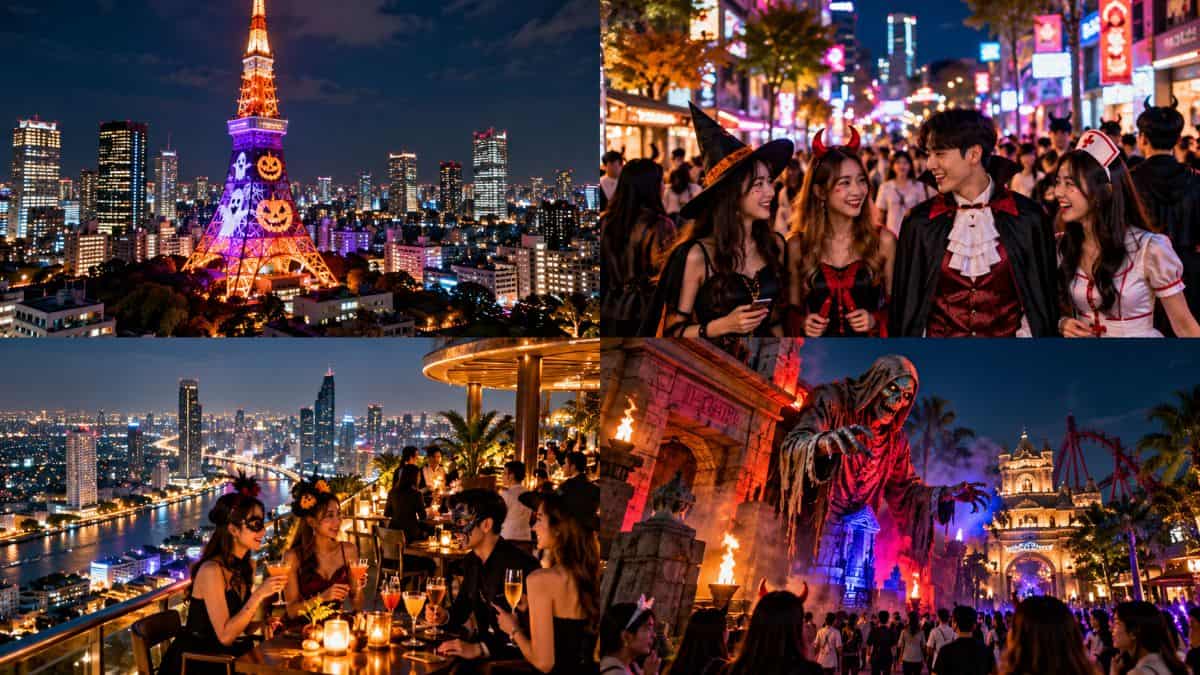
Halloween is giving Tokyo, Seoul, Bangkok and Singapore four distinctive ways to attract entertainment-led travellers this October. Tokyo Tower’s seasonal projection show runs until 31 October, while Universal Studios Singapore’s Halloween Horror Nights 14 continues on selected nights until 1 November 2026. Seoul offers a wider mix of Korean pop-culture experiences, horror entertainment and nightlife, while Bangkok presents opportunities for hotel-led parties and evening excursions. However, a crucial distinction separates seasonal spectacle from measurable tourism growth. Singapore welcomed 16.9 million international visitors in 2025, while Bangkok’s hotel market recorded softer occupancy amid weaker international arrivals. These contrasting indicators make late October a valuable test of how themed entertainment translates into overnight stays and visitor spending.
Tokyo Turns Halloween Into an Immersive City Experience
Tokyo is approaching Halloween through a distributed entertainment model rather than relying on one signature event. Observation decks, anime-inspired attractions, immersive exhibitions and cosplay gatherings allow visitors to construct their own seasonal itineraries. This format suits travellers who want Halloween-themed activities without spending every evening in a nightclub or haunted attraction.
Advertisement
Advertisement
One confirmed highlight is Tokyo Tower City Light Fantasia: Halloween Party 2026, which runs from 11 September to 31 October. The projection show transforms the observation-deck experience into a seasonal evening attraction. Visitors can combine it with panoramic city views, dining and nearby entertainment. The seasonal presentation requires observation-deck admission rather than a separate event ticket.
The official Tokyo travel guide also highlights the Ikebukuro Halloween Cosplay Festival 2026. The event draws more than 20,000 costumed participants, according to the guide. Sanrio Puroland is also hosting its PUROMONSTERSCRAMBLE Halloween programme, featuring immersive entertainment, DJs, themed content and limited-edition merchandise. These attractions extend the city’s appeal beyond conventional costume parties.
Advertisement
Advertisement
Tokyo’s wider tourism market provides important context. Japan’s official accommodation survey recorded 67.1% nationwide room occupancy in October 2025. Foreign guest-nights reached 16.48 million that month, up 3.7% year on year. However, total guest-nights fell 1.6%, illustrating how domestic and international demand can move in different directions. These figures cover Japan rather than Tokyo alone, so they cannot establish a city-specific Halloween effect.
For travellers, the practical advantage lies in flexibility. A two-night itinerary could combine Tokyo Tower’s evening show with a separate day for cosplay or character-themed entertainment. Visitors should check event dates, advance reservations and attraction opening hours before booking their hotel. Tokyo is particularly worth investigating for travellers seeking several distinct experiences rather than a single late-night event.
Advertisement
Advertisement
Seoul Combines K-Culture With After-Dark Entertainment
Seoul offers a different proposition, built around the intersection of Korean popular culture, experiential retail, nightlife and seasonal entertainment. Its Halloween appeal can extend from themed cafés and pop-up stores to horror attractions and late-night social districts. However, visitors should distinguish confirmed Halloween programmes from attractions that operate throughout the year.
The city’s international tourism figures demonstrate the scale of its wider visitor economy. Seoul recorded 1.36 million international tourist visits in July 2025, a 23.1% increase from the same month a year earlier. Arrivals between January and July reached 8.28 million, up 15.9% year on year. The Seoul Metropolitan Government attributed part of the momentum to Korean content, experiential tourism and growing interest among younger travellers. These figures describe overall tourism, not Halloween bookings.
Advertisement
Advertisement
For Halloween visitors, the research priority is to establish which horror attractions and themed programmes are operating on specific dates. Major theme parks, including Everland, warrant checking for seasonal admission products and night-time entertainment. Hongdae and Seongsu offer different experiences, ranging from nightlife and shopping to themed retail. Itaewon remains another well-known evening destination, but visitors should not assume that informal street gatherings represent an organised festival.
Crowd management is a significant part of Seoul’s travel story. Following the 2022 Itaewon crowd crush, authorities strengthened coordination, monitoring and safety planning in busy entertainment areas. Seoul’s documented safety exercises have covered locations around Itaewon, Rodeo Street and Hongik University. Travellers should check current municipal advisories, transport arrangements and venue access rules before visiting crowded districts.
A two-night Seoul itinerary could pair a confirmed ticketed attraction with Korean dining, shopping and an evening in a designated entertainment district. Visitors should book popular events early and avoid assuming that a particular district will host a large public celebration. For the tourism industry, the question is whether these dispersed experiences encourage longer stays rather than merely adding one evening to an existing trip.
Bangkok Tests the Value of Hotel-Led Halloween Tourism
Bangkok’s opportunity lies in combining Halloween entertainment with the city’s established dining, rooftop and nightlife economy. Hotels and entertainment venues can package themed dinners, costume parties and late-night experiences into a broader city break. Nevertheless, the number of advertised parties alone cannot reveal whether Halloween attracts additional international visitors or encourages existing guests to spend more.
Advertisement
Advertisement
The hotel market presents a particularly useful counterpoint to the seasonal excitement. Colliers reported that Bangkok’s average daily room rate reached THB 4,560 in the first half of 2025, rising 6% year on year. Yet occupancy slipped to 74.3% in the third quarter, down 4.3 percentage points year on year. Colliers linked the softer performance largely to weaker international arrivals, particularly from China.
This contrast matters to hotel operators. Rising room rates do not necessarily indicate stronger demand across the market. Hotels can maintain pricing while occupancy weakens, particularly when premium properties attract higher-spending guests. Conversely, midscale properties may rely on promotions to attract price-sensitive visitors. Bangkok’s Halloween packages should therefore be assessed against both room rates and the wider market’s occupancy performance.
For travellers, the best comparison is the total cost of an evening-led stay. A hotel package might include party admission, dinner or drinks, but its value depends on what the traveller would otherwise pay. Visitors should compare package prices with separate room and event bookings, including taxes, minimum-spend conditions and cancellation terms.
Bangkok could suit adults seeking dining, nightlife and hotel-based entertainment within one trip. However, an affordable headline room rate does not automatically make it the cheapest destination overall. Travellers should account for transport between venues, event admission and the cost of returning safely after late-night activities.
Singapore Builds a Ticketed Halloween Attraction Economy
Singapore provides the clearest example of a large, formally organised Halloween attraction in this comparison. Universal Studios Singapore Halloween Horror Nights 14 runs on selected nights from 25 September to 1 November 2026. The official programme lists four haunted houses, two scare zones and three live shows, creating a structured experience that visitors can book before arrival.
The event is scheduled from 7.30pm to 12.30am on operating nights. Organisers warn that the experience may be too intense for young children and do not recommend it for those under 13. Costume restrictions also apply, including a prohibition on costume masks. These details matter when families plan their itineraries and decide whether the event suits every member of their group.
Advertisement
Advertisement
The ticket calendar offers another useful insight. The official guide identifies selected peak dates, including 29, 30 and 31 October, alongside non-peak sessions. It also advertises ticket bundles and queue-skipping options. Visitors should compare the final price and included benefits rather than assuming every date or ticket category offers the same experience.
Singapore’s wider tourism performance reinforces the commercial relevance of distinctive attractions. The Singapore Tourism Board reported 16.9 million international visitor arrivals in 2025, an increase of 2.3% from 2024. Tourism receipts reached S$32.8 billion for the year, according to the board’s 2026 industry update. These figures show the scale of Singapore’s visitor economy, but they do not establish that Halloween Horror Nights caused a measurable increase in hotel demand.
Singapore Tourism Board chief executive Melissa Ow said on 3 February 2026 that the country was attracting visitors who value its “distinctive experiences”. Her comments accompanied the board’s report of S$23.9 billion in tourism receipts during the first three quarters of 2025, up 6.5% year on year. The statement supports the importance of differentiated tourism products, although it was not specifically about Halloween.
For visitors, Sentosa offers an opportunity to combine a ticketed evening with resort accommodation and other attractions. Yet travellers should calculate whether an overnight package costs less than booking its components separately. They should also check event-night availability, admission conditions and transport arrangements before committing to a stay.
Four Cities, Four Different Tourism Models
The comparison reveals why no single destination can be declared the universal Halloween winner without considering traveller priorities and comparable costs. Tokyo offers multiple themed experiences across the city, Seoul combines popular culture with nightlife, Bangkok lends itself to hotel and dining packages, and Singapore provides a concentrated, ticketed horror attraction.
| Destination | Confirmed or principal attraction angle | Hotel-market evidence | Best research question |
|---|---|---|---|
| Tokyo | Projection mapping, cosplay and themed attractions | Japan recorded 67.1% occupancy in October 2025 | Do dispersed attractions encourage longer stays? |
| Seoul | K-culture, nightlife and horror experiences | Comparable October city-level data is still needed | Do event nights coincide with higher hotel rates? |
| Bangkok | Hotel parties, dining and rooftop entertainment | ADR reached THB 4,560 in H1 2025; Q3 occupancy was 74.3% | Do packages convert nightlife spending into overnight stays? |
| Singapore | Halloween Horror Nights and resort experiences | 2025 tourism receipts reached S$32.8 billion | Do peak attraction nights influence hotel demand? |
The wider industry question is whether seasonal entertainment generates incremental visitor spending or simply redistributes spending that would have occurred anyway. An attraction may sell thousands of tickets without producing a proportional rise in hotel bookings. Conversely, a multi-night event calendar can encourage visitors to arrive earlier, extend their stay or upgrade their accommodation.
Advertisement
Advertisement
For destination marketers, this distinction affects campaign design. Hotels and attractions can measure package uptake, booking lead times, length of stay and ancillary spending. They can then identify whether a seasonal programme attracts new visitors or primarily serves existing guests. Publicly available data does not yet support a definitive Halloween-driven hotel-demand ranking across all four cities.
The Halloween Travel Budget Index: What Does One Night Actually Cost in Tokyo, Seoul, Bangkok and Singapore?
The most useful way to compare Halloween travel is to calculate the cost of an entire evening, rather than looking at hotel prices or attraction tickets in isolation. For travellers choosing between Tokyo, Seoul, Bangkok and Singapore, the final bill can vary considerably depending on whether they prefer immersive attractions, theme-park horror, rooftop parties or themed dining.
For a fair comparison, the following index uses 31 October 2026, two adults sharing one room, one hotel night and one principal Halloween experience. It separates verified published event prices from hotel-market estimates and additional spending. These are planning benchmarks, not guaranteed booking quotes.
Four-City Cost Comparison
| Cost component | Tokyo, Japan | Seoul, South Korea | Bangkok, Thailand | Singapore |
|---|---|---|---|---|
| Principal experience | Tokyo Tower Halloween projection show | Everland seasonal theme-park visit | Rooftop Halloween party or themed dinner | Halloween Horror Nights 14 |
| Published adult admission | ¥1,500 for Tokyo Tower’s Main Deck | ₩71,000 for Everland’s October all-day pass | ฿799 for the Prince Palace Hotel rooftop party | S$68 non-peak; S$78 peak |
| Alternative experience | Tokyo Tower Top Deck Tour: ¥3,300 online | Other themed experiences require separate price checks | Avani Ratchada Halloween buffet: ฿1,299 | Premium tours and queue-skipping options cost extra |
| Hotel benchmark | Median asking price of US$177 for 30 October in one third-party market sample | October 2026 median of US$293 across a tracked hotel sample; not specific to 31 October | Obtain a date-specific quote for the chosen hotel category | Compare central hotels with Sentosa resort accommodation |
| Additional spending | Dinner, local transport and any extra attractions | Meals, transport and any additional attractions | Transfers, additional drinks and dining | Meals, transport to Sentosa and any ticket upgrades |
| Key budget consideration | Multiple attractions can increase total spending | Theme-park admission may be a substantial part of the budget | A party or dinner package can simplify spending | Peak-date tickets and resort accommodation may increase the bill |
Published prices and hotel benchmarks were checked against available online listings in October 2026. The hotel figures use different samples and dates, so they must not be treated as a like-for-like ranking. Sources:
1. Tokyo: Pay for the View, Then Build the Evening
Tokyo Tower offers a relatively accessible starting point for an attraction-led Halloween evening. Its Main Deck costs ¥1,500 per adult, while the Top Deck Tour costs ¥3,300 online. The seasonal projection show is included with observation-deck admission, making it possible to enjoy the Halloween presentation without purchasing a separate event ticket.
Hotel selection is likely to have a greater influence on the final bill than the basic attraction ticket. A third-party market sample recorded a median asking price of US$177 for two adults sharing one room on Friday, 30 October 2026. Its corresponding Saturday median was US$205, demonstrating how the extra night can change the economics of a weekend stay. These are asking prices, not confirmed transaction rates.
Advertisement
Advertisement
For a couple, the best approach is to compare a central hotel with accommodation farther from the main attractions. The lower room rate may not represent better value if it requires additional transfers or makes a late-night itinerary less convenient. Travellers should add dinner, transport and any second attraction before judging the total.
2. Seoul: Account for Theme-Park Admission
Everland’s published October 2026 adult all-day pass costs ₩71,000. This provides a useful price anchor for travellers considering a theme-park-led itinerary, although it is a general admission price rather than a separate Halloween event ticket. Certain facilities may also charge additional fees.
Hotel costs require particular attention. One third-party market tracker reported a median October 2026 hotel price of US$293 for two adults across 135 tracked properties. That figure covers the month rather than Halloween night, so it cannot establish the precise cost of a 31 October stay.
Visitors should therefore compare actual hotel quotes for the intended district and dates before finalising their budget. They should also check whether the selected Halloween attraction operates on their travel date. The total should include meals, transport and any additional admission rather than treating the theme-park ticket as the complete cost of the evening.
3. Bangkok: Compare Packages With Separate Bookings
Bangkok provides two useful published price points for Halloween 2026. Prince Palace Hotel advertises a rooftop Halloween party for ฿799 per person, including a barbecue set, one drink and DJ entertainment. Avani Ratchada Bangkok Hotel lists a Halloween dinner buffet at ฿1,299 per person, including free-flow soft drinks. Both offers cover 29–31 October, although their inclusions differ.
For two adults, the rooftop party costs ฿1,598 before any additional spending. The dinner buffet costs ฿2,598 for two, including the advertised food and soft drinks. These figures do not include a hotel room, additional drinks or transport between venues.
Advertisement
Advertisement
Bangkok’s value proposition depends on the experience selected. A traveller who books a party at the hotel where they are staying may reduce transfer costs, while a visitor combining several venues may spend more than the headline event price suggests. Compare the package inclusions before deciding which option offers the better overall deal.
4. Singapore: Watch the Peak-Date Premium
Universal Studios Singapore’s Halloween Horror Nights 14 lists admission at S$68 on non-peak nights and S$78 on peak nights. The late-October peak calendar includes 29, 30 and 31 October, as well as 1 November. That creates a clear S$10 difference per ticket between the published standard price tiers.
For two adults, the standard admission total is S$136 on a non-peak date and S$156 on a peak date. This excludes accommodation, meals, transport and any queue-skipping upgrade. The official event operates from 7.30pm to 12.30am on selected nights, so visitors should also consider whether staying on Sentosa or elsewhere in Singapore better suits their itinerary.
The main budget question is whether an attraction-and-hotel package offers a genuine saving. Compare the package against the same room and tickets booked separately, using the same cancellation conditions and dates. A bundled offer is worthwhile only if its total cost and included benefits compare favourably.
How Travellers Can Plan a Better Halloween Break
The smartest way to choose between these destinations is to match the trip to the experience rather than chase the loudest seasonal promotion. Tokyo suits visitors who want several themed activities across different districts, while Seoul rewards travellers combining Korean culture with carefully planned evenings. Bangkok deserves consideration for hotel-led entertainment and dining, whereas Singapore offers a particularly structured horror attraction with published operating dates.
Before booking, compare ticket prices, room rates, package inclusions and transport costs for the same dates. Also check age restrictions, event availability and local safety guidance. Halloween in Asia offers four distinct ways to travel, but the strongest value depends on verified prices, personal preferences and whether the event genuinely justifies an extra night.
Advertisement
