
Washington DC Trades Festive Blows With New York and Chicago as Philadelphia Unveils Budget-Friendly Christmas Attractions in 2026

Published
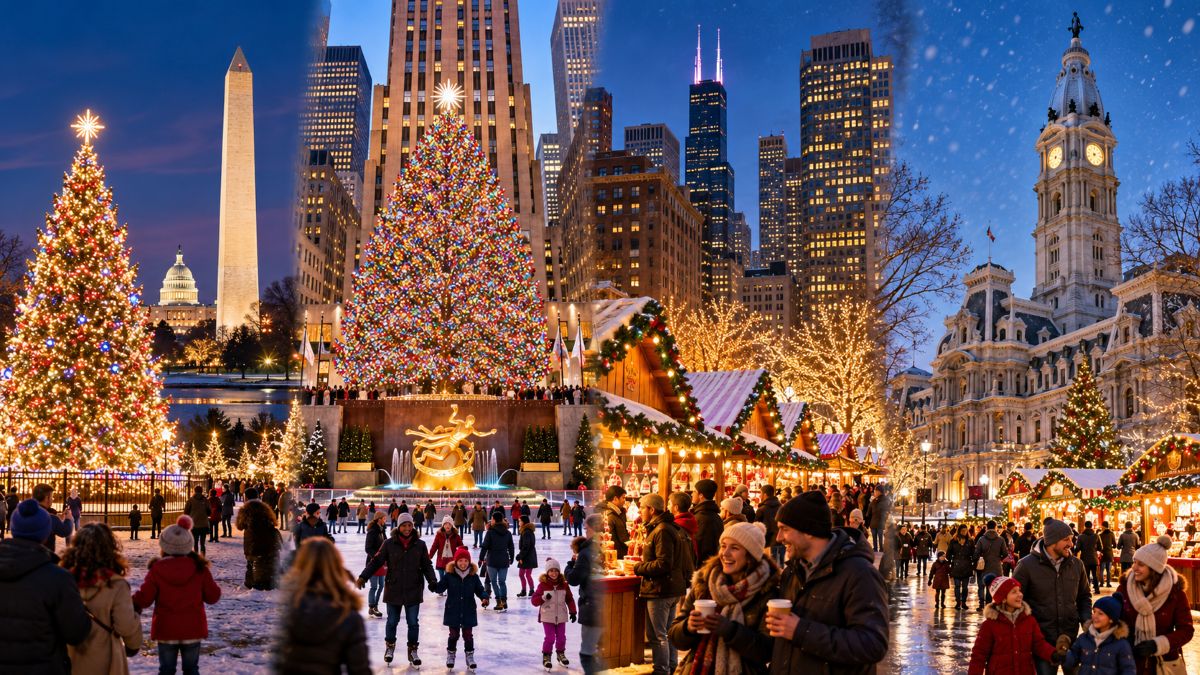
Washington, DC, New York, Chicago and Philadelphia are preparing for a Christmas season filled with free festive markets, illuminated landmarks and public celebrations. However, the best-value destination depends on more than admission prices. Washington’s DowntownDC Holiday Market runs from November 13 to December 23, 2026, with more than 115 vendors and free public entry. Chicago’s Christkindlmarket opens on November 20, while Philadelphia’s Christmas Village begins on November 21. New York’s Rockefeller Center Christmas tree arrives on November 7, ahead of its December 2 lighting ceremony. For budget-conscious families, the real contest is between free experiences, affordable transport, walkable itineraries and accommodation costs. A carefully planned Christmas city break can deliver memorable experiences without expensive tickets.
Four Cities Offer Different Routes to Christmas Savings
The 2026 festive calendar presents four distinct options for travellers who want seasonal experiences without costly admissions. Washington combines public celebrations with an extensive network of free museums. New York offers recognisable Christmas landmarks, while Chicago brings European-inspired market traditions. Philadelphia, meanwhile, concentrates several seasonal attractions around its central district.
Advertisement
Advertisement
The distinction matters because free entry does not mean a completely cost-free outing. Markets charge separately for food and merchandise, while some seasonal activities require tickets. Families can nevertheless control spending by prioritising outdoor displays, public spaces, museums and attractions within walking distance.
| City | Confirmed 2026 festive highlight | Free-access opportunity |
|---|---|---|
| Washington, DC | DowntownDC Holiday Market, November 13–December 23 | Market entry, public displays and Smithsonian museums |
| New York City | Rockefeller Center tree lighting, December 2 | Public tree viewing and festive streetscapes |
| Chicago | Christkindlmarket, November 20–December 24 | Market entry and downtown public displays |
| Philadelphia | Christmas Village, November 21–December 27 | Market entry, City Hall surroundings and public tree viewing |
Dates and access information are based on published 2026 announcements available on October 22, 2026. Individual attractions may impose separate access conditions.
Advertisement
Advertisement
Washington Delivers a Strong Free-Access Advantage
Washington, DC, has a compelling case for families seeking a culture-rich Christmas break. The DowntownDC Holiday Market returns for its 22nd season from November 13 to December 23, occupying F Street NW between 7th and 9th Streets. Its organisers list more than 115 vendors selling crafts, artwork, gifts and seasonal food. Entry is free, making the market accessible even to visitors who do not intend to shop.
The market’s operating hours offer useful flexibility. It opens from noon to 8pm Monday through Thursday, from 11am to 9pm on Fridays and Saturdays, and from 11am to 8pm on Sundays. It closes on Thanksgiving Day, November 26. Visitors can combine the market with nearby cultural attractions without paying for additional admissions.
Advertisement
Advertisement
The Smithsonian network strengthens Washington’s position considerably. The institution comprises 20 museums and the National Zoo, with admission free at its Washington museums. However, the National Zoo and selected museums require free passes or timed-entry tickets. Most Smithsonian museums close on December 25, so visitors should check individual schedules before travelling.
The National Museum of Natural History is another practical option. It opens daily from 10am to 5.30pm, except Christmas Day, and does not require general admission tickets. The National Museum of American History and the National Museum of the American Indian provide additional free indoor alternatives when winter weather makes outdoor sightseeing uncomfortable.
Advertisement
Advertisement
A particularly valuable date for travellers is December 3. The National Christmas Tree Lighting ceremony will take place that evening on the Ellipse near the White House. Its free ticket lottery opens on October 28 and closes on November 4, with winners notified on November 12. Each winner can receive up to five tickets, but entry into the lottery does not guarantee admission. The illuminated National Christmas Tree and the surrounding Pathway of Peace also provide a seasonal sightseeing opportunity after the ceremony.
For low-cost visitors, Washington’s principal advantage is the combination of free cultural institutions, monuments and seasonal experiences. However, travellers must still budget for local transport, meals and accommodation.
New York Makes Iconic Christmas Scenery Accessible
New York City remains a strong contender for travellers who want the classic American Christmas atmosphere without buying attraction tickets. Rockefeller Center’s Christmas tree arrives on November 7, 2026, and its official lighting ceremony takes place on December 2. Visitors can admire the tree from the public viewing area, although access conditions and crowd management may affect the experience. Paid observation-deck admission is not necessary for ordinary public tree viewing.
The city’s wider festive landscape adds considerable value. Visitors can walk along Fifth Avenue to see decorated department-store windows, explore public spaces around Midtown and admire seasonal displays without booking a guided tour. Bryant Park and other public areas can also form part of a self-guided Christmas itinerary, although visitors should verify seasonal operating dates and any charges for individual activities.
Advertisement
Advertisement
New York also offers cultural experiences beyond its best-known Christmas landmarks. The city’s 2026 holiday programme includes Harlem Holiday Lights on November 17, while the American Museum of Natural History’s Origami Holiday Tree opens on November 23. However, visitors should check museum admission policies before treating an indoor attraction as free.
Transport is an important consideration. The Metropolitan Transportation Authority’s standard subway and local bus fare rose to US$3 on January 4, 2026. Its rolling seven-day fare cap is US$35 for eligible subway, Staten Island Railway and local bus journeys. Visitors making several trips can therefore plan their spending more accurately than travellers relying on separate paper tickets.
For budget-conscious families, the best approach is to group Midtown attractions into one walking route. This reduces repeated journeys and keeps paid transport for longer distances. New York’s principal drawback is not a lack of free experiences, but the potential cost of accommodation and incidental spending during a heavily visited season.
Chicago Combines Market Culture With Public Displays
Chicago’s Christkindlmarket returns to Daley Plaza from November 20 to December 24, 2026. The market marks its 30th anniversary and draws inspiration from traditional German Christmas markets. Admission is free, allowing visitors to explore wooden stalls, seasonal decorations and artisan displays without purchasing anything. Food, drinks and merchandise remain optional expenses.
The market’s timing makes it particularly useful for travellers arriving before Thanksgiving or during early December. Visitors can pair it with Millennium Park, public holiday decorations and the city’s central architectural landmarks. These experiences create a full day of sightseeing without requiring a succession of paid attractions.
Christkindlmarket also operates seasonal locations in Wrigleyville and Aurora. The Wrigleyville market runs from November 20 through December 31, while the Aurora market runs from November 20 through December 24, on Thursdays to Sundays. These additional locations widen the choice for visitors staying outside the central business district, although travelling to them can add transport costs.
Advertisement
Advertisement
Chicago’s transport pricing offers another measurable advantage. The Chicago Transit Authority lists a US$2.50 regular ‘L’ train fare and a US$2.25 bus fare. Its one-day CTA/Pace pass costs US$5, while a three-day pass costs US$15. Travellers arriving at O’Hare should note that the standard train fare does not apply to the airport’s premium fare, which is US$5.
| Chicago transport option | Published fare |
|---|---|
| Regular ‘L’ train journey | US$2.50 |
| Regular bus journey | US$2.25 |
| One-day CTA/Pace pass | US$5 |
| Three-day CTA/Pace pass | US$15 |
| ‘L’ train from O’Hare | US$5 |
These fares make Chicago’s short-stay transport costs relatively easy to model. Nevertheless, the cheapest option depends on how many journeys a visitor makes and whether the itinerary includes the airport.
Winter conditions deserve particular attention. Cold temperatures and wind can make prolonged outdoor sightseeing uncomfortable, especially for children. Families should keep free indoor alternatives in reserve and avoid assuming every seasonal installation operates regardless of weather.
Philadelphia Puts Festive Landmarks Within Reach
Philadelphia offers a different kind of value: several major holiday experiences sit close together in Center City. Christmas Village returns to LOVE Park and City Hall from November 21 to December 27, 2026. The open-air market draws on Bavarian traditions and typically features more than 100 vendors. Visitors can browse the stalls and enjoy the atmosphere without paying an entrance fee.
The distinction between admission and activities is important here. Christmas Village’s surrounding area includes a Ferris wheel and carousel, but rides and purchases can add to a family’s spending. A visitor who wants the market atmosphere rather than paid entertainment can simply explore the public spaces and browse the stalls.
Philadelphia’s official holiday tree provides another free experience. The Philly Holiday Tree is scheduled to illuminate City Hall’s north apron from December 3, 2026, through January 2, 2027. Its opening celebration is planned for December 3 at 6pm, with free attendance. Travellers arriving later in December can still enjoy the illuminated tree after the opening ceremony.
Advertisement
Advertisement
Transport costs are also worth examining. SEPTA lists a US$2.90 fare for bus and Metro journeys using contactless payment or its Key system. The first and second transfers are free when passengers use the same payment method within two hours. Children under 12 ride free with a fare-paying adult, which can significantly reduce transport expenses for families.
Philadelphia’s compact central attractions make it possible to plan a largely walkable day. Visitors can combine the market, City Hall and nearby historic landmarks without repeatedly crossing the city. However, the most suitable hotel location depends on the itinerary, and visitors should not assume every attraction is within walking distance of every accommodation option.
What Local Transport Actually Costs
Public transport is a crucial part of the low-cost calculation. The following comparison uses published fares available for 2026, but the products differ in duration and coverage. A single journey cannot be compared directly with an unlimited day pass without considering the number of trips.
| City | Useful published fare | Best budgeting consideration |
|---|---|---|
| Washington, DC | Metro fares vary by distance and time; regular weekday journeys are listed at US$2.25–US$6.75 | Check each journey before travelling |
| New York City | US$3 standard subway or local bus fare | The US$35 rolling seven-day fare cap can help frequent riders |
| Chicago | US$5 one-day CTA/Pace pass | Compare the pass with individual fares |
| Philadelphia | US$2.90 bus or Metro fare | Two transfers are free within two hours using the same payment method |
Washington’s Metro fares vary according to journey length and travel time. Its published weekday regular fares range from US$2.25 to US$6.75, while weekend fares range from US$2.25 to US$2.50. The transport authority recommends using its trip planner to calculate individual journeys.
For families, the most meaningful comparison is the cost of the actual itinerary. A day pass may save money for visitors making repeated journeys, but it may offer little value when several attractions are within walking distance. Children’s fares and eligibility rules also differ, so adult-only calculations can overstate the cost of family travel.
Hotel Prices Could Decide the Final Winner
Free attractions do not automatically produce an inexpensive holiday. Accommodation can outweigh admission savings, particularly during the busiest December weekends. Consequently, a credible comparison must examine the complete cost of a short stay, rather than rank cities solely by their festive programmes.
Advertisement
Advertisement
A fair hotel comparison should use the same two-night dates, two adults and two children, and a room that legally accommodates all four guests. It should also compare similar accommodation standards and practical access to public transport. The final published prices must include mandatory taxes and fees, with breakfast and cancellation terms recorded separately.
The following framework shows how to compare costs without presenting unverified quotations as actual 2026 prices.
| Cost category | Washington, DC | New York City | Chicago | Philadelphia |
|---|---|---|---|---|
| Hotel for two nights | Verify live rate | Verify live rate | Verify live rate | Verify live rate |
| Local transport | Calculate planned journeys | Calculate journeys or fare cap | Compare fares with day pass | Include eligible transfers |
| Free attraction admission | US$0 for listed free attractions | US$0 for listed free attractions | US$0 for listed free attractions | US$0 for listed free attractions |
| Food and drinks | Set the same allowance | Set the same allowance | Set the same allowance | Set the same allowance |
| Mandatory hotel taxes | Add to quotation | Add to quotation | Add to quotation | Add to quotation |
This distinction protects readers from misleading price comparisons. A low-cost trip must include the unavoidable expenses, while optional shopping, restaurant meals and paid entertainment should remain outside the essential budget.
The article should also distinguish domestic visitors from international travellers. Flights, baggage charges, travel insurance and visa-related expenses depend on the traveller’s origin and circumstances. Including a single assumed airfare would make the comparison less useful to readers planning trips from different countries.
Two-Day Plans Can Reduce Unnecessary Spending
The most practical way to control costs is to group attractions geographically. Visitors should avoid crossing a city repeatedly for individual displays, particularly when several free experiences sit within walking distance.
| City | Day One | Day Two |
|---|---|---|
| Washington, DC | Smithsonian museum, National Mall monuments and DowntownDC Holiday Market | Free museum visits and the National Christmas Tree, subject to access requirements |
| New York City | Rockefeller Center, Fifth Avenue windows and public Christmas displays | Bryant Park area, seasonal streetscapes and selected free public spaces |
| Chicago | Millennium Park, public Christmas tree and Christkindlmarket | Magnificent Mile displays and other downtown public landmarks |
| Philadelphia | Christmas Village, LOVE Park and City Hall | Historic district sightseeing and the Philly Holiday Tree, when available |
These are suggested itineraries rather than fixed event schedules. Washington’s National Christmas Tree lighting requires lottery tickets, and the Rockefeller Center ceremony attracts substantial crowds. Visitors should confirm the arrangements before travelling specifically for either event.
Advertisement
Advertisement
A useful budget strategy is to schedule outdoor displays after sunset and use free museums during the day. This creates a varied itinerary without paying for multiple ticketed attractions. However, travellers should check opening hours and allow sufficient time for security screening at museums and public events.
Food spending also requires attention. Holiday markets are excellent places to browse, but their seasonal treats can quickly increase a family’s bill. Visitors can set a fixed allowance for optional purchases and use ordinary supermarkets or affordable local eateries for other meals.
The Best Travel Window Depends on Priorities
The early season offers a different experience from Christmas week. Travellers visiting in mid-November can explore markets as they open, although some major tree displays will not yet be illuminated. December brings more established festive scenery, but visitors should expect greater competition for accommodation and popular event access.
The 2026 calendar offers several useful milestones. Rockefeller Center’s tree arrives on November 7, Washington’s DowntownDC Holiday Market opens on November 13, and Chicago’s Christkindlmarket starts on November 20. Philadelphia’s Christmas Village follows on November 21. The National Christmas Tree and Philadelphia’s official holiday tree both have scheduled lighting events on December 3.
| Travel period | Main advantage | Important limitation |
|---|---|---|
| November 13–19 | Early Washington market visits and the start of the festive season | Some major displays and markets have not opened |
| November 20–30 | All four cities offer major market opportunities | Thanksgiving affects opening schedules and transport planning |
| December 1–10 | Several headline tree-lighting events are scheduled | Lottery access and crowds require preparation |
| December 11–24 | Strong choice for traditional Christmas scenery | Accommodation demand and limited market dates require careful checking |
| December 25–January 2 | Selected trees and seasonal displays continue | Many museums and some markets close for Christmas or earlier in the week |
The best dates depend on the experience travellers value most. Families prioritising museums may prefer dates before Christmas Day. Those seeking illuminated landmarks can travel later, provided they check individual opening schedules.
Which City Offers the Best Value?
Washington, DC, emerges as the strongest candidate for travellers seeking a broad mix of free Christmas experiences and cultural attractions. Its extensive Smithsonian network adds depth beyond seasonal displays, while the DowntownDC Holiday Market and National Christmas Tree offer distinct festive experiences. However, free timed-entry requirements and the cost of accommodation still matter.
Advertisement
Advertisement
New York is a strong choice for iconic Christmas scenery, Chicago for traditional market culture, and Philadelphia for a compact itinerary. There is no defensible overall winner on admission prices alone. The final decision should reflect the number of free attractions, realistic transport expenses, hotel quotations and the dates available to each family.
For budget-conscious travellers, the smartest strategy is to choose a destination with attractions close together, reserve accommodation early and build the itinerary around confirmed free experiences. That approach offers the best chance of enjoying a memorable American Christmas without letting optional extras dominate the spending.
Advertisement
