

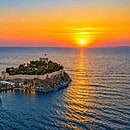
Image generated with Ai
Kastellorizo sits at the eastern edge of Greece, surrounded by the clear waters of the eastern Mediterranean. The island, officially called Megisti, belongs to the Dodecanese. Its colourful harbour, rocky coastline and layered history create a distinctive setting for a peaceful island holiday. A well-planned Kastellorizo travel experience combines swimming, sightseeing, walking and traditional food without requiring a crowded itinerary. The famous Blue Cave remains its defining natural attraction. However, the island also offers historic fortifications, religious sites, scenic paths and clear swimming waters. Most activities unfold around the compact harbour town, where fishing boats share the waterfront with cafés and tavernas. Kastellorizo suits travellers who value atmosphere, local character and slow exploration. Visitors should expect seasonal services and weather-dependent boat trips. These practical limitations form part of the island’s identity rather than reducing its appeal.
Many Greek islands attract visitors with large beaches, busy nightlife and extensive resort districts. Kastellorizo offers a quieter and more concentrated experience. Its harbour settlement forms the island’s social and visual centre. Neoclassical houses rise around the water in ochre, blue and warm pastel shades. Narrow balconies, tiled roofs and painted shutters create a striking arrival scene. These historic buildings also reflect different periods of prosperity, destruction and reconstruction. Fishing boats move around the harbour during the morning, while residents and visitors gather beside the water for coffee. Waterfront cafés and tavernas occupy much of the harbour’s lower edge. Boats remain moored only metres from many dining tables, giving the settlement an intimate and lived-in atmosphere.
A successful Kastellorizo travel experience depends on accepting the island’s compact scale. It has fewer conventional attractions than larger Greek destinations. However, several days can still pass comfortably. Mornings suit boat trips and swimming, while cooler afternoons allow cultural visits and hillside walks. Evenings bring another change as harbour lights reflect across the water. Traffic remains limited around the central settlement, so most important places remain accessible on foot. Stone pathways can become uneven or slippery, making comfortable footwear essential. The nearby Turkish coastline also stays clearly visible across the water. This geography highlights the eastern Mediterranean’s interconnected history while strengthening Kastellorizo’s distinctive position within Greece.
The Blue Cave, locally called Galazio Spilaio, stands among the island’s best-known natural landmarks. The Municipality of Megisti identifies it as one of Kastellorizo’s major attractions. Local names also include Fotsaliki and Trypa. Small boats provide the only practical access because the cave lies along the rocky coastline. Local captains usually depart from the main harbour during suitable sea conditions. The cave entrance remains extremely low, so passengers may need to bend or lie down as the boat enters. Even moderate waves can make the narrow opening unsafe. Therefore, travellers should keep their Kastellorizo travel itinerary flexible. A cancelled morning excursion may become possible later or on another day.
Advertisement
Advertisement
Inside the cave, sunlight reflects through the clear water and illuminates the chamber. The water and rock surfaces then appear intensely blue. Morning light often creates the strongest visual effect. However, local captains understand changing conditions better than fixed online recommendations. Visitors should always follow their judgement. Swimming may form part of certain excursions, although arrangements depend on the operator, weather and water conditions. Travellers should ask about swimming before departure. They should also confirm life-jacket availability and boarding procedures. A waterproof pouch can protect phones and travel documents.
Visitors can prepare for the Blue Cave through several simple steps:
The Blue Cave deserves its reputation. Still, responsible Kastellorizo travel never treats a natural attraction as a guaranteed performance. Weather controls every marine experience. Fortunately, visitors can explore the harbour, museums and historical sites when conditions prevent the journey.
Kastellorizo’s modest size conceals a complex past. Ancient, medieval, Ottoman and Italian influences appear across the island. Historic buildings and defensive remains reveal the importance of its strategic maritime position. The Castle of the Knights rises above the harbour. The Knights of Saint John established their presence during the medieval period. Only sections of the fortification survive today. Nevertheless, the elevated site provides sweeping views across the settlement and surrounding coastline.
Advertisement
Advertisement
The island’s modern name also connects with the castle. Kastellorizo likely developed from the Italian term meaning red castle. Below the fortress stands an important rock-cut Lycian tomb. Its carved façade resembles funerary monuments found along the nearby Anatolian coast. This unusual structure illustrates Kastellorizo’s historical links with the ancient Lycian world. Visitors should observe the tomb carefully without climbing across fragile surfaces. Responsible behaviour protects the structure from further damage.
The Archaeological Museum stands nearby inside a restored historical building. Its opening arrangements can vary, particularly outside the main summer season. Travellers should check locally before making the uphill journey. Paleokastro provides another view of the island’s history. The fortified site occupies elevated ground west of the main settlement. Ancient walls, cisterns and later structures remain visible across the area. The surrounding landscape also offers expansive maritime views. However, summer heat can make the walk demanding. Early morning provides cooler conditions and softer light. Water, sun protection and proper shoes remain essential. These landmarks add considerable depth to Kastellorizo travel. The destination becomes more than a photogenic harbour once visitors explore its defensive, cultural and archaeological landscape.
Walking creates the clearest connection between Kastellorizo’s settlement, history and rugged Mediterranean terrain. Several routes begin near the harbour and climb towards chapels, ruins and viewpoints. The route towards Saint George of the Mountain ranks among the island’s recognised walks. A long stone staircase climbs above the settlement. The ascent receives direct sunlight, making early morning or late afternoon more comfortable. From higher ground, the harbour appears almost completely enclosed. Colourful houses form a narrow band between the limestone slopes and blue water.
The Turkish coastline dominates the eastern horizon. Boats crossing the channel appear small beneath the surrounding hills. This elevated perspective explains Kastellorizo’s former strategic importance. It also reveals how little flat land surrounds the harbour town. Another pleasant route links the main harbour with Mandraki. This quieter second harbour presents a more residential side of island life. Churches, houses and small boats line the way. The walk remains manageable for most visitors with reasonable mobility.
Paleokastro requires greater preparation because the surrounding terrain feels rougher. Shade remains limited throughout much of the route. Walkers should carry enough water and avoid the strongest midday heat. Downloaded maps can also help because mobile coverage and signposting may vary. Responsible Kastellorizo travel requires realistic timing during summer. A hat, sun protection and supportive footwear remain necessary. Travellers should also inform someone before attempting quieter routes alone. Walking slowly reveals chapels, stone walls, cisterns and hardy coastal plants. Consequently, even a short walk can provide meaningful historical and environmental context.
Kastellorizo does not offer the long sandy beaches associated with many larger Greek islands. Instead, visitors enter the sea from rocks, harbour steps, platforms and nearby islets. Water shoes can make these entries safer and more comfortable. The main harbour provides convenient swimming access. However, swimmers must remain alert around boats, anchors and mooring lines. Mandraki offers another accessible option within walking distance. Conditions can change, so visitors should inspect the entry before entering the water.
Water taxis connect the main settlement with nearby Saint George Island. The small islet combines clear water with an open maritime setting. Some boat trips also visit quieter coastal coves. Availability depends on demand, weather and the operator’s daily route. The following table compares the leading swimming choices for a practical Kastellorizo travel itinerary.Swimming place Setting Access Important consideration Main harbour Clear, deep water near the town Steps and platforms Watch for boats and mooring lines Mandraki Quieter harbour surroundings Walk from the main settlement Inspect the entry before swimming Saint George Island Small islet with open-water views Local water taxi Confirm the final return service Blue Cave Enclosed marine cavern Small organised boat Access depends on calm conditions Coastal coves Rocky and less-developed shoreline Local boat excursion Carry water and follow local advice
Each location suits a different swimming style. Confident swimmers may enjoy deeper entries. Families and less confident swimmers should examine ladders and platforms first. Some locations provide little shade and no gradual shoreline. Sea urchins may also appear around rocky areas. Water shoes reduce risk, although swimmers should still inspect every entry carefully. This swimming culture shapes Kastellorizo travel. The limited number of conventional beaches encourages closer engagement with the island’s rocky coastline and marine environment.
Food forms a natural part of daily life around the harbour. Most cafés and tavernas occupy waterfront locations overlooking fishing boats and small excursion vessels. The setting encourages long, relaxed meals rather than hurried dining. Fresh fish and seafood often appear on local menus. However, availability depends on seasonal supply and the day’s catch. Travellers may also find grilled meat, stuffed vegetables, salads and traditional oven-cooked dishes. Small plates can include fava, aubergine dishes, local cheeses and vine leaves.
Visitors should read daily menus and ask which dishes use fresh ingredients. A reliable Kastellorizo travel guide cannot guarantee particular seafood because fishing conditions constantly change. Diners should ask what arrived that day rather than relying entirely on large printed menus. Coffee also plays an important role in the harbour’s daily routine. Waterfront cafés become particularly lively during mornings and ferry arrivals. Breakfast choices can include yoghurt, fruit, pastries, eggs and Greek coffee. Later, light snacks often extend gradually into evening meals.
Booking ahead may help during busy summer evenings. Smaller dining rooms and waterfront terraces can fill quickly. Travellers with allergies should communicate their requirements clearly. Written translations may help when ingredients require detailed confirmation. Food strengthens Kastellorizo travel through setting, seasonality and everyday routine. The most memorable meals often connect directly with the harbour’s working character.
Most international visitors reach Kastellorizo through Rhodes. From there, they continue by domestic flight or ferry. The island has a small airport with limited services. Weather and operational conditions can occasionally affect flights. Ferries also connect Rhodes with Kastellorizo. Journey times depend on the vessel, route and scheduled stops. Faster crossings can take around two hours and twenty minutes. Other services may require considerably longer.
Timetables change between seasons. Therefore, travellers should check current schedules before booking onward connections. A cautious Kastellorizo travel plan includes buffer time in Rhodes. Tight transfers create unnecessary risks when flights or ferries face delays. Visitors arriving from the nearby Turkish coast must complete border procedures. Passport and entry requirements depend on nationality. Travellers should verify current regulations through official authorities before departure. The short sea crossing still counts as international travel.
Accommodation mainly consists of small hotels, guest houses and apartments. Supply remains limited compared with larger Greek destinations. Early reservations make sense during summer. However, travellers should compare cancellation conditions alongside prices. Harbour accommodation provides convenience and atmosphere. Properties farther uphill may offer broader views but require additional climbing. Visitors with reduced mobility should request detailed access information. Historic buildings may include stairs, narrow entrances and uneven approaches.
May, June, September and early October can provide comfortable walking conditions. July and August usually bring stronger heat and greater visitor demand. However, weather conditions remain unpredictable throughout the season. Three nights allow a comfortable introduction to the island. Four or five nights provide greater flexibility when boat trips face cancellation. This slower schedule supports the central purpose of Kastellorizo travel.
Small islands face practical limits involving freshwater, waste, energy and transport. Visitors can reduce pressure through simple and responsible decisions. Refillable bottles reduce disposable plastic. Travellers should still ask whether their accommodation recommends tap water for drinking. Short showers help conserve limited water supplies. Reusing towels also reduces unnecessary laundry.
Visitors should carry rubbish away from isolated swimming places. Plastic fragments and cigarette ends cause lasting environmental damage. Marine wildlife requires equal care. Mediterranean monk seals can use caves and quiet coastal waters across the wider region. Travellers should never approach, feed or obstruct marine animals. Historical locations require similar restraint. Removing stones or entering restricted areas damages cultural heritage. Visitors should follow established paths because shortcuts accelerate erosion across dry slopes.
Local spending can support the resident economy. Independent accommodation, food outlets and licensed boat services keep visitor income within the community. However, respectful Kastellorizo travel involves more than spending money. Visitors must remember that the harbour remains a living neighbourhood. Noise travels easily across water, especially at night. Loud behaviour can disturb residents beyond the immediate waterfront. Photography also requires good judgement. Travellers should request permission before photographing people closely or entering residential areas. These habits protect the qualities that visitors came to experience. They also keep tourism compatible with everyday island life.
Kastellorizo requires more planning than a mainstream Greek resort. However, its limited scale creates its greatest strength. The Blue Cave offers a memorable encounter with geology, water and reflected light. Meanwhile, the harbour provides an equally compelling everyday spectacle. The castle, Lycian tomb and Paleokastro reveal a complex historical landscape. Walking routes connect those stories with commanding coastal views. Swimming requires some adjustment because sandy beaches remain scarce. However, clear water and rocky entries provide rewarding alternatives.
Harbour dining works best when travellers follow seasonal availability and local routines. Most importantly, Kastellorizo travel encourages a slower relationship with place. Visitors cannot control the wind, ferry schedule or cave access. Instead, they must remain flexible. A cancelled excursion can become a museum visit, harbour walk or extended lunch. That flexibility transforms logistical limitations into meaningful experiences. It also separates Kastellorizo from busier Mediterranean destinations.
A thoughtful Kastellorizo travel journey should leave room for uncertainty. The island’s strongest moments often emerge between scheduled activities. Its layered heritage, luminous water and compact harbour already provide compelling reasons to visit. For informed travellers, Kastellorizo offers something increasingly valuable. It provides time, perspective and genuine geographical drama.
Advertisement
Tags: Blue Cave Kastellorizo, dodecanese islands, Greece travel, Greek island holidays, Kastellorizo attractions
Advertisement
Advertisement













Saturday, September 5, 2026

Saturday, September 5, 2026

Saturday, September 5, 2026

Saturday, September 5, 2026
Saturday, September 5, 2026

Saturday, September 5, 2026

Saturday, September 5, 2026

Saturday, September 5, 2026



