
Saudi Arabia Aligns With France And More As Dragon Ball Theme Park Plans Expand Near Paris

Updated
Published
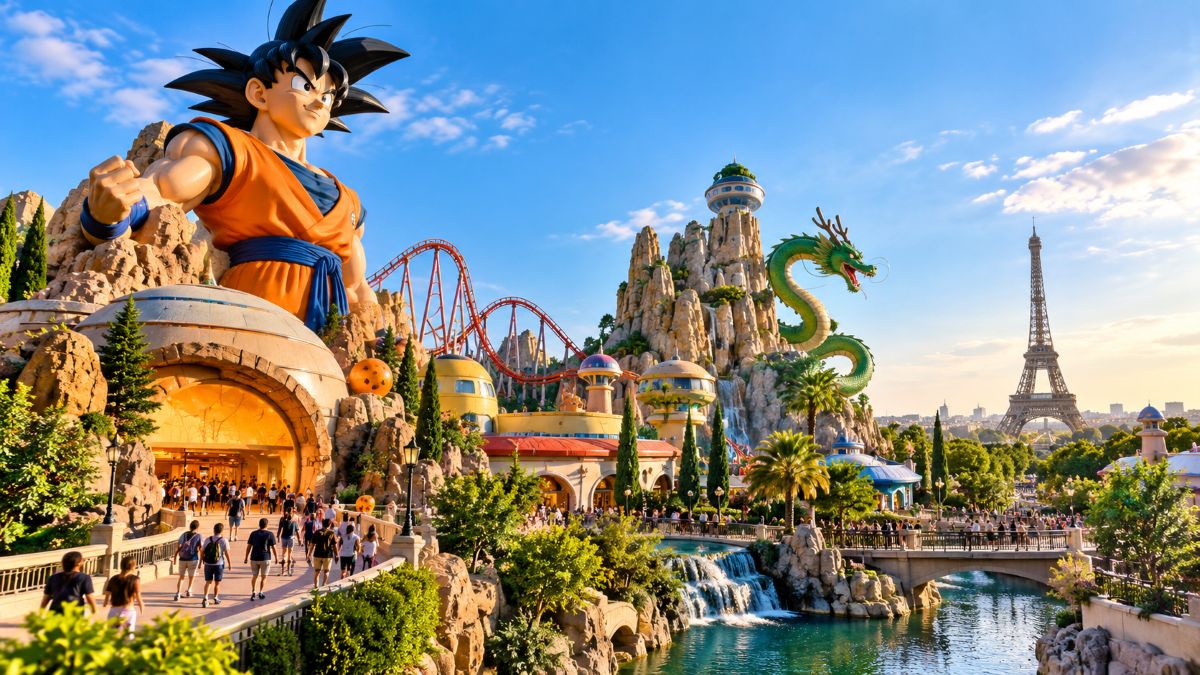
Saudi Arabia and France are moving towards a major new chapter in international tourism and entertainment, with a proposed €6 billion entertainment complex planned for Cergy-Pontoise near Paris. The development is expected to feature three theme parks, alongside hotels, restaurants, worker and student accommodation, and substantial green space. One of the parks is expected to centre on the globally recognised Dragon Ball franchise, potentially creating a major new attraction for anime fans travelling to France.
The announcement places the proposed project among the most ambitious entertainment investments planned in the Paris region in recent years. French President Emmanuel Macron said the development would represent an investment scale not seen in the sector since the arrival of Disneyland Paris. The project is also expected to create around 22,000 jobs, strengthening its potential economic importance for the surrounding area. For international visitors, the proposed destination could eventually add a new reason to extend a Paris holiday beyond the city’s traditional cultural landmarks, museums, shopping districts and historic attractions.
Advertisement
Advertisement
Saudi Arabia And France Develop Major Tourism Partnership
The proposed entertainment complex forms part of a broader relationship between Saudi Arabia and France focused on investment, tourism, entertainment and economic cooperation. The project was announced following a visit to Paris by Saudi Crown Prince Mohammed bin Salman, during which several agreements were discussed between the two countries.
A memorandum of understanding for the theme park development was signed by French Economy Minister Roland Lescure and the chief executive of Qiddiya Investment Company. The agreement gives the proposed development a significant institutional foundation while also reflecting Saudi Arabia’s growing interest in international entertainment and tourism investments.
Advertisement
Advertisement
The scale of the planned development is particularly significant because France already has one of Europe’s strongest tourism ecosystems. Paris attracts visitors for its heritage, architecture, gastronomy, fashion and cultural institutions, while the surrounding region has developed a substantial leisure and family tourism market.
Advertisement
Advertisement
The proposed complex could therefore complement existing attractions rather than compete solely as a standalone destination. Visitors arriving in the French capital for several days could potentially incorporate the new theme parks into longer itineraries covering Paris and the wider Île-de-France region.
Cergy-Pontoise Selected For Major Entertainment Development
The proposed site is expected to be located in Cergy-Pontoise, northwest of Paris, on the grounds of Mirapolis, a former theme park that closed in 1991. The location has reportedly attracted interest because of its proximity to both central Paris and Disneyland Paris.
This geographical position could become one of the project’s most important advantages from a travel perspective. A major entertainment destination needs strong accessibility, and a location within the wider Paris metropolitan area offers access to one of Europe’s largest international tourism gateways.
The development could also contribute to the regeneration of a site with an existing history of leisure and entertainment. Reusing land associated with a former theme park may allow the new project to establish a distinctive identity while reconnecting the location with the tourism economy.
However, the precise development schedule has not yet been announced. Construction is expected to take several years, meaning travellers should not interpret the announcement as an indication that the attraction will open in the immediate future.
Advertisement
Advertisement
Proposed Dragon Ball Park Could Transform Anime Tourism
The most distinctive element of the proposal is the expectation that one of the three parks could be dedicated to Dragon Ball. The Japanese manga and anime franchise has developed an enormous international following over several decades, making it a potentially powerful tourism draw.
The connection between Saudi Arabia, France and Dragon Ball reportedly dates back to a 2024 visit to Saudi Arabia involving Macron and the Saudi Crown Prince. Their shared interest in the franchise helped stimulate discussions about bringing a Dragon Ball-themed attraction to France.
Qiddiya Investment Company has already been developing a Dragon Ball theme park in Saudi Arabia, described as the world’s first Dragon Ball theme park. A comparable attraction near Paris could broaden the franchise’s international tourism presence while connecting Japanese popular culture with European destination development.
For France, the concept could also strengthen its position within the rapidly expanding market for pop-culture tourism. Travellers increasingly build holidays around films, television series, gaming, comics and anime, and a large-scale attraction could encourage dedicated trips as well as additions to conventional Paris itineraries.
€6 Billion Investment Could Reshape Regional Tourism
The scale of the proposed €6 billion investment is central to understanding its potential significance. Rather than creating a single amusement park, the development is expected to comprise three theme parks supported by a wider hospitality and residential ecosystem.
Advertisement
Advertisement
The reported components can be summarised as follows:
| Planned Element | Expected Role |
|---|---|
| Three theme parks | Main entertainment attractions for domestic and international visitors |
| Dragon Ball-themed park | Potential flagship attraction focused on Japanese manga and anime |
| Hotels | Accommodation for leisure travellers and visitors staying near the complex |
| Restaurants and catering | Food and beverage facilities supporting visitors and employees |
| Worker and student housing | Residential capacity connected with the development |
| Green space | Around 50,000 square metres planned for biodiversity |
| Employment | Approximately 22,000 jobs expected to be created |
The combination of attractions, accommodation and supporting infrastructure suggests a destination designed to encourage visitors to spend more time in the area rather than simply make a short excursion.
That could have wider consequences for local businesses, transport providers, hospitality operators and tourism services throughout the surrounding region. Increased visitor numbers could create additional demand for accommodation, dining, retail and leisure experiences.
Saudi Arabia Continues Its Push Beyond Oil
The proposed French development also fits into Saudi Arabia’s wider economic diversification strategy. The country has been investing heavily in tourism, hospitality, sports and entertainment as it seeks to develop sectors beyond oil.
Qiddiya Investment Company has become an important part of that strategy, with entertainment and destination development positioned as major areas of investment. The French project would extend that approach into a major European tourism market.
Advertisement
Advertisement
International investments of this type can also provide opportunities for cross-border expertise. France brings decades of experience in tourism, hospitality, cultural attractions and destination management, while Saudi Arabia is deploying significant capital into large-scale entertainment developments.
The partnership therefore represents more than a theme park proposal. It reflects the growing role of tourism and entertainment in international economic relationships.
Paris Could Gain A New Family Tourism Attraction
Paris remains one of the world’s best-known city-break destinations, but travellers often combine the capital with attractions outside the historic centre. A large entertainment complex in Cergy-Pontoise could become another major component of this wider tourism network.
Families could potentially combine a visit to Paris’s cultural attractions with several days dedicated to theme parks and entertainment. International anime fans could also have a specific reason to visit the region, particularly if the Dragon Ball park ultimately receives the scale and immersive features associated with major destination attractions.
The development could also encourage longer stays. Travellers who might otherwise spend a short weekend in Paris could have an additional reason to plan multi-day holidays incorporating entertainment experiences outside the city centre.
Advertisement
Advertisement
For the regional tourism economy, longer stays are particularly valuable because they can generate spending across hotels, restaurants, transport and other visitor services.
Green Space Included In The Proposed Complex
Despite the project’s enormous entertainment ambitions, the proposed development is also expected to include approximately 50,000 square metres of green space dedicated to biodiversity.
The inclusion of biodiversity areas is notable because large theme park developments can involve substantial land use and infrastructure. Incorporating green areas into the masterplan could help address environmental considerations while creating additional outdoor spaces for visitors and residents.
The eventual environmental impact will depend on how the development is designed, constructed and operated. At this stage, the available information establishes the intention to dedicate significant space to biodiversity, but detailed environmental plans and implementation measures have not yet been announced.
Construction Timeline Remains Unconfirmed
Although the investment announcement has generated considerable attention, travellers should expect a lengthy development process before the proposed attraction becomes operational.
Advertisement
Advertisement
No precise opening date has been announced, and construction is expected to take several years. Major entertainment complexes require extensive planning, infrastructure development, transport coordination, construction and testing before opening to the public.
The absence of a confirmed timetable means that the project should currently be viewed as a major planned tourism development rather than an immediately accessible attraction.
Its eventual success will depend on several factors, including construction progress, transport connectivity, visitor capacity, accommodation availability, environmental planning and the final design of the three theme parks.
A Potential New Landmark For European Entertainment Tourism
If completed as proposed, the €6 billion complex could significantly expand the entertainment tourism landscape around Paris. Its combination of three theme parks, hospitality facilities, residential infrastructure and green space would create a destination with ambitions extending well beyond a conventional amusement park.
The potential Dragon Ball attraction gives the development an especially distinctive international identity. By combining Saudi investment, French tourism infrastructure and Japanese popular culture, the project could become an unusual example of how global entertainment franchises are increasingly shaping travel decisions.
Advertisement
Advertisement
For travellers, however, the most important development will be the transition from announcement to construction and, eventually, opening. Until further details are released, the project remains a long-term prospect rather than a current Paris attraction.
If delivered successfully, it could nevertheless give the Paris region another powerful tourism asset and establish a new connection between European travel, Middle Eastern investment and Japanese pop culture.
Frequently Asked Questions
1. Where is the proposed Saudi-funded theme park complex located?
The planned entertainment complex is expected to be developed in Cergy-Pontoise, northwest of Paris, on the former Mirapolis theme park site.
2. How much is Saudi Arabia expected to invest in the project?
Advertisement
Advertisement
The proposed investment is valued at approximately €6 billion.
3. How many theme parks are planned?
The proposed entertainment complex is expected to contain three theme parks.
4. Will there be a Dragon Ball theme park in France?
One of the three parks is expected to be dedicated to the Dragon Ball franchise, although final details remain subject to development.
Advertisement
Advertisement
5. When will the Dragon Ball theme park near Paris open?
No confirmed opening date has been announced. Construction is expected to take several years.
6. How many jobs could the development create?
The project is expected to create around 22,000 jobs.
7. Why was Cergy-Pontoise selected for the project?
Advertisement
Advertisement
The location is strategically positioned near Paris and Disneyland Paris, while also offering a former theme park site suitable for redevelopment.
8. Will the complex include hotels?
Yes. Plans are expected to include hotels, catering facilities and other supporting infrastructure.
9. Will the project include green space?
Around 50,000 square metres of green space is expected to be dedicated to biodiversity within the proposed development.
Advertisement
Advertisement
10. Why is Saudi Arabia investing in entertainment projects abroad?
The investment forms part of Saudi Arabia’s broader economic diversification efforts, which include expanding tourism and entertainment alongside traditional economic sectors.
Advertisement
