
easyJet Flight EZY888 Returns at Glasgow Airport After Passenger Disruption Triggers Police Intervention

Published
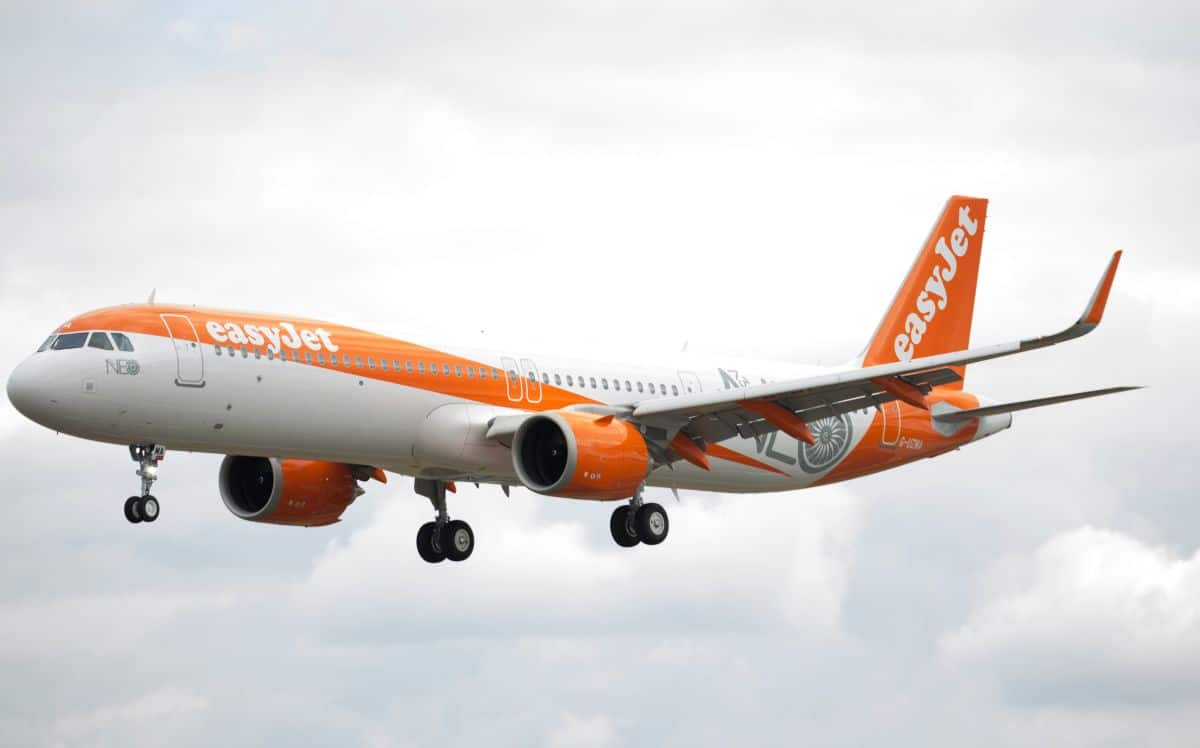
An easyJet flight from Glasgow to London Gatwick returned to its stand on Saturday after a passenger behaved disruptively before departure. Flight EZY888 was approaching the runway when it turned back to the gate, where Police Scotland officers removed the passenger. The incident delayed the service by 49 minutes from its scheduled departure time. Police Scotland said officers received the report at about 2.50pm on September 19. No complaints were made and no arrests followed the intervention. The aircraft eventually continued to Gatwick, highlighting how airlines and airports can prioritise passenger safety over punctuality when behaviour creates an operational concern.
Police Intervention Brings Glasgow Flight Back
The incident unfolded after EZY888 had left its stand and was moving towards the runway at Glasgow Airport. Passengers expected the aircraft to begin its departure when the aircraft instead turned around and returned to the gate.
Advertisement
Advertisement
Police officers were waiting when the aircraft reached the stand. They escorted the disruptive passenger from the aircraft before the remaining travellers continued their journey.
The intervention remained confined to the departing flight. Police Scotland later confirmed that officers had attended the aircraft following a report about a disruptive passenger. No complaint was made and no arrest resulted from the incident.
Advertisement
Advertisement
easyJet subsequently confirmed that the aircraft returned to its stand before departure because of the passenger’s behaviour. The airline said its cabin crew followed established procedures and acted to protect everyone onboard.
The carrier stated that its cabin crew are trained to assess situations and respond quickly when safety could be compromised. It also reiterated that it does not tolerate disruptive behaviour during flights.
Advertisement
Advertisement
For travellers, the episode illustrates an important distinction. A flight returning to the gate does not necessarily indicate an aircraft technical problem. Operational decisions can also arise from passenger behaviour, security concerns or other safety considerations.
| Key Detail | Information |
|---|---|
| Airline | easyJet |
| Flight | EZY888 |
| Origin | Glasgow Airport |
| Destination | London Gatwick |
| Incident date | 19 September 2026 |
| Report to police | Around 2.50pm |
| Reason for return | Disruptive passenger |
| Police action | Passenger removed from aircraft |
| Arrests | None |
| Complaints | None reported |
| Departure delay | 49 minutes |
| Scheduled departure | Around 2.40pm |
| Actual departure | 3.29pm |
| Reported London arrival | 4.57pm |
The reported timings underline the limited but tangible operational impact. A disruption before take-off avoided the more complicated consequences that can follow when an incident develops after an aircraft has entered the airspace.
Why Cabin Crew Can Stop A Departure
Cabin crew have responsibilities that extend far beyond inflight hospitality. Their role includes managing safety, security and passenger behaviour throughout the boarding and departure process.
easyJet’s published conditions allow the airline to refuse carriage or remove a passenger when it reasonably believes that person could threaten safety. The conditions cover threatening, abusive or disorderly behaviour, as well as conduct that obstructs crew members.
The airline also states that the captain has authority to resolve disruptive situations. Its conditions allow measures that can include removal from the flight and, where possible, physical restraint when circumstances require it.
That framework explains why returning to the stand can become the preferred option. Removing a passenger before take-off reduces the risk of an incident escalating once the aircraft is airborne.
Advertisement
Advertisement
It also allows airport security or police officers to intervene without introducing the additional constraints associated with an aircraft already in flight.
The decision can therefore create a delay for hundreds of passengers. However, the alternative could involve a substantially greater operational disruption if a serious incident occurs after departure.
Glasgow Airport already operates a dedicated approach to disruptive behaviour. Its Campus Watch programme connects airport employees, security teams and Police Scotland to identify concerns and support early intervention.
The airport says disruptive behaviour remains rare. Nevertheless, its programme uses rapid reporting and communication across the airport campus when staff identify potential problems.
Glasgow Airport Has A Wider Safety Network
The EZY888 incident occurred within an airport environment that already has systems designed to respond to unacceptable behaviour.
Glasgow Airport relaunched Campus Watch in March 2026 ahead of the busy Easter travel period. The initiative operates with Police Scotland and seeks to identify problems before they develop into more serious incidents.
Advertisement
Advertisement
The airport says staff can report individuals displaying signs of disruptive behaviour to its central control room. Information can then move rapidly across the airport, allowing airport teams or police officers to intervene.
The approach covers more than aircraft cabins. Behaviour in terminals, retail areas, bars and restaurants can also trigger intervention.
Glasgow Airport has previously said that more than 5,000 people work across the wider airport environment. Those employees form part of the airport’s broader safety culture.
That network matters because passenger disruption does not always begin after boarding. Problems can emerge in terminal areas, during security screening, at boarding gates or during aircraft boarding.
The airport’s strategy therefore focuses on early recognition rather than relying solely on police intervention after an incident becomes serious.
| Glasgow Airport Safety Measure | Purpose |
|---|---|
| Campus Watch | Identifies and addresses disruptive behaviour |
| Central control room | Receives reports from airport teams |
| Rapid information sharing | Alerts relevant airport personnel |
| Police Scotland partnership | Supports intervention where required |
| Staff awareness | Encourages early reporting |
| Bar and restaurant monitoring | Addresses problematic behaviour before boarding |
The EZY888 case demonstrates how these layers can work together. The passenger was removed before the aircraft continued towards London, allowing the remaining travellers to complete the journey.
Advertisement
Advertisement
Disruptive Behaviour Creates Wider Travel Costs
A disruptive passenger does not affect only the individual involved. Even a relatively short incident can create consequences for passengers, crew, airport staff and connecting journeys.
In this case, the reported 49-minute delay affected everyone travelling on EZY888. Passengers may also have faced uncertainty while the aircraft returned to the stand and police attended.
For travellers with onward rail journeys, hotel check-ins or connecting flights, even a delay of less than an hour can become significant.
The wider aviation industry has also recognised disruptive behaviour as a safety and operational issue. Glasgow Airport is a signatory to the UK Aviation Industry Code of Practice on Disruptive Passengers.
The airport also supports the industry’s “One Too Many” campaign. The broader objective is to discourage behaviour that can compromise the safety and wellbeing of passengers and aviation workers.
The issue has become more significant as passenger volumes have grown. UK airports handled 302 million passenger journeys in 2025, according to the Civil Aviation Authority. That represented a 2% increase from 295 million journeys in 2024 and marked the busiest year recorded for UK aviation.
Advertisement
Advertisement
More passengers naturally mean more opportunities for individual incidents to affect busy airport systems. However, the available evidence does not mean that disruptive behaviour represents the experience of most travellers.
Indeed, Glasgow Airport says such incidents remain extremely rare. The airport’s security programme exists precisely because aviation operations require contingency measures even for relatively uncommon events.
What easyJet Rules Mean For Travellers
Passengers often assume that purchasing a ticket guarantees carriage. In reality, airline conditions impose behavioural obligations throughout the journey.
easyJet’s current conditions state that the airline can refuse carriage where a passenger presents a safety risk. They also cover intoxication, threatening conduct, abusive language, failure to follow crew instructions and other forms of unsafe or disorderly behaviour.
The conditions also provide the captain with authority to address disruptive situations. Depending on circumstances, this can include removing a passenger from the aircraft.
The policy has practical implications for travellers. Behaviour that appears minor on the ground can become a serious operational issue inside an aircraft.
Advertisement
Advertisement
Passengers should therefore follow crew instructions promptly, avoid confrontational conduct and report concerns through crew members rather than attempting to intervene themselves.
The airline also maintains processes for managing disruptive passengers after incidents. Its privacy information states that safety reports can include witness statements and incident descriptions. It also says that passengers may be subject to travel bans under its disruptive passenger assessment process.
That means a single incident can have consequences beyond the immediate flight.
| Traveller Situation | Possible Operational Response |
|---|---|
| Threatening or abusive behaviour | Refusal of carriage or removal |
| Failure to follow crew instructions | Intervention by crew |
| Unsafe or disorderly conduct | Removal or other safety measures |
| Intoxication affecting safety | Refusal of carriage |
| Serious onboard disruption | Possible police involvement |
| Repeated serious behaviour | Potential travel restrictions |
These measures exist to protect the wider travelling public. They also help airlines establish a consistent framework for managing difficult situations.
Why The 49-Minute Delay Matters
The delay attached to EZY888 was modest compared with major aviation disruptions. Yet it offers a useful illustration of how airlines balance punctuality against safety.
UK aviation has experienced strong passenger growth, placing continued pressure on airports and airlines to maintain reliable operations. The Department for Transport’s latest analysis found that 0.8% of arriving and departing passenger flights were cancelled at short notice in July 2026. That was consistent with the 2025 baseline.
Advertisement
Advertisement
A passenger-related incident is different from a cancellation or conventional operational delay. However, it enters the same complex network of aircraft rotations, crew duties, airport stands and passenger connections.
A 49-minute departure delay can therefore have a wider effect if the aircraft operates another service later. Airlines must manage the aircraft, crew and airport resources around the disruption.
In the EZY888 case, the flight ultimately continued to London. That distinction is important for travellers because the incident did not result in a cancellation.
The aircraft’s return to the stand also meant the disruption was contained before the flight became airborne. From an operational perspective, that allowed the airline to resolve the immediate concern at Glasgow rather than deal with it during the flight.
What Passengers Should Do During Incidents
Travellers should remain seated and follow crew instructions whenever an aircraft returns to its stand unexpectedly. Passengers should not attempt to confront or physically restrain another traveller.
Instead, concerns should be communicated to cabin crew. Crew members are trained to assess the circumstances and determine whether airport security or police assistance is necessary.
Advertisement
Advertisement
Travellers should also avoid sharing unverified claims about an incident while it is unfolding. A flight returning to a stand can have many causes, and passengers may not immediately know what has happened.
This is particularly relevant in the era of instant social media reporting. A delay can quickly generate speculation before an airline or police authority has confirmed the circumstances.
For passengers connecting through London Gatwick, the practical priority is to check updated arrival information after departure. Travellers with onward journeys should allow reasonable connection time, particularly when flying through busy UK airports.
A Busy Aviation System Needs Early Action
The Glasgow incident also places passenger behaviour within a broader aviation safety environment.
The UK Civil Aviation Authority recorded 62,215 mandatory occurrence reports in 2025, up from 59,750 in 2024. These reports cover a broad range of aviation occurrences and should not be interpreted as a count of disruptive passenger incidents.
The figures nevertheless demonstrate the scale of reporting embedded within UK aviation safety management. Airlines and airports continuously record events that could present operational or safety risks.
Advertisement
Advertisement
The CAA’s latest Annual Safety Review for 2025 also covers aviation safety performance across UK aviation sectors. It includes areas such as aerodrome safety, air traffic control and aviation security.
Against that background, a decision to return an aircraft to the stand should not automatically be viewed as an operational failure. It can instead represent an established safety response to a developing situation.
The same principle applies across airlines and airports. Punctuality remains important, but safe completion of the journey remains the overriding operational requirement.
The Journey Continued After Police Action
For the passengers aboard EZY888, the disruption ultimately remained a temporary interruption rather than a cancelled journey.
Police removed the passenger from the aircraft after it returned to the stand. No arrests followed, and the remaining passengers subsequently continued towards London Gatwick.
The reported 49-minute delay provides a clear measure of the immediate impact. Yet the episode also offers a wider lesson for travellers using busy airports.
Advertisement
Advertisement
Air travel depends on passengers, cabin crew, airport teams, police and other agencies working within clearly defined safety procedures. When behaviour threatens that balance, intervention can become necessary before an aircraft leaves the ground.
For travellers, the most useful response is straightforward. Follow crew instructions, report concerns early and allow additional time when travelling through busy airports. The EZY888 incident shows how a contained intervention can allow a flight to resume while protecting the wider travelling public.
Advertisement
