
Hundreds of Passengers Impacted at Philadelphia International Airport As American Airlines, PSA Airlines, Republic, Jazz Face 12 Cancellations And 181 Delays, Disrupting Travel To Toronto, Montreal, Miami, Boston, Atlanta, Indianapolis

Published
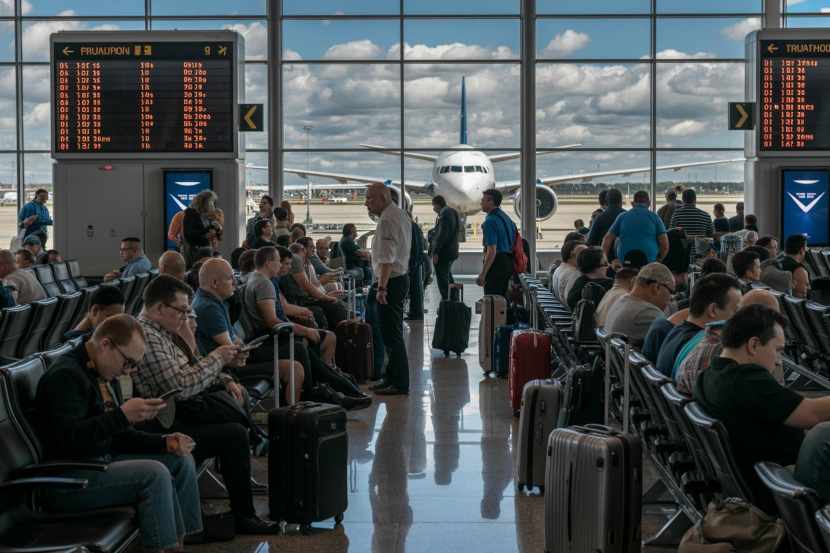 Image generated with Ai
At Philadelphia International Airport (PHL), a sudden spike in operational friction has culminated in a troubling total of 12 cancelled flights and 181 delayed flights, throwing regional transit networks into complete chaos. This massive structural breakdown has deeply restricted passenger movement into high-traffic vacation destinations and international commercial centers, directly halting crucial flight corridors linking travelers to major international hubs like Montrealand Torontoin Canada, alongside a multitude of vital municipal areas scattered all across the United States. Serving as the main commercial aviation gateway for the greater Pennsylvania tri-state area, Philadelphia International Airport (PHL) functions as an indispensable economic driver that heavily impacts regional tourism, trade, and corporate logistics. Recognized as a core transatlantic gateway and a massive primary hub for legacy air carriers, PHL processes tens of millions of eager vacationers every single year. However, because its dense scheduling matrix operates with tightly packed aircraft rotations, even a minor logistical bottleneck can trigger an immense, multi-terminal domino effect. This has left crowds of travelers stranded at the boarding gates, completely derailing meticulously planned vacation timetables, and jeopardizing vital cross-border travel segments.
Updated Operational Data and Impact Analysis
The latest airport scheduling metrics provide a stark window into the current logistical logjam stalling passengers and grounding commercial fleets.
- Total Cancelled Flights:12 flights
- Total Delayed Flights:181 flights
All the Airlines Affected by Cancellations
The sweeping operational gridlock has severely hit multiple prominent mainline legacy carriers and their regional network partners. PSA Airlines, operating as a wholly owned regional subsidiary of American Airlines Group, shouldered a massive portion of the initial cancellations, which heavily disrupted the mainline scheduling matrix of American Airlines. Cross-border carrier Jazz Aviation, flying under the corporate umbrella of Air Canada, faced deep route cuts that entirely severed transit lanes into neighboring international territories. Additionally, regional provider Republic Airwaysencountered massive fleet availability shortfalls. Further down the terminal lines, mainline operators struggled to preserve their schedules, with Piedmont Airlines, Delta Air Lines, Endeavor Air, Frontier Airlines, JetBlue Airways, Southwest Airlines, and United Airlines all forced to scale back their operations to avoid total gridlock at the gates.
- American Airlines: 5 cancellations, 80 delays
- PSA Airlines: 5 cancellations, 25 delays
- Republic: 1 cancellation, 9 delays
- Jazz: 1 cancellation, 2 delays
All the Cities and Countries Affected by Cancellation
The widespread geographic footprint of these scheduling failures extends far beyond Pennsylvania, isolating multiple high-profile economic regions throughout the United States and Canada. Terminal logs verify that the flight cancellations effectively blocked core cross-border transit channels, directly striking Toronto Pearson International Airport (YYZ) and Montreal-Trudeau International Airport (YUL). On the domestic front, the abrupt cancellations disrupted high-volume leisure and tourism routes, hitting regional hubs such as Providence (PVD) and Grand Rapids (GRR). Furthermore, critical connection hubs like Miami (MIA), Boston (BOS), Atlanta (ATL), and Indianapolis (IND) faced a heavy drop in arrivals, stranding thousands of connecting vacationers and severing access to regional vacation spots and coastal resort destinations.
Advertisement
Advertisement
Reason for Cancellation and Delays
A complex mix of systemic regulatory hurdles, severe regional weather patterns, and internal fleet vulnerabilities combined to create this massive disruption. Foremost among these issues are chronic, industry-wide air traffic controller staffing shortages within the heavily congested Northeast Corridor airspace, which forced aviation regulators to implement rigid ground delay programs. This structural bottleneck means that minor morning delays rapidly pile up into massive afternoon backlogs. The situation worsened due to severe seasonal weather fronts moving across the mid-Atlantic coast, forcing flight paths to close. When combined with sudden mechanical maintenance issues and strict crew duty-time limitations, airline schedulers had no choice but to cancel flights to keep the rest of their national networks from collapsing.
What To Do When Your Flight Gets Cancelled(FAQ)
Q: What are my immediate rebooking options if my flight out of PHL is officially cancelled?
Advertisement
Advertisement
A: If an airline cancels your scheduled flight, they are legally obligated to place you on their next available flight to your destination at no additional cost. If the airline’s own upcoming departures are completely filled, you have the right to request that customer service agents search for open seating options on competing airlines or alliance partners with whom they maintain interline agreements.
Q: Am I legally entitled to a full monetary refund if I decide to cancel my travel plans altogether?
Advertisement
Advertisement
A: Yes. Under consumer protection mandates enforced by the Department of Transportation, if your flight is cancelled by the operating carrier for any reason and you reject the alternative flight arrangements offered, you are entitled to a full cash refund. This law covers the entire unused ticket balance and associated baggage fees, applying even to non-refundable economy tickets.
Q: Will the airline pay for a hotel room and food vouchers during an extended overnight delay?
A: If the flight cancellation is caused by issues within the airline’s direct operational control, such as a mechanical issue or crew scheduling error, most major airlines will supply complimentary hotel vouchers and dining coupons. However, if the disruption is caused by force majeure events like bad weather or air traffic control halts, airlines are generally exempt from providing free lodging.
Broader Economic Footprint: Impact on US and Other Affected Countries and Their Tourism
The severe operational bottlenecks felt at Philadelphia International Airport carry a heavy economic cost that directly slows the momentum of international tourism. When a primary international hub experiences a systemic scheduling failure, the negative financial impacts travel down the economic chain to target destination markets where local merchants rely on a predictable influx of visitors. For international markets like Canada, a sudden drop in incoming passenger volumes from the US means fewer bookings for boutique hotels, regional tour operators, and municipal dining districts, highlighting how deeply intertwined modern tourism economies are with airline reliability.
Advertisement
Advertisement
This structural instability also harms domestic leisure markets. When family vacations to popular spots are disrupted by unexpected gate cancellations, travelers face non-refundable expenses and missed experiences. This volatility degrades long-term consumer trust in the aviation network. If travelers begin to expect delays, they often skip long-distance vacations entirely in favor of local drive-market trips. This shift deprives major cultural centers and resort regions of vital tourism revenue, stalling regional economic growth.
Comprehensive Overview of Philadelphia International Airport (PHL)
As a vital piece of transportation infrastructure, Philadelphia International Airport (PHL)operates as the primary architectural engine driving regional tourism throughout the Delaware Valley. Boasting a large passenger terminal complex featuring extensive dining and retail options, the airport balances high traveler volumes with an efficient layout. PHL serves as an indispensable arrival point for millions of global tourists seeking to explore the nation’s foundational history, world-class museums, and diverse cultural districts.
Because the vitality of local hospitality is linked to predictable airline schedules, persistent terminal delays pose a direct challenge to the tourismeconomy. When flights run on time, PHL acts as an economic multiplier, funneling high-spending visitors directly into regional hotels, conventions, and heritage sites. Ensuring the stability of this flight pipeline is absolutely essential for maintaining traveler confidence and keeping the regional tourism industry strong.
Advertisement
