
Emirates Unveils World-First Electric Premium Economy Seat With Full-Height Privacy Screen

Published
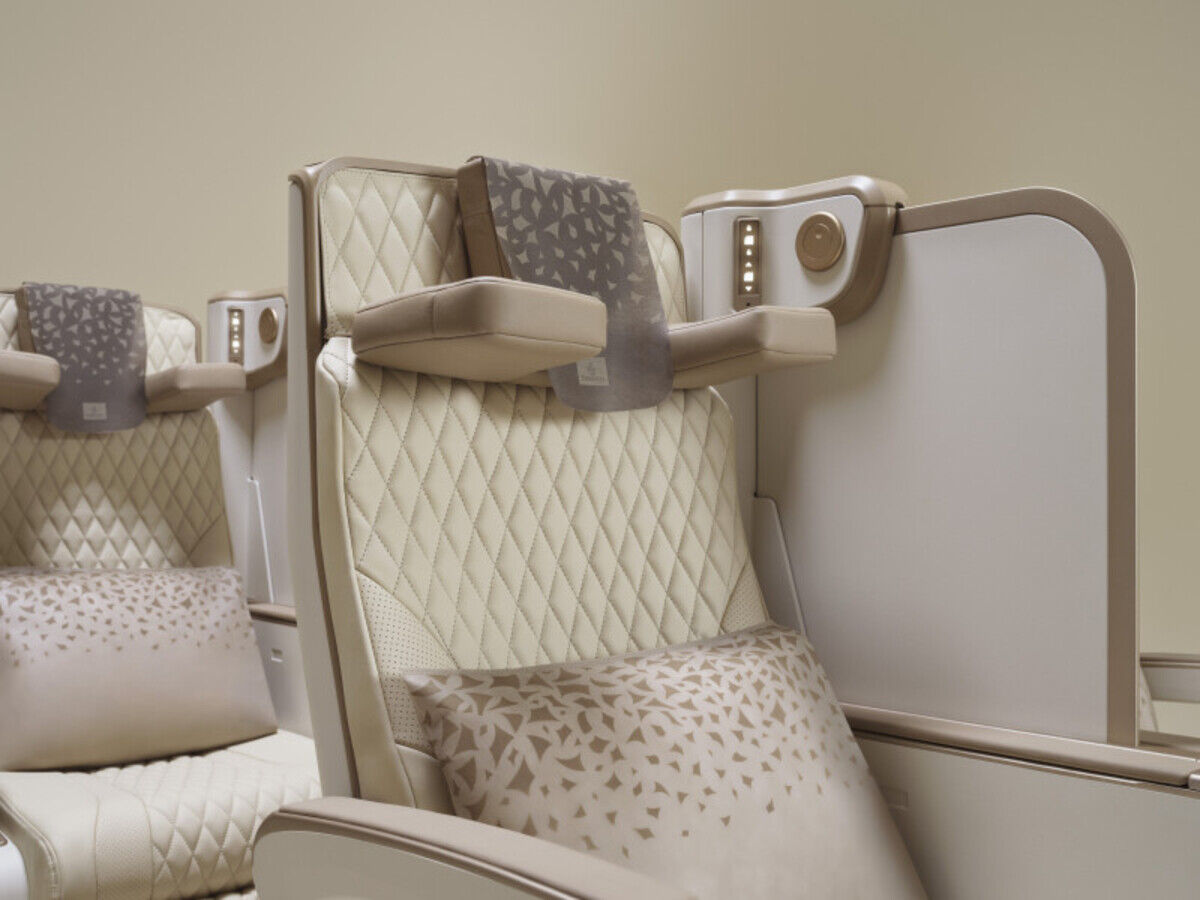
Image generated with Ai
Emirates has another step in improving their passenger experience with the introduction of electrically adjustable seats and privacy dividers in their new Premium Economy seat. The electrically adjustable privacy dividers will be debuted on Premium Economy seats on new Airbus A350s. Emirates claims this will be the first of its kind in global aviation.
The seat has been developed to give passengers more control over their personal space, seating position and onboard environment. Alongside electrical adjustment and enhanced privacy, it introduces upgraded head support, wireless charging, ultra-high-definition entertainment screens and additional exterior camera views.
Advertisement
Advertisement
The development builds on Emirates’ expanding Premium Economy programme, which was introduced in 2022. The airline has since positioned the cabin between traditional Economy and Business Class, targeting travellers seeking additional space, greater comfort and an elevated dining experience without purchasing a Business Class ticket.
New Privacy Feature Redefines the Premium Economy Cabin
The most distinctive feature of the new seat is an electrically operated privacy divider installed between passengers. Unlike smaller screens or fixed partitions found in some aircraft cabins, the divider extends to the full height of the seat.
Advertisement
Advertisement
Passengers can raise or lower the screen using controls built into the seat and secure it at their preferred level. The feature creates a more private setting for sleeping, working, dining or watching entertainment, particularly during long-distance journeys.
Advertisement
Advertisement
Privacy has traditionally been associated with First and Business Class cabins, while Premium Economy products have concentrated primarily on greater legroom, wider seats and improved meal services. Introducing a full-height divider into this category could influence how other airlines design future Premium Economy cabins.
The adjustable screen may be especially useful for solo passengers seated beside strangers. Travellers flying together can lower it when they want a more open seating arrangement.
Airbus A350 Cabin Features Just 28 Premium Economy Seats
The redesigned Premium Economy cabin will be installed on newly received Emirates Airbus A350 aircraft. It will contain 28 seats arranged in a 2-3-2 configuration.
This layout places two seats beside each window and three in the centre section. Compared with the denser arrangements typically used in Economy Class, the configuration provides additional width and reduces the number of passengers seated in each row.
Every Premium Economy seat will measure 20 inches across. Seat pitch on the A350 will reach up to 39 inches, giving passengers more legroom than they would ordinarily receive in Economy.
Advertisement
Advertisement
The limited cabin size is also intended to create a quieter and less crowded environment. With only 28 passengers in the section, boarding, meal service and movement around the cabin may feel more controlled than in larger Economy compartments.
Fully Electric Controls Give Travellers Greater Choice
The A350 product will become Emirates’ first fully electrically powered Premium Economy seat. Travellers will be able to adjust their seating position through an integrated passenger control unit rather than relying entirely on manual mechanisms.
Dedicated settings will include lounge and meal modes. These preset positions are designed to make it easier to prepare the seat for different stages of the journey without repeatedly adjusting individual components.
The electric controls will also operate the privacy screen. Passengers can select its height and lock it into position depending on whether they want greater separation or a more open seating area.
Seat automation is already widely available in premium cabins, but its introduction into Premium Economy demonstrates how the category is moving closer to selected Business Class standards. It also reflects growing competition among international airlines seeking to attract passengers willing to pay more for comfort but not necessarily for the complete luxury of a premium cabin.
Advertisement
Advertisement
Cradle-Style Recline Protects Space in the Row Behind
The seat has been designed to recline into a cradle position without extending into the personal area of the passenger seated behind. This approach allows travellers to rest without significantly reducing another passenger’s usable space.
Traditional reclining seats can create frustration during meal services or when passengers want to use laptops and tray tables. A cradle-style mechanism keeps the movement largely within the seat’s own structure, helping preserve comfort across consecutive rows.
The design should make sleeping and relaxing more practical on long-haul flights. It also supports a more predictable cabin environment because passengers behind are less likely to experience sudden changes to their available space.
Combined with a pitch of up to 39 inches, the non-intrusive recline gives Premium Economy travellers room to change position during extended journeys while maintaining separation between rows.
Redesigned Headrest Improves Support During Long Flights
Additional ergonomic improvements have been incorporated to support passengers during rest. The new seat will feature Emirates’ U-Dream headrest, manufactured by the airline’s seating partner and already recognised for its adjustable design.
Advertisement
Advertisement
Covered in leather, the headrest includes flexible wings that can be placed in several positions. Passengers can adjust them around the head and neck, reducing the need to lean against the cabin wall or use a separate travel pillow.
Head movement can interrupt sleep during a flight, particularly when a passenger is seated upright. The adjustable wings are intended to stabilise the head and provide a more supportive resting position.
A manually deployable leather footrest has also been included. By supporting the lower legs, the footrest can help passengers adopt a more relaxed posture and limit discomfort caused by keeping the feet in one position for long periods.
Wireless and USB-C Charging Keep Devices Connected
Emirates is also adding wireless charging to Premium Economy for the first time. Travellers with compatible smartphones and other devices will be able to charge them without connecting a cable.
USB-C charging will remain available at every seat, ensuring that passengers can power a broader range of personal electronics. The combination of wireless and wired charging will be particularly relevant on long-haul services, where phones, tablets and laptops may be used for many hours.
Advertisement
Advertisement
Each tray table will include an integrated phone holder. This will allow a personal device to function as a second screen while the tray is being used for meals, work or other activities.
The feature recognises the changing way passengers use technology onboard. Although seatback entertainment remains important, many travellers also consume downloaded films, answer messages, review documents or follow travel information through their own devices.
Upgraded Entertainment Arrives With 4K HDR Display
Passengers will have access to the Emirates ice entertainment platform through a 13.3-inch 4K HDR touchscreen. The high-resolution screen is designed to deliver sharper images, stronger colour reproduction and responsive navigation.
The system will provide films, television programmes, music and other entertainment options through a screen comparable in resolution to many modern personal devices. Its touch interface has also been developed to make browsing through the available content faster and easier.
Newly delivered Airbus A350 aircraft will introduce additional external camera views. Left- and right-facing perspectives will join the forward- and downward-facing cameras already offered.
Advertisement
Advertisement
These views will allow travellers to observe take-off, landing and scenery from several angles. They may be particularly attractive to passengers seated away from windows or those interested in following the progress of the aircraft from a more immersive perspective.
Dining Service Draws Inspiration From Business Class
The updated seat will form part of a wider Premium Economy service intended to offer elements normally associated with Business Class. Passengers will receive regionally influenced meals presented on Royal Doulton china, accompanied by linen napkins and stainless-steel cutlery.
The service aims to distinguish Premium Economy from the standard meals and presentation generally found in Economy. Menus will vary by destination and will be supported by a selection of premium beverages.
An Australian vintage sparkling wine will continue to be reserved for Premium Economy passengers throughout the Emirates network. Additional wines will be introduced on selected routes from September, including a 2024 Chablis Premier Cru and a 2014 Bordeaux from the Pessac-Léognan appellation.
From October, an English sparkling wine will also be served exclusively in Premium Economy on flights operating on UK routes. It will be the first English sparkling wine to join the airline’s onboard beverage selection.
Advertisement
Advertisement
These additions form part of a wine programme in which Emirates says it has invested more than US$1 billion since 2006.
Sustainable Amenity Kits Added on Long-Haul Services
Premium Economy passengers travelling on long-haul flights will receive reusable amenity kits made with bio-based materials. The collection includes alternatives to conventional leather produced using cactus-derived materials.
The bags have been designed around endangered wildlife and four natural habitats. Alongside their visual themes, they will contain plant-based skincare products being introduced to Emirates Premium Economy for the first time.
Passengers will also receive practical travel items, including socks, an eye mask, earplugs and a dental kit. Sustainable materials have been incorporated across several parts of the collection.
Reusable packaging gives travellers the option of keeping the bag after the flight rather than discarding it. The wildlife theme also connects the product to broader conservation messaging while adding a distinctive element to the cabin service.
Advertisement
Advertisement
Premium Economy Expansion Continues Across the Fleet
Since launching the cabin in 2022, Emirates has progressively introduced Premium Economy across more of its aircraft and destinations. The product is now available in every market currently served by the airline’s A350 fleet.
Its expansion reflects increasing demand for an intermediate cabin. Premium Economy attracts travellers who want greater room and enhanced service while remaining conscious of the substantial price difference between Economy and Business Class.
The airline’s existing product has received several industry honours. It was named Best Premium Economy Class at the Business Traveller Middle East Awards in both 2024 and 2025. Emirates also received the Airline with the Best Premium Economy Class title at the 2025 ULTRAs Awards.
Although these honours were awarded before the new electrically powered seat entered service, they provide a foundation for the latest cabin upgrade.
A New Competitive Standard for Long-Haul Travel
The introduction of an electric seat and full-height privacy screen demonstrates how rapidly Premium Economy is evolving. Once defined mainly by additional legroom, the cabin is increasingly incorporating features previously reserved for higher-priced travel.
Advertisement
Advertisement
Emirates’ latest design combines a 20-inch seat, pitch of up to 39 inches, controlled recline, adjustable head support, a footrest, wireless charging and 4K entertainment. The addition of greater privacy could become its most influential feature, particularly if passengers respond positively after the product enters commercial service.
For the airline, the updated cabin strengthens the role of the Airbus A350 in its fleet expansion. For passengers, it offers a more personalised environment while preserving the accessibility and practical appeal of Premium Economy.
The product also signals growing competition across the long-haul market. As airlines invest in more sophisticated intermediate cabins, travellers may increasingly expect privacy, electronic controls and enhanced technology as standard Premium Economy features rather than exclusive luxuries.
Advertisement
