
Austria Changed Travel Forever When A Single Train Line Secretly Invented The Ultimate Alpine Escape Destination

Published
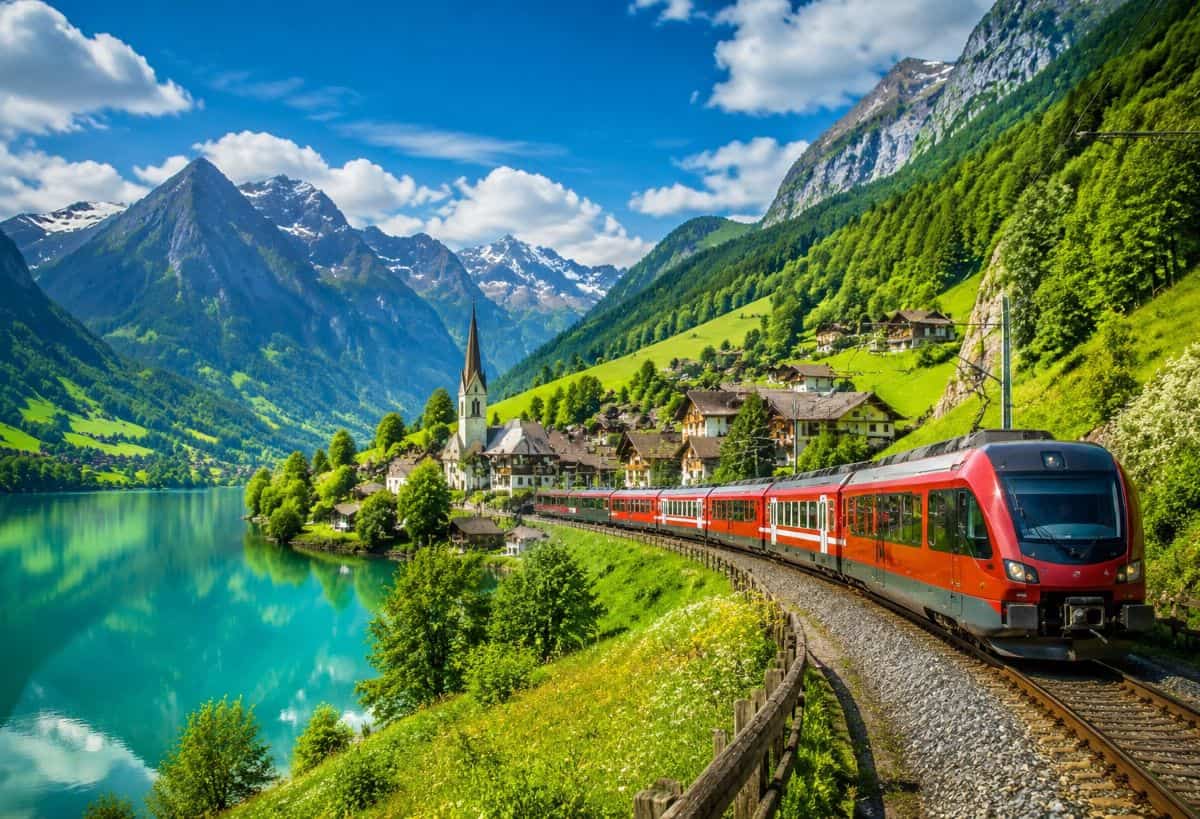
Image generated with Ai
There is a special sort of magic when a trip that is not very remarkable turns out to be an important event in your life. Crossing those old mountain passes meant traversing a hostile and long stretch of wilderness. Before the first segments of track were laid to cut their way through rock, there was a lot of empty space between the loud chaos of the city and the peace and quiet of the mountains. Developing a new line helped define a new destination, and changed the landscape far beyond the laying of the line. A new destination helped us realize our dreams of escaping the hustle of the city for some nice clean air and some peace and quiet. Once the smog of the city was traded for vistas of the mountains, a new appreciation for rest and relaxation was realized. We have exposed the once intimidating bulwark of the mountain range to be a cozy place to call home. Constructing new and innovative methods of travel, especially with a focus on transport, has completely changed how we interact with our world and how we appreciate the things that were once readily available.
How a Historic Train Line Invented a New Mountain Destination for Global Travelers
Advertisement
Advertisement
Historical accounts reveal that the fundamental framework of modern leisure tourism originated when a pioneering rail system transformed an isolated wilderness into an inviting sanctuary. Indeed, when a train line invented a destination, it permanently restructured how society conceptualized physical proximity, scenic retreats, and mountain hospitality across global communities! Furthermore, city residents quickly seized this unique opportunity to escape congested urban environments, establishing a revolutionary social pattern that prioritizes health and leisure. Ultimately, this historical milestone illustrates how visionary transportation development directly builds vibrant, enduring resort markets worldwide.
The transformative impact of transit planning continues to shape modern global travel standards, proving that strategic routes drive economic prosperity. Consequently, international developers routinely examine this nineteenth-century milestone to understand how civil engineering inspires long-term destination branding. Moreover, by converting rugged mountain topography into an accessible haven, early planners created a timeless blueprint for experience-driven hospitality. This dynamic history proves that transportation infrastructure does far more than move individuals; it actively defines how people discover, value, and experience the world around them!
Advertisement
Advertisement
The Mountain Before Tourism and the Engineering Feat of the Semmering Railway
Prior to the mid-nineteenth century, the formidable Semmering mountain pass existed primarily as a treacherous natural barrier located directly between Vienna and southern territorial regions. Attempting to traverse this steep, unyielding terrain presented immense physical challenges, hazards, and lengthy delays for ordinary travelers attempting the passage. However, between 1848 and 1854, the brilliant civil engineer Carl Ritter von Ghega masterminded the groundbreaking construction of the historic Semmering Railway, successfully overcoming the severe mountain topography through an extraordinary network of stone viaducts, deep tunnels, and dramatic curves.
Advertisement
Advertisement
Consequently, the completion of this monumental railway system permanently revolutionized human perceptions regarding geographic distance and rugged alpine environments. Citizens residing in urban Vienna suddenly possessed the incredible capability to reach peaceful mountain elevations within just a few hours. The towering peaks of Austria were no longer feared as an impassable wilderness, but were instead celebrated as an accessible, highly desirable destination for global travelers seeking health, relaxation, and unparalleled natural beauty.
Transforming Mountain Wilderness into a Curated Alpine Experience for Modern Society
Advertisement
Advertisement
Following the successful expansion of the rail route, the region rapidly evolved from a transient pass into an iconic, fully developed retreat designed specifically for extended relaxation and restorative health. Picturesque walking trails, private residential villas, and elevated observation platforms were systematically constructed across the forested mountain slopes. Additionally, a highly distinctive architectural style emerged, masterfully combining local stone foundations, timber framing, intricate wooden balconies, and wide, sunlit verandas. This deliberate design movement transformed Semmering into an elite alpine retreat that delighted contemporaries enthusiastically dubbed “High Vienna.”
As a direct consequence of these artistic and structural investments, the natural landscape was meticulously shaped to satisfy the refined aesthetic preferences of discerning urban visitors. In 1882, the famous Südbahnhotel officially opened its doors at an elevation of roughly 1,000 meters above sea level, establishing a magnificent new benchmark for high-altitude luxury and service excellence. Subsequent luxury establishments quickly emerged throughout the surrounding area, competing vigorously to provide superior amenities, panoramic vistas, and unmatched guest comfort. Thus, this seamless integration of regional transit, vernacular architecture, and upscale service provided the ultimate model for modern mountain resorts across the globe.
The Historic Legacy of Grand Hotels as the Original Social Networks of the Travel World
The grandiose lodging properties constructed throughout Semmering served functions far more significant than providing simple night-time shelter for visitors. Instead, these majestic structures operated as vibrant, highly interactive social epicenters where international elites, artists, and business leaders routinely gathered to exchange ideas. Broad verandas, opulent dining halls, and sprawling grand lobbies effectively operated as the original physical social networks of their era, facilitating vital cultural dialogues and high-society networking.
Advertisement
Advertisement
Ultimately, these luxurious establishments laid the vital foundation for what contemporary economic experts identify as the global experience economy. Long before modern tourism analysts created formal definitions for experiential travel, these historic mountain establishments proved that true hospitality relies on cultivating an authentic sense of community, cultural immersion, and shared lifestyle values. Today, the global hotel sector continuously replicates this historic framework by crafting properties around social connection, regional heritage, and distinctive communal design.
The Lasting Impact on Global Travel Trends and Future Destinations
The historical legacy of Semmering continues to exert a profound influence on contemporary travel preferences and global destination management strategies. Modern international travelers increasingly demand sustainable, high-speed rail options that seamlessly connect urban centers to pristine ecological reserves. Consequently, urban planners and resort developers look directly to this classic Austrian framework to design carbon-neutral vacation corridors that protect delicate ecosystems while serving high volumes of visitors.
Furthermore, this enduring historical paradigm proves that global travelers value integrated, holistic vacation experiences far above mere geographical movement. By unifying scenic transit routes, local architectural traditions, and immersive cultural hospitality, future destinations can cultivate resilient local economies that thrive across changing seasons. As global tourism continuously adapts to new technology and environmental priorities, the timeless principles established along the historic mountain pass remain central to building meaningful, world-class resort experiences.
Engineering Metrics and Extraordinary Structural Achievements Across the Mountain Railway Pass
The construction of the historic alpine corridor between 1848 and 1854 stands as one of the most remarkable technical achievements in civil engineering history. Traversing a total length of 41 kilometers (25.5 miles) across extremely challenging high-altitude terrain, the line successfully managed a dramatic elevation climb of 460 meters. Civil engineers incorporated a maximum gradient of 2.5%, establishing an unprecedented standard for heavy locomotive transit through steep geographical landscapes. To maintain continuous rail movement without sacrificing safety, construction crews excavated 14 mountain tunnels spanning a cumulative length of 1,477 meters, alongside 16 double-tiered stone viaducts and over 100 stone arch bridges.
Advertisement
Advertisement
Completing this colossal transportation route required a massive workforce of over 20,000 laborers, including master stonemasons, regional construction workers, and international engineers. Operating entirely without the aid of modern heavy machinery, these crews relied on hand tools, black powder explosives, and traditional stone-carving methods to chisel through solid rock formations. The structural durability of these hand-crafted masonry viaducts and tunnels permitted heavy train transit across deep mountain chasms, demonstrating how visionary engineering can master natural barriers and establish permanent access routes for future generations of travelers.
Demographic Shifts and the Rapid Economic Acceleration of Urban Leisure Travel
The official inauguration of the mountain railway in 1854 completely transformed regional travel habits and catalyzed an unprecedented surge in leisure tourism. Prior to the line’s completion, reaching the alpine pass from Vienna required a grueling 12 to 14 hours in horse-drawn carriages over rough mountain roads. The introduction of steam locomotives dramatically reduced transit time down to a mere 2.5 to 3 hours. This sudden accessibility allowed city dwellers to embark on spontaneous weekend retreats or extended summer vacations, forever changing urban social dynamics.
As a direct result of this reduced journey duration, annual passenger figures experienced exponential growth. Visitor numbers escalated from a few hundred intrepid mountain explorers per year during the early 1840s to over 100,000 annual rail passengers by the late nineteenth century. Wealthy urban families and high-society elites established extended seasonal residencies lasting anywhere from 4 to 12 weeks during peak summer and winter health seasons. This massive influx of affluent visitors stimulated rapid commercial expansion, turning an isolated mountain corridor into a thriving center of international leisure culture.
Financial Scale, Real Estate Value Surges, and Grand Alpine Retreats
The rapid expansion of mountain tourism triggered an unprecedented real estate boom across Semmering, changing the financial landscape of high-altitude hospitality. A major catalyst in this transformation was the opening of the iconic Südbahnhotel in 1882. To accommodate the soaring demand for luxury lodging, the property underwent extensive renovation cycles between 1893 and 1912, ultimately expanding its capacity to feature over 350 luxury guest rooms, expansive dining halls, heated indoor pools, and indoor athletic facilities.
Advertisement
Advertisement
This wave of hospitality investment caused regional land values to surge by over 400% within two decades following the railway’s inauguration. Wealthy investors from Vienna actively competed for prime mountain acreage to erect private alpine villas and grand resort properties. To deliver an exceptional level of personal service, grand hotels maintained a staff ratio of approximately 1.2 service personnel per guest. This operational benchmark set new international standards for luxury resort management, proving that physical transportation infrastructure directly drives high-value real estate development and premium service economies.
Climate Metrics and High-Altitude Health Factors Driving Wellness Tourism
During the nineteenth century, industrialized urban centers suffered from high levels of air pollution, prompting city residents to seek restorative health environments in the mountains. Situated at an elevation ranging between 895 and 1,000 meters above sea level, the region offered an ideal alpine climate characterized by 30% less atmospheric particulate matter than urban Vienna. Furthermore, ambient summer temperatures along the mountain pass averaged 5°C to 8°C cooler than lowland cities, providing an immediate escape from intense urban heatwaves.
These pristine climatic conditions encouraged the establishment of specialized health sanatoriums and wellness resorts catering to long-term health seekers. Guest stays at these specialized medical retreats averaged 21 to 30 days, focusing on structured climate therapy regimens (Luftkur), mountain walking, and respiratory recovery. Additionally, the pass benefited from over 1,800 hours of annual sunlight, ensuring abundant solar exposure during the winter months. This unique combination of pure mountain air, cooler temperatures, and high solar radiation transformed the alpine pass into an internationally recognized hub for health and wellness travel.
Early Public Capital Investment and Macroeconomic Returns on Transportation Infrastructure
The funding and construction of the rail corridor represented one of the largest public capital investments undertaken in nineteenth-century Europe. Between 1848 and 1854, total construction expenditures reached approximately 15 million guilders (florins). Although the government initially commissioned the route for strategic military movement and commercial trade between Vienna and the Adriatic port of Trieste, passenger leisure traffic quickly emerged as a major source of revenue, generating over 35% of total line income within its first ten years of operation.
Advertisement
Advertisement
The economic impact of this public investment extended far beyond direct ticket sales, creating a powerful economic multiplier effect throughout the broader regional economy. Economic analyses indicate that every 1 florin spent on railway construction generated approximately 3.5 florins in secondary economic activity across hospitality, local agriculture, residential construction, and service industries. This remarkable return on public capital demonstrated that large-scale infrastructure investments can generate long-term regional economic growth by stimulating secondary consumer markets and international tourism.
Architectural Scale, Spatial Metrics, and Alpine Design Standards
The construction boom along the mountain pass fostered a unique architectural style known as the Cottage-Stil, which blended traditional alpine elements with urban luxury standards. Multi-story hotel structures utilized locally quarried stone for 60% of their foundational bases, combining heavy masonry with timber framing and decorative wooden balconies extending up to 15 meters in length. This structural balance provided essential weather protection against severe winter climates while creating a distinctive aesthetic identity that complemented the surrounding forested landscape.
Architects incorporated expansive glass elements to connect indoor communal spaces with the natural environment. Grand dining rooms, enclosed verandas, and sun lounges integrated over 1,000 square meters of panoramic glass windows per hotel complex, maximizing natural daylight and solar thermal retention. To preserve the natural charm of the mountain environment, regional planning regulations enforced strict land-use ratios, requiring developers to reserve at least 70% of parcel land for protected pine forests, landscaped gardens, and scenic walking trails.
Modern Environmental Footprints and Carbon Metrics of Heritage Rail Tourism
The historical integration of rail transit and mountain tourism continues to serve as a benchmark for modern sustainable travel initiatives. Today, modern electric passenger trains operating along the historic Semmering line emit 75% to 85% less carbon dioxide per passenger-kilometer compared to private automobile transit. This dramatic environmental advantage highlights the enduring value of rail infrastructure in reducing the carbon footprint of global tourism while preserving sensitive mountain ecosystems.
Advertisement
Advertisement
Recognizing its exceptional historical, engineering, and cultural significance, UNESCO designated the railway line as a World Heritage Site in 1998, protecting a 41-kilometer cultural landscape corridor spanning over 170 years of architectural and engineering history. Looking toward the future, major modern infrastructure developments, such as the Semmering Base Tunnel, aim to shorten travel durations between Vienna and Graz to under 2 hours. Furthermore, this modern rail project will shift up to 50,000 tons of daily freight off highway systems onto electrified rail, proving that nineteenth-century transit corridors remain vital to building sustainable global transportation networks.
Reconnecting with Soulful Travel on Legendary Mountain Routes
Railways and elevation are just some of the things that make the history of this mountain pass so rich. It’s about slowing down, watching the world go by your window, and realizing how much of the world has become closed off. Railways have impacted the interactions between humankind and nature, and re-balance the relationship so that we take the breaks from our fast-paced lives to enjoy the pristine air and to look beyond our own egos and see the true, lasting value of that which was before us. The nature of those railways offered the urban dweller the breaks they so desperately needed to take away the frantic pace of the previous era’s travel The mountains will show you what travel should have always been. It’s about arriving, the warmth of being with others, and the peace of a journey well done. Using railways restores travel to its original purpose, honoring human connections and what it is truly meant to be. It ceases to be travel and, instead, peace a true homecoming to the memories and places that bring us comfort.
Advertisement
