
Bahrain Joins Saudi Arabia, UAE, Kuwait, Oman, Qatar and Other Gulf Countries Across Middle East As US-Iran Agree To 60-Day Negotiation Framework In Switzerland, Raising Hopes for Securing The Strait of Hormuz and Stronger Travel Connectivity

Published
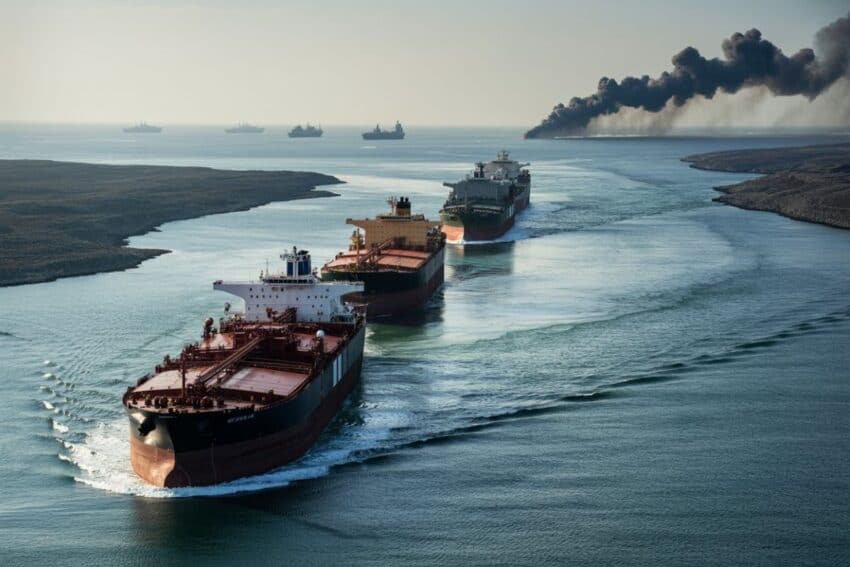
Bahrain Joins Saudi Arabia, UAE, Kuwait, Oman, Qatar and Other Gulf Countries Across Middle East as US-Iran Agree to 60-Day Negotiation Framework in Switzerland, raising hopes for securing the Strait of Hormuz and stronger travel connectivity, a development with direct implications for global tourism and aviation. The renewed diplomatic process has improved expectations for safer maritime and air transport corridors across the Gulf, a region that supports major international flight networks and energy trade. Greater stability around the Strait of Hormuz could strengthen airline operations, cruise itineraries, business travel and visitor confidence, benefiting tourism flows across the Middle East and supporting connectivity between Europe, Asia and Africa.
Greater Strait of Hormuz Security Following the US-Iran 60-Day Negotiation Framework Could Strengthen Gulf Travel and Connectivity
The agreement between the United States and Iran to continue discussions under a 60-day diplomatic framework has renewed attention on the stability of the Strait of Hormuz, one of the world’s most important maritime corridors. According to the US Energy Information Administration (EIA), around 20 million barrels of crude oil and petroleum products moved through the Strait daily in 2024 and 2025, accounting for roughly one-fifth of global petroleum liquids consumption. Any reduction in geopolitical risks helps improve shipping reliability, aviation confidence and tourism demand across Gulf Cooperation Council countries. Bahrain, Saudi Arabia, the United Arab Emirates, Kuwait, Oman and Qatar all rely heavily on uninterrupted trade and transport networks.
- The Strait of Hormuz handles about 20% of global oil trade.
- Gulf economies depend on stable transport corridors.
- Reduced tensions support aviation and tourism sectors.
- Maritime insurance costs may become more stable.
- Regional connectivity benefits from geopolitical certainty.
| Strategic Indicator | 2026 Status |
|---|---|
| Daily Oil Flow Through Strait | ~20 million barrels |
| Share of Global Petroleum Trade | About 20% |
| Key Countries Benefiting | Bahrain, Saudi Arabia, UAE, Kuwait, Oman, Qatar |
| Main Sectors Affected | Shipping, aviation, tourism |
| Source | US Energy Information Administration |
Bahrain Strengthens Its Position in Gulf Tourism and Aviation Connectivity
Bahrain continues to develop tourism and air transport under the Kingdom’s Tourism Strategy 2022-2026. According to Bahrain Tourism and Exhibitions Authority and Bahrain Airport Company, Bahrain International Airport handled more than 9.74 million passengers during 2025, supported by Gulf Air’s network expansion. Greater regional stability around the Strait of Hormuz supports Bahrain’s ambitions to attract more leisure and business visitors. Bahrain’s location within the Gulf allows it to benefit from stronger air links with Saudi Arabia, the UAE, Qatar and international destinations. Stable regional conditions also support cruise tourism and maritime trade.
- Bahrain International Airport remains a key gateway.
- Gulf Air continues network development.
- Business and leisure tourism are expanding.
- Cruise tourism benefits from stable maritime routes.
- Stronger Gulf connectivity supports visitor growth.
| Bahrain Tourism Indicators | Latest Status |
|---|---|
| Main Airport | Bahrain International Airport |
| National Carrier | Gulf Air |
| Tourism Strategy | 2022-2026 |
| Key Tourism Segments | Leisure, MICE, Cruises |
| Source | Bahrain Tourism and Exhibitions Authority |
Saudi Arabia’s Vision 2030 Tourism Ambitions Depend on Stable Regional Connectivity
Saudi Arabia’s tourism transformation under Vision 2030 continues accelerating. According to the Ministry of Tourism and the Saudi Tourism Authority, the Kingdom welcomed over 116 million domestic and international tourists in 2025. Mega-projects including NEOM, Red Sea Global, Diriyah and AlUla rely heavily on international air access and regional stability. Reduced uncertainty around Gulf shipping lanes and air corridors supports Saudia, Riyadh Air and expanding airport infrastructure. Stability across the Strait of Hormuz helps reinforce Saudi Arabia’s position as one of the Middle East’s fastest-growing tourism destinations.
Advertisement
Advertisement
- Vision 2030 focuses on tourism diversification.
- International arrivals continue increasing.
- Mega-projects require stable air access.
- Saudi aviation infrastructure is expanding.
- Regional stability supports investment.
| Saudi Arabia Tourism Indicators | Latest Update |
|---|---|
| Total Visitors | Over 116 million |
| Key Projects | NEOM, Red Sea Global, AlUla |
| National Carriers | Saudia, Riyadh Air |
| Main Hubs | Riyadh, Jeddah |
| Source | Ministry of Tourism Saudi Arabia |
UAE Aviation and Tourism Growth Benefit From Reduced Regional Uncertainty
The United Arab Emirates remains one of the world’s leading aviation hubs. According to Dubai Airports, Dubai International Airport handled approximately 95.2 million passengers during 2025, maintaining its position among the world’s busiest international airports. Abu Dhabi’s Zayed International Airport and Sharjah International Airport also continue expanding. The UAE’s tourism industry depends heavily on international connectivity and uninterrupted airspace access. Reduced concerns surrounding the Strait of Hormuz support airline operations, cargo traffic and travel confidence. Emirates, Etihad Airways, flydubai and Air Arabia all benefit from stable regional conditions.
- Dubai remains a global aviation centre.
- International passenger traffic continues growing.
- Cargo operations rely on stable routes.
- Tourism contributes significantly to GDP.
- Airline connectivity strengthens regional travel.
| UAE Aviation Indicators | 2025-2026 |
|---|---|
| Dubai International Traffic | About 95.2 million passengers |
| Major Airlines | Emirates, Etihad, flydubai |
| Key Airports | Dubai, Abu Dhabi, Sharjah |
| Main Markets | Europe, Asia, Africa |
| Source | Dubai Airports, GCAA UAE |
Kuwait’s Transport and Tourism Sectors Depend on Gulf Stability
Kuwait’s economy and transport systems are closely linked with Gulf trade routes. According to the Directorate General of Civil Aviation Kuwait, Kuwait International Airport continues modernisation through Terminal 2 development. Stable regional conditions help strengthen international air services and facilitate business travel. Kuwait Airways continues expanding its network across Europe, Asia and the Middle East. Reliable maritime routes also support trade and economic activity.
Advertisement
Advertisement
- Kuwait International Airport expansion continues.
- Kuwait Airways is increasing connectivity.
- Business travel remains important.
- Maritime trade depends on regional security.
- Stable Gulf conditions support tourism.
| Kuwait Aviation Indicators | Current Status |
|---|---|
| Main Airport | Kuwait International Airport |
| National Carrier | Kuwait Airways |
| Infrastructure Expansion | Terminal 2 Project |
| Main Markets | Europe and Asia |
| Source | DGCA Kuwait |
Oman’s Strategic Location Makes Strait of Hormuz Stability Important for Tourism Growth
Oman occupies a strategic position near the entrance to the Strait of Hormuz. According to the National Centre for Statistics and Information and the Ministry of Heritage and Tourism, Oman continues expanding tourism under Vision 2040. Muscat International Airport and Salalah Airport support growing visitor numbers. Cruise tourism, luxury resorts and adventure travel contribute significantly to the sector. Stable maritime conditions strengthen confidence among international visitors and cruise operators.
- Oman benefits from strategic geography.
- Tourism diversification remains a priority.
- Cruise tourism is expanding.
- Airports support international access.
- Stable maritime routes encourage travel.
| Oman Tourism Indicators | Latest Update |
|---|---|
| Tourism Framework | Vision 2040 |
| Main Airports | Muscat, Salalah |
| Key Tourism Segments | Cruises, Luxury, Adventure |
| Main Source Markets | Europe and GCC |
| Source | Ministry of Heritage and Tourism Oman |
Qatar’s Global Aviation Network Relies on Strong Regional Stability
Qatar continues to strengthen its role as a major aviation and tourism hub. According to Qatar Tourism and Hamad International Airport, passenger traffic exceeded 54.3 million in 2025. Qatar Airways remains one of the world’s largest international carriers, connecting more than 170 destinations. Reduced geopolitical risks across the Gulf improve operational reliability and support continued growth in transit traffic. Stable shipping and air corridors are essential for Qatar’s tourism and logistics sectors.
Advertisement
Advertisement
- Hamad International Airport remains a major hub.
- Qatar Airways connects global markets.
- Transit tourism supports growth.
- Logistics and cargo sectors depend on stability.
- Air connectivity drives visitor arrivals.
| Qatar Aviation Indicators | 2025-2026 |
|---|---|
| Passenger Traffic | More than 52 million |
| National Carrier | Qatar Airways |
| Main Airport | Hamad International Airport |
| Destinations Served | Over 170 |
| Source | Qatar Tourism, HIA |
Stronger Gulf Travel Connectivity Supports Airlines, Cruises and Tourism Across the Middle East
The travel and tourism industry across the Gulf stands to benefit significantly from greater certainty surrounding the Strait of Hormuz. According to UN Tourism and IATA forecasts for 2026, the Middle East remains one of the fastest-growing regions for international tourism. Airlines across Bahrain, Saudi Arabia, the UAE, Kuwait, Oman and Qatar continue investing in fleet expansion and airport infrastructure. Cruise operators are increasing Gulf itineraries, while business travel and MICE tourism continue recovering. Stable maritime and air transport corridors help strengthen traveller confidence and encourage long-haul tourism demand.
- The Middle East remains among the fastest-growing tourism regions.
- Gulf airlines continue expanding fleets.
- Cruise tourism is increasing.
- Business travel and events tourism are recovering.
- Stable transport routes improve traveller confidence.
| Regional Travel Impact | 2026 Outlook |
|---|---|
| International Tourism Growth | Positive |
| Aviation Expansion | Continuing |
| Cruise Tourism | Increasing |
| Business Travel | Recovering |
| Source | UN Tourism, IATA |
Conclusion
Bahrain joining Saudi Arabia, UAE, Kuwait, Oman, Qatar and other Gulf countries across the Middle East in welcoming the US-Iran 60-Day Negotiation Framework in Switzerland has raised hopes for securing the Strait of Hormuz and strengthening travel connectivity throughout the region. Greater stability across key maritime and aviation corridors could support smoother airline operations, stronger tourism demand and improved visitor confidence. As diplomatic engagement continues, the Gulf region is well positioned to enhance its role as a global travel hub. The renewed focus on security and connectivity may ultimately benefit international tourism, trade and cross-border mobility.
Advertisement
