
Spain Moves With France And More Competitors To Boost European Tourism Through High-Yield Off-Peak Strategy

Published
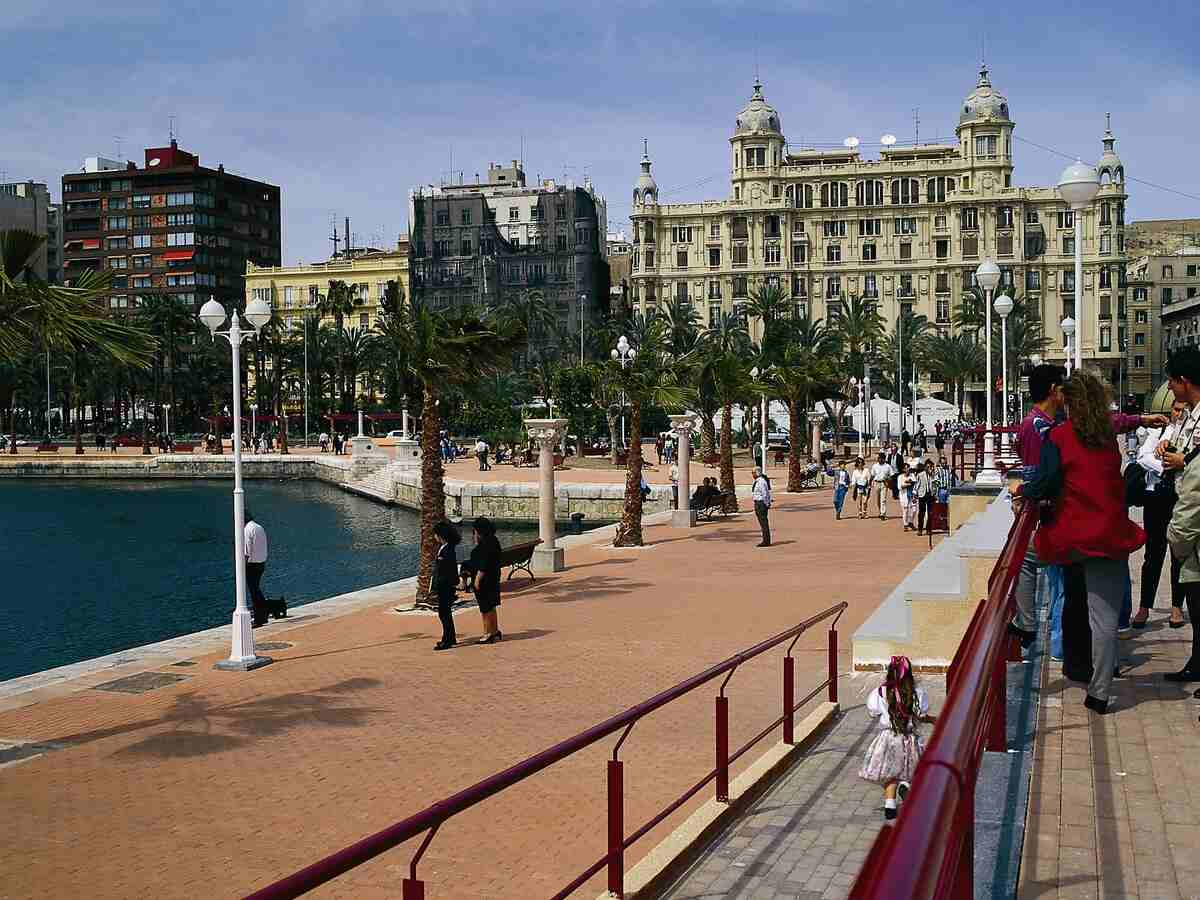
Spain unites with France and their regional competitors in an effort to grow the market of off-season, high-yielding travelers in Europe. The world of travel in Europe is witnessing a historic transformation. With the setting of the summer boom, a competitive but cooperative fight has been established for supremacy in tourism in Southern Europe and the Mediterranean region. From the two-month summer race to become a more complex year-round economic activity based on qualitative growth and off-season expansion of the high-yielding travelers market.
While Italy captured headlines by soaring to the top spot in September accommodation saturation, major European rivals—principally Spain, France, and Greece—are responding aggressively. By leveraging strategic international alliances, Artificial Intelligence, expanded long-haul flight connectivity, and targeted off-season marketing campaigns, these destinations are redefining how Europe attracts and retains global travelers in 2026.
Advertisement
Advertisement
The September Phenomenon: How Italy Seized the European Lead
To understand the strategic counter-moves by Spain, France, and Greece, one must first look at the late-summer momentum that forced their hand. In September, Italy achieved a remarkable milestone in European travel, outbalancing its long-standing Mediterranean competitors in Online Travel Agency (OTA) hotel saturation and occupancy rates.
Data highlighted by Italian Undersecretary to the Ministry of Tourism, Gianmarco Mazzi, revealed that Italy’s accommodation saturation reached between 51% and 62% during the late-summer-to-autumn transition. By comparison, Spain recorded saturation rates between 42% and 54%, while France registered 33% to 42%.
Advertisement
Advertisement
The Drivers Behind Italy’s Autumn Surge
Several pivotal operational and cultural factors fueled Italy’s rise to the top:
- The Evolution of Tourist Intent: A decade ago, cultural attractions ranked lower on the list of primary motivators for international visitors. Today, under Mazzi’s analysis, culture, art cities, and heritage sites stand as the single biggest draw for foreign travelers entering Italy.
- Competitive Value Pricing: Italy maintained an attractive average daily accommodation rate of approximately €153 per night, significantly undercutting rivals like Spain (€170 per night) and Greece (€195 per night), delivering high perceived value without sacrificing experience.
- Explosive Air Connectivity: Italian airports saw a 14% increase in direct international seat capacity, outpacing Spain (+8%), Greece (+7%), and France (+2%). Inbound search queries skyrocketed from high-demand feeder markets, including Poland (+76%), Germany (+66%), and Spain (+48%).
- Geographic Diversification: Tourism expanded well beyond coastal strips. Italy’s lakes and waterways (such as Lake Como, Lake Garda, and Lake Maggiore) hit a 54% saturation rate, while thermal spa regions and inland heartlands like Umbria (+9.7%) and Piedmont (+9.2%) saw sharp upticks. In the south, Calabria led regional growth with a 10.5% surge in arrivals, supported by Puglia and Sardinia.
- Climate Adaptation: Facing intense mid-summer heatwaves across the deep south, global tourists intentionally shifted their schedules into September or pivoted toward alpine havens in Trentino and South Tyrol, successfully smoothing out seasonal volume.
Faced with changing climate patterns and shifting traveler behaviors, Southern Europe’s heavyweights are no longer measuring success purely by headcount. Instead, Spain, France, and Greece are executing high-yield, off-peak strategies designed to maximize expenditure per visitor, disperse crowd density into lesser-known provinces, and capture lucrative year-round revenue streams.
Advertisement
Advertisement
Spain’s 2026 Playbook: Long-Haul Connectivity, AI Partnerships, and Cultural Sprawl
Spain continues to operate as an absolute titan of global travel, drawing over 58 million international visitors in the first half of the year alone and rapidly tracking toward the 100-million annual mark. However, Spain’s current push focuses on shifting from sheer volume to high-yield off-peak travelers.
1. Long-Haul Expansion into Asia and the Americas
Spain has aggressively targeted long-haul, high-spending markets to offset traditional seasonal dips:
Advertisement
Advertisement
- China & East Asia: Air capacity between major Chinese hubs and Spanish gateways (Madrid-Barajas and Barcelona-El Prat) surged by over 40%, supported by streamlined visa processing programs that issue approvals in under a week.
- Latin American & US Routes: Direct flights connecting Madrid to secondary and tertiary cities across North and South America have turned the capital into Europe’s premier bridgehead for high-spending transcontinental travelers.
2. The Bilateral Innovation Pact with Greece
In a pioneering move to future-proof Mediterranean tourism, Spain and Greece established a formal bilateral alliance. This partnership centers on:
- Artificial Intelligence Deployment: Jointly implementing AI-driven predictive modeling to monitor visitor density, optimize transport schedules, and prevent bottlenecks at heritage sites.
- Shared Digital Infrastructure: Standardizing visitor management systems and combining cross-border promotional efforts for long-haul tourists visiting Southern Europe.
- Heritage Investment: Co-investing in sustainable infrastructure around archaeological and historic destinations to allow year-round operation without ecological degradation.
3. Spreading Beyond the Coasts
To ease pressure on coastal hotspots like Barcelona and the Balearic Islands, Spain’s off-peak strategy heavily promotes regional inland travel:
- The Valencian Community (+9.5%) and Madrid (+11%) have seen explosive growth driven by gastronomy, cultural exhibitions, and business conventions (MICE sector) during autumn and winter.
- Multi-Destination Cruise Networks: Modernized cruise itineraries along Valencia, Cádiz, and Málaga encourage shore excursions that venture deep into surrounding rural countryside.
France’s Masterclass: Premium Yield, Off-Season Luxury, and Rural Redistribution
France firmly retains its position as the world’s most visited country, welcoming more than 102 million international arrivals. Rather than expanding raw numbers during peak July and August weeks, France’s strategy centers entirely on maximizing yield and expanding its off-peak footprint.
1. Capitalizing on High-Yield Visitors
France set a national record by generating over €77.5 billion in international tourism revenue, driven by a sharp rise in average spend per stay (averaging €760 per visitor). Premium accommodations, Michelin-starred culinary circuits, and luxury retail experiences have been tailored specifically to draw affluent global travelers outside the standard holiday months.
Advertisement
Advertisement
2. Capturing the Global Autumn Boom
By heavily marketing autumn foliage, wine harvest seasons, and cultural festivals, France registered substantial year-over-year off-peak growth across key overseas feeder markets:
- United States: +9%
- Mexico: +17%
- China: +14%
- Japan: +8%
3. The Rural Revolution
To distribute economic benefits directly to local communities while combating urban overcrowding:
- Non-coastal and rural accommodations—particularly boutique rentals and restored countryside châteaux—accounted for 64% of domestic choices.
- Regional rail connectivity through France’s high-speed TGV network has enabled seamless access to inland regions such as Burgundy, the Loire Valley, and Alsace during shoulder seasons.
Greece’s Year-Round Evolution: Qualitative Growth and Transatlantic Alliances
Greece has executed one of the most remarkable strategic pivots in the Mediterranean. Recognizing the environmental and infrastructural limits of peak-summer island travel, the Greek Ministry of Tourism shifted its focus to qualitative growth—prioritizing revenue per visitor and expanding into a true 12-month destination.
1. Surging Travel Receipts
Greek travel receipts hit an all-time record exceeding €23.6 billion. Crucially, national financial data demonstrates that revenue growth rate reached twice the speed of visitor volume growth, confirming the success of attracting higher-spending demographics.
2. Explosive Off-Season Growth
Incentivized by targeted winter and autumn promotional campaigns, early-year and off-season travel receipts in Greece leapt by more than 58% year-over-year.
- RevPAR (Revenue Per Available Room) across urban hotels in Athens and Thessaloniki surged during traditional off-months.
- Thematic Off-Season Travel: Promoting hiking trails, mountain villages in Epirus, mainland archaeological circuits (Delphi, Meteora), and city-break packages replaced the singular focus on sun-and-beach tourism.
3. Transatlantic Hub Partnerships
Direct flight connections between North America and Athens expanded significantly:
Advertisement
Advertisement
- New direct routes from major US aviation hubs, including Atlanta and Dallas-Fort Worth, alongside expanded service from New York and Chicago, drove high-spending American arrivals up by more than 30%.
Comparative Matrix: 2026 Strategic Benchmarks
To illustrate how these European competitors stack up across key performance indicators, the breakdown below highlights their distinct market positions and strategic priorities:
| Country | Primary Strategic Focus | Key Flight Growth Feeder Markets | Key Off-Peak Growth Indicators | Average Nightly Rate |
| Italy | Culture, inland lakes, value pricing, and regional diversification | Poland (+76%), Germany (+66%), Spain (+48%) | OTA saturation peaked at 51%–62%; Calabria arrivals up +10.5% | €153 |
| Spain | Long-haul expansion, AI digital management with Greece, regional spread | China (+40% air capacity), Latin America, US | Madrid arrivals up +11%; over 58M mid-year arrivals | €170 |
| France | Premium yield maximization, rural redistribution, off-season luxury | Mexico (+17%), China (+14%), US (+9%), Japan (+8%) | €77.5B record revenue; 64% of stays in rural inland heartlands | Premium Tier |
| Greece | Qualitative growth, transatlantic air alliances, 12-month season extension | United States (+30% arrivals via transatlantic hubs) | Off-peak receipts up +58%; total revenue €23.6B+ | €195 |
The 2026 European Tourism Paradigm Shift
The post-summer tourism dynamics across Italy, Spain, France, and Greece demonstrate that the traditional rules of European travel have permanently changed. High summer temperatures, rising environmental awareness, and a growing demand for authentic, uncrowded cultural experiences have pushed both travelers and governments toward a new model.
While Italy captured late-summer supremacy by providing an optimal mix of rich cultural heritage, strong air connectivity, and competitive pricing, its regional rivals are far from standing still. Spain is opening massive long-haul pipelines from Asia while pioneering digital and AI infrastructure. France is setting global standards in revenue generation per visitor and rural dispersion. Simultaneously, Greece is proving that a sun-and-sand destination can successfully transition into a year-round cultural heavyweight.
Spain follows France and its other rivals in utilizing high-yield, off-peak policies in order to enhance European tourism.
It is worth noting that these countries are not only competing with each other for a finite number of vacationers in July and August. By adopting high-yield, off-peak policies, Spain, France, Greece, and Italy have made Europe a premier travel destination for all year round.
Advertisement
