Angana Dutta Angana Dutta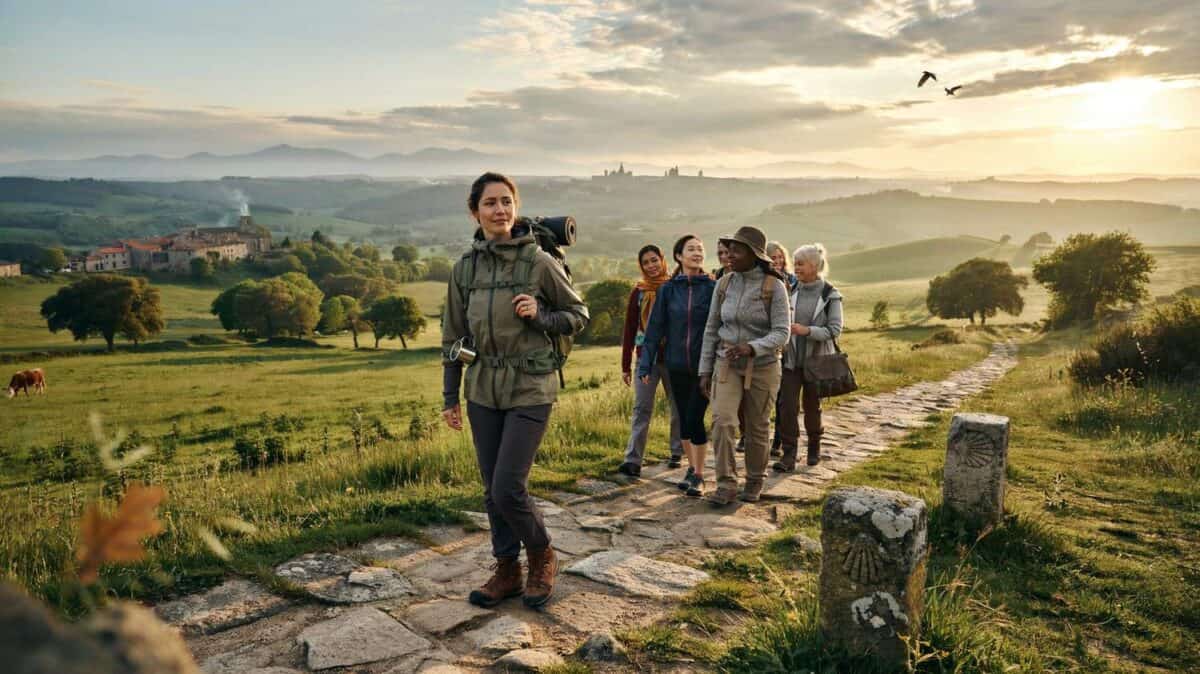
Image generated with Ai
Women-Led Pilgrimage Travel is paving the way to a new kind of global tourism. Spain and Portugal, among others, are establishing themselves as top locations for independent spiritual travelers. This is possible due to the current trend of government outreach and investment in the historic pathways of pilgrimage and the modernization of existing pilgrimage infrastructure. Women’s safety is of highest importance and is built into these modern pathways. This new trend in contemporary pilgrimage creates new, safe, exciting, and inspirational travel for curious enthusiasts. Women-centering pilgrimage travel and cross-border spiritual travel are new pathways to travel for the user and the local economy, while incorporating fabled pathways of historic pilgrimage. Examples of this new pilgrim travel include the Camino de Santiago and the Camino Portugués and the sacred pilgrimage routes in India and the Hajj and Umrah in Saudi Arabia.
Women-led pilgrimage travel is a growing travel segment. Women around the world are integrating their faith, culture, and history with their journeys of wellness and personal discovery. The growth of digital travel booking, increased transportation and safety, has led many women to choose independent pilgrimages over traditional, organized pilgrimages.
Religious tourism is a growing focus for many governments, making sacred destinations more accessible. The pilgrimage sites are becoming more year-round tourism destinations.
These pilgrimages are no longer limited to religious purposes. Many women are traveling for the opportunity to walk long distances, immerse themselves in different cultures and histories, and reflect on their personal wellness and spirituality.
Advertisement
Spain is one of the top pilgrimage destinations in the world with the internationally known Camino de Santiago.
The official Pilgrim Reception Office counts hundreds of thousands of peregrines arriving in Santiago de Compostela every year and women make up a large percentage. Pilgrims come from all over Europe, North America, Asia, and Latin America and take many different Routes on the Camino.
The popularity of the Camino is due to many travel trends. These include:
Spain has an excellent network of tourism services and beautiful historic towns and is home to many UNESCO sites. These continue to draw travelers seeking meaningful experiences, away from traditional tourism.
Advertisement
Advertisement
Portugal is one of the fastest developing pilgrimage gateway countries in Europe via the Camino Portugués.
Many thousands of international travelers start their pilgrimage in Portuguese cities before crossing into northern Spain. This pathway is made up of beautiful coastlines, medieval cities, and many modern amenities.
Portugal is advantageous because of:
Many travelers find Portugal to be a relaxed and not overrun option with access to the Santiago pilgrimage.
India has one of the largest domestic pilgrimage markets in the world.
The recent trends in booking have shown strong demand in:
Private booking platforms found that younger travelers and women have been more likely to book pilgrimages by themselves.
The Indian government is simultaneously building more infrastructure to aid religious tourism via the PRASHAD (Pilgrimage Rejuvenation and Spiritual, Heritage Augmentation Drive) initiative. This program focuses on visitor amenities, transportation improvements, and developing pilgrimage sites.
The Amarnath and Char Dham pilgrimages happen annually with a government coordinated system of safety, health, and visitor management.
Saudi Arabia has made significant improvements that are changing international pilgrimage travel.
Saudi Arabia has relaxed some of its policies and now allows eligible women to perform Hajj and Umrah without a male guardian under officially sanctioned programs. This policy has created new travel opportunities for women from a number of countries.
There are also new opportunities resulting from Saudi Arabia’s Vision 2030 tourism strategy, which includes:
The aims of this strategy are to increase pilgrimage travel and make Saudi Arabia one of the largest religious tourist destinations in the world.
France is an integral part of European pilgrimage tourism, especially the historic Camino Francés, one of the main routes to Santiago de Compostela.
The Pyrenees mark the border through which many pilgrims travel to Spain. French pilgrims begin their journeys in France.
France is made prosperous by:
Because of its location, France is able to provide much of Europe’s pilgrimage tourism.
Japanese Pilgrimage routes, like the:
Provide unique, historic yet modern, walking routes. Incorporating Buddhist and Shinto mountain traditions with ancient and modern cultures, Japan provides an interesting pilgrimage.
Japan is able to provide peace to a traveler looking for a spiritual and nature infused experience, because of its advanced modern systems of transportation, coupled with a growing modernly focused tourism.
Israel continues to host religious travelers wishing to see the holy sites of Christianity, Judaism, and Islam.
Places such as:
are still major locations for worldwide pilgrimage travel.
Although there are challenges in the region, the local religious background has sustained and even attracted more international tourists, a majority of whom are looking to perform religious activities, engage in cultural tourism, and visit historical sites.
| Country | Key Pilgrimage Destination | Travel Driver | Official Tourism Focus |
|---|---|---|---|
| Spain | Camino de Santiago | Walking pilgrimage | Heritage tourism |
| Portugal | Camino Portugués | Cross-border pilgrimage | Cultural tourism |
| India | Amarnath, Char Dham, Varanasi | Domestic spiritual tourism | PRASHAD infrastructure |
| Saudi Arabia | Makkah, Madinah | Hajj and Umrah reforms | Vision 2030 tourism |
| France | Camino Francés | Historic pilgrimage routes | Religious heritage |
| Japan | Kumano Kodo, Shikoku | Spiritual walking | Cultural tourism |
| Israel | Jerusalem, Nazareth | Faith tourism | Religious heritage |
Many governments have begun to heavily support pilgrimage tourism by investing in it long-term.
Some of these policies include:
Pilgrimage travel will soon be gaining a whole new customer base, and it will be all thanks to some additional advancements in safety and organization.
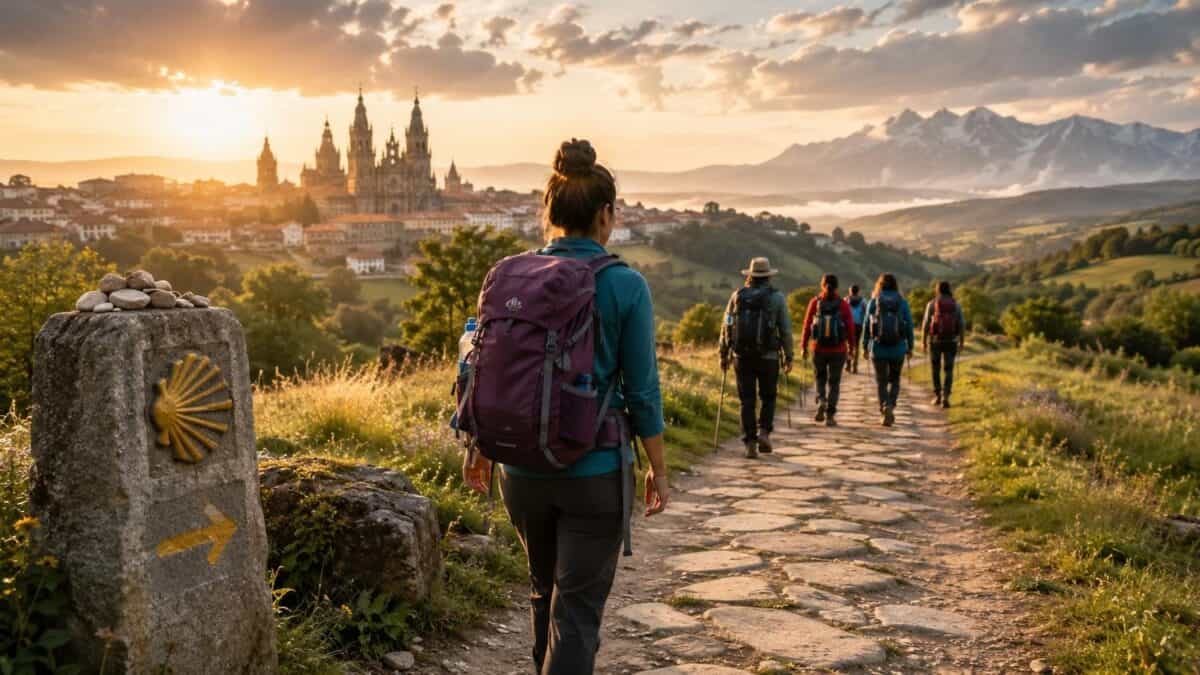
Image generated with Ai
Consumer interests are typically trending towards a mix of faith, culture, history, and nature based travel. Women’s pilgrimage travel combines all these interests and encourages people to travel in a different, more meaningful way as opposed to the previously popular citybreaks.
Furthermore, the combination of infrastructure improvements, digital systems, and modern transportation have made once out of reach sacred destinations more accessible. This allowed new customers to open up pilgrimage travel and monetary systems to new local economies and, consequently, sacred destination travel.
The process of booking a pilgrimage trip has gotten easier, however, researching before a trip is still a necessity. Things like laws, the local climate, and other destination specifics are still very important to research.
Before traveling:
| Country | Major Pilgrimage Destinations | Primary Travel Access | Government Tourism Focus | Major International Gateways |
|---|---|---|---|---|
| Spain | Camino de Santiago | Air, Rail, Walking Routes | Heritage & Pilgrimage Tourism | Madrid, Barcelona, Santiago de Compostela |
| Portugal | Camino Portugués | Air, Rail, Road | Cultural & Walking Tourism | Lisbon, Porto |
| India | Amarnath, Char Dham, Varanasi, Haridwar | Air, Rail, Road | PRASHAD Scheme & Spiritual Tourism | Delhi, Srinagar, Dehradun, Varanasi |
| Saudi Arabia | Makkah, Madinah | International Air | Hajj, Umrah & Vision 2030 | Jeddah, Madinah, Riyadh |
| France | Camino Francés | Rail, Road, Air | Religious Heritage Tourism | Paris, Toulouse |
| Japan | Kumano Kodo, Shikoku Pilgrimage | Air, Rail | Cultural Heritage Tourism | Tokyo, Osaka |
| Israel | Jerusalem, Nazareth | Air, Road | Religious Tourism | Tel Aviv |
There is an opportunity for many destinations that have a history of catering to seasonal religious visitors, as the number of women-led pilgrimage travelers rapidly increases.
Travelers that visit women-led pilgrimage sites tend to spend their money in places that are not pilgrimage sites. This is beneficial for local restaurants, guides, and transport providers.
Today, travelers blend:
Because of these trends, the tourism industry can generate revenue outside peak pilgrimage season.
Increasingly, governments see pilgrimage tourism as an avenue for economic growth.
There is a positive economic impact on the region with improved pilgrimage tourism services and an increased length of stay and spending by visitors. This also creates new jobs for the local community in lodging, transportation, food service, and other tourism-related businesses.
With the expansion of digital bookings, enhanced transport, and increased government spending, spiritual tourism is becoming more accessible to women and younger people who like to travel independently.
For the steadily increasing number of year round travelers, pilgrimage travel is becoming a significant, high-value market for airlines, hotels, rail operators, and tours.
Women-led pilgrimage travel is when women go on religious journeys by themselves or in women-only groups. This includes traditional pilgrimages, famous walking routes, and trips to religious sites.
Countries that have strong pilgrimage systems are Spain, Portugal, India, Saudi Arabia, France, Japan, and Israel. They have encouraged both religious destinations and pilgrimage networks through government supported tourism.
Pilgrimage tourism is on the rise due to easier access, greater government interest and modern digital travel planning. This growing segment of tourism encourages travelers to combine their modern-day, travel-related pursuits with their spirituality, cultural heritage, history, personal wellness and authenticity.
The author identifies women-led pilgrimage travel as a prominent trend within global tourism and a sign of transformation in the rest of the world. European, Asian and Middle-Eastern governments are investing in the protection of cultural heritage and the creation of visitor infrastructure and travel safety measures to support the independent travel of modern-day pilgrims. This trend toward independent travel is evident around the world and shows that modern travelers want to combine their journeys with faith, culture, history and personal experience.
Women-led pilgrimage travel makes a positive impact on travel to some of the worlds most meaningful spiritual sites. There are more ways than ever to travel, including the Camino de Santiago in Spain, the Camino Portugués in Portugal, the sacred pilgrimage circuits of India, the Hajj and Umrah in Saudi Arabia, the historic walking routes of Japan and the religious heritage sites of Israel. Continued government investment in infrastructure and the provision of visitor services to pilgrimage sites will sustain contemporary travel and support the preservation of important spiritual traditions.
Always visit the government’s travel advisory . Make sure to see the requirements for entry and registries of your specific destination and the local tourism guidelines.
Advertisement
Tags: Faith Tourism, pilgrimage travel, Portugal, spain, Tourism news
Advertisement
Advertisement













Friday, September 4, 2026

Friday, September 4, 2026

Friday, September 4, 2026

Thursday, September 3, 2026

Wednesday, September 2, 2026

Friday, September 4, 2026

Friday, September 4, 2026