
Kerten Hospitality Targets India Boom with One Thousand Keys as Lifestyle Hotels Redefine Travel Market Growth

Published
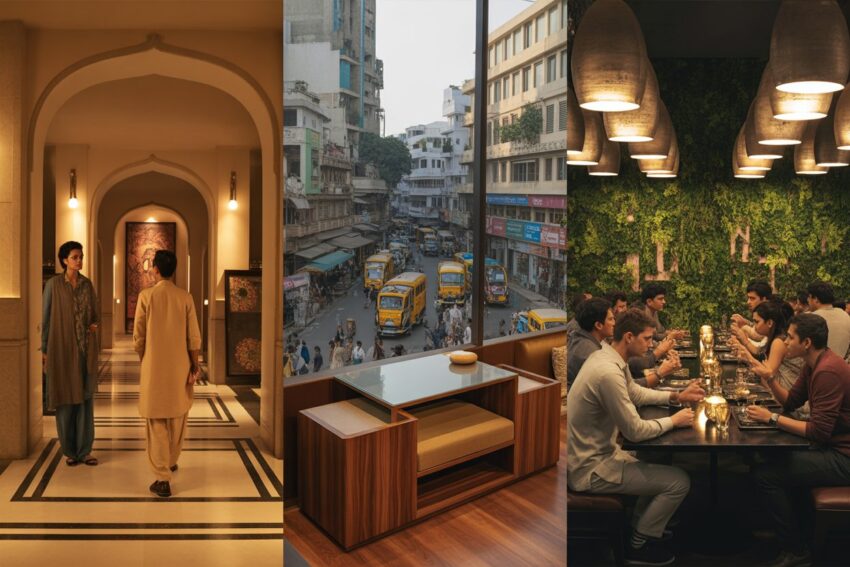 Image generated with Ai
India’s hospitality sector is entering a decisive growth phase. Global lifestyle hospitality group Kerten Hospitality has now made a calculated entry into this fast-expanding market. The Ireland-headquartered company is positioning India as a core pillar of its next expansion cycle. The strategy is precise. The group aims to launch 1,000 keys in the first phase. It will deploy three distinct lifestyle brands tailored to different segments.
This move is not incidental. It follows a strong financial performance in 2025. Kerten Hospitality recorded a 55% rise in revenues. Gross operating profit increased by 69%. Management fees grew by 44%. These figures signal sustained investor confidence and operational strength.
India’s projected hospitality market size of USD 55.67 billion by 2031 adds urgency. Demand is shifting. Travellers now prefer experience-driven stays. They seek authenticity, culture, and community. Kerten’s “bespoke-at-scale” model directly aligns with this behavioural shift.
The company has already built a diversified portfolio across Europe, the Middle East, and Africa. With 60 active projects and 12 proprietary brands, its India entry represents a high-impact expansion decision. The group is now setting up a dedicated India office. It is actively engaging with asset owners across key destinations.
Advertisement
Advertisement
This is not just a market entry. It is a structural bet on India’s evolving travel economy.
Why Is India a Strategic Growth Market for Kerten Hospitality?
India offers scale. It also offers demographic momentum. The country’s travel ecosystem is expanding rapidly. Domestic tourism is rising. International arrivals are recovering. More importantly, the traveller profile is changing.
Advertisement
Advertisement
Young travellers dominate demand. They are digitally native. They prioritise experiences over standardised hotel stays. Cultural immersion is no longer optional. It is expected.
Kerten Hospitality’s model fits this transition. Its community-first philosophy integrates local identity into hospitality design. Unlike traditional chains, it avoids uniformity. Instead, it builds context-driven destinations.
Advertisement
Advertisement
India also provides strong investment signals. Hospitality assets are attracting institutional and private capital. Developers are actively seeking differentiated concepts. Kerten’s flexible model allows local adaptation while maintaining global standards.
This combination of demand, capital, and cultural diversity makes India a high-yield, high-potential market for lifestyle hospitality expansion.
What Is Kerten Hospitality’s India Expansion Strategy?
The expansion strategy is structured. It focuses on scalability and localisation. The group aims to launch 1,000 keys in phase one. This will be distributed across multiple cities and formats.
Three brands will anchor the rollout:
Advertisement
Advertisement
- The House Hotel – a luxury, culture-driven offering
- Cloud7 Hotels – a design-led lifestyle concept
- HOSME – an affordable social hospitality model
Each brand targets a specific segment. This segmentation reduces risk. It also maximises market penetration.
Kerten is not pursuing an ownership-heavy model. Instead, it focuses on management and partnerships. Asset owners retain creative input. The group provides operational expertise, branding, and distribution.
A dedicated India office will coordinate expansion. It will manage local partnerships. It will also ensure faster execution.
This strategy balances global consistency with local relevance. It is designed for rapid but controlled growth.
How Do Kerten’s Brands Address Different Traveller Segments?
The three-brand approach is deliberate. It captures the full spectrum of India’s hospitality demand.
The House Hotel targets premium travellers. It focuses on bespoke luxury. Each property reflects local culture and design. It is not standardised. It is curated.
Advertisement
Advertisement
Cloud7 Hotels addresses the mid-to-upscale segment. It blends design with functionality. The concept appeals to urban travellers. It is particularly suited to metro cities and business hubs.
HOSME targets budget-conscious travellers. However, it avoids the limitations of traditional budget hotels. It introduces social interaction spaces. It combines affordability with experience.
This multi-brand strategy creates flexibility. It allows Kerten to operate across cities, tiers, and traveller types. It also strengthens its appeal to developers seeking diversified offerings.
What Does ‘Bespoke-at-Scale’ Mean in Practice?
The concept of “bespoke-at-scale” defines Kerten Hospitality’s core philosophy. It aims to merge individuality with operational efficiency.
Traditional hotel chains prioritise uniformity. Rooms look similar across cities. Experiences are predictable. Kerten rejects this model.
Instead, it builds properties that reflect local culture. Design, food, and programming are location-specific. Yet, backend operations remain standardised. This ensures consistency in service quality.
Advertisement
Advertisement
This approach creates differentiation. Travellers experience authenticity. Owners benefit from proven systems.
The model has already delivered results. It has worked across diverse geographies. From Europe to the Middle East, Kerten has demonstrated scalability without losing identity.
In India, this approach could redefine lifestyle hospitality. It aligns with the country’s cultural diversity and regional uniqueness.
How Does the Owner-First Model Reshape Hotel Development?
Kerten Hospitality places asset owners at the centre of its strategy. This is a critical differentiator.
Traditional hotel operators often impose rigid brand standards. This limits creativity. It also increases costs.
Kerten adopts a flexible framework. Owners can customise design and positioning. They are not constrained by strict manuals. However, they still benefit from global expertise.
Advertisement
Advertisement
The group provides operational systems, recruitment support, and marketing infrastructure. It also ensures brand alignment.
This model reduces entry barriers. It attracts a wider pool of developers. It also accelerates project execution.
In India, where real estate dynamics vary widely, this flexibility is crucial. It allows projects to adapt to local conditions while maintaining international quality benchmarks.
What Role Did Kerten’s Global Performance Play in This Move?
The India entry is backed by strong financial momentum. Kerten Hospitality’s 2025 performance was significant.
- Revenue increased by 55%
- Gross operating profit rose by 69%
- Management fees grew by 44%
These metrics indicate operational efficiency. They also reflect strong demand for its lifestyle model.
In January 2026 alone, the group signed 1,000 new keys globally. This rapid expansion demonstrates investor confidence.
Advertisement
Advertisement
The company now has 60 projects in its pipeline. These span Europe, the Middle East, and Africa.
India is the next logical step. It offers scale and long-term growth potential. The timing aligns with both market demand and organisational capacity.
How Will India’s Evolving Traveller Behaviour Shape This Expansion?
Traveller behaviour in India is undergoing a structural shift. Experience is replacing convenience as the primary driver.
Travellers now seek:
- Cultural immersion
- Local authenticity
- Community interaction
- Design-led environments
Standard hotel rooms are losing appeal. They are seen as interchangeable.
Kerten’s model directly addresses this shift. It integrates local culture into every aspect of the stay. It creates social spaces. It encourages interaction.
Advertisement
Advertisement
This aligns with both domestic and international travellers. It also resonates with India’s large diaspora.
As demand continues to evolve, lifestyle hospitality will gain prominence. Kerten is positioning itself at the centre of this transformation.
Kerten Hospitality’s entry into India is a calculated expansion move grounded in data, demand, and design philosophy. The company is not merely entering a new market. It is aligning itself with a structural shift in global travel behaviour. India’s rapidly growing hospitality sector, projected to reach USD 55.67 billion by 2031, provides a fertile landscape for experience-driven concepts.
The group’s strategy combines flexibility with scalability. Its three-brand approach ensures market coverage across segments. Its owner-first model reduces friction for developers. Most importantly, its “bespoke-at-scale” philosophy matches the expectations of modern travellers.
The cause is clear. Demand for authentic experiences is rising. The answer lies in adaptable, culturally rooted hospitality models. The reason behind Kerten’s move is strategic timing. It is entering India when lifestyle demand is accelerating.
This expansion has the potential to reshape how hospitality is conceptualised and delivered in one of the world’s most dynamic travel markets.
Advertisement
