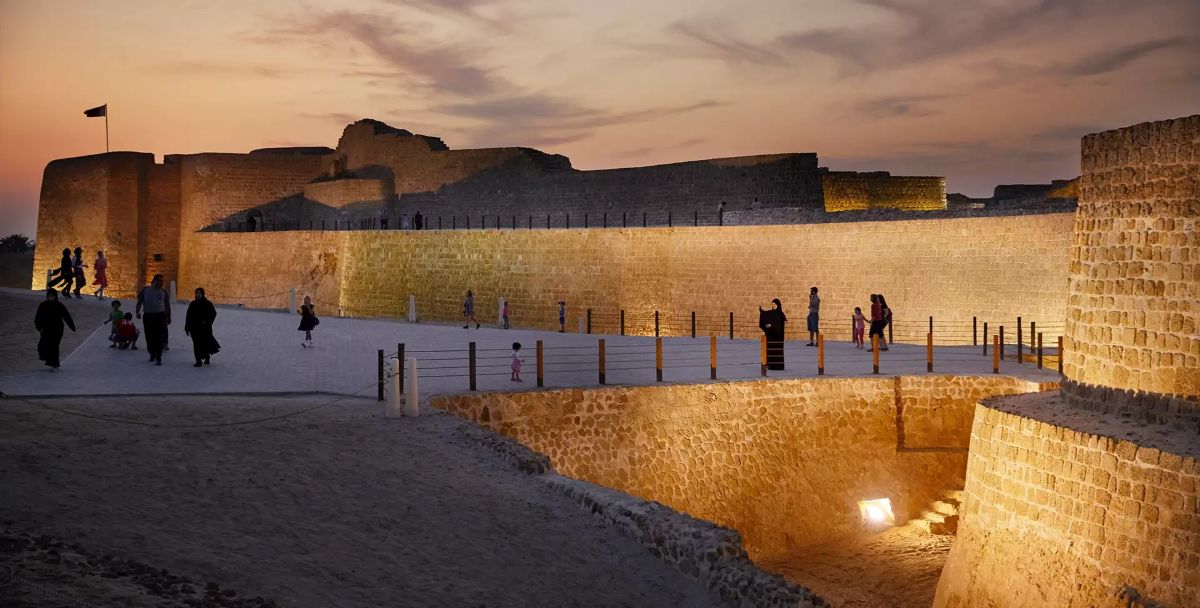
Bahrain is approaching a pivotal moment in its tourism development, with 14.9 million visitors recorded in 2024 and inbound tourism revenue reaching BD1.9 billion. The Kingdom’s exceptional Saudi market remains central, accounting for roughly 12.8 million visits, according to the latest available breakdown. Yet Bahrain is now preparing its 2027–2031 National Tourism Strategy, creating an opportunity to broaden its visitor base.
The next opportunity lies in exporting Bahrain’s successful short-break model to India, Britain, China, Germany and other markets. Its compact geography, expanding air connectivity, visa access and diverse tourism products could support that shift. The bigger question is whether Bahrain can turn a predominantly regional weekend habit into a globally recognised 48-to-72-hour Gulf escape.
Advertisement
Bahrain’s tourism story begins with an unusual geographical advantage. The King Fahd Causeway creates a direct land connection with Saudi Arabia, making Bahrain exceptionally accessible to millions of potential visitors. For travellers from the Eastern Province, the journey can feel closer to a cross-border leisure outing than an international holiday.
That convenience has helped create a powerful repeat-visit culture. Saudi residents can travel for dining, shopping, entertainment, family breaks and events without the planning burden associated with longer international journeys. The model also supports frequent, short visits rather than relying only on annual holidays.
Advertisement
Advertisement
The scale is now substantial. Bahrain recorded 14.9 million visitors in 2024, including 8.3 million day visitors and 6.6 million overnight visitors. Tourist nights reached 19.2 million, while average daily expenditure stood at BD69.1. Total inbound tourism revenue reached BD1.9 billion.Bahrain Tourism Indicator, 2024 Recorded figure Total visitors 14.9 million Day visitors 8.3 million Overnight visitors 6.6 million Tourist nights 19.2 million Average stay 2.9 nights Average daily expenditure BD69.1 Inbound tourism revenue BD1.9 billion Aircraft movements 101,534
The figures reveal something important for the travel industry. Bahrain already has a short-stay tourism economy at meaningful scale. Its next task is to diversify where those visitors come from and increase the value generated by each trip.
The timing makes this story particularly significant. Bahrain’s existing National Tourism Strategy covers 2022–2026, with sports, culture, family, maritime tourism and events among its principal focus areas. The government is now developing a successor strategy covering 2027–2031.
The new strategy is intended to examine changing traveller behaviour, identify gaps and opportunities, adopt international best practices and establish measurable sector targets. That means Bahrain is effectively reassessing how it wants to compete as Gulf tourism becomes increasingly crowded.
The previous strategy also identified priority source markets and several tourism segments. These include the GCC, United Kingdom, China, India and Germany, alongside marine, business, sports, recreational, medical, cultural and media tourism.
This creates a more nuanced objective than simply reducing Saudi dependence. Bahrain can retain its strongest regional market while developing additional demand streams that behave differently.Market Potential Bahrain proposition Strategic advantage Saudi Arabia Frequent weekend breaks Road accessibility India Family, luxury, weddings, business leisure Strong Gulf connectivity UK Winter sun, heritage, events Longer-haul leisure demand China Culture, shopping, luxury Large international market Germany Winter escapes, culture, wellness European diversification Wider GCC Events, dining and leisure Short-haul repeat visits
The most interesting proposition may not be to position Bahrain as another week-long Gulf holiday.
Instead, Bahrain could develop a distinctive 72-hour destination proposition.
That would exploit one of its biggest physical advantages: compactness. Visitors can combine heritage, museums, dining, shopping, waterfront experiences, entertainment and beaches without spending large portions of their holiday travelling between distant attractions.
This is increasingly relevant as travellers favour shorter, more frequent breaks. A three-night itinerary can also fit neatly around business trips, sporting events, concerts and regional travel.
Bahrain already promotes a broad portfolio spanning UNESCO-listed heritage, traditional souqs, beaches, dining, shopping and contemporary attractions.
For international visitors, however, the proposition needs to be packaged differently. A traveller from Mumbai or London must see a reason to select Bahrain as the main destination, rather than merely an add-on to Dubai, Doha, Abu Dhabi or a wider Gulf itinerary.
India stands out because the travel proposition is already supported by air connectivity and established Gulf travel patterns.
Bahrain International Airport lists Mumbai and Delhi among its conveniently connected cities, with approximate flying times of around three hours. Current airport schedules also show services involving Mumbai, Delhi, Kochi, Chennai, Hyderabad and Bengaluru.
That creates several possible demand pools. Families could seek short leisure breaks, while affluent travellers could combine luxury hotels with dining and shopping. Business travellers could add leisure nights, while wedding and medical travel could produce higher-value visits.
The strategic question is therefore not whether Indians can reach Bahrain. They clearly can. The question is whether Bahrain can build a sufficiently differentiated proposition to win consideration against larger Gulf destinations.
The United Kingdom and European markets could give Bahrain something the Saudi market does not provide at the same scale: greater geographical diversification.
British and German visitors are unlikely to drive the same spontaneous road-trip pattern. Instead, Bahrain would need to sell a compelling winter escape, cultural break, sporting trip or luxury long weekend.
That difference matters because international air travellers generally require stronger pre-trip motivation. Events can provide that trigger. Heritage can provide the narrative. Hotels, restaurants and wellness facilities can provide the commercial depth.
Bahrain therefore does not need to replicate its Saudi proposition overseas. It needs to translate the convenience of the weekend model into a reason to fly.
China represents another distinct opportunity because its potential scale changes the economics of destination marketing.
The Chinese visitor is not simply a substitute for a Saudi weekend traveller. Bahrain would need to compete through culture, heritage, luxury, shopping, food and carefully designed Gulf itineraries.
The destination could also benefit from its manageable size. For a traveller combining several Gulf countries, Bahrain can potentially function as a compact cultural stop rather than requiring an extended stay.
That makes Bahrain’s diversification strategy less about chasing one replacement market. Instead, it can construct a portfolio of source markets with different travel motivations and spending patterns.
Bahrain’s international expansion will ultimately depend on aviation.
The official tourism platform says Bahrain has direct flights to more than 70 destinations worldwide, while Bahrain International Airport serves more than 35 commercial and cargo airlines.
The airport’s connectivity already stretches well beyond the immediate Gulf. Its published network includes major markets across Europe, Asia, Africa and the Middle East. Current airport listings show airlines including British Airways, Emirates, Etihad, Turkish Airlines, Gulf Air, IndiGo, Air India Express and others.
The opportunity is therefore not merely to add destinations. Bahrain must determine which routes can generate incremental leisure demand, rather than simply serving existing business or diaspora traffic.Connectivity Factor Why It Matters For Tourism Direct international flights Reduces friction for short breaks Indian city connectivity Supports family and leisure demand European access Enables winter-sun travel Gulf network Supports multi-country itineraries Modern airport infrastructure Strengthens first and last impressions Airline diversity Reduces dependence on one carrier
Entry policy could become another important differentiator.
Bahrain’s current official guidance says citizens of GCC countries do not require visas, while visitors from almost 70 countries may qualify for visas on arrival. An eVisa is available to eligible travellers from more than 200 countries.
That creates a relatively broad international access framework. However, travellers should always check eligibility before booking because visa requirements vary by nationality and can change.
For tourism planners, the lesson is straightforward. Connectivity brings the traveller close; simple entry procedures help convert that connectivity into bookings.
The headline figure of 14.9 million visitors is impressive, but it needs careful interpretation.
More than half of the 2024 visitor total comprised day visitors. Those travellers can generate significant spending across restaurants, retail, entertainment and transport. However, overnight visitors generally create additional accommodation expenditure and more tourist-night activity.
The 2024 figures show 19.2 million tourist nights against 14.9 million visitors. Average stay stood at 2.9 nights, while daily spending reached BD69.1.
That suggests an important opportunity for Bahrain’s next strategy: raising the economic yield of tourism without pursuing visitor volume at any cost.Tourism Lever Current Signal Future Opportunity Visitor volume 14.9m in 2024 Diversify source markets Overnight demand 6.6m visitors Encourage longer stays Average stay 2.9 nights Build three-night packages Daily spending BD69.1 Develop premium experiences Tourist nights 19.2m Increase hotel and resort utilisation Revenue BD1.9bn Attract higher-value segments
Bahrain has another advantage: it does not need to rely exclusively on sightseeing.
Its strategic framework covers marine, business, sports, recreational, medical, cultural and media/cinematography tourism.
That portfolio can support different international audiences throughout the year. Formula 1 and other events can create fixed travel dates, while heritage can support year-round cultural trips. Wellness can appeal to affluent short-break travellers, while business tourism can generate leisure extensions.
Medical tourism is particularly interesting because it can lengthen the commercial value of a visit. Likewise, maritime tourism can help Bahrain connect leisure travel with cruise and waterfront development.
This diversification also reduces the risk of relying on a single seasonal product.
Saudi Arabia itself offers an instructive comparison.
The Kingdom recorded around 30 million international tourists in 2024, while total domestic and inbound tourism reached about 116 million. International tourism spending reached SAR168.5 billion, according to Saudi government figures.
Saudi Arabia is therefore becoming a major destination in its own right. That creates both competition and opportunity for Bahrain.
Bahrain can no longer assume that Saudi residents will automatically cross the causeway for every leisure occasion. The island must continually refresh its proposition through events, dining, shopping, culture, entertainment and new experiences.
At the same time, the growth of Saudi tourism can create a complementary multi-destination market. Travellers already visiting the Gulf could potentially combine Saudi Arabia and Bahrain within one itinerary.
For travellers, the diversification push could produce a more sophisticated Bahrain.
Visitors may see more internationally targeted itineraries, new events and greater investment in experiences rather than simply additional accommodation. The strongest proposition could be a carefully designed three-night break combining heritage, food, waterfront leisure and one major event.
International visitors should also pay attention to Bahrain’s event calendar. Sporting events, cultural programmes and seasonal festivals can change the value proposition significantly from one weekend to another.
The official tourism platform currently promotes attractions, itineraries, beaches, shopping, dining and an active events calendar, making it a useful starting point for trip planning.
Bahrain does not need to outbuild every competing Gulf destination.
Its more defensible advantage may be its ability to deliver high-density experiences within a compact geography. That is particularly valuable for travellers with limited holiday time.
The 2027–2031 strategy provides an opportunity to turn that characteristic into a formal tourism proposition. Rather than measuring success only through arrival numbers, Bahrain could place greater emphasis on source-market diversity, overnight stays, visitor expenditure, repeat visitation and experience quality.
The evidence already shows a substantial tourism economy. The next phase is about making that economy broader, deeper and less geographically concentrated.
Bahrain’s established Saudi visitor base remains an extraordinary asset rather than a weakness. The 2024 figures demonstrate that short-stay tourism can generate substantial visitor volume, spending and economic activity, while the King Fahd Causeway provides an advantage few destinations can replicate.
Yet the next chapter could look markedly different. The forthcoming 2027–2031 tourism strategy gives Bahrain a chance to transform a proven regional model into an international one. If India, Britain, China, Germany and other markets begin adopting the same three-night travel habit, Bahrain could evolve from a predominantly Gulf weekend destination into a compact global short-break proposition.
For travellers, that could mean a destination designed not for one grand holiday, but for repeated, richly packed escapes.
| Item | Current Information |
|---|---|
| 2024 visitors | 14.9 million |
| Overnight visitors | 6.6 million |
| Day visitors | 8.3 million |
| Average stay | 2.9 nights |
| Tourist nights | 19.2 million |
| Average daily spend | BD69.1 |
| Tourism revenue | BD1.9 billion |
| Visa on arrival | Eligible nationals from almost 70 countries |
| eVisa | Available to eligible nationals from 200+ countries |
| Air connectivity | Direct flights to 70+ destinations |
| New strategy | National Tourism Strategy 2027–2031 |
| Priority markets | GCC, UK, China, India, Germany |
Advertisement
Advertisement
Advertisement












Sunday, September 6, 2026

Sunday, September 6, 2026

Sunday, September 6, 2026
Saturday, September 5, 2026
Saturday, September 5, 2026
Sunday, September 6, 2026

Sunday, September 6, 2026