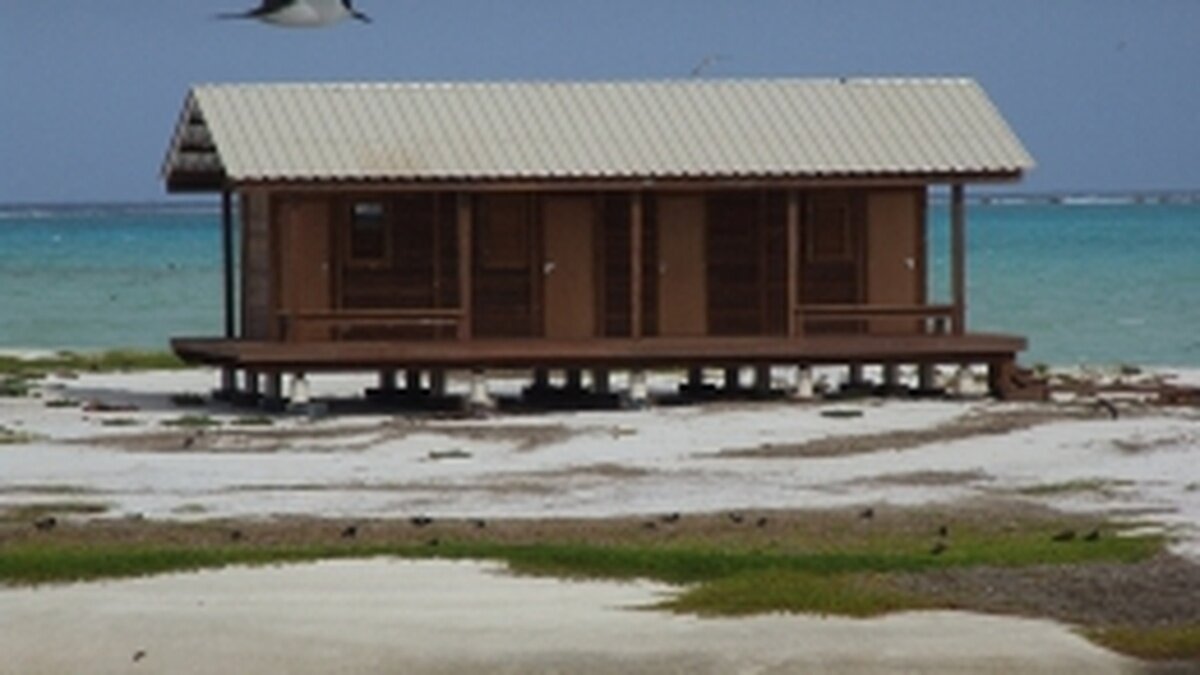
Brazil’s latest Atol das Rocas vessel retender exposes a travel reality easily missed in destination coverage: ordinary tourists cannot visit this UNESCO-listed biological reserve. Authorised teams reach it exclusively by sea from Natal on missions averaging four days, while its paired World Heritage component, Fernando de Noronha, operates as a controlled tourism destination linked by regular flights from Recife. For travellers and travel sellers, these two celebrated Atlantic environments therefore represent fundamentally different products.
Brazil’s Instituto Chico Mendes de Conservação da Biodiversidade, or ICMBio, republished its ocean-vessel procurement for the Atol das Rocas Biological Reserve on 31 July 2026 after the earlier Electronic Tender 90002/2026 was declared unsuccessful.
The new procedure, Electronic Tender 03/2026, is for the continuous charter of an ocean-going vessel. It is not a government purchase of a boat, and more importantly for travel readers, it is not a transport concession designed to bring tourists to the atoll. Its purpose is to sustain scientific work, environmental monitoring, enforcement, biodiversity protection, logistics and emergency response.
As of 6 September, ICMBio’s official GR-2 procurement index, last updated on 4 September 2026, continues to record both the original June procurement and its July republication. The July entry explicitly identifies the new procedure as a reissue following the failure of the first competition.
Advertisement
That procurement trail supplies the fresh 2026 news peg. The more significant travel story lies inside the technical documents: they reveal just how different reaching Atol das Rocas is from travelling to an ordinary Brazilian island destination.
According to the ICMBio 2026 Preliminary Technical Study, the reserve lies approximately 144 nautical miles from Natal, with access exclusively by sea. The same study records the distance as approximately 267 kilometres from Natal in its broader regional planning section. ICMBio also states that the reserve has neither its own vessel nor a permanent vessel crew.
| Access and operating factor | Official 2026 requirement | Travel significance |
|---|---|---|
| Mainland departure | Natal, Rio Grande do Norte | Natal is the defined operational gateway |
| Distance | About 144 nautical miles; ICMBio also records about 267 km | The reserve is far offshore |
| Access mode | Exclusively maritime | There is no tourist air-transfer model |
| Typical expedition cycle | About four days return | This is an offshore mission, not a standard excursion |
| Team rotations | Approximately every 20 to 25 days | Transport is scheduled around conservation operations |
| Vessel size | Minimum 11 metres, approximately 42 feet | Ocean-capable craft is required |
| Engine | Minimum 100 HP | Reflects offshore operating conditions |
| Navigation range | Minimum 300 nautical miles | Vessel must operate well beyond the direct outward distance |
| Payload | Minimum 1,500 kg | Supplies, equipment, potable water and personnel must travel together |
| Personnel | At least six researchers in addition to crew | Capacity is structured for authorised teams |
| Landing support | Inflatable boat with 15–25 HP motor | Final transfer is made using smaller craft |
| Communications | GPS, VHF, HF-SSB, EPIRB, satellite telephone and tracking | Independent offshore communications are considered essential |
| Emergency readiness | Vessel availability within four hours in defined emergencies | Medical and operational contingency is built into the contract |
The specifications are contained in ICMBio’s current Term of Reference and Preliminary Technical Study. ICMBio further states that immediate medical assistance is not available at the reserve, which explains requirements for first-aid equipment, satellite communications and rapid emergency mobilisation.
The vessel retender should therefore never be interpreted as Brazil preparing Atol das Rocas for visitor arrivals.
Advertisement
Advertisement
Brazilian federal law provides the clearest answer. Under Article 10 of Law 9,985 of 18 July 2000, a Biological Reserve is an Integral Protection conservation category. Public visitation is prohibited except for access with an educational purpose under the applicable rules. Scientific research also requires prior authorisation from the administering authority.
UNESCO independently reinforces that distinction. Atol das Rocas forms part of the Brazilian Atlantic Islands: Fernando de Noronha and Atol das Rocas Reserves World Heritage property, inscribed in 2001. UNESCO describes the Atol das Rocas Biological Reserve as closed to public access and managed for species protection and research. It also identifies the illegal presence of tourist boats as a threat to the site’s integrity.
For travel businesses, that changes the language required around the destination. Atol das Rocas may be globally recognised, visually exceptional and part of a UNESCO World Heritage property, but UNESCO status does not create a right of tourist access.
There is no ordinary leisure itinerary, authorised day tour, public ferry or bookable island excursion created by the 2026 vessel contract.
The most unusual travel dimension becomes clearer when Atol das Rocas is compared with Fernando de Noronha.
UNESCO manages the international designation as one serial World Heritage property containing two separate protected components. Their conservation relationship is close, yet their visitor models could scarcely be more different.
Natal is directly tied to the Atol das Rocas operation. ICMBio places the reserve’s administrative headquarters in Natal, and the 2026 Term of Reference specifies that expeditions begin in the city and operate from the Port of Natal before returning to the same point after the offshore mission.
Recife, by contrast, is a recognised tourism gateway to Fernando de Noronha. According to the official Fernando de Noronha administration, travellers first reach Recife, from which regular flights operate to the archipelago. The official tourism portal describes the air journey as approximately one hour.
| Travel factor | Atol das Rocas | Fernando de Noronha |
|---|---|---|
| UNESCO relationship | Component of Brazilian Atlantic Islands World Heritage property | Component of the same property |
| Visitor model | Public visitation prohibited except qualifying educational access | Controlled tourism permitted |
| Mainland city connection | Natal | Recife |
| Transport model described by official authorities | Authorised maritime expeditions | Regular passenger air access |
| Primary role | Research, monitoring, enforcement and biodiversity protection | Conservation combined with regulated tourism |
| Accommodation tourism | Not a conventional visitor destination | Official tourism portal lists lodging and tourism services |
| Trip distribution | Cannot be sold as a normal leisure product | Can be distributed through conventional tourism channels subject to local rules |
UNESCO itself recognises the contrast. Its management assessment notes that Fernando de Noronha operates under tourism controls covering visitor capacity, navigation and diving, while Atol das Rocas remains closed to public access.
That distinction is precisely why both Natal and Recife are relevant to the story. They anchor opposite sides of the same marine heritage geography: Natal supports authorised conservation access to the closed reserve; Recife supports passenger access to the tourism-facing component.
ICMBio’s 2026 procurement also quantifies the operational cost of maintaining access to an island environment that travellers themselves cannot book.
The Term of Reference places the estimated annual value at R$1,057,983.84.Service category Estimated annual charter days Estimated missions Unit daily value Estimated annual value Routine expeditions 72 18 R$10,834.22 R$780,063.84 Emergency operations 24 6 R$11,580.00 R$277,920.00 Combined estimate 96 24 — R$1,057,983.84
Each routine expedition is calculated around a four-day return cycle. ICMBio estimates 18 routine return missions over 12 months and provides another six potential emergency missions, adding 24 emergency charter days. Weather, environmental emergencies and extraordinary operational demands can alter those estimates.
The proposed contract runs for five years from signature, with the possibility of extension up to ten years under Brazilian procurement legislation. The published annual estimate should not be multiplied mechanically into a ten-year headline value because future pricing, extensions and contractual adjustments are not predetermined by the tender document.
The information gain for the travel industry is not that another remote island could become the next exclusive destination. It is almost the reverse.
Atol das Rocas demonstrates that high-value natural heritage does not automatically need to become a tourism product.
Many destination narratives place accessibility, infrastructure and increased visitation at the centre of tourism development. Here, Brazil’s operational investment is being directed towards preserving the capacity to manage an inaccessible place, rather than increasing tourist throughput.
The 2026 vessel requirements effectively reveal the unseen infrastructure of non-tourism conservation: offshore range, specialist crew, cargo capacity, potable water, rescue equipment, medical contingency, satellite communication, weather flexibility and small-boat landing capability.
For B2B travel planners, this is an important product-development distinction. UNESCO recognition describes heritage value. It does not define commercial accessibility.
The contrast between Fernando de Noronha and Atol das Rocas further demonstrates how protected destinations can exist under different visitor regimes even when they share one World Heritage designation. Recife can support a controlled visitor economy around Fernando de Noronha, while Natal’s Atol das Rocas connection remains principally administrative and operational.
That difference should shape everything from itinerary design to destination marketing.
ICMBio identifies Atol das Rocas as Brazil’s first marine conservation unit and the only atoll in the South Atlantic Ocean. Its current official reserve page records an area of 35,186.41 hectares and its creation under Decree 83,549 of 5 June 1979.
The 2026 technical study records 147 fish species, with five endemic to Atol das Rocas and Fernando de Noronha. It also identifies more than 14 endemic gastropod species associated with Rocas, Fernando de Noronha and Trindade, as well as 70 sponge species, including five considered potentially new to science in the study’s underlying biodiversity record.
UNESCO identifies the wider World Heritage property as internationally important for marine turtles, sharks, marine mammals, tropical seabirds and South Atlantic marine biodiversity.
Those characteristics help explain why restricted access is not merely a logistical inconvenience. It is part of the conservation model.
As of 6 September 2026, the most important traveller message from Brazil’s Atol das Rocas procurement is therefore not a new journey travellers can book. It is a much rarer lesson about a journey they generally cannot.
ICMBio’s latest vessel requirements expose the substantial maritime system needed simply to keep conservation teams, scientific work and emergency capability functioning approximately 144 nautical miles from Natal. Meanwhile, Recife remains connected to a completely different tourism ecosystem through Fernando de Noronha.
Together, those two gateways reveal an important future direction for sustainable travel policy. Some exceptional natural destinations can accommodate tightly managed tourism. Others may generate their greatest long-term value by remaining outside ordinary commercial circulation.
For international travel companies, destination marketers and specialist operators, Atol das Rocas is therefore best understood not as an undiscovered Brazilian island waiting for tourism development, but as a protected limit to tourism itself. That may ultimately be the most significant travel story contained inside Brazil’s otherwise technical 2026 maritime procurement.
Advertisement
Advertisement
Advertisement













Sunday, September 6, 2026

Sunday, September 6, 2026
Sunday, September 6, 2026

Saturday, September 5, 2026
Saturday, September 5, 2026

Sunday, September 6, 2026

Sunday, September 6, 2026