
Bali Advances with Jakarta and Others to Crack Down on Overtourism with New Tourism Taxes, Rental Curbs and More Travel Changes Across Indonesia in 2026

Published
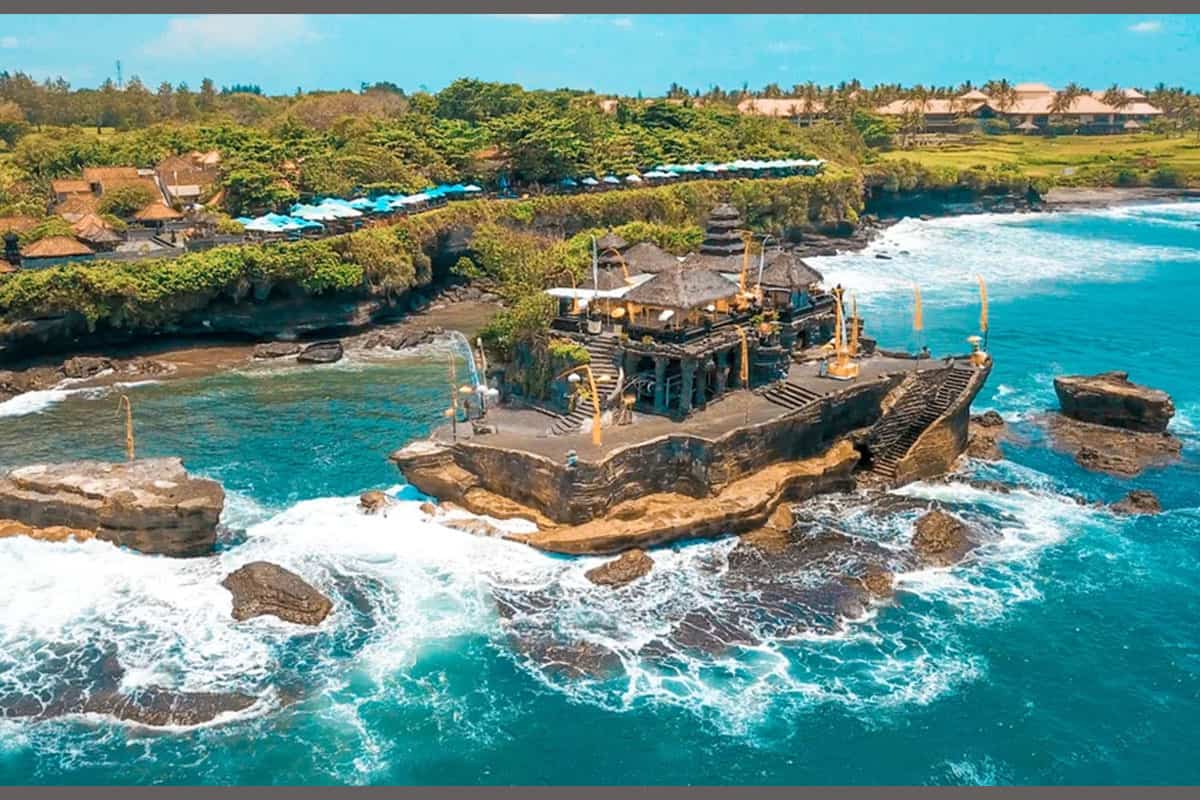
In an attempt to relieve environmental pressure and infrastructure challenges, the Indonesian government has initiated a range of restrictive policies, including a crackdown on overtourism in Bali. One of the most successful of these measures, resulting in over 7 million overseas visitor arrivals in a single year, was the introduction of unrivaled policies to restrict tourism in Bali in 2026. Local and national government officers collaborated to control the growing challenge of tourism through a suite of integrated policy levers including a building moratorium, an increase in tourist fees, the establishment of an Immigration task force to monitor tourists, and restrictions on short-term leases. This work uses official sources to document the most recent policy changes, economic data, and forecasting models to consider the future of tourism in Indonesia, up to and including September 2026.
The Background of Overtourism in Bali
For decades, Bali has served as the undisputed crown jewel of Indonesian tourism, drawing millions of international visitors to its pristine beaches, terraced rice paddies, and vibrant Hindu culture. However, the exponential growth of the global travel sector over the past ten years has transformed this idyllic paradise into a focal point for debates surrounding environmental sustainability and infrastructure capacity. The sheer volume of arrivals has placed unprecedented strain on the island’s waste management systems, water resources, and local road networks. In response to mounting public pressure and undeniable ecological degradation, both provincial authorities and the central government in Jakarta have been compelled to act.
The trajectory leading to the Bali overtourism travel changes 2026 officially began in the aftermath of the global pandemic. When international borders fully reopened, the influx of tourists returning to Bali exceeded even the most optimistic recovery projections. While this revitalised the local economy—bringing much-needed revenue to hotels, restaurants, and local artisans—it also exposed critical vulnerabilities in the island’s spatial planning. Southern coastal areas such as Canggu, Seminyak, and Uluwatu experienced severe gridlock, rampant unregulated construction, and a sharp increase in incidents involving disrespectful tourist behaviour at sacred religious sites.
Recognising that the traditional mass-tourism model was no longer viable, the Ministry of Tourism and Creative Economy began pivoting towards a framework of “quality over quantity.” This strategic shift prioritised higher-spending tourists who stay longer and respect local customs, rather than short-term visitors who contribute disproportionately to the island’s congestion. The groundwork laid between 2023 and 2025 culminated in a series of sweeping legislative updates, executive orders, and inter-ministerial task forces designed to completely overhaul the visitor experience and restore balance to the local ecosystem.
Advertisement
Advertisement
Latest Official Developments as of September 2026
As of 28th September 2026, the landscape of Balinese tourism is governed by the strictest regulatory framework in the island’s modern history. Central and provincial authorities have moved beyond mere proposals, actively enforcing a highly structured regime that impacts every facet of the travel industry. The most defining characteristic of the Bali overtourism travel changes 2026 is the unprecedented level of cooperation between the Bali Provincial Government and Jakarta’s central ministries, notably the Coordinating Ministry of Maritime and Investment Affairs.
Recent weeks have seen the formal deployment of the newly expanded Immigration Task Force, a specialised unit tasked with heavily monitoring tourist hotspots. Officers equipped with body cameras are now a common sight in areas like Kuta and Ubud, conducting random compliance checks on visas, driving licences, and tourist tax receipts. Furthermore, sweeping audits of foreign-owned businesses and properties are currently underway to identify tax evasion and zoning violations. This aggressive enforcement strategy signals a clear departure from the lenient oversight of previous decades, illustrating the government’s unwavering commitment to establishing a highly regulated, premium tourism environment.
Advertisement
Advertisement
The Sweeping Building and Construction Moratorium
One of the most drastic and economically impactful measures introduced under the Bali overtourism travel changes 2026 is the comprehensive construction moratorium. Initially proposed by central government officials, including Senior Minister Luhut Binsar Pandjaitan, as a potential ten-year ban, the policy has been formally adapted into a targeted, multi-district suspension of new building permits (PBG) for hotels, villas, and nightclubs situated on agricultural land.
The moratorium is fiercely enforced across six key districts: Tabanan, Jembrana, Buleleng, Bangli, Karangasem, and Klungkung. These regions, historically known for their untouched natural beauty and vital agricultural output, were increasingly targeted by developers fleeing the saturated southern markets. By halting new commercial tourism developments in these areas, the government aims to protect vital rice-producing zones and preserve the island’s UNESCO-recognised Subak irrigation systems.
Crucially, the heavily developed southern districts of Badung, Gianyar, and Denpasar are currently excepted from this specific six-district ban, though they remain subject to intense scrutiny and separate spatial planning restrictions. For foreign investors and expatriates, the moratorium has fundamentally altered the real estate landscape. While land acquisition remains legal, securing the necessary permits to develop that land into tourism accommodation is virtually impossible in the restricted zones. Existing properties with previously approved permits are permitted to operate, but any expansion plans are firmly halted.
Government Announcements on Sustainable Tourism
The central government’s messaging throughout 2026 has been remarkably consistent. Coordinating Minister for Maritime Affairs and Investment, Luhut Binsar Pandjaitan, has been a vocal proponent of these stringent measures. He has repeatedly cited the presence of approximately 200,000 foreign nationals residing in Bali as a primary catalyst for increased crime, unregulated property development, and intense competition for local jobs. His direct intervention underscores the national importance placed on resolving Bali’s infrastructure crisis.
Simultaneously, Minister of Tourism and Creative Economy, Sandiaga Uno, has championed the transition towards sustainable, high-yield tourism. Official statements from his ministry heavily emphasise the necessity of the Bali overtourism travel changes 2026 to safeguard the island’s cultural heritage. The government’s united front is further bolstered by the Bali Provincial Government, which has systematically implemented the operational aspects of these national directives, ensuring that enforcement is consistent across all jurisdictions.
Expansion and Enforcement of the Tourist Tax
In February 2024, Bali made international headlines by implementing a mandatory tourist levy of IDR 150,000 (approximately USD 10 or GBP 7.50) for all foreign arrivals. Paid via the official Love Bali digital portal, the tax was designed to fund urgent environmental protection, cultural preservation, and infrastructure upgrades. In its inaugural year, the tax successfully generated over Rp 318 billion. By 2025, as compliance mechanisms improved and tourist numbers swelled, revenue from the levy surpassed Rp 369 billion.
Advertisement
Advertisement
However, as part of the broader Bali overtourism travel changes 2026, enforcement has been drastically escalated. In the initial rollout phase, compliance relied heavily on the honour system, resulting in significant shortfalls. Today, proof of payment—presented as a digital QR code—is strictly verified at immigration checkpoints, major tourist attractions, and even during random street patrols by the Immigration Task Force.
Furthermore, serious legislative discussions are currently advancing to significantly raise the levy. Proposals circulating within the provincial parliament aim to increase the fee to between IDR 250,000 and IDR 500,000 per entry. Officials argue that a higher fee will not only deter budget-conscious travellers who contribute to overtourism but will also provide the massive capital required to construct a proposed light rail transit (LRT) system connecting Ngurah Rai International Airport to major tourist hubs.
Rental Curbs and Transportation Regulations
The chaotic traffic conditions in Bali, exacerbated by thousands of inexperienced tourists navigating narrow roads on rented motorbikes, have long been a source of immense frustration for local residents. In response, the Bali overtourism travel changes 2026 include severe restrictions on vehicle rentals.
Foreign tourists are now largely prohibited from renting motorbikes unless they possess a valid international driving permit that explicitly covers motorcycles, alongside verified insurance documentation. Rental agencies are subjected to rigorous auditing, and those found bypassing the regulations face immediate operational suspension and heavy fines. Additionally, authorities have cracked down on the illegal practice of foreign nationals operating unlicensed rental businesses or acting as unregulated tour guides, effectively reclaiming these micro-economies for local Balinese entrepreneurs.
To counter the reduction in private tourist transport, the government has invested in upgrading public bus networks and subsidising official taxi cooperatives. While these alternatives are still developing, the strict rental curbs have already yielded a measurable decrease in traffic accidents involving foreign nationals and have marginally alleviated congestion in gridlocked areas like Canggu.
Immigration Task Forces and Law Enforcement
Perhaps the most visible manifestation of the Bali overtourism travel changes 2026 is the enhanced presence of law enforcement. The Directorate General of Immigration, acting under directives from the Ministry of Law and Human Rights, has vastly expanded its operational footprint on the island. The dedicated Immigration Task Force is specifically trained to identify and deport foreigners violating their visa conditions, disrespecting cultural norms, or engaging in illegal employment.
Advertisement
Advertisement
Penalties for non-compliance have been dramatically increased. Visa overstays, previously met with modest daily fines, now carry the threat of immediate deportation and multi-year entry bans. In severe cases of fraud or criminal behaviour, offenders face lengthy prison sentences. The implementation of body cameras by task force officers ensures accountability and transparency during altercations, whilst also serving as a potent deterrent against unruly behaviour. This zero-tolerance approach has fundamentally altered the atmosphere for long-term visitors and digital nomads, mandating strict adherence to Indonesian law.
Verified Statistics and Tourism Demographics
To fully grasp the necessity of the Bali overtourism travel changes 2026, one must examine the official figures published by Statistics Indonesia (Badan Pusat Statistik – BPS). Following a devastating collapse during the pandemic, Bali’s recovery was remarkably swift. In 2024, the island welcomed approximately 6.33 million international visitors. By the end of 2025, that figure had surged by nearly 10%, reaching an official count of 6.95 million direct foreign arrivals, pushing the island past its pre-pandemic zenith.
The demographic breakdown reveals that Australia remains the undisputed primary source market, contributing over 1.6 million visitors in 2025 (approximately 23.4% of total foreign arrivals). India and China followed closely, contributing over 569,000 and 537,000 arrivals respectively.
Crucially, international arrivals represent only a fraction of the total footprint. Domestic tourism is a colossal component of Bali’s visitor economy. In 2025, BPS recorded a staggering 26.6 million domestic trips to the island. On average, this translates to roughly 19,000 foreign arrivals and 72,900 domestic trips per day. This immense daily influx highlights why the island’s infrastructure—from water tables to waste management facilities—has been pushed to the absolute brink of failure, necessitating urgent central government intervention.
Economic Implications and GDP Contribution
Despite the severe strain on infrastructure, the economic reality is that Bali remains overwhelmingly dependent on the travel sector. In 2024, the accommodation and food-and-beverage sectors alone contributed 21.75% to Bali’s Gross Regional Domestic Product (GRDP). The industry supports nearly 2.7 million jobs across hospitality, transport, and associated services.
The central challenge for policymakers navigating the Bali overtourism travel changes 2026 is striking a delicate balance: heavily regulating the industry to protect the environment without triggering a catastrophic economic contraction. The transition to premium tourism is designed to offset the potential drop in sheer visitor numbers with higher per-capita expenditure. Early economic indicators from 2026 suggest that while the growth rate of total arrivals has marginally slowed in response to the new taxes and regulations, overall tourism receipts and tax yields have continued to rise, validating the government’s strategic pivot towards high-value travel.
Advertisement
Advertisement
Industry Impact: Real Estate and Foreign Investment
The commercial landscape, particularly in the real estate sector, has been significantly disrupted by the recent regulatory overhaul. Historically, Bali represented a highly lucrative, lightly regulated environment for foreign property investors. However, the imposition of the 2026 construction moratorium has injected a massive degree of uncertainty into the market.
Foreign Direct Investment (FDI) via PT PMA (foreign-owned corporate entities) structures remains legal, and the buying and selling of existing leasehold and freehold properties is unrestricted. Nevertheless, the inability to secure new building permits (PBG) on agricultural land in the six restricted districts has halted hundreds of planned developments. Consequently, property values for existing, fully permitted villas and hotels have skyrocketed due to the artificially constrained supply. Conversely, the value of raw, undeveloped agricultural land in the restricted zones has stagnated. Investors are now forced to conduct exhaustively thorough due diligence, ensuring flawless zoning compliance before committing to multi-million-dollar transactions.
Policy Implications for Digital Nomads and Expatriates
Bali has long been heralded as a global mecca for digital nomads and remote workers. However, the Bali overtourism travel changes 2026 have fundamentally altered the environment for this specific demographic. In previous years, thousands of remote workers operated in a legal grey area, utilising standard tourist visas or Visa on Arrival (VoA) facilities to live and work on the island for extended periods, contributing minimally to the local tax base.
The government has now firmly closed these loopholes. The Immigration Task Force actively monitors co-working spaces and cafes, demanding proof of appropriate visa status. To accommodate legitimate remote workers, Indonesia has streamlined its remote worker visas and Golden Visa programmes. These highly structured permits require substantial financial proof, clean criminal records, and adherence to local tax obligations. While these changes have resulted in an exodus of budget-conscious digital nomads, they have successfully established a regulated, legally compliant community of high-earning expatriates who contribute meaningfully to the provincial economy.
Environmental Preservation and Cultural Protection
At its absolute core, the primary objective of the Bali overtourism travel changes 2026 is the urgent preservation of the island’s environment and deeply sacred cultural heritage. Balinese Hinduism is inextricably linked to the land; agricultural cycles, temple ceremonies, and daily life are all governed by a profound respect for nature. The unchecked commercialisation of the past decade directly threatened this spiritual ecosystem.
The revenues generated by the meticulously enforced tourist tax are now actively being deployed into tangible environmental projects. Large-scale investments are being made into modernising waste processing facilities to combat the persistent issue of plastic pollution on beaches. Furthermore, strict zoning laws are being aggressively enforced to prevent commercial encroachment upon sacred temple grounds and traditional village layouts. The government has also launched extensive educational campaigns, mandating that tourists dress modestly and behave respectfully when visiting religious sites, with immediate deportation for those who intentionally desecrate sacred areas.
Advertisement
Advertisement
The 100-Year Bali Development Blueprint (2025-2125)
The regulatory actions taken in 2026 are not merely reactionary measures; they are legally anchored in a visionary, long-term legislative framework known as the Haluan Pembangunan Bali Masa Depan (The 100-Year Bali Development Blueprint, 2025-2125), codified under Provincial Regulation (Perda) No. 4/2023.
This monumental century-long blueprint serves as the constitutional foundation for all current and future spatial planning, economic policy, and environmental protection on the island. It dictates that Bali must transition away from mass commercial exploitation and return to a model of harmonious, culturally integrated development. By aligning the Bali overtourism travel changes 2026 with this 100-year vision, officials have ensured that the current moratoriums and tax levies possess immense legal fortitude, rendering them highly resistant to lobbying efforts from large-scale commercial developers. This blueprint guarantees that sustainability is legally prioritised over unrestricted economic expansion for the next century.
Future Outlook for Indonesian Tourism
Looking ahead, the successful implementation of these strict measures in Bali is widely expected to serve as a national blueprint for other emerging tourism hotspots across the Indonesian archipelago. Destinations such as Lombok, Labuan Bajo, and Lake Toba are being developed under the central government’s “10 New Balis” initiative. However, armed with the hard-learned lessons of the past decade, the Ministry of Tourism is proactively applying the regulatory principles of the Bali overtourism travel changes 2026 to these new regions from their very inception.
By 2030, the Indonesian government aims to have fully transitioned Bali into a premium, highly regulated eco-tourism destination. While the era of unregulated, ultra-budget travel to the Island of the Gods has definitively ended, the decisive actions taken in 2026 guarantee that Bali’s unique cultural identity and breathtaking natural environment will survive and thrive. The island will remain a premier global destination, but one that demands respect, financial contribution, and responsible behaviour from every visitor fortunate enough to cross its borders.
Advertisement
