
Air India Flight from Bengaluru to Vijayawada Faces Severe Delay at Kempegowda International Airport

Published
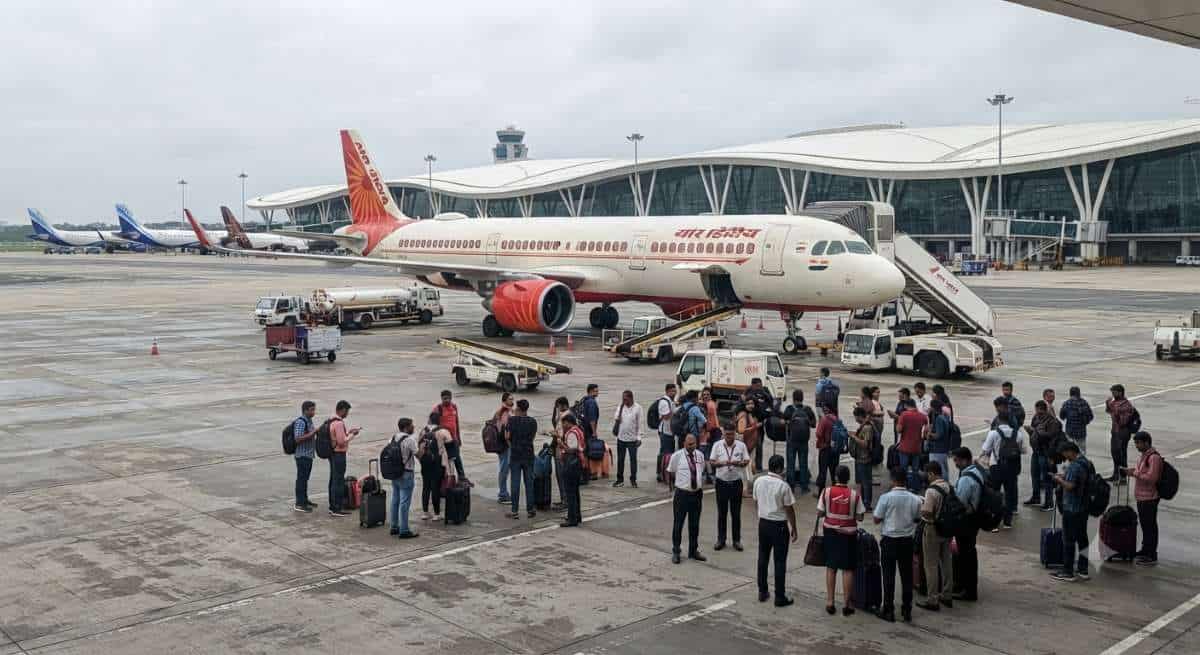
Image generated with Ai
A significant aviation disruption unfolded when an Air India flight scheduled to operate from Bengaluru to Vijayawada encountered an unexpected delay at the Kempegowda International Airport. The flight, which had been originally scheduled for departure at 7 AM on a Monday morning, failed to take off as planned, thereby throwing travel itineraries into complete disarray. Tensions began to mount rapidly inside the terminal as the departure time lapsed without the aircraft being positioned on the runway.
Countless travelers who had arrived early to catch the service found themselves stranded in a state of confusion within the boarding area. Among the affected individuals was a high-profile delegation, notably including Andhra Pradesh Transport, Sports & Youth Minister Mandipalli Ramprasad Reddy, alongside several other prominent officials and everyday passengers who were depending on the punctual operation of the route to reach their destinations.
Impact on Travellers
The sudden interruption in travel schedules inflicted immense frustration and inconvenience upon all stranded passengers at the terminal. Confusion grew exponentially as time progressed past the scheduled 7 AM departure window, with travelers left waiting indefinitely in the boarding zones without a clear path forward. Attempts made by distressed passengers to gather concrete information regarding the delayed departure were reportedly met with vague and unhelpful responses from the airline ground staff.
Dissatisfaction intensified due to the absence of transparent updates concerning the specific reasons behind the hold-up or an estimated time of departure. Furthermore, anger was directed toward the apparent lack of prompt alternative arrangements or fundamental provisions, leaving prominent figures like the Andhra Pradesh minister and fellow citizens stranded and grappling with disrupted professional and personal engagements.
Advertisement
Advertisement
Industry Insights
Incidents of this nature shed light on the recurring operational and communication challenges plaguing domestic air travel networks. Industry analysts frequently point out that while technical glitches, air traffic congestion, and operational scheduling bottlenecks are occasional realities of aviation, the standard of ground communication heavily dictates passenger sentiment. When airlines fail to provide immediate, transparent information during unexpected schedule changes, anxiety and dissatisfaction multiply rapidly among customers.
Advertisement
Advertisement
Effective crisis management within the aviation sector relies heavily on proactive updates, prompt deployment of alternative resources, and empathetic customer service. The episode at the Bengaluru facility underscores the critical necessity for commercial carriers to refine their real-time passenger communication protocols, ensuring that travelers are never left uninformed or unsupported during unexpected flight irregularities.
Practical Information
For travelers navigating similar air travel disruptions, certain practical steps are typically recommended to mitigate inconvenience. Passengers facing prolonged flight delays are advised to immediately verify the updated flight status directly through official airline applications, customer service helplines, or airport information display boards rather than relying solely on initial announcements. It is essential for affected individuals to understand their rights regarding compensation, refreshment vouchers, or alternative routing options as mandated by civil aviation regulatory guidelines.
Keeping digital or physical copies of boarding passes, booking references, and communication records can significantly streamline the process of lodging complaints or claiming eligible reimbursements. Additionally, maintaining open communication channels with destination contacts helps manage expectations when arrival times are unpredictably extended.
Comparison with Previous Policies or Developments
In contrast to historical aviation environments where passengers had limited recourse and fewer communication channels during flight disruptions, contemporary regulatory frameworks have introduced stricter accountability measures for commercial airlines. Modern guidelines implemented by aviation authorities increasingly emphasize passenger rights, requiring carriers to maintain better transparency regarding delays, cancellations, and denied boarding.
While past decades often saw passengers completely stranded with minimal institutional support or recourse for redressal, current policies mandate specific thresholds of assistance, including refreshments and alternate flights depending on the duration of the hold-up. Nevertheless, as demonstrated by the recent disruption at the Bengaluru hub, operational gaps in real-time communication on the ground continue to challenge the seamless execution of these consumer-friendly policies.
Advertisement
